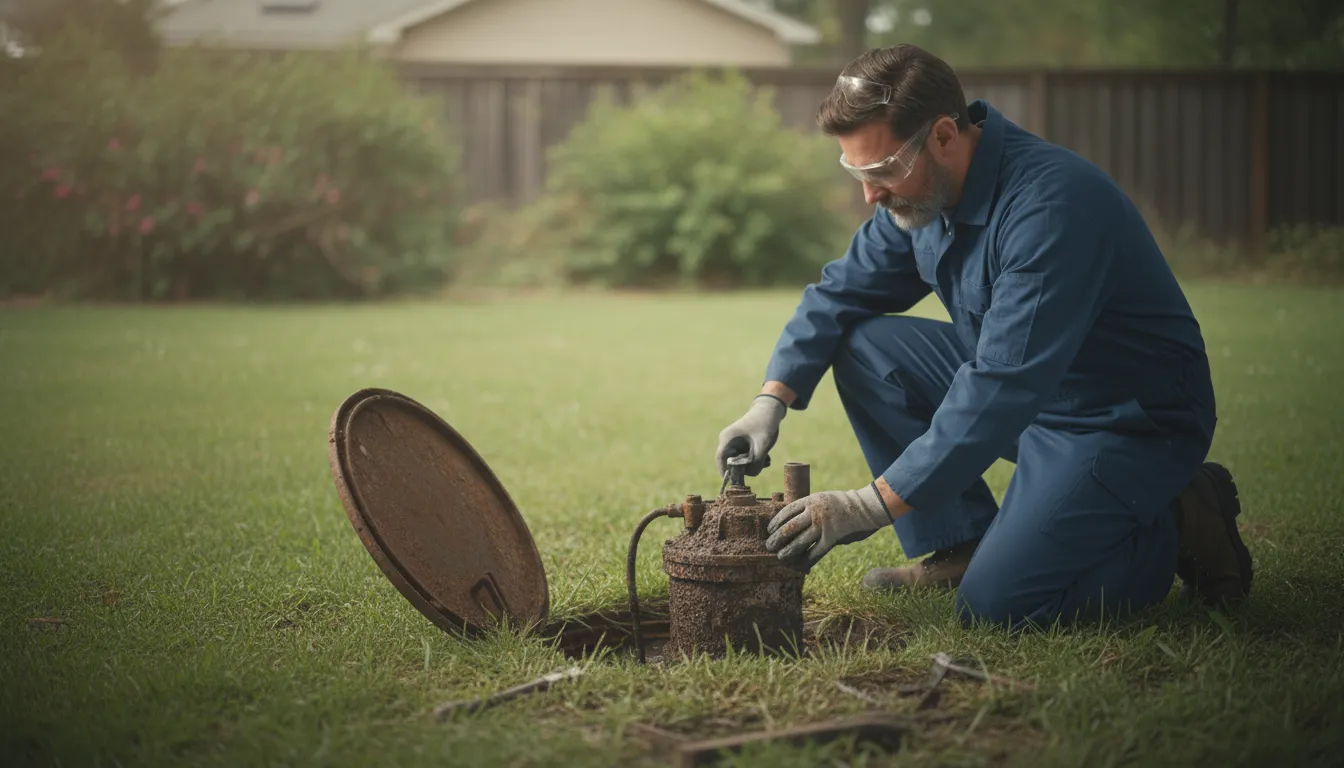
Find the Best Septic Pump Repair Companies for Your Business
No obligation • Fast responses • Nationwide coverage

Why you can trust Septic Spot
Septic Spot is a leading United States resource for understanding and comparing septic services. Our editors review providers using consistent criteria and verify key business details. Listings and scores are independent, and companies cannot pay to influence our content.
Search providers near you
Top Septic Pump Repair Companies in Wyoming, Michigan Ranked
When your septic system's pump fails or your entire system reaches the end of its life, it's more than an inconvenience-it's a critical home maintenance issue that requires immediate, professional attention. In Wyoming, Michigan, local soil conditions and regulations make understanding your septic repair and replacement options essential. This guide explains the process, costs, and key considerations for septic pump repair and full system replacement, helping you connect with qualified local professionals to restore your home's wastewater system safely and efficiently.
Understanding Septic System Failures in Wyoming
A functioning septic system is invisible, quietly processing household wastewater. Problems arise when key components fail. The most common issues requiring repair or replacement involve the pump, drainfield, or the tank itself. In Wyoming, environmental factors heavily influence system longevity and failure rates.
The region's dense clay soils are a primary culprit 1. Clay particles are tiny and pack tightly together, severely limiting the drainage and percolation necessary for a septic system's drainfield to work. When wastewater can't soak into the ground, it saturates the soil, leading to a failed drainfield, sewage backups, and soggy yard areas.
Compounding this is Michigan's often high water table, especially in areas near the Grand River 2. When the groundwater level rises, it can inundate a drainfield, preventing proper treatment and dispersal of effluent. These conditions mean systems in Wyoming may fail prematurely compared to areas with sandy, well-draining soils, often necessitating more complex-and costly-engineered solutions.
The Repair vs. Replacement Decision
Not every system problem requires a full overhaul. A professional inspection is the critical first step to diagnose the issue accurately 3.
When Repair is Feasible:
- Pump or Float Failure: The pump that moves effluent from the tank to the drainfield can burn out. Similarly, the control floats that regulate the pump's operation can fail. Replacing these components is a common repair.
- Baffle or Riser Damage: The baffles inside the tank guide wastewater flow, and risers provide access to the tank. These can crack or deteriorate and are often repairable.
- Localized Drainfield Issues: Sometimes, only one section of a drainfield fails. While less common, spot repairs or extensions may be possible.
Signs You Likely Need a Full Replacement:
- Drainfield Failure: Persistent soggy ground, sewage odors, or backups indicate the soil can no longer absorb liquid. This often requires a new drainfield.
- Tank Structural Failure: Cracks, collapses, or severe corrosion in the tank itself compromise the entire system.
- Age and Repeated Repairs: Most traditional septic systems have a 20-40 year lifespan. If your system is old and requires frequent fixes, replacement is usually more cost-effective and reliable long-term.
The Septic Repair and Replacement Process
Working with a licensed professional ensures the job meets all Kent County Health Department codes. The process typically follows these key steps:
- Professional Inspection & Diagnosis: A technician will inspect the tank, pump, drainfield, and overall system performance to pinpoint the exact problem and recommend a solution.
- Permitting: Any significant repair, and certainly a full system replacement, requires a permit from the Kent County Health Department. Your contractor will handle this, as designs must be approved to ensure they meet environmental and public health standards.
- System Pumping: Before any work inside the tank can begin, a septic pumping service must fully evacuate the tank for safety and access.
- Execution of Work: This phase varies widely:
- For a pump repair, it involves replacing the submersible pump, control panel, and floats.
- For baffle/riser repair, it involves installing new tank access points or internal components.
- For a full replacement, it involves excavating the old tank and drainfield (if necessary), installing the new tank and system, and constructing the new drainfield.
- Final Inspection & Backfill: Once installation is complete, a health department inspector will review the work. After passing inspection, the contractor can backfill the excavations 4.
Find the perfect septic pump repair companies for your needs
Get personalized recommendations and expert advice
Types of Septic Systems in West Michigan
The type of system on your property significantly impacts repair and replacement strategies and costs.
- Conventional Gravity Systems: The most common older design. Wastewater flows by gravity from the tank to a network of pipes in a drainfield. These are the simplest but often fail in Wyoming's clay soils.
- Pressure-Distribution Systems: These use a pump to evenly distribute effluent under pressure across the drainfield via smaller pipes. They are better for uneven terrain and can extend drainfield life.
- Aerobic Treatment Units (ATUs): These systems inject oxygen into the treatment tank, supporting bacteria that break down waste more thoroughly. They are often required for smaller lots or poor soil conditions and produce a higher-quality effluent.
- Mound Systems: An engineered solution for high water tables or poor soil. A sand-filled mound is constructed above the natural grade, and effluent is pumped into it for treatment before dispersing. This is a common replacement system in challenging West Michigan conditions.
Cost Factors for Septic Work in Wyoming
Costs can vary dramatically based on the scope of work, system type, and site conditions. Here's a general breakdown of what homeowners might expect:
- Septic Tank Pumping & Inspection: $250-$600. This is a necessary precursor to most repair work and for routine maintenance.
- Pump or Control Component Replacement: $800-$5,000. The wide range depends on pump horsepower, brand, and the complexity of the electrical components 5.
- Baffle or Riser Repair: $300-$1,200. Generally a more straightforward repair if the tank itself is sound.
- Drainfield Repair or Replacement: $3,000-$15,000. Partial repairs are less expensive, but a completely new drainfield is a major excavation project 6.
- Full System Replacement: $10,000-$35,000+. This is the most significant investment. A conventional gravity system replacement falls on the lower end, while engineered systems like sand mounds or ATUs, frequently required in Wyoming due to soil and water table issues, drive costs toward the higher end and beyond 7 8 9.
Important Note on Financing: The upfront cost of a full system replacement can be daunting. Michigan residents should investigate the Michigan Saves Septic Replacement Loan Program, which offers affordable financing specifically for this purpose 10.
Choosing a Local Service Provider
Given the technical and regulatory complexity, selecting the right contractor is crucial. Look for a licensed, insured professional with extensive experience in Kent County. They should be familiar with the local health department's permitting process and the specific soil challenges of the Wyoming area. Ask for references, detailed written estimates, and a clear explanation of the proposed solution. A reputable provider will never recommend a full replacement without a thorough inspection and justification.
Frequently asked questions
Sources
Footnotes
-
How Soil Type Affects Septic System Performance - https://www.septicblueraleigh.com/how-your-soil-determines-your-septic-systems-success.html ↩
-
Repair or Replace? What to Know When Your Septic System ... - https://www.septicserviceshowell.com/post/repair-or-replace-what-to-know-when-your-septic-system-starts-failing-in-livingston-county-mi ↩
-
Septic System Repair: Essential Guidelines for Homeowners - https://smartsepticpros.com/blog/septic-system-repair-guidelines/ ↩
-
New Septic System Installation - https://pumpthatseptic.com/septic-system-installation ↩
-
How Much Does Septic Tank Repair Cost? [2026 Data] | Angi - https://www.angi.com/articles/how-much-does-repairing-septic-tank-cost.htm ↩
-
What Homeowners Need to Know About Septic Systems - https://www.consumerscu.org/blog/what-homeowners-need-to-know-about-septic-systems ↩
-
Septic Repair vs. Replacement: A Guide to Costs & Red Flags - https://prosepticri.com/septic-repair-vs-replacement-guide/ ↩
-
Engineered Septic Systems in Michigan: Costs, Maintenance ... - https://www.michiganseptic.com/post/engineered-septic-systems-in-michigan-costs-maintenance-a-2026-guide ↩
-
How Much Does a Septic Tank Installation Cost? - https://www.thisoldhouse.com/plumbing/septic-tank-installation ↩
-
Navigating your home septic system replacement - Michigan Saves - https://michigansaves.org/news/navigating-your-home-septic-system-replacement/ ↩