Find the Best Septic Pump Repair Companies for Your Business
No obligation • Fast responses • Nationwide coverage

Why you can trust Septic Spot
Septic Spot is a leading United States resource for understanding and comparing septic services. Our editors review providers using consistent criteria and verify key business details. Listings and scores are independent, and companies cannot pay to influence our content.
Search providers near you
Top Septic Pump Repair Companies in New Brunswick, New Jersey Ranked
Maintaining a functional septic system is crucial for any property not connected to a municipal sewer line. When a septic pump fails or components wear out, it can lead to sewage backups, property damage, and significant health hazards. This guide focuses on septic pump repair and replacement, a critical service for homes with pressure-dosed or elevated drainfield systems. Understanding the signs of trouble, local regulations, and typical repair processes can help you make informed decisions and connect with qualified local professionals who specialize in septic system maintenance and remediation.
Understanding Your Septic System Type
Not all septic systems are the same, and the type you have directly dictates the complexity and cost of any pump-related repair. The two primary designs in the New Brunswick area are gravity-fed systems and pumped (or pressure-dosed) systems.
Gravity Systems are the simpler, more traditional design. They rely on the natural slope of the land to move effluent from the tank to the drainfield. Repairs for these systems often involve clearing blockages, repairing inlet/outlet baffles, or replacing the distribution box (D-box). While they don't use a pump for daily operation, some may include a pump for effluent filtering or to move liquid to a higher secondary treatment area.
Pumped or Dose Systems are necessary when wastewater must be moved uphill to the drainfield or when soil conditions aren't ideal for gravity flow. These systems use an effluent pump, float switches, and a control panel to periodically dose the drainfield. Repairs here are more complex, typically involving electrical troubleshooting, pump replacement, or control panel issues. Identifying your system type is the first step in diagnosing a problem.
Common Signs You Need Pump Repair or Replacement
Ignoring early warning signs can turn a manageable repair into a catastrophic system failure. Be alert for these indicators:
- Alarms and Warning Lights: Modern pumped systems have control panels with audible and visual alarms. An active alarm is a direct signal that the pump has failed, a float switch is stuck, or the water level in the pump tank is too high.
- Slow Drains and Gurgling: Gurgling sounds from toilets or drains, coupled with slow drainage throughout the house, can signal a failing pump or a blockage preventing effluent from leaving the tank.
- Sewage Backups: The most severe sign is sewage backing up into household drains. This indicates a complete failure of the system to move wastewater out of the tank.
- Wet Spots or Lush Grass: Soggy ground or unusually green, lush grass over the drainfield or near the septic tank can mean the pump isn't distributing effluent properly, causing surfacing.
- Unusual Odors: Foul smells near the tank, drainfield, or inside the home are a clear sign of system distress and potential failure.
The Impact of New Jersey Soil on Repairs
The soil composition on your property is a major factor in your system's health and the repair strategies available. New Brunswick and Middlesex County sit within varied geological areas, including the Coastal Plain and areas with glacial till deposits 1.
- Sandy Soils: Offer good drainage and are generally favorable for conventional septic systems. Repairs in these areas may be more straightforward.
- Clay-Heavy Soils: Common in parts of New Jersey, clay soils compact easily and drain poorly. They can become saturated, leading to drainfield failure. In these conditions, a simple pump repair might not solve the underlying issue if the drainfield is compromised. Engineered systems with pumps are often required for clay soils, and repairs can be more costly.
- High Water Tables: Areas with a high water table, especially during wet seasons, can flood a drainfield. A properly functioning pump system is critical in these environments to control the timing and volume of effluent released.
If a drainfield is failing due to soil compaction, technologies like TerraLift-a process that fractures compacted clay soil with compressed air-can be a repair option, potentially avoiding the high cost of a full field replacement.
Find the perfect septic pump repair companies for your needs
Get personalized recommendations and expert advice
The Repair and Replacement Process: What to Expect
Engaging a professional for septic pump repair or system work follows a structured process, especially under local regulations.
- Professional Inspection & Diagnosis: A certified technician will first perform a thorough inspection. This includes checking the tank, pumps, electrical components, control panel, and assessing the drainfield. They will diagnose whether the issue is a faulty pump, a clog, an electrical problem, or a more serious system-wide failure 2.
- Permitting: In Middlesex County, permits from the local health authority are required for most septic system repairs and replacements. Your service provider should handle obtaining the necessary permits from the Middlesex County Office of Health Services, Environmental Health division. For specific property requirements, you can contact them directly at 732-745-8480.
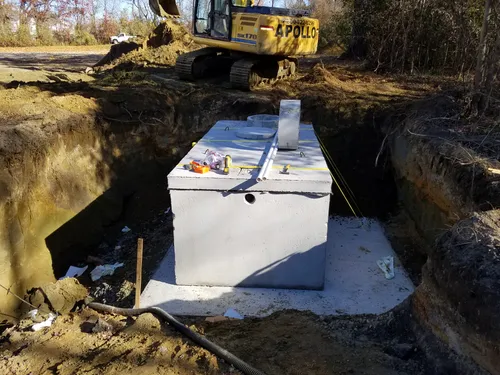
- Excavation and Repair Work: Once permitted, the repair begins. This may involve excavating to access the septic tank, pump chamber, or distribution lines. The failed component (pump, float, D-box, section of pipe) is removed and replaced 3.
- System Testing and Inspection: After repairs, the system is tested to ensure proper operation. For significant repairs or replacements, a county health inspector may need to approve the work before the excavation is backfilled 4.
- Backfill and Site Restoration: Finally, the excavated area is carefully backfilled and the site is restored as much as possible to its original condition.
Cost Guide for Septic Repairs in New Brunswick
Costs for septic system work vary widely based on the system type, soil conditions, and scope of the problem. Below is a general cost guide based on regional data 5 6.
- Tank Pumping & Diagnostic Inspection: $200 - $600. This is often the first step to assess system health.
- Effluent Pump or Sump Pump Replacement: $800 - $2,500. This includes the pump unit, floats, and associated electrical work.
- Baffle or Riser Replacement: $300 - $1,200. Repairing or replacing the inlet/outlet baffles or adding/maintaining access risers.
- Distribution Box (D-Box) Replacement: $1,000 - $2,000.
- Partial Drainfield Repair: $3,000 - $15,000. For replacing a section of failed leach field or using technologies like TerraLift to rehabilitate compacted soil.
- Complete Septic System Replacement: $15,000 - $40,000+. This is the cost for a full system redesign and installation, which may be necessary if the tank and drainfield have both failed 7 8 9.
Choosing a Service Provider for Septic System Work
Selecting the right professional is critical. Look for licensed, insured contractors with specific experience in septic pump systems and a strong understanding of Middlesex County and New Jersey Department of Environmental Protection (NJDEP) regulations 10. They should be willing to provide a detailed, written estimate that breaks down parts, labor, and permit fees. Ask for references and check reviews to gauge their reputation for quality work and clear communication.
Frequently asked questions
Sources
Footnotes
-
How Soil Type Affects Septic Installation - Earthmovers NJ - https://earthmoversnj.com/how-soil-type-affects-septic-installation/ ↩
-
Septic System Repair in New Jersey - ATS Environmental - https://www.atsenvironmental.com/residential/septic-system-repair/ ↩
-
Septic System Repairs | Septic Parts Replacement | NJ - https://septicandoiltanks.com/septic-system-repairs-component-replacement/ ↩
-
Installing a Septic Tank System in Utah: A Step-by-Step Guide - https://www.andersoneng.com/installing-a-septic-tank-system-in-utah-a-step-by-step-guide/ ↩
-
Septic Repair vs. Replacement: A Guide to Costs & Red Flags - https://prosepticri.com/septic-repair-vs-replacement-guide/ ↩
-
Troubleshooting & Repairs - New Jersey Septic Management Group - https://nj-septic.com/repairs/ ↩
-
Septic Repair vs Replacement in NJ: Costs & Signs - https://www.atsenvironmental.com/blog/septic-repair-vs-replacement/ ↩
-
The Real Cost of Septic Installation in New Jersey (2025) - https://www.atsenvironmental.com/blog/the-real-cost-of-septic-installation-in-new-jersey-2025/ ↩
-
How Much Does It Cost To Replace A Septic System In ... - https://dsepticservice.com/b/septic-system-replacement-cost-new-jersey/ ↩
-
Septic System Program | Middlesex County NJ - https://www.middlesexcountynj.gov/government/departments/department-of-public-safety-and-health/office-of-health-services/environmental-health/septic-system-program ↩