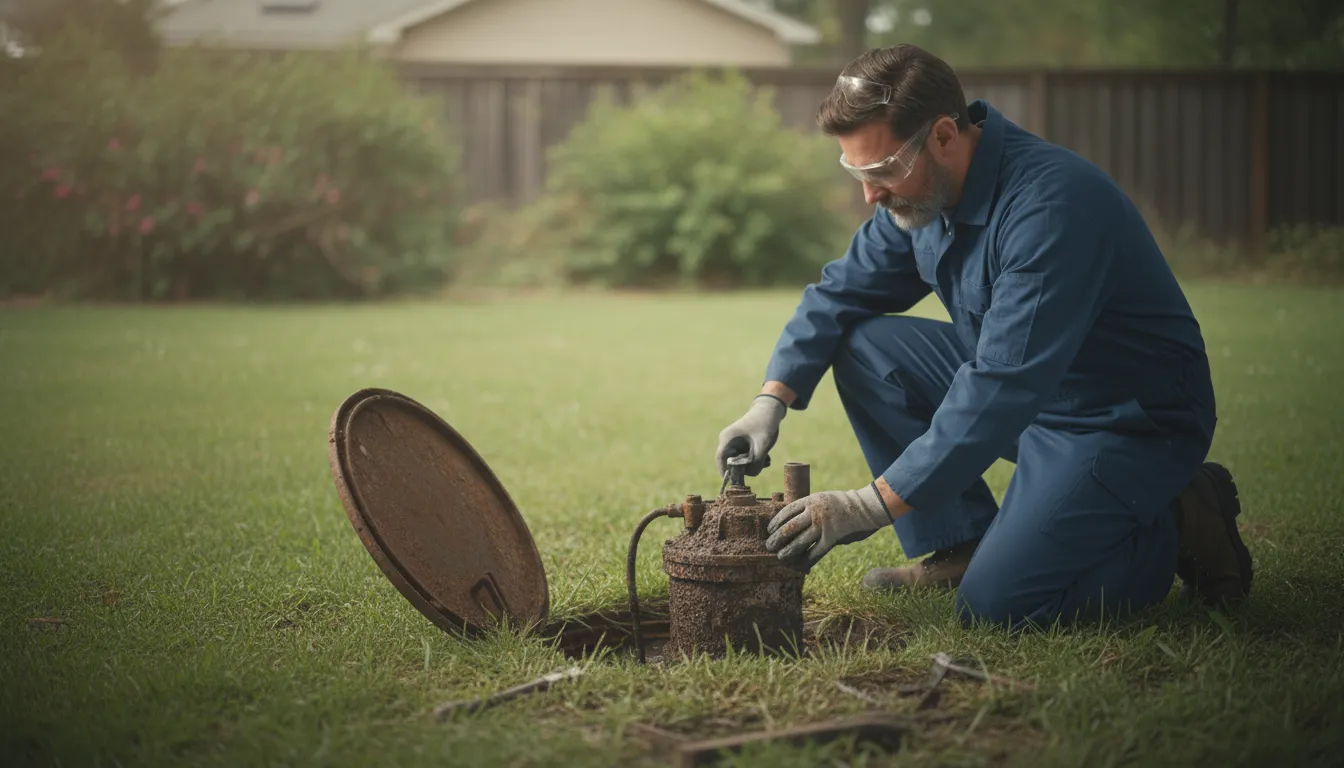
Find the Best Septic Pump Repair Companies for Your Business
No obligation • Fast responses • Nationwide coverage

Why you can trust Septic Spot
Septic Spot is a leading United States resource for understanding and comparing septic services. Our editors review providers using consistent criteria and verify key business details. Listings and scores are independent, and companies cannot pay to influence our content.
Search providers near you
Top Septic Pump Repair Companies in Old Bridge, New Jersey Ranked
Maintaining a functional septic system is crucial for the health, safety, and property value of your Old Bridge home. When the pump or other critical components fail, timely and professional repair or replacement is essential to prevent backups, environmental contamination, and costly property damage. This guide explains the specifics of septic pump and system services in Old Bridge, detailing common issues, local cost factors, and the regulatory process to help you make informed decisions when addressing system problems.
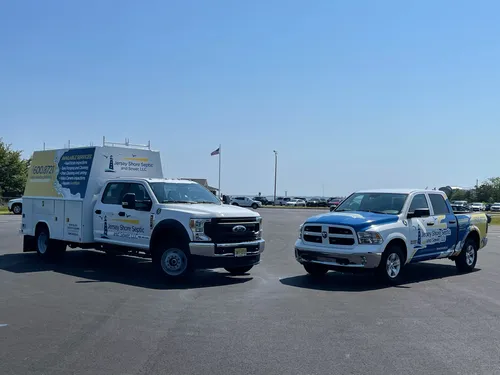
Jersey Shore Septic And Sewer LLC
Lakewood, NJ
Jersey Shore Septic And Sewer LLC is a family-owned and operated business serving Lakewood, NJ, and surrounding counties including Atlantic, Middlesex, Monmouth, and Ocean. With over a decade of experience, they provide residential and commercial septic services such as septic tank pumping, inspections, repairs, replacements, and new installations. Their team holds CDL-A licenses and is trained to perform specialized services like video camera inspections and high-pressure water jetting. The company also offers excavation and commercial snow removal services.
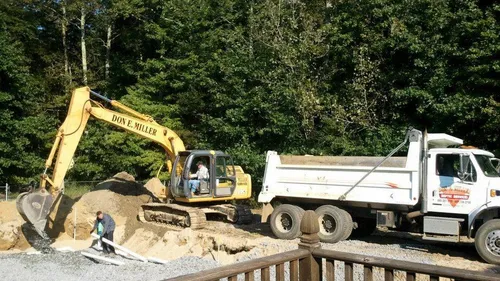
Don E Miller Septic Service Inc & Donny's Potty's
362 Meany Rd, North Hanover, NJ 08562
Don E Miller Septic Service Inc & Donny's Potty's is a family-owned septic service provider based near Philadelphia, PA. They offer a wide range of septic system services including pumping, inspections, repairs, and installations, as well as portable toilet rentals for residential, commercial, and municipal customers. The company has been serving the North Hanover Township area and surroundings since 1963, providing expertise in maintaining and installing various septic system components such as dosing pumps, grease traps, and effluent filters.
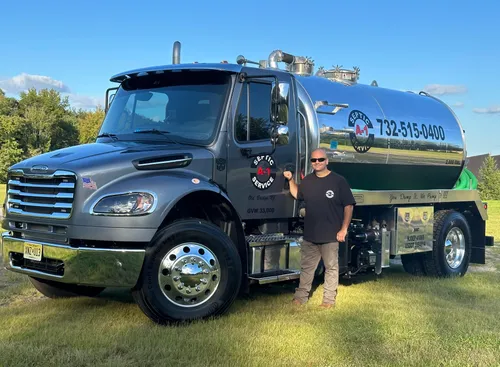
A-1 Septic Service,LLC
New York, NY
A-1 Septic Service, LLC is a family-owned septic service provider based in New York, NY, with a history dating back to 1956. They offer a range of services including septic pumping, inspection, cleaning, repair, and installation for residential and commercial systems. The company uses advanced tools and technology to maintain and service all types of septic tank systems. A-1 Septic Service is licensed, insured, and provides emergency services with 24/7 availability.
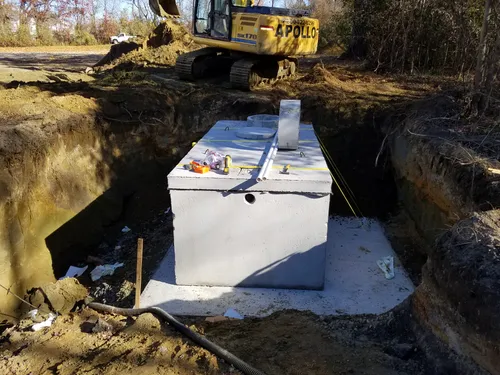
Apollo Sewer & Plumbing
110 W Front St, Keyport, NJ 07735
Apollo Sewer & Plumbing provides comprehensive plumbing and septic services in New York, NY. They handle everything from septic tank installation, pumping, and repair to sewer line cleaning and excavation. Their capabilities include high-pressure jetting and the use of heavy equipment like backhoes and dozers for trenching and new line installation. Apollo Sewer & Plumbing serves both residential and commercial clients and offers 24/7 emergency plumbing services to address urgent issues at any time.
Understanding Your Septic System in Old Bridge
A residential septic system is an on-site wastewater treatment plant. In a typical system, waste flows from your home into a septic tank where solids settle. The clarified liquid, or effluent, then moves to a drain field (or leach field) for final filtration into the soil. In many Old Bridge properties, especially those with challenging topography or soil, a septic pump (or effluent pump) is a critical component. This pump moves effluent from the tank to the drain field, which may be located uphill or at a distance. When this pump fails, or when other system components like baffles or distribution boxes are compromised, the entire system can stop functioning properly.
Key Factors Influencing Repair and Replacement in Middlesex County
Several local conditions unique to Old Bridge and the surrounding New Jersey area significantly impact the approach and cost of septic work.
- Soil Type and Percolation: New Jersey soils, particularly those with high clay content common in the region, have poor percolation rates 1. This means water drains very slowly. If an existing system fails, repairing the drain field may not be feasible. Instead, a new system often requires a much larger drain field or an engineered alternative like a costly mound system to function properly.
- High Water Table: Areas with a high seasonal water table are not uncommon. This can saturate a traditional drain field, causing system failure. Solutions often involve installing shallow, pressurized drain fields or specialized pump systems, which increase project complexity and expense.
- State and Local Regulations: All septic work in New Jersey is strictly regulated by the New Jersey Department of Environmental Protection (NJDEP) and local health departments 2 3. Even a simple pump replacement may require a permit, and a full system replacement always requires soil testing (a perc test), engineering design, and formal approvals. This regulatory oversight is crucial for protecting groundwater but adds time and cost to projects.
Common Septic System Repairs
Not every system failure requires a full replacement. Many issues can be resolved with targeted repairs.
- Septic Pump Repair or Replacement: This is one of the most common service calls. A faulty pump or float switch will trigger an alarm and halt effluent flow. A certified technician will diagnose the issue at the pump, control panel, and alarm 4 5. Replacing a failed effluent pump, including labor and components, typically ranges from $800 to $5,000 in Old Bridge.
- Baffle or Riser Repair: Tank baffles (inlet/outlet tees) prevent scum and solids from exiting the tank. Risers provide access from the ground surface to the tank lids. Damaged baffles can cause clogs, while missing risers make routine maintenance difficult and expensive. Repairing or installing these components can cost between $300 and $1,200.
- Distribution Box Repair: The D-box evenly distributes effluent to the lines in the drain field. If it becomes clogged, cracked, or tilted, it can cause uneven drainage and field failure. Repairing or replacing a distribution box is more invasive and often coincides with drain field work, with costs ranging from $3,000 to $15,000.
When Replacement Becomes Necessary
Repair is not always the most economical long-term solution. Recognizing the signs of systemic failure can save you from repeated repair bills.
- Persistent Drain Field Failure: If the soil in the leach field has become clogged (a condition called "biomat" failure) or is saturated due to high groundwater, the field can no longer absorb effluent. This leads to surfacing sewage, soggy yards, and foul odors. Field rejuvenation techniques are sometimes possible, but often, a new drain field or full system is required.
- Age and Material of System: Many septic systems have a lifespan of 20-40 years 6. Older systems made from steel tanks or primitive concrete are more prone to collapse and failure. If the tank itself is compromised, replacement is unavoidable.
- Major Component Failure: When multiple expensive components fail simultaneously-such as a failed tank, a collapsed D-box, and a saturated field-the combined cost of repairs can approach or exceed the cost of a new, more efficient system.
Find the perfect septic pump repair companies for your needs
Get personalized recommendations and expert advice
The Process for Septic System Replacement
Replacing a septic system is a major project that involves several key steps, largely driven by New Jersey's environmental regulations.
- Site Evaluation and Soil Testing: A licensed site evaluator or engineer must conduct a percolation test to determine the soil's absorption rate and identify the seasonal high-water table. This data is the foundation for the new system's design.
- Engineering and Design: Based on the soil test results, a professional designs a system that complies with NJDEP regulations. For difficult sites, this may involve an engineered system like a mound, sand filter, or advanced treatment unit.
- Permitting: The design plans, along with the application, are submitted to the local health department and/or NJDEP for review and approval. This process can take several weeks or months.
- Installation: Once permits are secured, excavation begins. The old system is properly abandoned (often filled with sand or gravel), and the new tank, pumps, and drain field are installed according to the approved plans.
- Final Inspection: The local authority conducts a final inspection to ensure the installation matches the permitted design before the system is covered.
Cost Breakdown for Old Bridge Homeowners
Costs for septic work in Old Bridge are influenced by the factors above. Here's a general breakdown based on local data:
- Septic Tank Pump Replacement: $800 - $5,000
- Baffle or Riser Repair: $300 - $1,200
- Distribution Box Repair: $3,000 - $15,000 (often tied to field work)
- Full Septic System Replacement: $15,000 - $40,000+7 8 9
It's important to note that for a full replacement, the costs for soil testing, engineering design, and permitting are typically additional and can add several thousand dollars to the total project 10. The wide range in replacement cost accounts for system type (a standard gravity system vs. a complex mound system) and the scale of excavation required.
Maintaining Your System to Avoid Major Repairs
Proactive maintenance is the most effective way to extend the life of your septic system and avoid premature replacement.
- Regular Pumping: Have the septic tank pumped every 3-5 years by a licensed professional to prevent solids from overflowing into the drain field.
- Annual Inspections: A yearly check of the pump, alarm, and overall system function can catch small problems before they become disasters 11.
- Water Conservation: Reducing household water use lessens the load on your system, allowing the drain field to properly absorb and treat effluent.
- Mind What You Flush: Only human waste and toilet paper should go down the drain. Avoid chemicals, grease, wipes (even "flushable" ones), and other non-biodegradable items.
Frequently asked questions
Sources
Footnotes
-
How Soil Type Affects Septic Installation - Earthmovers NJ - https://earthmoversnj.com/how-soil-type-affects-septic-installation/ ↩
-
The Complete Guide to Septic System Installation and ... - https://excavatingnj.com/blog/the-complete-guide-to-septic-system-installation-and-permitting-in-new-jersey/ ↩
-
Watershed & Land Management | Septic System - NJDEP - https://dep.nj.gov/wlm/lrp/common-projects/septic-system/ ↩
-
Septic Tank Repair & Evaluation Services in New Jersey - https://alseptic.com/septic-tank-repair-nj/ ↩
-
Septic System Repairs and Modifications in Old Bridge, NJ - https://sewerman.com/old-bridge-nj/services/pipe-repairs/ ↩
-
How Long Does a Septic System Last in New Jersey? - https://www.atsenvironmental.com/blog/how-long-does-a-septic-system-last-in-new-jersey/ ↩
-
Septic Repair vs. Replacement: A Guide to Costs & Red Flags - https://prosepticri.com/septic-repair-vs-replacement-guide/ ↩
-
Septic Repair vs Replacement in NJ: Costs & Signs - https://www.atsenvironmental.com/blog/septic-repair-vs-replacement/ ↩
-
How Much Does It Cost To Replace A Septic System In Northern NJ? - https://dsepticservice.com/b/septic-system-replacement-cost-new-jersey/ ↩
-
How Much Does It Cost to Replace a Septic System? - https://alphaenvironmental.net/blog/how-much-cost-replace-septic-system/ ↩
-
The Role of Regular Inspections in Extending the Life of Your Septic System - https://www.rosesepticservices.com/the-role-of-regular-inspections-in-extending-the-life-of-your-septic-system ↩