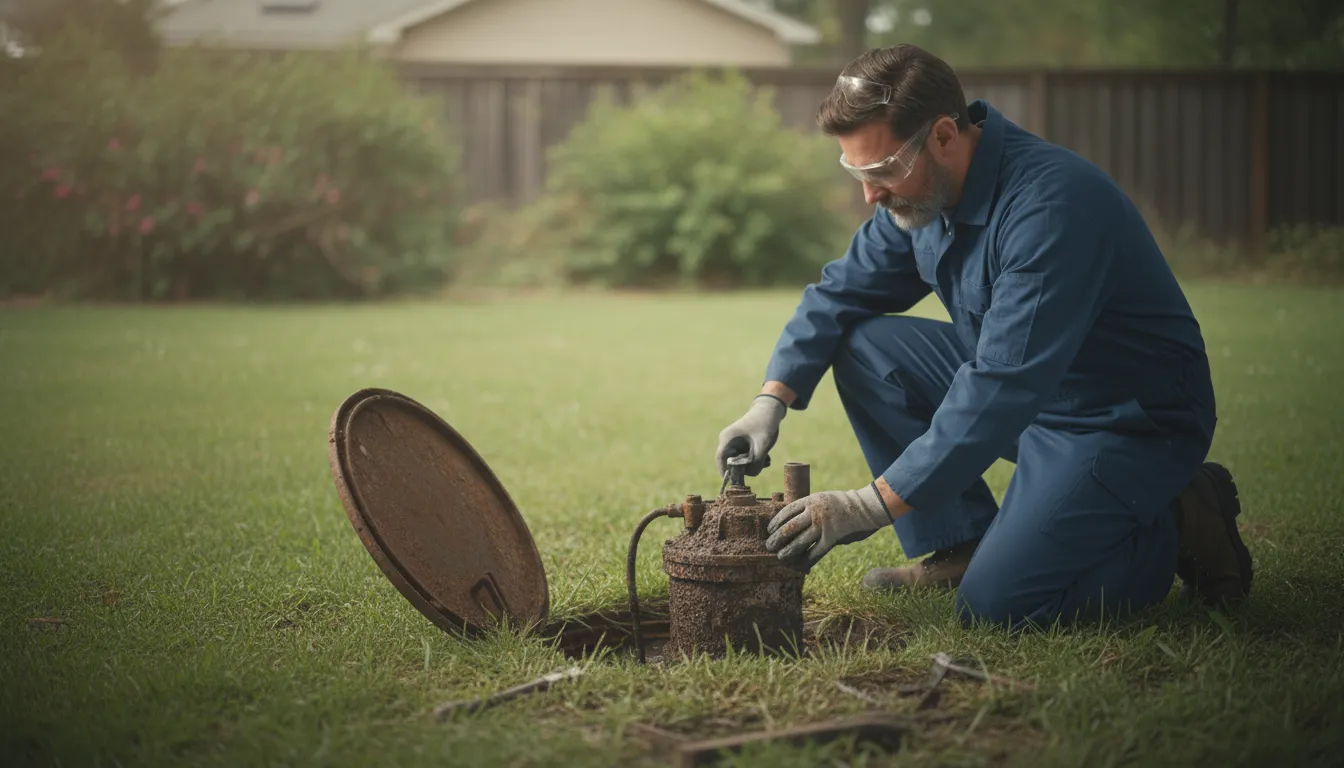
Find the Best Septic Pump Repair Companies for Your Business
No obligation • Fast responses • Nationwide coverage

Why you can trust Septic Spot
Septic Spot is a leading United States resource for understanding and comparing septic services. Our editors review providers using consistent criteria and verify key business details. Listings and scores are independent, and companies cannot pay to influence our content.
Search providers near you
Top Septic Pump Repair Companies in Paterson, New Jersey Ranked
Maintaining a functional septic pump is a critical part of homeownership for many in Paterson. This component is the heart of pressure-dosed or mound systems, which are common in our region due to challenging soil conditions. When a pump fails, it can lead to sewage backups, unpleasant odors, and potential environmental issues. This guide provides essential information on septic pump service, from recognizing failure signs to understanding repair and replacement processes, helping you make informed decisions for your home's wastewater system.
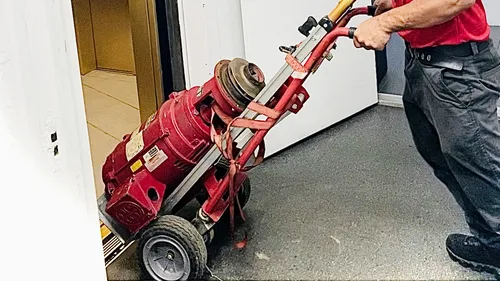
The Pump Guys Pump & Motor Specialist
1177 6th Ave 5th floor, New York, NY 10036
The Pump Guys Pump & Motor Specialist provides pump repair, rebuild, and maintenance services in New York, NY. They handle a wide range of pumps including industrial, commercial, residential, and marine types, along with alarm signals and controls. Their expertise covers troubleshooting, diagnosing, and servicing major pump brands to ensure proper operation.
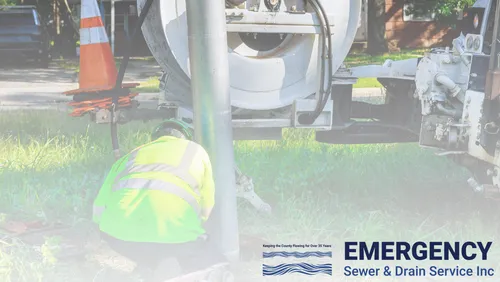
Emergency Sewer & Drain Service, Inc.
75 Virginia Rd, White Plains, NY 10603
Emergency Sewer & Drain Service, Inc. provides septic pump repair and replacement services in New York, NY. Based in White Plains, they serve clients across Westchester County, NY, and Fairfield County, CT. The company offers a wide range of plumbing and drainage services, including pump repairs, main sewer line repair, and flooded basement pumping. Established in 1984, they bring over four decades of experience to both residential and commercial systems. They are available 24 hours a day, seven days a week to address urgent plumbing needs.
Understanding Your Septic System's Pump
Not all septic systems rely on a pump. Conventional gravity systems move effluent through pipes using natural slope alone. However, many homes in Northern New Jersey, including Paterson, require a more complex setup. Due to high water tables and dense, clay-heavy soils that absorb liquid slowly (a condition known as slow percolation or "perc" rate), engineered systems like pressure-dosed distribution or mounds are necessary. These systems depend entirely on a septic pump-often a submersible effluent pump or a grinder pump-to push wastewater from the tank up into a network of pressurized distribution lines in the drain field. This ensures even effluent dispersal and prevents pooling and system failure.
Why Pumps Are Prone to Failure in Our Area
The local environment directly impacts pump longevity. In systems designed for difficult soils, the pump is an active, working component, not a passive pipe. It cycles on and off frequently, leading to standard wear and tear. Furthermore, if the soil absorption is particularly slow, the pump may work harder and cycle more often, accelerating motor burnout. Seasonal challenges also play a role; winter freezing can stress pipes and pumps, leading to malfunctions from frozen lines or restricted flow that causes the pump to overwork 1.
Signs You Need Septic Pump Service
Recognizing early warning signs can prevent a full system backup and more costly damage. Be alert to these common indicators:
- Alarm Sounds: Most pump systems have a high-water alarm (audible and/or visual). If this alarm activates, it means the water level in the pump tank is too high, signaling a pump failure or control panel issue.
- Slow Drains or Backups: Unexplained slow-draining sinks, tubs, or toilets, especially in lower levels of the home, can indicate the pump isn't moving effluent out to the drain field.
- Unusual Noises: Grinding, humming, or clicking sounds from the septic tank or pump tank area can point to a failing pump motor or obstructed impeller.
- Soggy Ground or Odors: A persistently soggy yard or foul sewage smells near the drain field or tank could mean the pump has failed, causing effluent to surface.
- Electrical Issues: A tripped circuit breaker for the pump circuit or visible damage to the control panel are clear signs of an electrical problem needing professional attention.
The Professional Diagnosis and Repair Process
When you suspect a problem, a licensed professional will follow a systematic approach to restore your system.
- Inspection and Diagnosis: The technician will first check the control panel for error codes or power issues. They will then physically inspect the pump, often by accessing it through the tank lid or risers, to determine if the issue is a clogged float switch, a failed control component, a burned-out motor, or a blockage in the discharge line 2.
- Permitting and Planning: For significant repairs or a full pump replacement, New Jersey regulations often require a permit, especially when electrical work is involved 3 4. Your service provider will typically handle this.
- Excavation and Access: If the pump is not under a riser, the area over the pump tank may need to be excavated. Installing risers during this process is highly recommended for easier future access.
- Repair or Replacement: The faulty component is addressed. This could be a simple electrical repair, a float switch replacement, or the removal of the old pump and installation of a new, correctly sized unit with watertight electrical connections 5.
- Testing and Site Restoration: After installation, the new pump is tested to ensure it activates at the correct water level and pumps effluent effectively to the drain field. Once confirmed operational, the site is backfilled, graded, and restored 6.
Find the perfect septic pump repair companies for your needs
Get personalized recommendations and expert advice
Cost Factors for Pump Service in Paterson
Understanding the potential investment helps in planning. Costs in Paterson are influenced by the system type, pump model, and site accessibility. Here's a general breakdown based on local service data:
- Septic Pump Repair: For minor issues like electrical control repairs or float switch replacement, costs typically range from $250 to $400.
- Standard Effluent Pump Replacement: Replacing a standard submersible effluent pump generally costs between $800 and $2,500, including labor and the pump unit 7 8.
- Grinder Pump Replacement: Systems that require a grinder pump, which macerates solids, involve a more complex and expensive unit. Replacement costs can range from $1,500 to over $3,000 9.
- Control Panel or Electrical Repair: Fixing or replacing the system's control panel and wiring typically falls in the range of $300 to $80010.
- Riser Installation: Adding risers (plastic or concrete tubes that provide access from the ground surface to the tank lid) is a wise ancillary investment during service, costing approximately $200 to $600. This saves significant money on future excavation costs 11 12.
Important Note: These are estimated ranges. Your final cost can vary significantly based on the depth of the tank, local permit fees, the specific pump brand/model required, and how easily equipment can access your yard.
Choosing Between Repair and Replacement
A professional technician will advise you on the most cost-effective long-term solution. A repair might suffice for a recent pump with a minor, isolated fault. However, replacement is often recommended if:
- The pump is approaching or has exceeded its typical 7-10 year lifespan.
- The motor has burned out, which is often more costly to repair than replace.
- The pump housing is cracked or corroded.
- Repeated failures indicate the pump is undersized or incompatible with your system's demands.
Investing in a quality replacement pump, often with a better warranty, can provide peace of mind and reliability for years to come.
Maintaining Your System to Prevent Pump Failure
Proactive maintenance is the best way to avoid unexpected repair bills and extend the life of your septic pump and overall system.
- Schedule Regular Inspections: Have your entire system, including the pump, float switches, and alarm, inspected every 1-3 years by a professional.
- Pump the Tank Regularly: Even with a functioning pump, the solid waste (sludge) in the main tank must be pumped out every 3-5 years to prevent solids from flowing into and damaging the pump.
- Conserve Water: Reduce excessive water use to minimize the number of times the pump must cycle on and off each day.
- Mind What You Flush: Never flush non-biodegradables (wipes, feminine products, grease) or harsh chemicals, which can clog or corrode the pump.
- Protect the Drain Field: Keep heavy vehicles and structures off the drain field area to prevent soil compaction and pipe damage that can stress the pump.
Frequently asked questions
Sources
Footnotes
-
Septic Repair vs Replacement in NJ: Costs & Signs - https://www.atsenvironmental.com/blog/septic-repair-vs-replacement/ ↩
-
Troubleshooting & Repairs - New Jersey Septic Management Group - https://nj-septic.com/repairs/ ↩
-
The Real Cost of Septic Installation in New Jersey (2025) - https://www.atsenvironmental.com/blog/the-real-cost-of-septic-installation-in-new-jersey-2025/ ↩
-
How to Replace Your Septic System: What New Jersey ... - https://petruzzellibros.com/uncategorized/how-to-replace-your-septic-system-what-new-jersey-homeowners-should-know ↩
-
Septic Tank Replacement Explained: Costs, Lifespan, And What To ... - https://www.theseptictankman.com/blog/septic-tank-replacement-explained-costs-lifespan-and-what-to-expect ↩
-
Repairing Septic Systems: A Detailed Manual - https://ky-pd.com/blog/fixing-septic-system/ ↩
-
How Much Does Septic Tank Repair Cost? [2026 Data] | Angi - https://www.angi.com/articles/how-much-does-repairing-septic-tank-cost.htm ↩
-
Costs of Replacing a Septic Tank - https://www.scorpionsepticservices.com/blog/understanding-the-costs-of-replacing-a-septic-tank ↩
-
How Much Does It Cost to Replace a Septic System? - https://alphaenvironmental.net/blog/how-much-cost-replace-septic-system/ ↩
-
Septic Repair vs Replacement in NJ: Costs & Signs - https://www.atsenvironmental.com/blog/septic-repair-vs-replacement/ ↩
-
How Much Does Septic Tank System Repair Cost? (2026) - https://homeguide.com/costs/septic-tank-repair-cost ↩
-
Septic Repair vs. Replacement: A Guide to Costs & Red Flags - https://prosepticri.com/septic-repair-vs-replacement-guide/ ↩