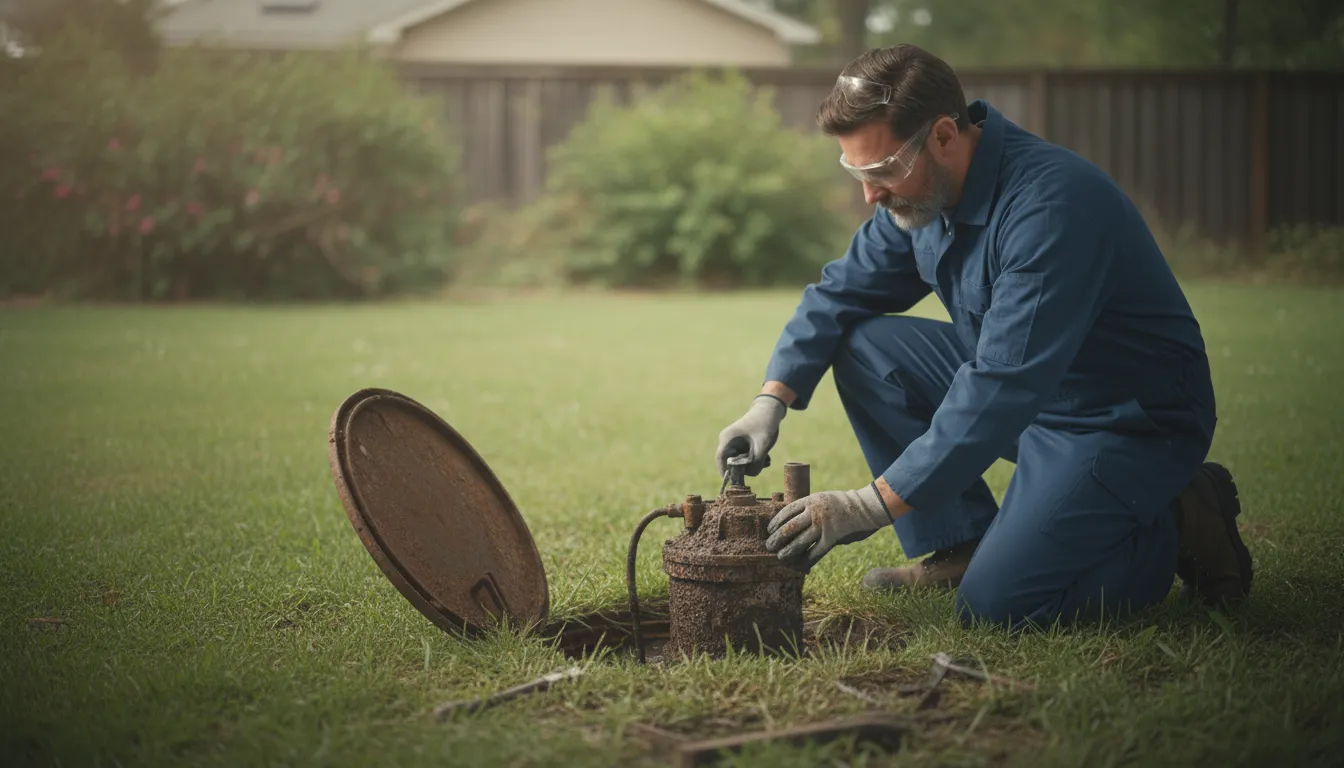
Find the Best Septic Pump Repair Companies for Your Business
No obligation • Fast responses • Nationwide coverage

Why you can trust Septic Spot
Septic Spot is a leading United States resource for understanding and comparing septic services. Our editors review providers using consistent criteria and verify key business details. Listings and scores are independent, and companies cannot pay to influence our content.
Search providers near you
Best Septic Pump Repair Companies in Texas Ranked
A failing septic pump can lead to unpleasant odors, soggy yards, and even sewage backups into your home. In Texas, where many homes rely on complex aerobic treatment units (ATUs) or low-pressure dosing systems, a functional pump is critical for proper wastewater treatment and disposal. This guide explains how septic pump systems work in Texas, outlines the state's specific regulations, and provides clear steps for finding qualified, licensed professionals to diagnose and fix pump issues, ensuring your system operates safely and complies with all legal requirements.
HomeField Parker County
617 Pine St, Aledo, TX 76008
HomeField Parker County is a septic service provider based in Fort Worth, TX, offering comprehensive septic system solutions for both residential and commercial clients. Their services include septic tank pumping, inspections, repairs, installations, drain field replacement, and system design. They also provide real estate septic inspections and maintenance plans to help customers stay compliant with local regulations. HomeField Parker County serves Parker, Johnson, and Hood counties, bringing local expertise to every job. Their team is equipped to handle emergency septic repairs and routine maintenance, ensuring systems operate efficiently and meet current standards.

Good Clean Plumbing - Cedar Park
720 S Bell Blvd Unit 5A, Cedar Park, TX 78613
Good Clean Plumbing - Cedar Park is a residential plumbing service provider based in Round Rock, TX. They offer a full range of plumbing services including septic pump repair and replacement, supported by licensed and experienced technicians using modern tools. The company has over 25 years of experience in residential plumbing, led by a Responsible Master Plumber. Their services come with industry-leading warranties and a satisfaction guarantee, reflecting their commitment to quality and customer care.
Hometown Septic Services
Austin, TX
Hometown Septic Services provides comprehensive septic system solutions in Austin, TX, and surrounding communities. They serve both residential and commercial clients, offering services such as septic tank pumping, inspections, repairs, and pump replacements. The company specializes in septic pump repairs to ensure efficient wastewater management and compliance with local regulations. Hometown Septic also offers emergency septic services to address urgent system failures promptly. Their team is equipped to handle a wide range of septic system needs, maintaining system functionality and preventing future issues.
Septic Pro Services
17355 Reiss Trail, New Caney, TX 77357
Septic Pro Services offers comprehensive septic system solutions in Houston, TX, including inspections, pumping, installations, repairs, and maintenance for residential and commercial properties. The family-run company combines nearly two decades of construction and plumbing experience with state licensing and compliance expertise to ensure systems meet Texas Commission on Environmental Quality standards. Their capabilities include high-pressure hydro jetting to clear clogs and restore flow. Septic Pro Services provides emergency septic services available 24/7 for urgent pumping and repairs, emphasizing hands-on leadership and customer-focused care.
Burleson Septic Cleaning
2410 SW Hulen St, Burleson, TX 76028
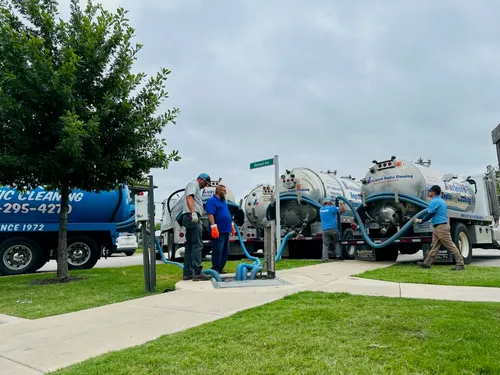
Burleson Septic Cleaning is a family-owned septic service provider based near Dallas, TX, serving Tarrant and Johnson Counties. Since 1972, they have offered residential and commercial septic tank pumping, system cleaning, and repair services. Their team uses state-of-the-art commercial vacuum trucks and specializes in lift station maintenance and repair. With over 50 years of experience, Burleson Septic Cleaning provides true 24/7 emergency service with live operators to handle septic issues anytime.
How Septic Pumps Work in Texas Systems
Septic systems in Texas are not one-size-fits-all. The type of pump your system uses depends heavily on its design, which is determined by local soil conditions and regulations. Understanding your system type is the first step in addressing any pump problem.
Aerobic Treatment Units (ATUs) are extremely common, especially in areas with less permeable soil. These advanced systems use an electric air pump (aerator) to inject oxygen into the treatment tank, promoting the growth of bacteria that break down waste more efficiently than traditional systems 1. A second submersible effluent pump is often used to move the treated wastewater from the treatment tank to a spray field for dispersal over your lawn. The constant operation of these pumps makes them susceptible to wear and eventual failure.
Low-Pressure Dosing (LPD) or Drip Irrigation Systems also rely on pumps. Instead of relying on gravity, a pump sends controlled, timed doses of effluent to the drain field. This allows for more even distribution and is better for environmentally sensitive areas or sites with challenging topography 2 3.
Conventional Gravity Systems typically do not have pumps, as wastewater flows by gravity from the home to the tank and then to the drain field. If you have pump issues, you likely have an ATU or a pressure-dosing system.
Common Signs of Pump Failure
Recognizing the early warnings of a pump problem can prevent more extensive and expensive damage to your septic system and property.
- Alarms and Warning Lights: Most aerobic and pumped systems have a control panel with an alarm light or audible buzzer. An active alarm is the most direct sign of a pump malfunction or high water level in the tank.
- Soggy Ground or Surfacing Effluent: Wet, mushy, or unusually green patches in your yard, particularly near the drain field or spray heads, can indicate that a pump has failed and effluent is not being properly distributed or is backing up.
- Sewage Odors: Foul smells inside your home or around the yard can signal that waste is not being processed and moved through the system correctly, often due to a failed aerator pump in an ATU.
- Slow Drains and Gurgling: While this can indicate a blockage, it may also point to a system that is full because the effluent pump isn't moving water out to the drain field.
- Unusually High Electricity Bills: A septic pump, especially an aerator that runs continuously, that is struggling or seized can draw excess power.
Texas Regulations: Licensing, Contracts, and Permits
The Texas Commission on Environmental Quality (TCEQ) regulates all On-Site Sewage Facilities (OSSFs), which is the official term for septic systems. State law imposes specific requirements that directly impact pump repair and replacement.
- Mandatory Licensing: Anyone who performs maintenance, repair, or installation on an OSSF in Texas must be licensed by the TCEQ. Always verify a provider's TCEQ license. Hiring an unlicensed individual can result in improper repairs and may void certain requirements.
- Required Maintenance Contracts for Aerobic Systems: If you own an Aerobic Treatment Unit, you are legally required to have a valid, ongoing maintenance contract with a licensed OSSF provider 4 5. This contractor is responsible for inspecting the system (typically twice a year), servicing the pumps and components, and submitting reports to your local authorized agent (usually the county health department).
- Permitting for Repairs: The need for a permit depends on the repair scope.
- Emergency Repairs: No permit is required for immediate repairs necessary to abate a public health nuisance, such as replacing a broken pump, pipe, or electrical switch 6 7. However, the repair must be reported to the local permitting authority within 72 hours.
- Non-Emergency Work: More significant work, like replacing a failed drain field or making major alterations to the system, will likely require a permit from your local county or city health department before work begins 8.
Find the perfect septic pump repair companies for your needs
Get personalized recommendations and expert advice
The Professional Repair and Replacement Process
When you suspect a pump issue, following a structured process with a licensed professional ensures a compliant and lasting solution.
- Initial Diagnosis: Contact your maintenance provider (if you have a contract) or a licensed septic repair company. They will inspect the control panel, check electrical connections, test the pumps, and assess the overall system to confirm the problem.
- System Evaluation and Pump Selection: The professional will determine the exact pump type (effluent, aerator, grinder), its horsepower, and its specifications. Using the correct replacement part is crucial for system balance and longevity.
- Permitting (If Required): Your licensed contractor will determine if the repair requires a permit and will handle all paperwork and submissions with the local authority, saving you the hassle.
- Pump Replacement: The old pump is removed from the tank. For submersible pumps, this involves pumping down the tank, disconnecting electrical and plumbing connections, and extracting the unit. The new pump is installed, connected, and sealed properly.
- Testing and Inspection: After replacement, the contractor will test the pump's operation, check for leaks, and ensure the control panel and alarms are functioning correctly. For aerobic systems, they will verify proper aeration.
- Reporting: The provider will document the repair for your records and, if required, submit a report to the local authority to close out any emergency repair notification or permit.
Understanding Costs for Pump Service in Texas
The cost to repair or replace a septic pump in Texas varies based on the pump type, labor, and system accessibility. It's important to get detailed estimates from licensed providers.
- Pump Repair vs. Replacement: Simple repairs like fixing a stuck float switch or replacing a capacitor may cost a few hundred dollars. Complete pump replacement is more common and more costly.
- Pump Replacement Cost: Replacing a submersible effluent pump or an aerator pump typically ranges from $600 to $1,500 or more, including parts and labor 9. Complex grinder pumps or high-head pumps will be at the higher end.
- System-Specific Factors: Aerobic systems have more complex components, which can increase service costs. The location of the tank and depth of the pump also affect labor time.
- Broader Context: For comparison, routine septic tank pumping in Texas averages $300-$500 every 3-5 years 10. A full aerobic system installation can cost between $9,500 and $15,000+, while a complete conventional system replacement can range from $7,000 to over $25,000 depending on size and soil conditions 11 12.
Maintaining Your Septic Pump System
Preventive maintenance is the best way to avoid unexpected pump failures and costly emergencies.
- Honor Your Maintenance Contract: For ATU owners, adhering to the state-required twice-yearly service is non-negotiable and vital. This regular check-up includes inspecting and cleaning pumps, checking diffusers, and testing alarms.
- Conserve Water: Reduce sudden, large volumes of water entering the system (like from long showers or doing all laundry in one day), which can overwhelm pumps.
- Mind What You Flush: Never flush chemicals, grease, wipes, or feminine hygiene products. These can clog pumps and destroy the biological treatment process.
- Protect the Drain Field: Keep heavy vehicles, patios, and pools away from the drain field and spray heads to prevent crushing underground pipes and components.
- Know Your System: Locate your tank lids and control panel. Keep a record of past inspections, pumpings, and repairs.
Frequently asked questions
Sources
Footnotes
-
The Ultimate Guide to Septic System Design & Installation in Central ... - https://epicseptic.com/the-ultimate-guide-to-septic-system-design-installation-in-central-texas-what-every-homeowner-builder-needs-to-know/ ↩
-
Types of Septic Systems Suitable for Texas - Weaver Excavating - https://weaverexcavating.net/types-of-septic-systems-suitable-for-texas/ ↩
-
The Different Types of Septic Tank Systems - https://fletchersplumbing.net/blog/2023/06/the-different-types-of-septic-tank-systems/ ↩
-
How a Septic System Works | Williamson County, TX - https://www.wilcotx.gov/651/How-a-Septic-System-Works ↩
-
SEPTIC SYSTEM LAWS IN TEXAS - https://www.terseptic.com/posts/septic-systems-its-the-law ↩
-
Maintenance of On-Site Sewage Facilities (Septic Systems) - https://www.tceq.texas.gov/permitting/ossf/ossfmaintenance.html ↩
-
Advice for an Owner of an On-Site Sewage Facility (Septic System) - https://www.tceq.texas.gov/permitting/ossf/ossfadvice.html ↩
-
What laws in Texas apply to septic systems? - Water School - https://brazos.org/about-us/education/water-school/articleid/349/what-laws-in-texas-apply-to-septic-systems ↩
-
Professional Septic Services | Edinburg, TX | LJH Services Inc - https://www.ljhservicesinc.com/septic-services ↩
-
Septic systems explained - Texas Water Resources Institute - https://twri.tamu.edu/blog/septic-systems-explained/ ↩
-
Cost of a Septic System in Texas - https://dillonseptic.com/cost-of-a-septic-system-in-texas/ ↩
-
Cost to Install a Septic System in Dallas [2026 Data] - Angie's List - https://www.angi.com/articles/what-does-it-cost-install-septic-system/tx/dallas ↩