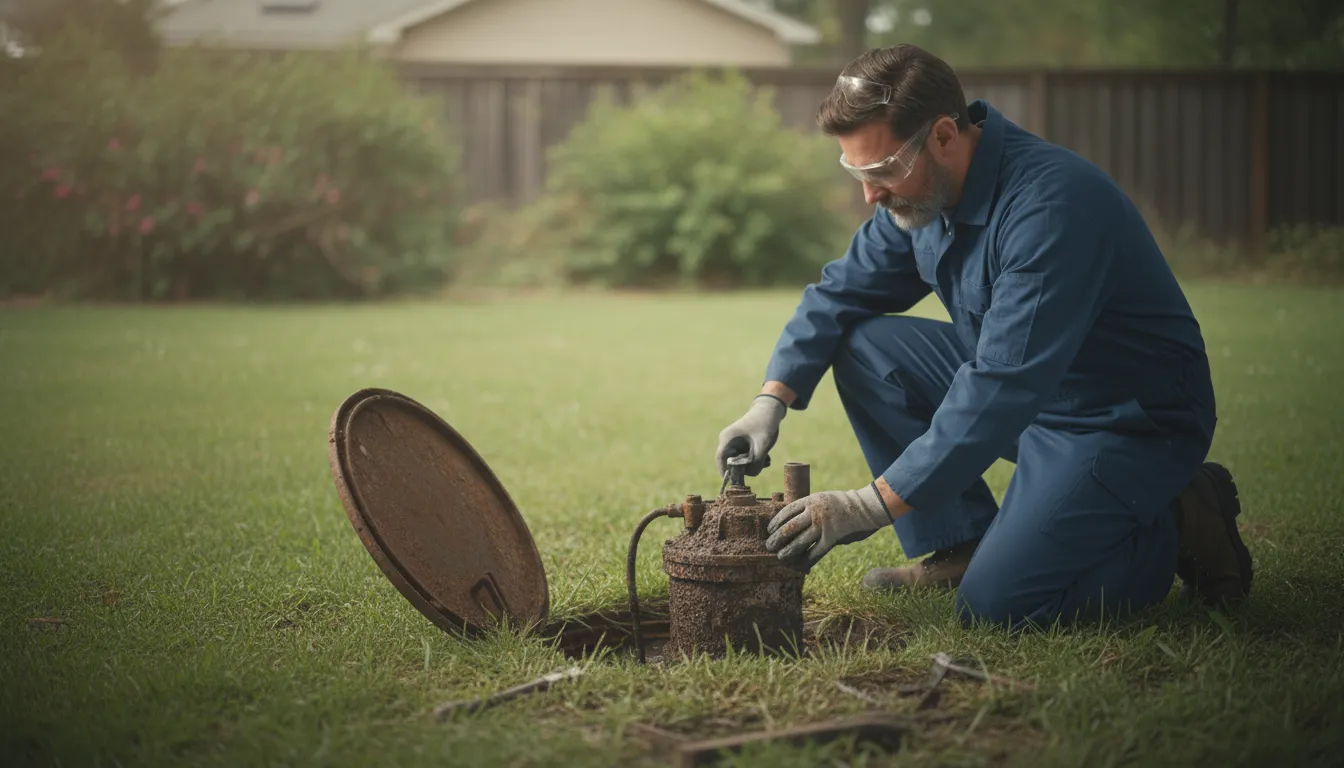
Find the Best Septic Pump Repair Companies for Your Business
No obligation • Fast responses • Nationwide coverage

Why you can trust Septic Spot
Septic Spot is a leading United States resource for understanding and comparing septic services. Our editors review providers using consistent criteria and verify key business details. Listings and scores are independent, and companies cannot pay to influence our content.
Search providers near you
Top Septic Pump Repair Companies in Vancouver, Washington Ranked
When your septic system's pump fails or your entire system is failing, it's more than an inconvenience-it's a potential health hazard and a threat to your property's value. In Vancouver and across Clark County, the unique soil conditions and high groundwater make specialized knowledge essential for effective septic pump repair and full system replacement. This guide helps you understand the process, costs, and local considerations for restoring your wastewater system, empowering you to find qualified local professionals for the job.
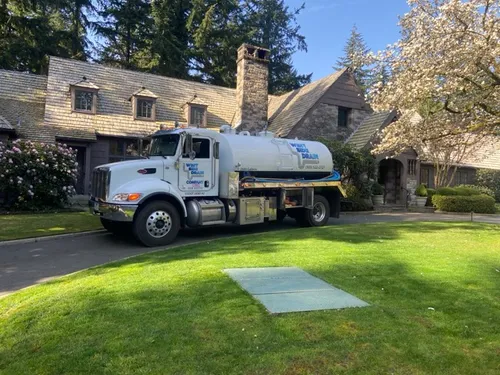
West Side Drain and Septic
Hillsboro, OR
West Side Drain and Septic is a septic tank pumping, inspection, repair, and pump replacement company serving Hillsboro, OR, and the greater Portland Metro Area. With over 16 years of experience, they provide comprehensive septic system services including 24-hour drain cleaning and emergency repairs. Their fully equipped trucks and trained technicians handle a wide range of septic and drain issues, ensuring thorough diagnosis and effective solutions. The company is family owned, licensed, and insured, with a focus on clear communication and quality workmanship.
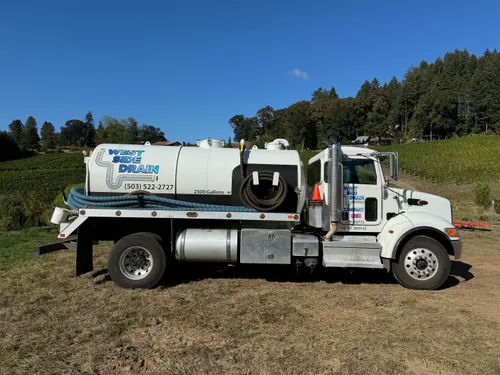
West Side Drain and Septic
9460 SW Tigard St STE 102 A, Tigard, OR 97223
West Side Drain and Septic is a septic tank pumping, inspection, and repair company serving Portland, OR, and the surrounding metro area. They provide comprehensive septic system services including maintenance, repairs, and emergency drain cleaning. The company is equipped with fully stocked service vehicles and uses advanced tools like cameras and drain scrubbing equipment to diagnose and resolve issues efficiently. With over 16 years of experience, West Side Drain and Septic offers 24-hour service to address urgent plumbing and septic needs.
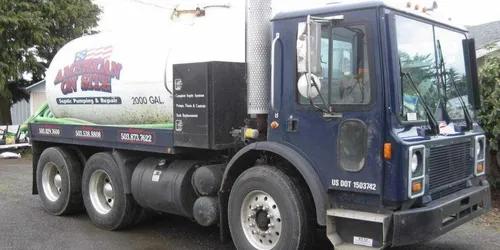
American On Site
Portland, OR
American On Site is a full-service septic provider based in Portland, OR, serving residential, commercial, and civil clients. They offer a wide range of septic services including inspections, pumping, installation, maintenance, and repairs such as drain field replacement and septic pump servicing. The company is experienced in handling all aspects of septic systems, using quality components to ensure proper function and longevity. Since 2003, American On Site has been serving the greater Willamette Valley area, providing expertise in septic system installation and maintenance. They cover multiple counties in Oregon and focus on delivering comprehensive septic solutions to their customers.
Understanding Your Septic System's Pump
Not all septic systems have a pump. Conventional gravity systems rely on slope to move effluent from the tank to the drainfield. However, many homes in the Vancouver area, due to site constraints like flat terrain or high groundwater, utilize pressure distribution systems. These systems use an electrical pump (often called a septic pump, effluent pump, or submersible pump) to push treated wastewater evenly through a network of small pipes in the drainfield.
The pump is the heart of these systems. When it fails, wastewater stops moving, which can lead to backups in your home or an overloaded septic tank. Repairing or replacing this pump is a common and critical need for many local homeowners.
Common Signs You Need Pump Repair or System Service
Recognizing early warning signs can prevent a minor issue from becoming a catastrophic system failure. Be alert for these indicators:
- Audible or Visual Alarm: Most pressurized systems have an alarm that sounds or lights up when the pump fails or the water level in the tank is too high. This is your system's direct call for help.
- Sewage Backups: The most alarming sign is wastewater backing up into household drains, toilets, or showers. This indicates a severe blockage or pump failure preventing proper flow.
- Wet Spots or Odors: Ponding water, soggy soil, or lush green grass over the drainfield, especially when it hasn't rained, signals that effluent is not being absorbed. Foul odors around the tank or drainfield area are another clear red flag 1.
- Slow Drains: Consistently slow-draining sinks, tubs, and toilets throughout the house can point to a system that is overwhelmed or failing.
Why Vancouver's Environment Demands Specialized Repair
Clark County's specific geology directly impacts how septic systems are designed, how they fail, and how they must be repaired or replaced.
- High Winter Water Table: Clark County has notoriously high groundwater levels, especially during the wet winter months. This can inundate and "float" a drainfield, causing complete system failure. Repairs often involve ensuring the pump and pressure distribution system are functioning perfectly to overcome this challenge, or may require a completely different system design like a mound system.
- Slow-Draining Clay Soils: Prevalent in the area, these dense soils have very low permeability. Wastewater struggles to percolate down, leading to surface ponding and system failure. Repairs or replacements must account for this, often requiring larger drainfields or advanced treatment components to compensate for the poor soil conditions 2.
These factors mean a simple pump swap might not be the full solution. A qualified technician will assess whether the pump failure is an isolated electrical/mechanical issue or a symptom of a larger environmental problem stressing the entire system.
The Repair and Replacement Process: From Diagnosis to Inspection
Addressing a septic pump or system issue is a structured process, often involving local health department oversight to protect public health and groundwater.
- Professional Diagnosis: A licensed septic professional will inspect your system. They will check the pump, control floats, alarm panel, and drainfield to pinpoint the exact cause of failure-whether it's a burned-out pump, a stuck float switch, a clogged filter, or a failing drainfield.
- Permitting: In Clark County, most septic system repairs require a permit from the Clark County Public Health Department. Your contractor will typically handle this, as the work must meet specific county and state standards 3.
- Site Evaluation (For Major Work): For a full system replacement or a new drainfield, a new site evaluation (sometimes called a "soils test") is usually required. A specialist assesses the soil type, depth to groundwater, and slope to design a system that will function properly on your specific property.
- Repair or Replacement Work: This is the physical work. For pump repair, it involves pumping the tank, accessing the pump chamber, and replacing the pump, floats, or wiring. For a full system replacement, it involves excavating, removing the old tank and drainfield, and installing a new, permitted system designed for your property's conditions 4.
- Final Inspection: Once work is complete, the county health inspector will visit to ensure the repair or installation meets all code requirements before the permit is finalized and the system can be used 5.
Find the perfect septic pump repair companies for your needs
Get personalized recommendations and expert advice
Cost Guide for Septic Pump and System Work in Vancouver
Costs can vary widely based on the complexity of the repair, the system type, and your property's conditions. Here is a general range for common services in the Vancouver area:
- Septic Pump or Control Component Repair/Replacement: $800 - $5,000. This covers diagnosing and replacing a failed effluent pump, alarm panel, or float switches. The wide range accounts for pump horsepower, depth, and accessibility.
- Tank Pumping & Filter Maintenance: $200 - $1,000. Essential maintenance that often accompanies a repair. Cleaning the effluent filter is crucial for pump health.
- Baffle or Riser Replacement: $300 - $1,200. Repairing inlet/outlet baffles or adding/repairing tank access risers.
- Drainfield Minor Repair/Pipe Replacement: $1,500 - $8,000. Addressing a localized clog or replacing a section of failed drainfield piping.
- Full System Replacement or Major Repair: $10,000 - $40,000+. This is the cost for a completely new septic system, including tank and drainfield. The high end includes complex systems like mound or at-grade systems required for difficult sites with high water tables or poor soils, which are common in Clark County 6 7 8 9.
Types of Systems You Might Encounter or Install
Understanding the types of systems can clarify why repairs vary in complexity and cost.
- Conventional Gravity System: The traditional design. May not have a pump, but many in Vancouver are being upgraded or were built with one.
- Pressure Distribution System: Common in Vancouver. Uses a pump to dose the drainfield evenly, which is better for shallow soils or flat sites. The pump is a critical, repairable component 10 11.
- Mound System: An above-ground drainfield built with imported sand. Often the solution for high groundwater or shallow bedrock. Requires a pump to push effluent to the top of the mound 12.
- Sand Filter or Advanced Treatment System: Used where soil conditions are very poor or space is limited. These systems provide a high level of treatment before effluent reaches the drainfield and involve more mechanical components, including pumps.
Maintaining Your System After a Repair
Once your pump or system is repaired, proper maintenance is key to preventing a repeat failure.
- Regular Pumping: Have your tank pumped every 3-5 years by a licensed pumper. This prevents solids from washing out into the drainfield or clogging the pump.
- Conserve Water: Reduce strain on your system by fixing leaks, using water-efficient fixtures, and spreading out laundry loads.
- Mind What You Flush: Only human waste and toilet paper should go down the drain. Avoid grease, chemicals, wipes (even "flushable" ones), and excessive use of garbage disposals.
- Protect Your Drainfield: Never drive or park on it, and keep rainwater drainage systems and roof drains directed away from the area.
Frequently asked questions
Sources
Footnotes
-
Septic Services, Whidbey Island - https://www.brownbearsepticpumping.com/septic ↩
-
How Soil Type Affects Septic System Performance - https://www.septicblueraleigh.com/how-your-soil-determines-your-septic-systems-success.html ↩
-
Septic System Services in Vancouver, WA - https://www.firstcallseptic.com/vancouver-wa ↩
-
Vancouver Septic System Installation - https://www.affordablesepticusa.com/vancouver-septic-system-installation ↩
-
Repair Permit for a Septic System Procedure and Criteria - https://www.washingtoncountyor.gov/hhs/documents/repair-procedure-and-criteria/download?inline ↩
-
On-Site Septic System Maintenance Brochure - Clark County - https://clark.wa.gov/sites/default/files/media/document/2024-04/on-site-septic-system-maintenance-brochure.pdf ↩
-
Septic Repair vs. Replacement: A Guide to Costs & Red Flags - https://prosepticri.com/septic-repair-vs-replacement-guide/ ↩
-
How Much Does Septic Tank Repair Cost? [2026 Data] | Angi - https://www.angi.com/articles/how-much-does-repairing-septic-tank-cost.htm ↩
-
Residential Septic Tank Pricing | Homeowner's Guide to Costs - https://www.ntotank.com/blog/residential-septic-tank-pricing ↩
-
Top Septic Systems for Rural Homes Explained - https://warriordrainandplumbing.com/top-septic-systems-for-rural-homes-explained/ ↩
-
Different types of Septic Systems | Types of Sewage Systems - https://www.eliterooter.com/different-types-septic-systems/ ↩
-
Septic Tank Repair/Replace Vancouver, WA - https://prolineplumbingandsewer.com/services/septic/septic-tank-repair-and-replacement ↩