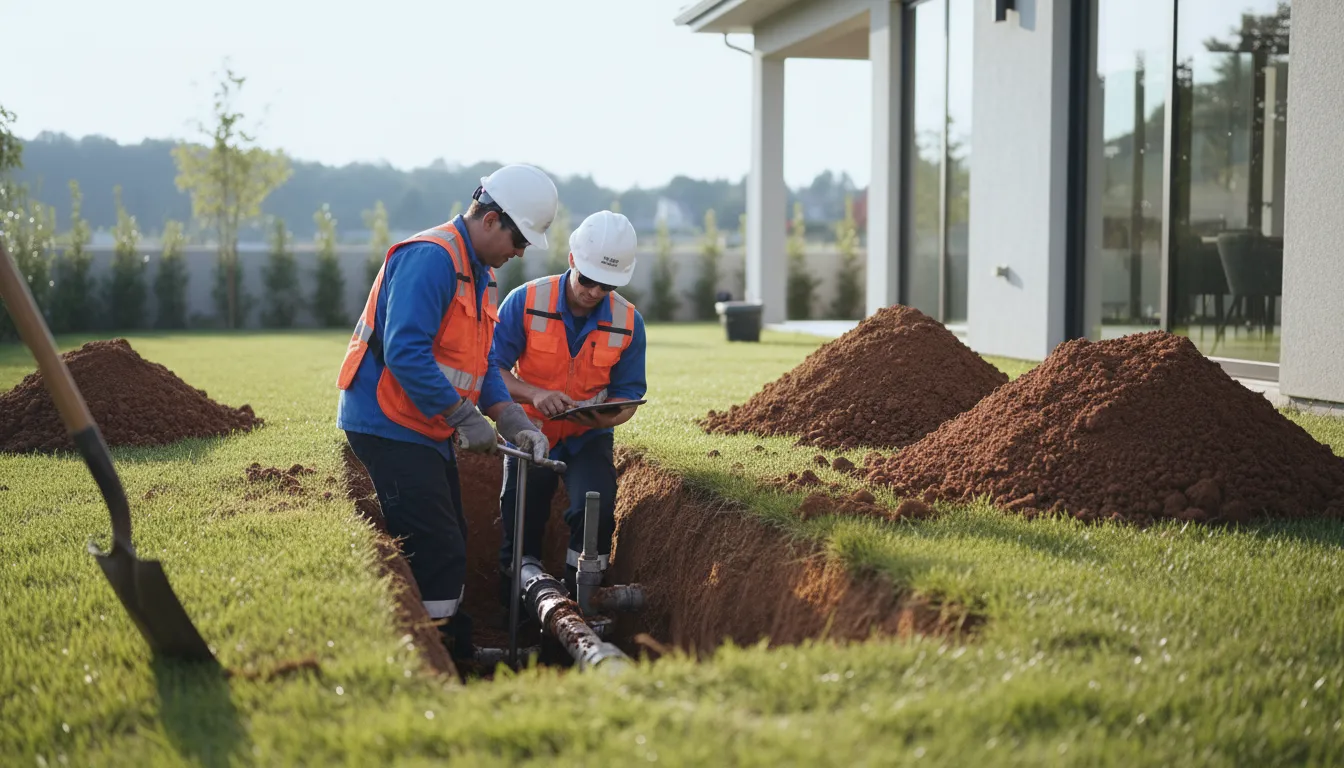
Find the Best Septic System Repair Companies for Your Business
No obligation • Fast responses • Nationwide coverage

Why you can trust Septic Spot
Septic Spot is a leading United States resource for understanding and comparing septic services. Our editors review providers using consistent criteria and verify key business details. Listings and scores are independent, and companies cannot pay to influence our content.
Search providers near you
Best Septic System Repair Companies in Arkansas Ranked
A failing septic system is a serious health and environmental hazard for Arkansas homeowners. Septic system repair involves diagnosing and fixing issues with your tank, drainfield, or connecting pipes to restore proper wastewater treatment. Understanding the state's specific regulations and typical repair processes is crucial for a successful, legal, and cost-effective project. This guide provides clear, practical information to help you navigate the repair process, from permits and licensed professionals to common costs and procedures.
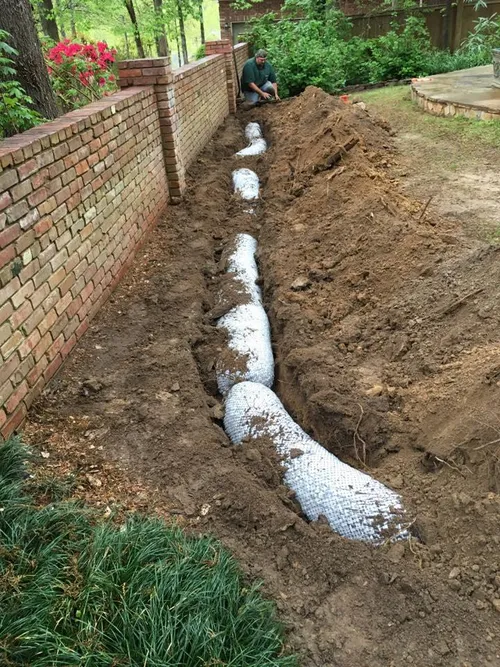
Mandy's Septic Solutions
Little Rock, AR
Mandy's Septic Solutions provides septic system installation, repair, and pumping services in Little Rock, AR, and Cabot. They also offer perc testing to support proper wastewater disposal for homes and businesses. With over six years serving the area and a lead contractor who has more than 20 years of industry experience, Mandy's Septic Solutions is licensed and insured to handle various septic system needs. The company offers 24/7 availability for septic system services.

S & S SEPTIC SYSTEMS AND ENVIRONMENTAL SERVICES, LLC
13726 W Gary Ln, Ward, AR 72176
S & S SEPTIC SYSTEMS AND ENVIRONMENTAL SERVICES, LLC is a family-owned company based near Little Rock, AR, offering septic system installation, repair, and inspection services. They serve customers throughout Arkansas, providing new septic system installations, replacements, and repairs tailored to each situation. The company focuses on delivering durable septic solutions designed to last for many years and works closely with clients to ensure proper system design and diagnosis.
Clear Flow
Little Rock, AR
Clear Flow is a septic system repair and installation company based in Little Rock, AR. They specialize in percolation testing and septic system services for clients in Little Rock and surrounding Arkansas communities. With over 29 years of experience since 1984, Clear Flow focuses on quality installation and maintenance of septic systems, aiming for long-lasting and efficient solutions. The company serves multiple local areas including Austin, Jacksonville, Cabot, and Conway, among others.
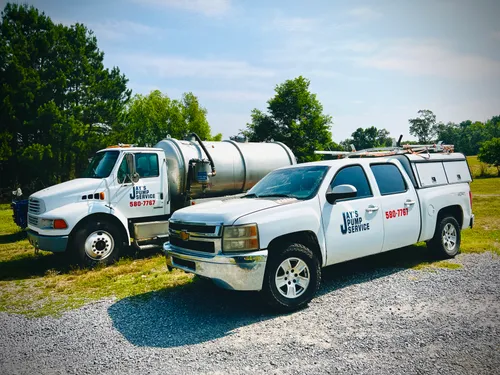
Jay's Pump Service
16429 N Sardis Rd, Mabelvale, AR 72103
Jay's Pump Service is a family-owned septic service provider based in Little Rock, AR. Established in 2000, the company offers a range of septic system services including tank pumping, inspections, lift pump replacement, and drain field repairs. Their skilled technicians also handle tank locating, riser installation, and commercial lift station cleaning. Jay's Pump Service provides emergency call availability during evening hours to support urgent septic needs.
Understanding Arkansas Septic Repair Regulations
In Arkansas, nearly all septic system repairs are regulated by the Arkansas Department of Health (ADH). State law requires a permit for any repair, alteration, or expansion of an onsite wastewater system. The primary goal of these regulations is to protect public health and groundwater by ensuring repairs are designed and executed correctly.
The permit application (Form EHP-19) must be submitted by a licensed Designated Representative (DR) to your local county health unit 1 2. This licensed professional is responsible for assessing the failure and designing a repair that complies with state codes. A standard permit for an alteration or repair carries a $30 application fee.
There is a critical exception for emergencies. If a system fails catastrophically (e.g., sewage is surfacing), repairs can begin immediately to abate the public health nuisance. However, the ADH must receive the formal permit application from your licensed professional within 10 working days of starting the emergency work.
When a Permit Might Not Be Required
A permit may be exempt if your residence sits on 10 or more acres and all components of the septic system are located more than 200 feet from any property line. It is essential to verify this exemption with your local health unit before proceeding with any work.
The Role of Licensed Professionals
Arkansas law mandates that septic system repairs be performed by state-licensed professionals. You cannot legally repair your own system beyond very minor components like a cleanout filter. Two key licenses are involved:
- Licensed Installer/Technician: This professional or company performs the physical repair work, such as excavating, replacing pipes, or installing a new tank.
- Designated Representative (DR): This is a higher-level license. A DR conducts the necessary site evaluations (like soil tests), designs the repair plan, and submits the permit application to the ADH. Often, a contracting company will have a DR on staff.
Always verify a contractor's license with the ADH before hiring them. Using an unlicensed individual can result in improper repairs, voided warranties, and legal penalties if the work doesn't meet code.
Common Repair Scenarios and Procedures
Repairs range from simple fixes to complex, expensive projects. The appropriate solution depends entirely on the diagnosis.
Minor Repairs
- Component Replacement: This includes fixing or replacing damaged inlet/outlet baffles, repairing broken tank lids, or clearing/replacing clogged connecting pipes between the house and tank or the tank and drainfield.
- Tank-Only Issues: If the tank itself is cracked or damaged but the drainfield is still functional, a repair may involve patching the tank or, more commonly, a "tank swap-out." This entails pumping the old tank, removing it, and installing a new one in the same location, reconnecting it to the existing drainfield.
Major Repairs and Drainfield Failure
The most complex and costly repairs involve the drainfield (absorption field). Failure symptoms include soggy ground, sewage odors, or wastewater backing up into the house.
- Diagnosis: A DR will need to assess the cause. It could be a crushed pipe, biomat clogging, or the field being overwhelmed due to high water table or poor soil.
- Soil Evaluation: For any repair involving a new or expanded drainfield, a soil analysis and percolation test are required by the ADH to determine the appropriate size and type of system.
- Repair Options: Sometimes, a section of the field can be repaired or a new "lateral line" added. Often, if the original field has failed, a completely new drainfield must be constructed in a different location on the property, following all current setback rules.
Complete System Replacement
If the existing system cannot be repaired to meet current regulations, a full system replacement is necessary. This is a major project involving new tanks and a new drainfield. Costs are significant, typically ranging from $3,000 to over $10,000, depending on system type, soil conditions, and property layout.
Find the perfect septic system repair companies for your needs
Get personalized recommendations and expert advice
Key Factors Influencing Repair Design and Approval
The ADH's approval of a repair design is not arbitrary; it is based on specific environmental and safety factors that your Designated Representative will evaluate.
- Soil Type and Depth: Arkansas code heavily bases system design on soil type and the depth to the seasonal high water table 3. Repairs must ensure a minimum vertical separation between the bottom of the drainfield and the water table. Poorly draining soils or a high water table may require an advanced, alternative treatment system instead of a conventional pipe-and-gravel field.
- Required Setbacks: All septic system components, whether original or repaired, must maintain minimum distances from property lines, wells, buildings, streams, and other water sources. These setbacks are strictly enforced to prevent contamination.
- System Age and Type: Older systems may not meet current codes. A repair might be denied if it merely prolongs the life of a non-compliant system. In such cases, the ADH may require an upgrade to a modern, code-compliant system as part of the repair 4.
Cost Breakdown for Septic Repairs in Arkansas
Costs vary widely based on the repair's scope. Here is a general guide based on available data:
- Permit Application Fee: $30 for alterations/repairs.
- Minor Repairs (Baffles, Piping): Several hundred dollars, depending on labor and excavation needs. A simple tank swap-out (replacing the tank only) might range from $500 to $900 for the tank and basic labor, not including extensive excavation or new drainfield work.
- Major Drainfield Repairs: This is where costs escalate. Replacing or adding a new drainfield involves heavy machinery, engineering, and materials. Expect costs to range from $3,000 to $10,000 or more5.
- Complete System Replacement:
- Single-tank conventional system: $2,000 - $3,500 6.
These are estimates. Always get detailed, written quotes from multiple licensed contractors that include all costs: design, permits, materials, labor, and final inspection.
The Importance of Maintenance and Failure Reporting
Many major repairs can be prevented with regular maintenance. The ADH recommends pumping your septic tank every 3 to 5 years, depending on household size and usage 9. Only a licensed septic tank cleaner should perform this service 9. Regular pumping prevents solids from washing out into the drainfield and causing premature failure.
If you experience a failure, such as sewage surfacing on your property, you are legally obligated to report it to your local county health department immediately 10. This triggers the process for getting the necessary emergency repairs permitted and protects your neighbors from potential health risks.
All completed repairs must receive a final inspection and approval from the ADH or its authorized agent before the system is backfilled and put back into service 11. This ensures the work was done according to the permitted design.
Frequently asked questions
Sources
Footnotes
-
Appendix F Requirements for Submission of an Onsite Wastewater ... - Arkansas Department of Health ↩
-
Arkansas Septic License & Certification | 2024 Contractor Guide - ServiceTitan ↩
-
Arkansas Administrative Code, Division 04, Rule 007.04.93-005 - Justia ↩
-
ARKANSAS STATE BOARD OF HEALTH Rules Pertaining to Onsite Wastewater Systems and Relevant Acts ↩
-
Residential Septic Tank Pricing | Homeowner's Guide to Costs - NTO Tank ↩
-
How Much Does a Septic System & Septic Tank Cost - NexGen Septics ↩
-
How Much Does It Cost to Replace a Septic System? - Alpha Environmental ↩
-
Arkansas Septic System Requirements - National Tank Outlet ↩ ↩2
-
ARKANSAS STATE BOARD OF HEALTH Rules Pertaining to Onsite Wastewater Systems ↩