Find the Best Septic System Repair Companies for Your Business
No obligation • Fast responses • Nationwide coverage

Why you can trust Septic Spot
Septic Spot is a leading United States resource for understanding and comparing septic services. Our editors review providers using consistent criteria and verify key business details. Listings and scores are independent, and companies cannot pay to influence our content.
Search providers near you
Find Septic System Repair Companies near you
A failing septic system is more than an inconvenience; it's a potential health hazard and a significant financial liability. Septic system repair involves diagnosing and fixing issues with your onsite wastewater treatment system, from the tank and pipes to the critical drain field. Understanding common problems, repair options, and costs is essential for any homeowner relying on a septic system. This guide helps you identify issues, navigate the repair process, and find qualified local professionals to restore your system's function.
Search providers near you
Understanding Your Septic System: The Basics of Repair
Before diving into repairs, it helps to know what you're working with. Most residential septic systems consist of two main parts: a watertight septic tank where solids settle and begin to decompose, and a drain field (or leach field), where the treated liquid effluent is dispersed into the soil for final purification 1. Repairs can target either component, and the system type greatly influences the complexity and cost of the fix.
The most common is a conventional system, which uses gravity to move wastewater from the tank to a network of perforated pipes in a gravel-filled trench. Repairs here often involve the pipes, the tank's internal components, or sections of the drain field. Alternative or advanced systems, like aerobic treatment units (ATUs) or those with pumps, filters, or sand mounds, include mechanical and electrical parts 2. While they can treat wastewater more effectively for challenging sites, repairs to pumps, aerators, or control panels are often necessary and can be more expensive due to their specialized components 3.
Common Signs You Need Septic Repairs
Ignoring early warning signs can turn a minor fix into a catastrophic failure. If you notice any of the following, it's time to investigate septic system services:
- Sewage Backups: The most alarming sign. Wastewater backing up into household drains, toilets, or showers indicates a severe blockage or system overload.
- Slow Drains: Consistently slow-draining sinks, tubs, or toilets, especially if plunging or drain cleaners don't help, can point to a problem in the main sewer line to the tank or a full tank.
- Foul Odors: Persistent sewage smells inside your home or, more commonly, in your yard near the tank or drain field are a clear indicator of a problem.
- Surface Ponding: Standing water or soggy, spongy ground over the drain field, particularly when it hasn't rained, signals that the field is saturated and failing to absorb effluent.
- Unusually Lush Grass: While it might look healthy, a patch of grass over the drain field that is significantly greener and faster-growing than the rest of the lawn can indicate a leak of nutrient-rich wastewater 4.
- Gurgling Sounds: Strange gurgling noises from your plumbing when you flush or run water can suggest a blockage in the pipes or a venting issue.
Diagnosing the Problem: What Needs Fixing?
A professional inspection is crucial to pinpoint the exact issue. Here are the most frequent culprits behind septic system failure:
1. Drain Field Failure
This is often the most serious and expensive repair. A failing leach field can no longer absorb and treat liquid effluent. Causes include hydraulic overload (putting too much water into the system too quickly), clogging from solids that have escaped the tank due to lack of pumping, soil compaction, or root intrusion. Symptoms are surface ponding, odors, and sewage backups.
2. Broken or Blocked Pipes
The pipes connecting your house to the tank (inlet) or the tank to the drain field (outlet) can crack, collapse, or become clogged with roots, grease, or non-biodegradable materials. This disrupts the entire flow of wastewater.
3. Tank Component Failures
Inside the tank, critical parts can break:
- Baffles: These are tees or walls at the inlet and outlet of the tank. They prevent scum (floating fats) and sludge (settled solids) from exiting the tank and clogging the drain field. A broken baffle allows these materials to escape, causing rapid field failure 5.
- Risers: Concrete or plastic access ports that extend from the tank lids to the ground surface. Damaged or missing risers make routine pumping and inspection difficult and can be a safety hazard.
4. Pump and Mechanical Failures (Advanced Systems)
For systems with pumps, aerators, or dose siphons, electrical failures, float switch malfunctions, or pump burnout are common issues. These systems rely on these components to function, so a repair is urgent.
Find the perfect septic system repair companies for your needs
Get personalized recommendations and expert advice
Septic System Repair Costs: What to Expect
Repair costs in the US vary dramatically based on the problem's severity and your system type. Here's a breakdown of common septic repair costs based on industry data 6 7:
- Minor Component Repairs: Fixing a broken baffle or installing access risers typically ranges from $300 to $1,200.
- Septic Line Repair: Repairing or replacing the sewer line from the house to the tank or the outlet pipe to the field averages $1,500, with a general range of $1,000 to $4,200.
- Pump or Control System Repair: For aerobic or pumped systems, replacing a pump, aerator, or control panel can cost between $800 and $5,000, depending on the component's complexity.
- Partial Drain Field Repair: If only a section of the leach field is damaged, a "spot repair" may be possible, costing $3,000 to $15,000.
- Major Drain Field Replacement: A completely new drain field is a major excavation project. Costs typically range from $5,000 to $15,000+, and can go even higher for alternative systems like sand mounds.
- Full System Replacement: When both the tank and field fail, replacement is necessary, with costs spanning $5,000 to $40,000 or more, heavily dependent on soil conditions, system type, and local regulations 8.
Key Takeaway: Conventional gravity-fed systems are generally less expensive to repair than alternative systems with mechanical parts 9. The single best way to avoid these high costs is through regular maintenance.
The Repair Process: Steps and Regulations
- Professional Inspection: Always start with a certified septic system professional. They will perform tests, often including a "dye test" or a soil percolation test, to diagnose the exact failure point 10.
- Permitting: Most substantial repairs, especially those involving the drain field or system replacement, require a permit from your local county health department 11. Your contractor should handle this, as the work must comply with state and local environmental codes designed to protect groundwater.
- Repair vs. Replacement Decision: The inspector will advise whether a repair is feasible or if a full or partial replacement is necessary. Sometimes, repairing an old tank connected to a new drain field is an option.
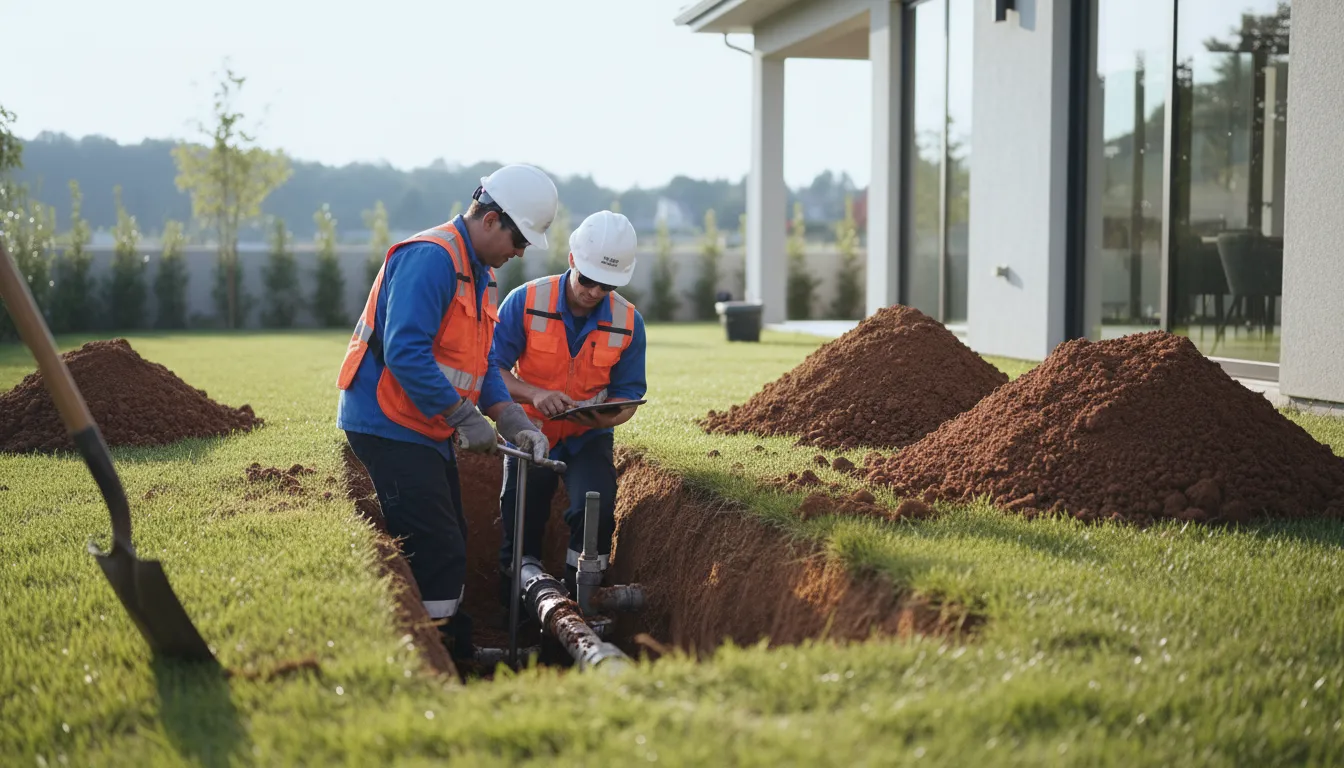
- Execution: Repair work may involve excavation to access pipes or the tank, pumping out the existing tank, replacing components, or installing new drain field lines.
Prevention: The Best "Repair" Strategy
Routine maintenance is far cheaper than any repair. The U.S. Environmental Protection Agency recommends pumping your septic tank every three to five years, depending on household size and tank capacity 12. This prevents sludge and scum from overflowing into the drain field, which is the leading cause of field failure 13 14. Additionally, conserve water, avoid flushing anything besides human waste and toilet paper, and never pour grease or harsh chemicals down the drain.
Frequently asked questions
Sources
Footnotes
-
How to Care for Your Septic System | US EPA - https://www.epa.gov/septic/how-care-your-septic-system ↩
-
9 Types of Septic Systems: Pros, Cons, and Costs | Angi - https://www.angi.com/articles/types-septic-systems.htm ↩
-
Septic Tank Types - https://expresssepticservice.com/tank-variations/ ↩
-
Part 2. Common Problems, Symptoms, and Solutions. Septic ... - https://www.lakecountyco.gov/DocumentCenter/View/1107 ↩
-
Understanding the Different Types of Septic Repairs - https://septiccleanings.com/blog/different-types-of-septic-repairs/ ↩
-
How Much Does Septic Tank Repair Cost? [2026 Data] | Angi - https://www.angi.com/articles/how-much-does-repairing-septic-tank-cost.htm ↩
-
Septic System Maintenance Costs: Quad Cities | John Wulf - https://jwseptic.com/scott-county-walcott-iowa-report/ ↩
-
Septic Repair vs. Replacement: A Guide to Costs & Red Flags - https://prosepticri.com/septic-repair-vs-replacement-guide/ ↩
-
Your Septic Tank Guide: Types, Costs & Maintenance - https://www.srmfre.com/septic-tank/ ↩
-
Repairing Septic Systems: A Detailed Manual - https://ky-pd.com/blog/fixing-septic-system/ ↩
-
Key Facts for Septic Tanks in Rural Properties - https://septiccleaning.com.au/blog/understanding-septic-tanks-for-rural-properties-everything-you-need-to-know/ ↩
-
Frequent Questions on Septic Systems | US EPA - https://www.epa.gov/septic/frequent-questions-septic-systems ↩
-
New Homebuyer's Guide to Septic Systems - EPA - https://www.epa.gov/sites/default/files/2017-08/documents/170803-homebuyerssepticguide_508c.pdf ↩
-
Why Maintain Your Septic System | US EPA - https://www.epa.gov/septic/why-maintain-your-septic-system ↩