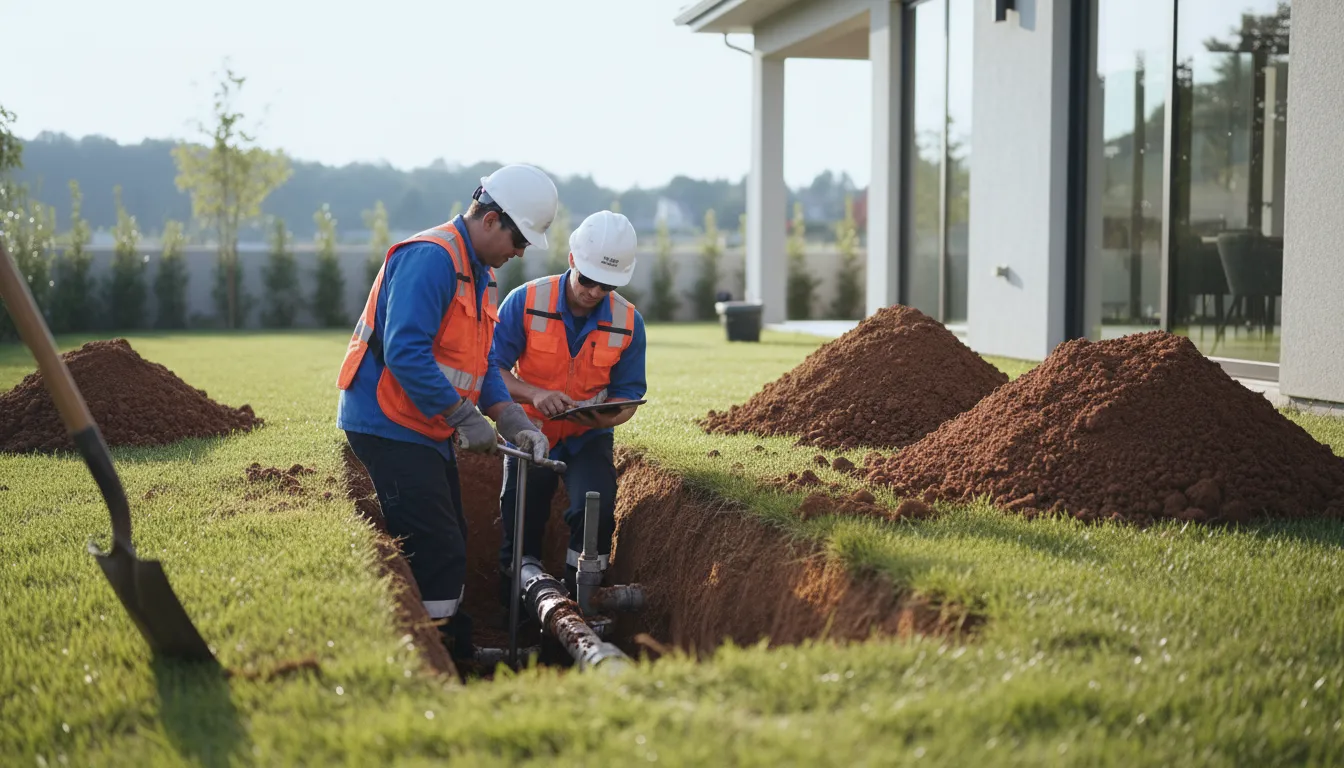
Find the Best Septic System Repair Companies for Your Business
No obligation • Fast responses • Nationwide coverage

Why you can trust Septic Spot
Septic Spot is a leading United States resource for understanding and comparing septic services. Our editors review providers using consistent criteria and verify key business details. Listings and scores are independent, and companies cannot pay to influence our content.
Search providers near you
Best Septic System Repair Companies in Maryland Ranked
A properly functioning septic system is essential for safely treating household wastewater and protecting your property value and local environment. When your system shows signs of trouble-like slow drains, soggy ground, or unpleasant odors-prompt repair by a qualified professional is critical. In Maryland, these repairs are strictly regulated to safeguard public health and water resources, especially the Chesapeake Bay. This guide provides the practical information you need to understand the repair process, navigate state and local regulations, and connect with licensed specialists in your area.
Mahon Plumbing
6824 Fort Smallwood Rd Ste. A, Baltimore, MD 21226
Mahon Plumbing is a family-owned plumbing company serving Baltimore, MD, and surrounding counties. With over 30 years of experience, they provide a wide range of residential and commercial plumbing and gas services, including septic system repairs. Their licensed utility contractor status allows them to handle underground water, sewer, and utility line projects in-house. Mahon Plumbing offers 24/7 emergency plumbing and utility services to address urgent issues promptly.

Prime Plumbing
7617 Baltimore Annapolis Blvd, Glen Burnie, MD 21060
Prime Plumbing is a locally owned plumbing company serving Baltimore, MD, and the surrounding counties. Established in 2012, they provide septic tank pumping and septic system repair services along with general plumbing solutions. Their licensed technicians offer transparent pricing and flexible financing options. Prime Plumbing also provides complimentary second opinions on water, sewer, and septic repairs, helping customers make informed decisions.

Shilling septic
Baltimore, MD
Shilling Septic is a locally owned septic service provider based in Baltimore, MD, serving Anne Arundel County and Central Maryland. With over 65 years of experience, the company offers a full range of septic services including installation, pumping, cleaning, inspections, and repairs. Their expertise includes addressing regional challenges such as soil composition and proximity to water, ensuring systems are properly maintained and repaired. Shilling Septic also provides emergency services with 24/7 availability to handle urgent septic issues.
American Septic & Backhoe Service
Baltimore, MD
American Septic & Backhoe Service is a family-owned business providing comprehensive septic system care in Baltimore, MD, and nearby Harford County since 1992. They offer a full range of services including septic tank pumping, inspections, repairs, new system installations, and drain field maintenance. The company is certified in Best Available Technology (BAT) septic systems and provides 24-hour emergency services to address urgent septic needs.
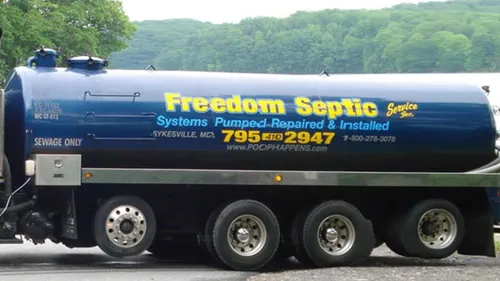
Freedom Septic Service, Inc.
2809 Liberty Rd, Sykesville, MD 21784
Freedom Septic Service, Inc. is a family-owned business with over 20 years of experience providing septic system services in Baltimore, MD. They offer a range of solutions including septic tank pumping, installation, repair, sewage treatment, and grease trap cleaning. The company also provides portable toilet and restroom trailer rentals for events and job sites, featuring options like handicap accessible units and climate-controlled trailers. Serving Baltimore and surrounding counties, Freedom Septic Service combines licensed expertise with comprehensive sanitation services to meet residential and commercial needs.
Understanding Maryland's Septic Repair Regulations
Septic system work in Maryland is not a DIY project. The state has established a clear regulatory framework to ensure repairs are performed correctly and safely.
Permit Requirements: Before any work begins on a malfunctioning or failed system, you must obtain a repair permit from your local county Health Department 1. This permit process ensures the proposed repair complies with all current environmental and public health standards.
Licensed Professionals: All septic system repairs must be performed by a contractor licensed by the Maryland State Board of On-Site Wastewater Professionals. Hiring a licensed professional is not just a recommendation-it's a legal requirement. They understand the complex soil and site conditions across the state and can ensure the repair meets code.
Mandatory Inspections: Once repairs are completed, a county Sanitarian must inspect the work before it is backfilled and put into service. This final inspection is your assurance that the repair has been done properly and your system is safe to use.
Common Types of Septic Repairs and Their Causes
Septic issues can range from minor fixes to major component replacements. Understanding the problem is the first step toward a solution.
- Tank Repairs: Concrete tanks can crack, and inlet/outlet baffles can deteriorate or break. Modern repairs often involve installing new, durable plastic risers and lids for safer, easier future access. A compromised tank can leak raw sewage into the ground, posing a serious health risk 2.
- Pump Failures: For systems with a pump to move effluent to a drain field, pump or float switch failure is common. This will cause backups in the house or a non-functioning drain field.
- Drain Field (Soil Absorption Area) Failure: This is often the most serious and costly issue. Failure occurs when the soil becomes permanently clogged with biomat, often due to lack of pumping or hydraulic overloading. Signs include surfacing sewage, persistently soggy ground over the field, and sewage backups 3.
- Pipe and Distribution Box Issues: Crushed, clogged, or misaligned pipes from the tank to the field can cause uneven distribution or backups.
The Critical Role of Site Evaluation and Soil Testing
A key reason repairs require professional and regulatory oversight is the importance of soil and site conditions. Simply replacing a component in the same spot may not be sufficient.
Percolation Testing: A licensed professional or county sanitarian must evaluate the soil through percolation ("perc") tests to determine its ability to absorb and treat wastewater. This testing is crucial for designing any new drain field or expansion.
Septic Reserve Area (SRA): Maryland regulations require that every septic system site has a designated, undisturbed Septic Reserve Area (SRA). This is a space reserved for a future replacement drain field. If your current field fails, the repair will likely involve constructing a new field in this SRA. Protecting this area from construction, driving, or planting deep roots is vital for your property's long-term utility.
Groundwater Protection: In areas with high seasonal groundwater, special measures are required. Tanks may need to be watertight and securely anchored to prevent contamination of groundwater, which is a drinking source for many Maryland residents.
Cost Breakdown for Septic System Repairs in Maryland
Repair costs vary widely based on the problem's severity, your location, soil conditions, and system size. It's always wise to get multiple estimates from licensed contractors.
- Minor Repairs: Fixing baffles, replacing a manhole cover, or installing access risers typically ranges from $500 to $2,500.
- Septic Tank Replacement: Replacing a damaged tank can cost between $500 and $5,000, depending on tank material and size.
- Drain Field Replacement: This is the most significant expense. Because it involves extensive excavation, new piping, and often utilizing the Septic Reserve Area, costs can range from $3,000 to $10,000 or more. In some cases, if a completely new system design is needed, costs can reach $8,000 to $25,000+.
- Overall Range: For a typical residential repair project in Maryland, homeowners often spend between $3,500 and $18,000+, with the Baltimore area averaging $3,500 to $8,100 for common repairs 4.
Find the perfect septic system repair companies for your needs
Get personalized recommendations and expert advice
The Repair Process: Step-by-Step
Knowing what to expect can make managing a septic repair less stressful.
- Identify the Problem: Signs of failure include drains gurgling or backing up, sewage odors indoors or outdoors, soggy bright green grass over the drain field, or pooling wastewater.
- Contact a Licensed Professional: A licensed septic contractor will diagnose the issue, often with a camera inspection or soil probe.
- Apply for a Permit: Your contractor will typically handle the permit application with the local Health Department, which includes submitting a repair plan.
- Perform the Repair: Once the permit is issued, the contractor executes the work. This may involve pumping the tank, excavating, and replacing components.
- Final Inspection: The county Sanitarian inspects the repair before it is covered up. Only after passing this inspection should final payment be made to the contractor.
Best Available Technology (BAT) and System Upgrades
In environmentally sensitive areas, particularly those within the Chesapeake Bay Critical Area, Maryland may require that repairs include an upgrade to a Best Available Technology (BAT) system 5. These advanced systems, such as aerobic treatment units (ATUs), remove significantly more nitrogen-a key pollutant affecting the Bay-from the wastewater. If your repair is in a designated area, your contractor and the Health Department will guide you through this requirement, which may involve additional costs but also potential grant funding through the Bay Restoration Fund.
Maintenance: The Best "Repair" is Prevention
Regular maintenance is the most cost-effective strategy to avoid major repairs.
- Pump Regularly: The Maryland Department of the Environment recommends pumping your tank every 3-5 years, depending on household size and usage. This prevents solids from flowing into and clogging the drain field.
- Conserve Water: Spreading out laundry loads and fixing leaky fixtures reduces the hydraulic load on your system, extending its life.
- Protect the System: Never park or drive over the tank or drain field. Avoid planting trees nearby, and keep roof drains and sump pumps directed away from the septic area.
While Maryland does not mandate a septic inspection at the time of home sale, a pre-sale inspection is highly recommended for both buyers and sellers to uncover any latent issues 6.
Frequently asked questions
Sources
Footnotes
-
A Guide to Septic Systems and Maintenance - https://mde.maryland.gov/programs/water/BayRestorationFund/OnsiteDisposalSystems/Documents/Onsite%20Systems/Uof%20MD%20Septic%20Records%20and%20Maintenance%20Guidelines.pdf ↩
-
Ground Water Management | Baltimore County Government - https://www.baltimorecountymd.gov/departments/environment/ground-water-management ↩
-
Septic Repair | Frederick County Health Department, MD - https://health.frederickcountymd.gov/379/Septic-Repair ↩
-
How Much Does a Septic System & Septic Tank Cost - NexGen Septics - https://www.nexgenseptics.com/septic-system-cost/ ↩
-
Septic Systems & Sewage - Caroline County Health Department - https://www.carolinehd.org/environmental-health/septic-systems-sewage/ ↩
-
Safer Septic Systems for Maryland | Clean Water Action - https://cleanwater.org/safer-septic-systems-maryland ↩