Find the Best Septic System Repair Companies for Your Business
No obligation • Fast responses • Nationwide coverage

Why you can trust Septic Spot
Septic Spot is a leading United States resource for understanding and comparing septic services. Our editors review providers using consistent criteria and verify key business details. Listings and scores are independent, and companies cannot pay to influence our content.
Search providers near you
Best Septic System Repair Companies in North Dakota Ranked
Maintaining a functional septic system is crucial for protecting your property, health, and North Dakota's environment. When components fail, timely and proper septic system repair is essential to prevent backups, contamination, and costly property damage. This guide provides clear, practical information on the repair process, regulations, and costs in North Dakota, helping you understand your options and connect with qualified local professionals to restore your system.

Understanding Septic System Repair Needs
A septic system is a complex onsite wastewater treatment structure. Repairs can range from simple fixes, like replacing a damaged pipe or baffle, to major undertakings involving drainfield restoration or full tank replacement. Common signs you may need repairs include:
- Slow drains or sewage backups in your home.
- Unpleasant odors around the tank or drainfield area.
- Lush, soggy ground or standing water over the drainfield.
- Gurgling sounds in your plumbing.
- Failing a routine inspection.
Addressing these issues promptly can prevent more extensive environmental damage and higher repair bills. In North Dakota, all repair work is regulated to ensure it meets state health and safety standards.
North Dakota Regulations and Permits
Before any repair work begins, you must navigate North Dakota's regulatory framework. This ensures the work is done correctly and protects groundwater, which is a vital resource in the state.
Required Permits
A permit from your local public health unit is mandatory before starting any septic system repair. The permit application process allows officials to review the proposed repair to ensure it complies with the North Dakota State Plumbing Code and other construction standards. Skipping this step can result in fines and an unpermitted system that may need to be redone.
Licensed Professionals
Repairs must be completed by a qualified professional. In North Dakota, septic system installers (which includes those performing repairs) must obtain a free state license from the North Dakota Department of Environmental Quality (NDDEQ) 1. Some counties or cities may have additional certification requirements. While certified property owners are allowed to perform work on their own primary residence in some jurisdictions, hiring a licensed sewer contractor is strongly recommended for their expertise and to ensure compliance with all technical standards 2.
System Design Standards
All repairs must bring the system up to current code. Key standards in North Dakota include:
- Baffles and Tees: Inlet and outlet baffles must be replaced with appropriate 4-inch diameter sanitary tees to prevent scum and solids from exiting the tank 3.
- Groundwater Protection: Systems are designed with a minimum of 3 feet of vertical separation between the bottom of the soil absorption unit (drainfield) and the highest seasonal water table.
- Soil Suitability: The soil must be suitable (e.g., sandy loam, loam) for effective wastewater treatment. A percolation test may be required to verify absorption rates 4.
- Setbacks: Tanks and drainfields must be located at least 100 feet from private wells less than 100 feet deep, and 50 feet from deeper wells 5 6.
Find the perfect septic system repair companies for your needs
Get personalized recommendations and expert advice
Common Repair Types and Cost Estimates
Repair costs in North Dakota vary widely based on the problem's severity, system size, soil conditions, and local labor rates. Below are general price ranges to help you budget, though obtaining multiple quotes from licensed professionals is essential.
Minor Repairs ($500 - $2,500)
These are common fixes that address specific components without major excavation.
- Baffle/Tee Replacement: Replacing a deteriorated inlet or outlet baffle.
- Pipe Repair: Fixing clogged or broken pipes between the house and tank or the tank and drainfield.
- Tank Lid or Riser Repair: Securing or replacing a damaged, unsafe, or sinking access lid.
- Small Drainfield Section Repair: Addressing a single clogged or saturated line in the absorption field.
Major Repairs and Component Replacement ($1,500 - $15,000+)
These involve significant excavation, replacement of major components, or system upgrades.
- Septic Tank Replacement: The cost to replace a standard 1,000-gallon concrete tank typically ranges from $1,500 to $5,000, plus installation fees. The price increases for larger tanks or specialty materials 7.
- Drainfield Repair/Replacement: This is often the most expensive repair. Patching a failing section may cost a few thousand dollars. A complete drainfield replacement, which may require new soil, sand, and distribution lines, can easily exceed $10,000 to $15,000, and complex situations can drive costs much higher 8.
- Pump or Dosing Chamber Repair: For systems with a pump to move effluent, repairing or replacing the pump and electrical components.
- System Upgrade for Compliance: Bringing an old system up to current code standards, which may involve adding new components or relocating parts of the system.
The Repair Process: What to Expect
A professional repair typically follows these steps:
- Inspection & Diagnosis: A licensed professional will inspect the system, often using a camera, to pinpoint the exact problem.
- Permit Application: Your contractor or you will apply for the necessary repair permit from the local health unit, submitting a plan for the work.
- System Location & Marking: The technician will locate and mark all system components (tank, cleanout, drainfield) and record distances from permanent structures for future reference 9.
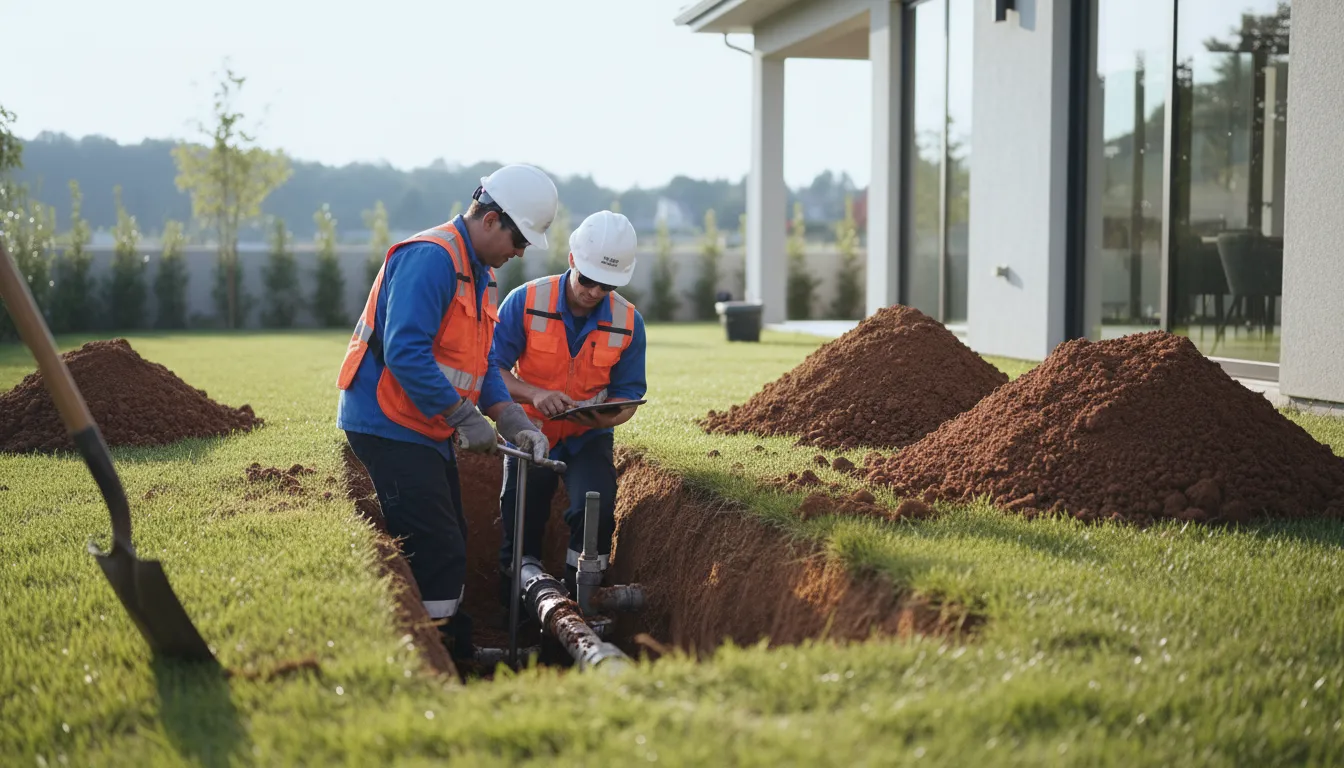
- Excavation & Repair: The repair area is carefully excavated, the work is performed according to the permit, and old materials are properly disposed of.
- Inspection & Backfill: A local health inspector may visit to approve the repair before it is backfilled. Once approved, the site is restored.
- Final Documentation: You will receive documentation of the completed work and permit closure for your records.
Maintaining Your System After Repair
After a repair, proper maintenance is key to preventing future failures.
- Regular Pumping: Pump the tank every 3-5 years, or as recommended based on usage.
- Water Conservation: Reduce water flow to the system to prevent overload.
- Mind What You Flush: Never flush chemicals, wipes, grease, or non-biodegradable items.
- Protect the Drainfield: Never drive or park on it, and plant only grass over the area.
Frequently asked questions
Sources
Footnotes
-
Septic Systems - North Dakota Department of Environmental Quality ↩
-
On-Site Sewage Treatment Systems (OSTS) | City of Grand Forks, ND ↩
-
Individual Home Sewage Treatment Systems - First District Health Unit ↩
-
Guideline 39 - septage, sump and pit waste, and restaurant grease trap waste management - NDDEQ ↩
-
All about septics | Onsite Sewage Treatment Program - University of Minnesota ↩
-
Residential Septic Tank Pricing | Homeowner's Guide to Costs - NTO Tank ↩
-
How Much Does a Septic System & Septic Tank Cost - Nexgen Septics ↩
-
Septic System Handout-2018-PDF - Homeowners at Laurel Park ↩