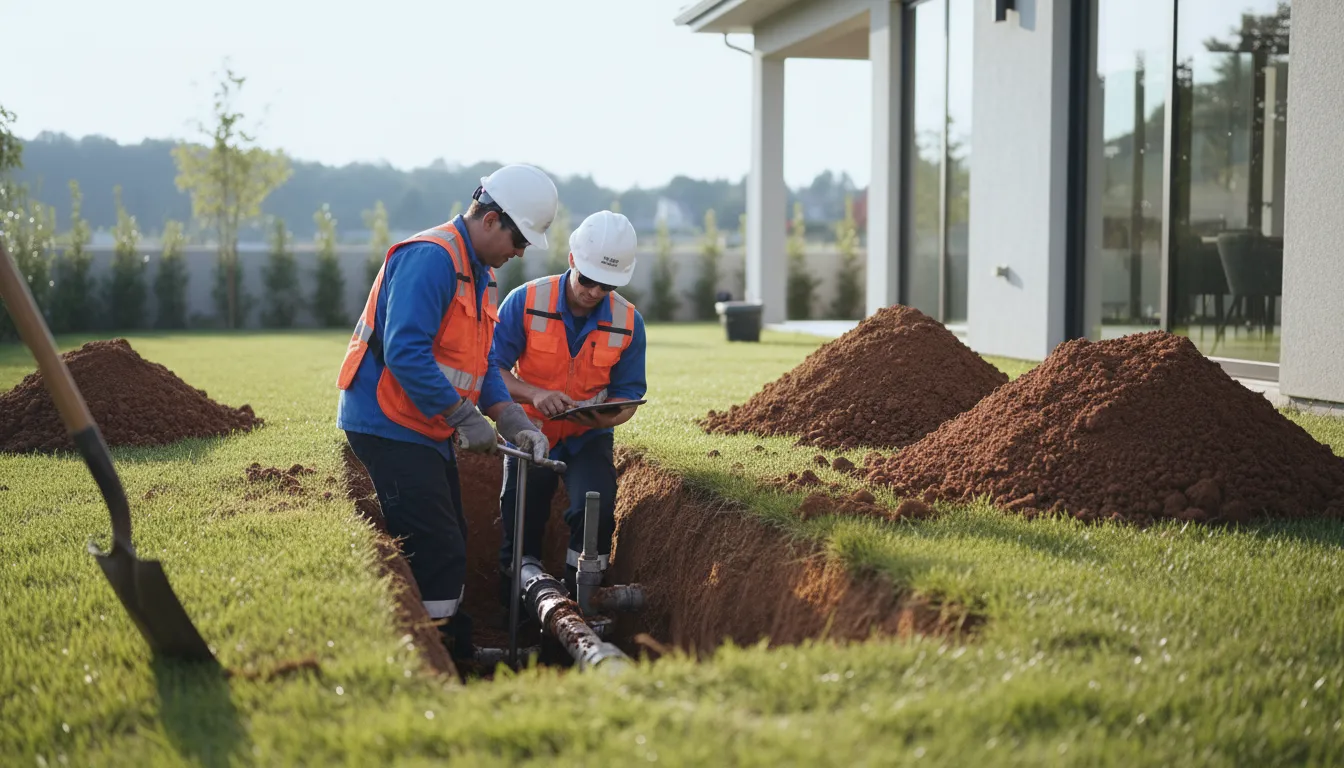
Find the Best Septic System Repair Companies for Your Business
No obligation • Fast responses • Nationwide coverage

Why you can trust Septic Spot
Septic Spot is a leading United States resource for understanding and comparing septic services. Our editors review providers using consistent criteria and verify key business details. Listings and scores are independent, and companies cannot pay to influence our content.
Search providers near you
Top Septic System Repair Companies in Hoboken, New Jersey Ranked
Maintaining a functional septic system is a critical responsibility for Hoboken homeowners. When issues arise, timely and proper septic system repair is essential to protect your property value, ensure public health, and comply with New Jersey's strict environmental regulations. This guide explains the local repair process, common problems, and how to connect with qualified professionals who understand the specific requirements for onsite wastewater treatment systems in Hudson County.
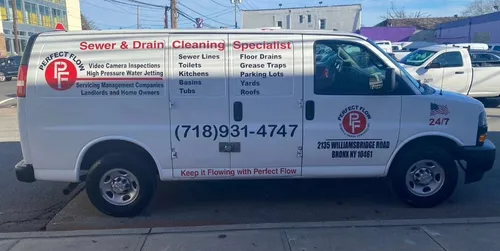
Perfect Flow Sewer & Drain Services
2135 Williamsbridge Rd, Bronx, NY 10461
Perfect Flow Sewer & Drain Services provides septic tank inspection and septic system repair in Yonkers, NY. They offer thorough inspections, efficient cleaning, and precise repairs to maintain reliable sewer and drain systems. Their services focus on ensuring seamless flow and system functionality.
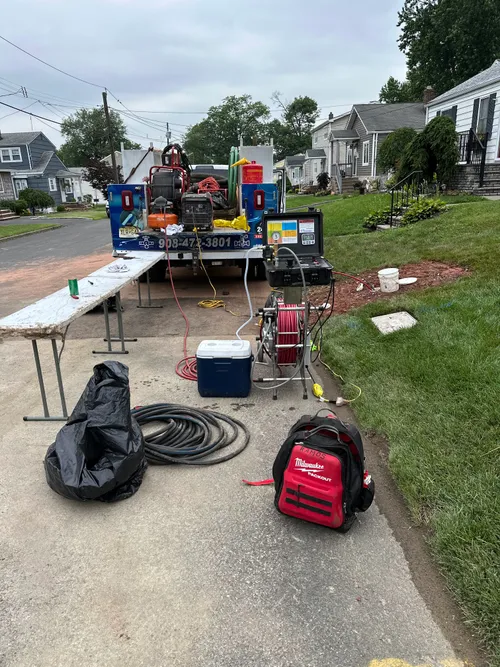
Arrow Sewer and Drain
165 Union Ave, Middlesex, NJ 08846
Arrow Sewer and Drain is a septic tank inspection and repair company serving New York, NY. They specialize in trenchless sewer repair methods that avoid excavation, preserving property while fixing cracked or corroded underground pipes. Their services include sewer inspections, pipe repairs, hydro-jetting, and emergency plumbing. The company offers 24/7 emergency plumbing service to address urgent sewer line problems quickly with professional camera inspections and effective solutions. Arrow Sewer and Drain serves a wide area including Middlesex and Somerset Counties in New Jersey, providing residential, commercial, and municipal sewer and plumbing projects.
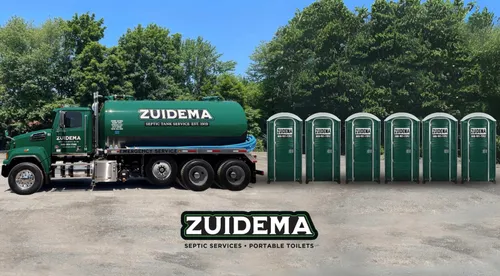
Zuidema Septic Services & Portable Toilets
90 Midland Ave, Midland Park, NJ 07432
Zuidema Septic Services & Portable Toilets provides residential and commercial septic services along with portable toilet and restroom trailer rentals in New York, NY. With over 100 years of experience since 1919, they offer septic tank pumping, inspections, repairs, and grease trap services. Their use of advanced sewer camera technology helps identify and address sewer line issues effectively. Zuidema also offers 24/7 emergency service for septic and portable toilet needs, ensuring support is available at any time.
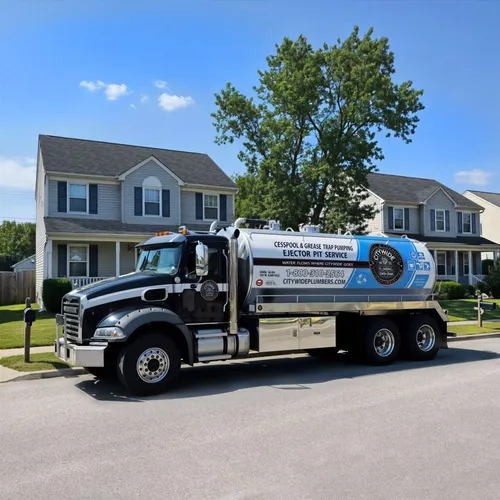
Citywide Grease Trap Maintenance | Cesspool Pumping Service Long Island
110 Voice Rd, Carle Place, NY 11514
Citywide Grease Trap Maintenance | Cesspool Pumping Service Long Island provides septic and cesspool pumping, inspection, repair, and installation services in New York, NY. Serving both residential and commercial clients, they offer comprehensive maintenance and cleaning to prevent system failures. Their skilled technicians use advanced equipment for installations and repairs, including grease trap pumping and sewage ejector pit services. With over 65 years of experience, Citywide operates 24/7 to address emergency needs promptly.
Water Resource Technologies
2 Kanouse Rd, Newfoundland, NJ 07435
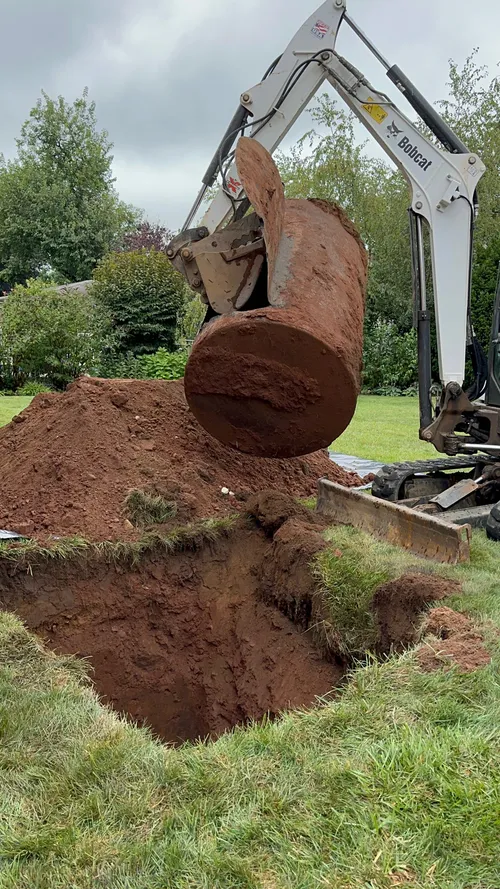
Water Resource Technologies is a full-service environmental remediation and consulting company based near New York, NY. They specialize in septic system repair and installation, as well as residential heating oil tank services and environmental site remediation. Their expertise includes environmental drilling and borings, supporting a range of environmental and septic system needs.
Understanding Septic System Regulations in Hoboken
Septic system work in New Jersey is heavily regulated by the NJ Department of Environmental Protection (NJDEP) under the N.J.A.C. 7:9A standards, often referred to as the Standards for Individual Subsurface Sewage Disposal Systems. In Hoboken and across Hudson County, the local health department-typically the Municipal or County Board of Health-is the primary permitting authority for systems discharging less than 2,000 gallons per day.
A crucial first step for any repair is determining if a permit is required. Major repairs involving tank replacement, leach field (drain field) modifications, or system capacity changes always require permits 1. Conversely, some minor repairs, such as replacing a baffle or tank lid, may not need formal permitting but should still be performed by a licensed professional. It is mandatory to report a failed system to the local health department, which will then guide the necessary corrective actions 2.
The Professional Repair Process: From Inspection to Approval
A systematic approach is key to effective septic system remediation. Reputable professionals follow a defined process to diagnose and fix problems correctly.
1. Comprehensive Inspection Before any repair can be planned, a thorough inspection is necessary. This is far more than just checking if the toilet flushes. A professional inspection typically includes:
- Preparation: Locating and uncovering all tank lids and distribution boxes.
- Pumping: The tank is completely pumped out to allow for a visual inspection of the interior for cracks, leaks, and structural damage 3.
- Component Assessment: Checking baffles, pipe connections, and the distribution box (D-box) to ensure it is level and distributing effluent evenly 4.
- Drain Field Evaluation: Probing the soil absorption area for signs of saturation, biomat buildup, or hydraulic failure 5.
- Hydraulic Load Test: Running water to test the system's capacity and absorption rate 6.
2. Engineering Design and Permitting If the inspection reveals a major issue, a licensed professional engineer (PE) must design the repairs or replacement system 7. These engineered plans are then submitted to the Hoboken or Hudson County health department for review and permit approval 8. Permit fees can range from $200 to $1,500, while engineering design fees often cost between $2,000 and $4,000 9 10.
3. Repair Execution and Final Inspection Once permitted, the repair work can begin. Upon completion, the health department must conduct a final inspection to witness the installation, including the tank, any pumps, and the final grading 11 12. Only after passing this inspection will they issue a Certificate of Approval, which is vital for your property records.
Find the perfect septic system repair companies for your needs
Get personalized recommendations and expert advice
Common Septic Repairs and Associated Costs in New Jersey
Repair costs in Hoboken vary widely based on the problem's complexity, soil conditions, and system size. Here's a breakdown of common septic fixes and their estimated price ranges 13 14:
Minor Repairs ($300 - $1,200) These are often the simplest and least expensive fixes, sometimes not requiring a permit.
- Baffle Replacement: The baffles inside the tank prevent scum and sludge from exiting into the drain field. If damaged, they must be replaced.
- Tank Lid/Cover Replacement: Cracked or damaged lids are a safety hazard and must be secured.
- Effluent Filter Cleaning/Replacement: Clogged filters can cause backups.
- Broken Pipe Repair: Fixing pipes between the house and tank or tank and distribution box.
Component Repairs ($800 - $3,000) These repairs address specific mechanical or structural failures within the system.
- Distribution Box Repair/Leveling: If the D-box is cracked or tilted, it will not distribute wastewater evenly, leading to drain field failure.
- Pump or Sewage Ejector Repair/Replacement: For systems with a pump to move effluent to the drain field.
System Remediation ($1,000 - $5,000) When the drain field is sluggish but not completely failed, these techniques can sometimes restore function.
- High-Pressure Water Jetting: Clears blockages in the drain field lines.
- Chemical or Biological Remediation: Treatments to break down biomat buildup in the soil.
- Soil Fracturing (e.g., TerraLift): A process that uses compressed air to create cracks in compacted soil around the leach field, improving percolation.
Full System Replacement ($15,000 - $60,000+) Replacement is the only option when the drain field has failed, the tank is severely compromised, or the existing system cannot be brought up to current code-a common requirement during property transfers if the system fails inspection. Costs depend heavily on soil tests, system design, and local excavation requirements 15.
Signs You May Need Septic System Repair
Don't wait for a sewage backup into your home. Be proactive and look for these warning signs:
- Slow Drains: Sinks, showers, and toilets that drain slowly, especially throughout the house.
- Sewage Odors: Unpleasant smells indoors or near the drain field area in your yard.
- Soggy Lawn: Spongy, bright green grass, or standing water over the drain field.
- Gurgling Sounds: Noises from your plumbing fixtures.
- Backups: Sewage backing up into household drains.
If you notice any of these signs, contact a professional for an inspection immediately. Early intervention can often prevent a minor issue from becoming a costly replacement.
Maintenance: The Best "Repair" is Prevention
Consistent maintenance is the most cost-effective strategy to avoid major septic system failures. The NJDEP recommends having your septic tank pumped every 3 to 5 years, depending on household size and usage 16 17. Furthermore, be mindful of what goes down your drains and protect the physical system. Driving or parking vehicles over the tank or drain field can crush pipes and compact soil, leading to failure 18. Similarly, planting trees or deep-rooted shrubs near the system can cause root intrusion and damage 16.
Frequently asked questions
Sources
Footnotes
-
Division of Water Quality | Professional Information - NJDEP - https://dep.nj.gov/dwq/wastewater/septic-systems/professional-information/ ↩
-
SEPTIC MANAGEMENT PLAN COMPONENT WITH MUNICIPAL - https://www.nj.gov/dep/wqmp/docs/20240617-septic-management-plan-somerset-county-smp-document.pdf ↩
-
Septic System Inspection: NJSMG - https://www.youtube.com/watch?v=5YsqNZi1bdY ↩
-
Copy of Inspections - New Jersey Septic Management Group - https://nj-septic.com/inspections-copy/ ↩
-
How Septic System Inspections Are Performed in New Jersey - https://thesewerkings.com/blog/septic-system-inspections/ ↩
-
Septic System Testing Home Inspections in New Jersey - https://www.newjerseyhomeinspections.com/septicsystem.htm ↩
-
NJDEP| Division of Water Quality | Permitting Information - https://dep.nj.gov/dwq/wastewater/septic-systems/permitting-information/ ↩
-
NJDEP| Division of Water Quality | Permitting Information - https://dep.nj.gov/dwq/wastewater/septic-systems/permitting-information/ ↩
-
NJ Septic Regulations for 2026: Inspections, Permits & Rules - https://www.atsenvironmental.com/blog/nj-septic-regulations-for-2026/ ↩
-
N.J. Admin. Code § 7:9A-8.2 - Septic tanks | State Regulations - https://www.law.cornell.edu/regulations/new-jersey/N-J-A-C-7-9A-8-2 ↩
-
Septic System Repair & Troubleshooting in NJ - https://excavatingnj.com/services/septic/repairs/ ↩
-
Compliance Advisory - NJ.gov - https://www.nj.gov/dep/enforcement/advisories/2023-07.pdf ↩
-
Septic Repair vs Replacement in NJ: Costs & Signs - https://www.atsenvironmental.com/blog/septic-repair-vs-replacement/ ↩
-
Septic System Repair in New Jersey - ATS Environmental - https://www.atsenvironmental.com/residential/septic-system-repair/ ↩
-
Septic System Installation | EarthCare, A Wind River Company - https://www.wrenvironmental.com/north-jersey-hudson-valley/residential/septic-system-installation/ ↩
-
New Jersey Septic System Rules - 2026 Guide - https://thesewerkings.com/blog/new-jersey-septic-system-rules/ ↩ ↩2
-
SEPTIC - NJ.gov - https://dep.nj.gov/wp-content/uploads/dwq/pdf/septicmn.pdf ↩
-
New Jersey Septic Tank Rules And Regulations - https://www.arrowsewernj.com/blog/septic-tanks-in-new-jersey-what-you-need-to-know/ ↩