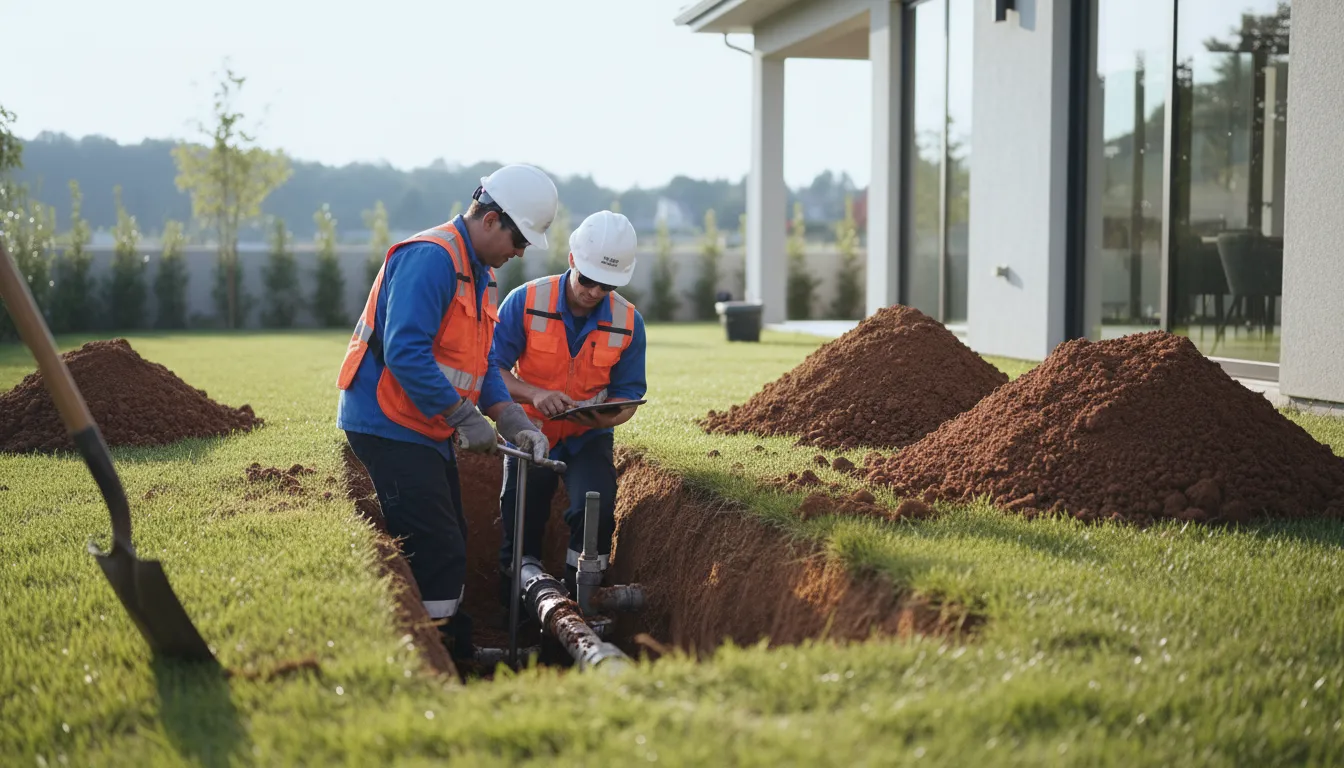
Find the Best Septic System Repair Companies for Your Business
No obligation • Fast responses • Nationwide coverage

Why you can trust Septic Spot
Septic Spot is a leading United States resource for understanding and comparing septic services. Our editors review providers using consistent criteria and verify key business details. Listings and scores are independent, and companies cannot pay to influence our content.
Search providers near you
Top Septic System Repair Companies in Monroe, New Jersey Ranked
When your septic system shows signs of trouble in Monroe, it's more than a household inconvenience-it's a regulated environmental concern. Septic system repair involves diagnosing and fixing issues with your on-site wastewater treatment system, from the tank to the drain field. Proper maintenance and timely fixes are crucial for protecting your property value, ensuring family health, and complying with strict local environmental regulations. This guide will help you understand the repair process, local requirements, and how to connect with qualified professionals who can assess and resolve your system's issues efficiently and legally.
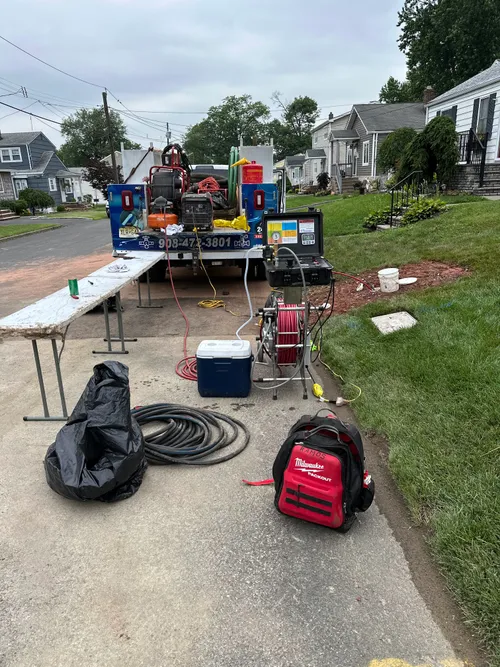
Arrow Sewer and Drain
165 Union Ave, Middlesex, NJ 08846
Arrow Sewer and Drain is a septic tank inspection and repair company serving New York, NY. They specialize in trenchless sewer repair methods that avoid excavation, preserving property while fixing cracked or corroded underground pipes. Their services include sewer inspections, pipe repairs, hydro-jetting, and emergency plumbing. The company offers 24/7 emergency plumbing service to address urgent sewer line problems quickly with professional camera inspections and effective solutions. Arrow Sewer and Drain serves a wide area including Middlesex and Somerset Counties in New Jersey, providing residential, commercial, and municipal sewer and plumbing projects.
Zuidema Septic Services & Portable Toilets
90 Midland Ave, Midland Park, NJ 07432
Zuidema Septic Services & Portable Toilets provides residential and commercial septic services along with portable toilet and restroom trailer rentals in New York, NY. With over 100 years of experience since 1919, they offer septic tank pumping, inspections, repairs, and grease trap services. Their use of advanced sewer camera technology helps identify and address sewer line issues effectively. Zuidema also offers 24/7 emergency service for septic and portable toilet needs, ensuring support is available at any time.
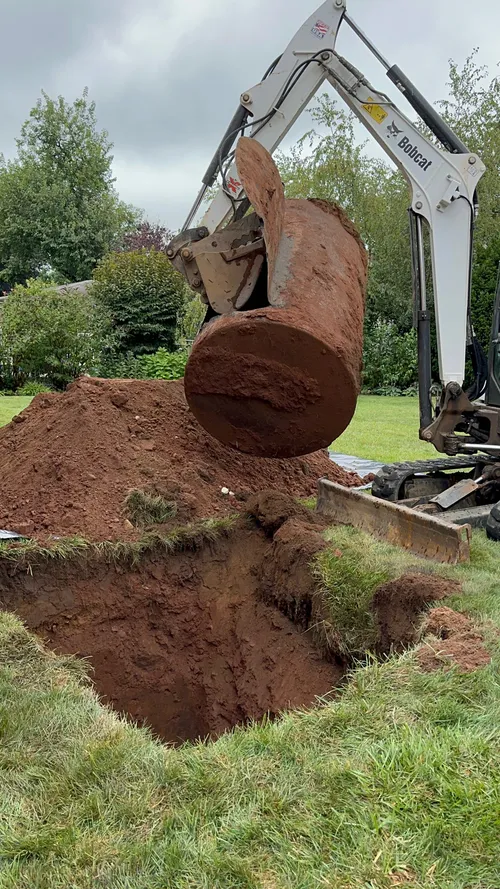
Water Resource Technologies
2 Kanouse Rd, Newfoundland, NJ 07435
Water Resource Technologies is a full-service environmental remediation and consulting company based near New York, NY. They specialize in septic system repair and installation, as well as residential heating oil tank services and environmental site remediation. Their expertise includes environmental drilling and borings, supporting a range of environmental and septic system needs.
A Norton Septic Contracting
3171 US-9, Old Bridge, NJ 08857
A Norton Septic Contracting is a full-service septic company based in New York, NY, offering septic tank pumping, inspections, repairs, and installations. They serve residential and commercial clients and specialize in alternative septic systems like Hoot and Infiltrator. With over 30 years of experience, they provide NJDEP-compliant inspections and have developed effective repair methods for systems that fail prematurely. The company emphasizes proper maintenance and offers consultations to troubleshoot septic issues. They provide personalized service and handle each project from start to finish.
WHERE OLD MEETS NEW LLC
2a Great Meadow Ln, East Hanover, NJ 07936
WHERE OLD MEETS NEW LLC is a family-operated septic service company based near New York, NY, serving the communities of Northern New Jersey. They provide full-service septic system maintenance, repair, and installation for both residential and commercial properties. With over 50 years of experience, the company offers expertise in all aspects of septic systems, including planning and permitting for new installations. WHERE OLD MEETS NEW LLC is licensed and insured, continuing a legacy that began with B Horstmann Septic Service founded in 1978.
Understanding Monroe's Septic System Regulations
Repairing a septic system in Monroe, New Jersey, is governed by a framework of state and county regulations designed to protect public health and the local environment, particularly given the area's water tables and environmental zones 1. The Middlesex County Environmental Health Division (MCEHD) is the primary authority overseeing all septic permitting, inspections, and compliance2 3. Before any significant work begins, homeowners must understand that unpermitted repairs can lead to substantial fines, legal action, and even a mandate to remove the non-compliant work.
Key Permit Requirements
Nearly all major septic repairs require formal approval. This isn't just bureaucratic red tape; it's a safeguard. Key activities that trigger a permit include:
- Replacing the septic tank or altering its capacity.
- Modifying or repairing the drain field (leach field).
- Changing the system's design or adding components like pumps.
- Addressing any failure identified during a mandatory inspection.
The permit process often requires a repair plan designed by a licensed professional engineer, submitted in multiple copies for county review4. This ensures the fix meets all technical standards for long-term functionality.
Critical Setback Distances
A core part of NJ regulations (NJAC 7:9A) involves strict setbacks. Any repair must maintain minimum distances from key features5 6:
- 25 feet from property lines.
- 50 feet from any water well.
- 100 feet from streams, lakes, or other water bodies. These rules are non-negotiable and can significantly influence repair options on smaller or irregularly shaped lots in Monroe.
Common Types of Septic Repairs
Septic system issues can range from minor component failures to complete system breakdowns. Identifying the problem accurately is the first step toward a cost-effective solution.
Tank-Related Repairs
The septic tank itself is a common trouble spot. Repairs here are often less invasive than drain field work and may include:
- Lid and Riser Installation: Replacing damaged concrete lids or installing septic tank risers to bring access points to ground level. This is a crucial upgrade for safety and easier future maintenance7.
- Baffle or Tee Replacement: The inlet and outlet baffles (or tees) prevent scum and sludge from exiting the tank. If broken or missing, they must be replaced to protect the drain field.
- Crack Sealing: Small cracks in concrete tanks can sometimes be sealed from the inside with specialized compounds, though major structural damage usually requires tank replacement.
Drain Field (Leach Field) Rehabilitation
This is often the most complex and costly type of repair. The drain field is where treated effluent is dispersed into the soil. Problems here manifest as soggy yards, sewage odors, or slow drains. Solutions vary:
- Jet-Vac or Hydro-Jetting: Using high-pressure water to clear clogs and biomat buildup in the distribution pipes8.
- Soil Restoration: In some cases, contaminated soil in the drain field area must be excavated and replaced.
- Partial Replacement: If only a section of the field has failed, it may be possible to repair or replace just that portion, though this still requires engineering and permits.
System Component Upgrades
Modernizing older system parts can improve performance and prevent future failures:
- Effluent Filter Installation: Adding a filter on the tank outlet can catch solids that escaped, protecting the drain field-a highly recommended upgrade9.
- Distribution Box (D-Box) Repair/Replacement: A faulty D-box can cause uneven drainage, leading to field failure. Replacing it ensures even effluent distribution.
- Pump System Repairs: For systems with pumps (like mound systems), repairing or replacing failed pumps, float switches, or control panels is essential10.
The Professional Inspection: Your Roadmap to Repair
You can't fix what you haven't properly diagnosed. A professional, NJ-compliant inspection is the essential first step before any repair11. Here's what a thorough assessment in Monroe typically involves:
- System Location & Access: The technician will locate the tank and drain field, then excavate to uncover the access lids.
- Pumping & Internal Inspection: The tank is pumped to allow a visual inspection of the interior for cracks, leaks, root intrusion, and the condition of baffles.
- Component Evaluation: The inlet, outlet, and distribution box (if present) are checked for damage or blockages.
- Drain Field Assessment: This may involve probing the soil in the leach field area to check for saturation, observing for surfacing effluent, or even a hydraulic load test where water is run to see how the system handles flow12.
- Comprehensive Reporting: You receive a detailed report outlining the system's condition, any failures, and recommended repairs. This report is often required by the Middlesex County Environmental Health Division to obtain a repair permit.
Find the perfect septic system repair companies for your needs
Get personalized recommendations and expert advice
Understanding Repair Costs in Middlesex County
The cost of septic system repair in Monroe varies widely based on the failure's extent, system type, and the required engineering and permitting. Specialized labor and county fees influence the overall price. Below is a general range for common services:
- Professional Inspection & Pumping: $400 - $800. This is often the starting point and may be required for permit applications.
- Minor Repairs (Baffles, Risers, Lids): $500 - $2,500. These are common fixes that don't typically involve major excavation.
- Major Repairs (D-Box, Pipe Networks, Partial Drain Field): $2,000 - $5,000. These jobs involve more labor, materials, and likely permit fees.
- Engineering & Permit Fees: $2,000 - $4,000+ (Engineering), $300 - $1,000 (Permits). For major work, these pre-repair costs are significant and necessary13 14.
- Complete System Replacement: $15,000 - $35,000+. This is the last resort for irreparable systems and cost depends heavily on soil conditions and system type.
The Path from Repair to Replacement
How do you know if a repair is sufficient or if a full replacement is inevitable? Consider these factors:
- Age of System: A septic system in New Jersey typically lasts 20-40 years15. If your system is near or beyond this age and experiencing major failure, replacement may be more economical than repeated repairs.
- Extent of Drain Field Failure: If the entire drain field is saturated and non-functional, repair options are limited and often temporary. Replacement is usually the only permanent solution.
- Changes in Water Usage: If your household size has significantly increased, an old system may be undersized. Repairing it won't solve the underlying capacity issue.
- Regulatory Compliance: Sometimes, an old system cannot be repaired to meet current NJAC 7:9A standards, necessitating a full upgrade to a modern, compliant system.
A reputable professional will outline all options, explaining the long-term viability and cost implications of repair versus replacement for your specific situation.
Maintaining Your System Post-Repair
After investing in a repair, protecting that investment is key. Proper maintenance can prevent premature failure:
- Adhere to a Pumping Schedule: Monroe and Middlesex County often recommend pumping every 3-5 years, depending on usage. Keep records.
- Mind What Goes Down the Drain: Avoid flushing chemicals, grease, wipes, and excessive food waste. These can clog components and disrupt the bacterial balance in the tank.
- Protect the Drain Field: Never park vehicles or place heavy structures over the leach field. Divect downspouts and surface water away from the area.
- Monitor Regularly: Be alert for warning signs like slow drains, gurgling sounds, soggy soil, or unpleasant odors, and address them promptly.
Frequently asked questions
Sources
Footnotes
-
New Jersey Septic Tank Rules And Regulations - https://www.arrowsewernj.com/blog/septic-tanks-in-new-jersey-what-you-need-to-know/ ↩
-
A Guide for Homeowner's Septic Systems - http://englishsewage.net/wp-content/uploads/2016/12/511129_-English-HomeownersGuide_2017_final.pdf ↩
-
Division of Water Quality | Professional Information - NJDEP - https://dep.nj.gov/dwq/wastewater/septic-systems/professional-information/ ↩
-
Septic System Program | Middlesex County NJ - https://www.middlesexcountynj.gov/government/departments/department-of-public-safety-and-health/office-of-health-services/environmental-health/septic-system-program ↩
-
New Jersey Septic System Rules - 2026 Guide - https://thesewerkings.com/blog/new-jersey-septic-system-rules/ ↩
-
SEPTIC - NJ.gov - https://dep.nj.gov/wp-content/uploads/dwq/pdf/septicmn.pdf ↩
-
Septic System Repairs and Modifications in Monroe Township ... - https://sewerman.com/monroe-township-nj/services/pipe-repairs/ ↩
-
Troubleshooting & Repairs - NJ Septic Management Group - https://nj-septic.com/repairs/ ↩
-
Septic System Repairs and Modifications in Salem County, NJ - https://sewerman.com/salem-county-nj/services/pipe-repairs/ ↩
-
Septic System Repair in New Jersey - ATS Environmental - https://www.atsenvironmental.com/residential/septic-system-repair/ ↩
-
How Septic System Inspections Are Performed in New Jersey - https://thesewerkings.com/blog/septic-system-inspections/ ↩
-
Septic System Care and Maintenance - Monroe County - https://www.monroecounty.gov/files/health/eh/OnsiteSewage/eh-PHESepticSystemCare.pdf ↩
-
NJ Septic Regulations for 2026: Inspections, Permits & Rules - https://www.atsenvironmental.com/blog/nj-septic-regulations-for-2026/ ↩
-
Septic Repair vs Replacement in NJ: Costs & Signs - https://www.atsenvironmental.com/blog/septic-repair-vs-replacement/ ↩
-
How Long Does a Septic System Last in New Jersey? - https://www.atsenvironmental.com/blog/how-long-does-a-septic-system-last-in-new-jersey/ ↩