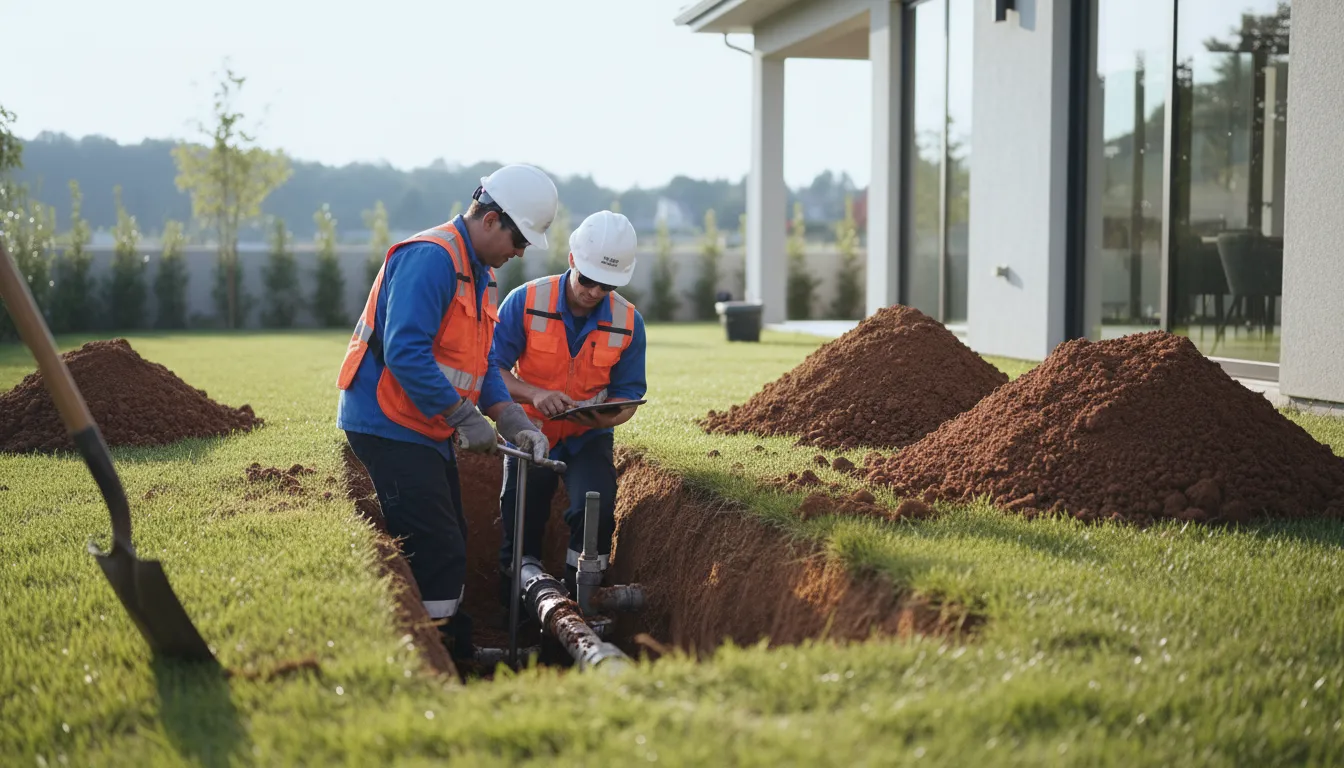
Find the Best Septic System Repair Companies for Your Business
No obligation • Fast responses • Nationwide coverage

Why you can trust Septic Spot
Septic Spot is a leading United States resource for understanding and comparing septic services. Our editors review providers using consistent criteria and verify key business details. Listings and scores are independent, and companies cannot pay to influence our content.
Search providers near you
Top Septic System Repair Companies in Parsippany-Troy Hills, New Jersey Ranked
Maintaining a functional septic system is a critical responsibility for homeowners in Parsippany-Troy Hills. When components fail, timely and proper septic system repair is essential to protect your property, your health, and the local environment. This guide provides a detailed overview of the repair process, local regulations, and costs, helping you understand your options and connect with qualified local professionals to restore your system's operation.
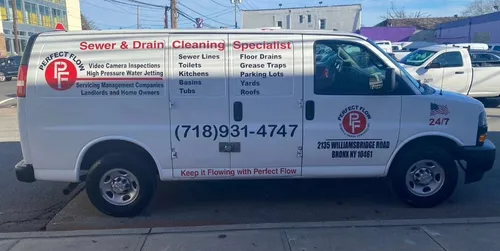
Perfect Flow Sewer & Drain Services
2135 Williamsbridge Rd, Bronx, NY 10461
Perfect Flow Sewer & Drain Services provides septic tank inspection and septic system repair in Yonkers, NY. They offer thorough inspections, efficient cleaning, and precise repairs to maintain reliable sewer and drain systems. Their services focus on ensuring seamless flow and system functionality.
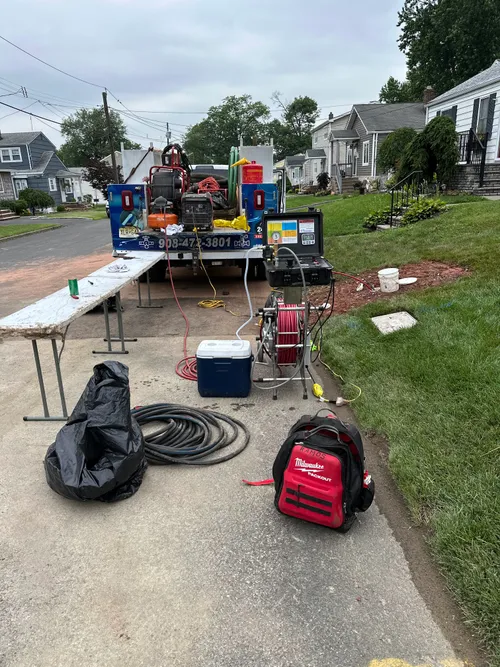
Arrow Sewer and Drain
165 Union Ave, Middlesex, NJ 08846
Arrow Sewer and Drain is a septic tank inspection and repair company serving New York, NY. They specialize in trenchless sewer repair methods that avoid excavation, preserving property while fixing cracked or corroded underground pipes. Their services include sewer inspections, pipe repairs, hydro-jetting, and emergency plumbing. The company offers 24/7 emergency plumbing service to address urgent sewer line problems quickly with professional camera inspections and effective solutions. Arrow Sewer and Drain serves a wide area including Middlesex and Somerset Counties in New Jersey, providing residential, commercial, and municipal sewer and plumbing projects.
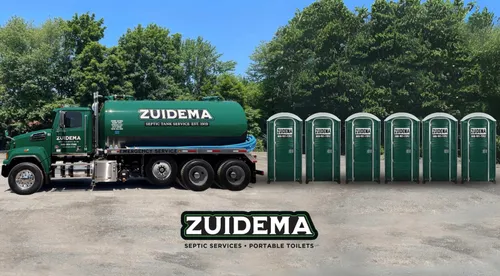
Zuidema Septic Services & Portable Toilets
90 Midland Ave, Midland Park, NJ 07432
Zuidema Septic Services & Portable Toilets provides residential and commercial septic services along with portable toilet and restroom trailer rentals in New York, NY. With over 100 years of experience since 1919, they offer septic tank pumping, inspections, repairs, and grease trap services. Their use of advanced sewer camera technology helps identify and address sewer line issues effectively. Zuidema also offers 24/7 emergency service for septic and portable toilet needs, ensuring support is available at any time.
Water Resource Technologies
2 Kanouse Rd, Newfoundland, NJ 07435
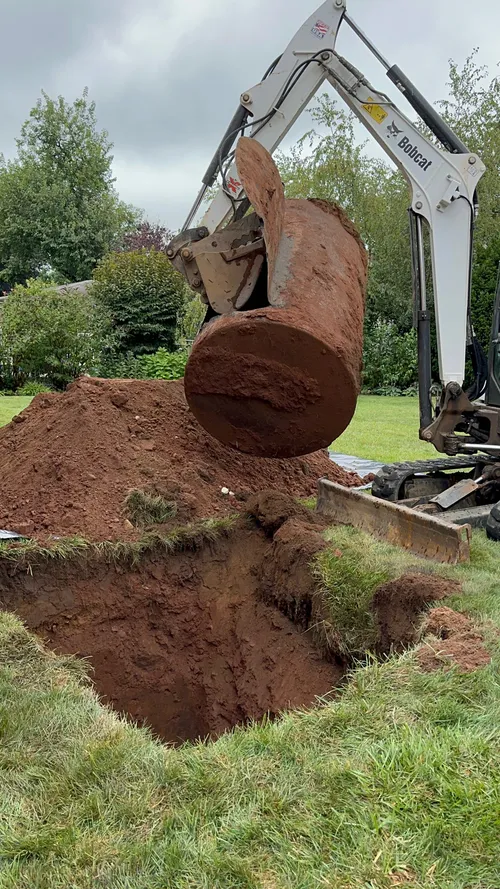
Water Resource Technologies is a full-service environmental remediation and consulting company based near New York, NY. They specialize in septic system repair and installation, as well as residential heating oil tank services and environmental site remediation. Their expertise includes environmental drilling and borings, supporting a range of environmental and septic system needs.
WHERE OLD MEETS NEW LLC
2a Great Meadow Ln, East Hanover, NJ 07936
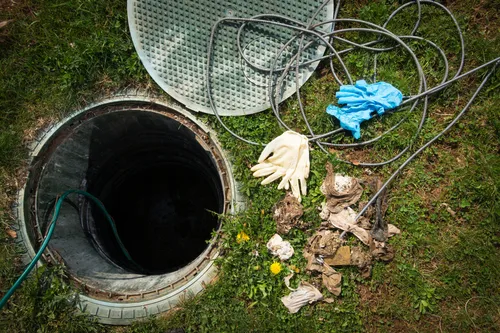
WHERE OLD MEETS NEW LLC is a family-operated septic service company based near New York, NY, serving the communities of Northern New Jersey. They provide full-service septic system maintenance, repair, and installation for both residential and commercial properties. With over 50 years of experience, the company offers expertise in all aspects of septic systems, including planning and permitting for new installations. WHERE OLD MEETS NEW LLC is licensed and insured, continuing a legacy that began with B Horstmann Septic Service founded in 1978.
Understanding Parsippany-Troy Hills Septic System Regulations
All work on a septic system in Parsippany-Troy Hills is governed by strict state and local codes. Before any repair begins, you must obtain a permit from the Township's Health Department. The Township enforces New Jersey Administrative Code (NJAC) 7:9A standards, which dictate everything from system design to setback distances from wells and property lines 1. For significant repairs or a full system replacement, engineered plans prepared by a licensed professional are typically required and must be submitted for approval 2.
The Township also mandates regular maintenance. Under Township Code 326-5, homeowners must license their systems and submit proof of maintenance-either a pumping receipt or an inspection report-every three years. Furthermore, a comprehensive inspection is almost always required during real estate transactions in New Jersey, which can often uncover the need for repairs. Navigating these regulations is a key part of any septic service, and working with providers familiar with Parsippany and Morris County requirements is crucial for a smooth, compliant project.
Common Types of Septic Repairs and Their Causes
Septic systems are comprised of several key components, any of which can fail. Identifying the specific issue is the first step toward a solution.
Minor Component Repairs: These are often the most common and least expensive fixes. They include replacing damaged or missing tank lids and risers (typically $300-$800), repairing or replacing broken inlet or outlet baffles ($800-$1,500), or swapping out a failed effluent pump or motor ($800-$2,500). These repairs address specific points of failure without altering the core absorption system.
Distribution Box Issues: The distribution box (D-box) evenly disperses liquid effluent from the tank to the drain field lines. If it becomes clogged, cracked, or tilted, it can cause uneven distribution and localized drain field failure. Repairing or replacing a D-box generally costs between $1,200 and $3,000.
Drain Field Problems: This is often the most serious and costly type of repair. A failing leach field, indicated by soggy ground, sewage odors, or slow-draining fixtures, may be caused by soil saturation, crushed pipes, or biomat buildup. Options range from partial repairs like cleaning or replacing a few lines to a full drain field replacement, with costs ranging from $15,000 to $35,000 3.
Full System Replacement: When the tank is structurally compromised or the drain field is beyond repair, a complete septic system installation is necessary. In Parsippany-Troy Hills, this is a major undertaking involving new tanks, absorption areas, and extensive permitting. Costs for a full replacement typically start around $35,000 and can exceed $60,000, especially if advanced treatment technology or alternative systems are required due to site constraints 4.
Find the perfect septic system repair companies for your needs
Get personalized recommendations and expert advice
The Septic Inspection & Diagnosis Process
Before a repair plan can be developed, a thorough inspection is necessary to diagnose the problem. A proper inspection in New Jersey follows a defined process 5.
- Preparation & Access: The technician will locate the tank and distribution box, which may involve probing the yard. Any soil or landscaping covering the access lids is removed.
- Pumping: For a proper assessment, the septic tank is usually pumped out. This allows the inspector to clearly see the tank's interior walls, baffles, and the bottom for cracks, leaks, or excessive sludge/scum buildup 6 7.
- Comprehensive Evaluation: The inspector examines the tank's structural integrity and checks all components. Crucially, they also assess the soil absorption system (drain field) for signs of failure, such as surfacing effluent or saturated soil 8.
- Reporting: The inspector provides a detailed report stating whether the system passes, passes with conditions (recommending specific repairs), or fails. This report is often required by the local health department to obtain a repair permit 9.
Inspection costs in the area typically range from $500 to $2,000, depending on the system's complexity and the extent of the evaluation.
Cost Factors for Septic Repairs in Parsippany
The final cost of your septic system fix depends on multiple variables. Beyond the type of repair outlined above, consider these key factors:
- Permit and Engineering Fees: The Township permit fee is just the start. For major work, you will need engineered plans, which can add $2,500 to $3,500 to your project budget 10 11.
- System Size and Technology: A system for a larger home costs more to repair than one for a smaller dwelling. Alternative systems with pumps, filters, or aerobic treatment units have more complex (and expensive) components.
- Site Accessibility: Easy access for backhoes and dump trucks keeps costs down. Difficult access due to fences, pools, landscaping, or steep slopes can significantly increase labor time and equipment needs.
- Soil Conditions and Landscaping: Repairs that involve excavating in rocky or difficult soil are more costly. You'll also need to budget for restoring lawns, gardens, or hardscapes disturbed during the repair.
Repair vs. Replacement: Making the Decision
Facing a major septic issue often leads to a critical question: should you repair or replace? A professional assessment is vital, but general guidelines exist.
Opt for Repair When: The problem is isolated to a single, repairable component (like a pump or baffle), the tank is structurally sound, and the drain field is still functioning adequately. Repair is almost always the more cost-effective short-term solution.
Consider Replacement When: The septic tank has major structural cracks, the drain field has completely failed (often indicated by persistent backups and soggy yard areas), or the system is old and undersized for your current household. If repairs are extensive and nearing the cost of a new system, replacement may offer better long-term value and reliability. A new system also comes with updated technology and a longer expected lifespan.
Maintaining Your System After a Repair
Once your system is repaired, proper maintenance is key to preventing future problems and protecting your investment. Adhere to the Township's 3-year maintenance cycle by having your tank pumped and inspected regularly 12. Practice water conservation to avoid hydraulically overloading the system. Be mindful of what you flush-avoid grease, chemicals, wipes, and other non-biodegradables. Finally, protect your drain field by never driving or parking heavy vehicles over it and keeping roof drains and sump pumps directed away from the area.
Frequently asked questions
Sources
Footnotes
-
A Guide for Homeowner's Septic Systems - http://englishsewage.net/wp-content/uploads/2016/12/511129_-English-HomeownersGuide_2017_final.pdf ↩
-
Navigating Septic System Regulations: Expert Guidance for ... - https://www.mapengineering.net/navigating-septic-system-regulations/ ↩
-
Septic Repair vs Replacement in NJ: Costs & Signs - https://www.atsenvironmental.com/blog/septic-repair-vs-replacement/ ↩
-
How Much Does It Cost To Replace A Septic System In Northern NJ? - https://dsepticservice.com/b/septic-system-replacement-cost-new-jersey/ ↩
-
How Septic System Inspections Are Performed in New Jersey - https://thesewerkings.com/blog/septic-system-inspections/ ↩
-
SEPTIC - NJ.gov - https://dep.nj.gov/wp-content/uploads/dwq/pdf/septicmn.pdf ↩
-
New Jersey Septic Tank Rules and Regulations - Arrow Sewer & Drain - https://www.arrowsewernj.com/blog/septic-tanks-in-new-jersey-what-you-need-to-know/ ↩
-
Septic System Repair in New Jersey - https://www.atsenvironmental.com/residential/septic-system-repair/ ↩
-
Why Septic Inspections are Vital for New Jersey Home Buyers - https://speidelseptic.com/why-septic-inspections-vital-for-nj-home-buyers/ ↩
-
NJ Septic Regulations for 2026: Inspections, Permits & Rules - https://www.atsenvironmental.com/blog/nj-septic-regulations-for-2026/ ↩
-
The Real Cost of Septic Installation in New Jersey (2025) - https://www.atsenvironmental.com/blog/the-real-cost-of-septic-installation-in-new-jersey-2025/ ↩
-
Health & Human Services - Parsippany.net - https://www.parsippany.net/Departments/health-and-human-services ↩