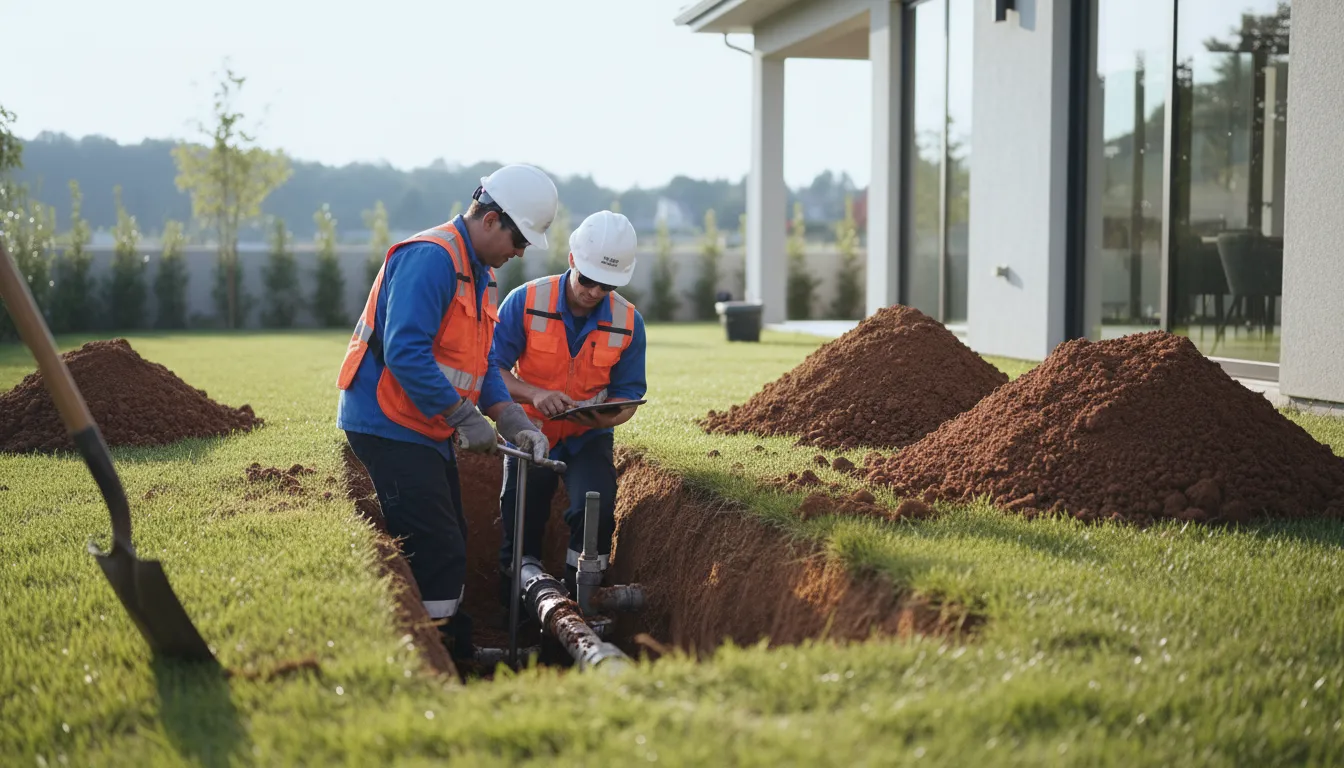
Find the Best Septic System Repair Companies for Your Business
No obligation • Fast responses • Nationwide coverage

Why you can trust Septic Spot
Septic Spot is a leading United States resource for understanding and comparing septic services. Our editors review providers using consistent criteria and verify key business details. Listings and scores are independent, and companies cannot pay to influence our content.
Search providers near you
Top Septic System Repair Companies in Piscataway, New Jersey Ranked
A failing septic system is a serious issue for any Piscataway homeowner, posing health risks, environmental hazards, and potential property damage. Septic system repair involves diagnosing and fixing problems with your tank, drain field, or related components to restore proper wastewater treatment. Understanding local regulations and finding qualified professionals is crucial, as all septic work in Piscataway requires approval from the local Health Department. This guide provides the information you need to navigate the repair process, from initial inspection to final approval, and connect with experienced local specialists for your septic servicing needs.
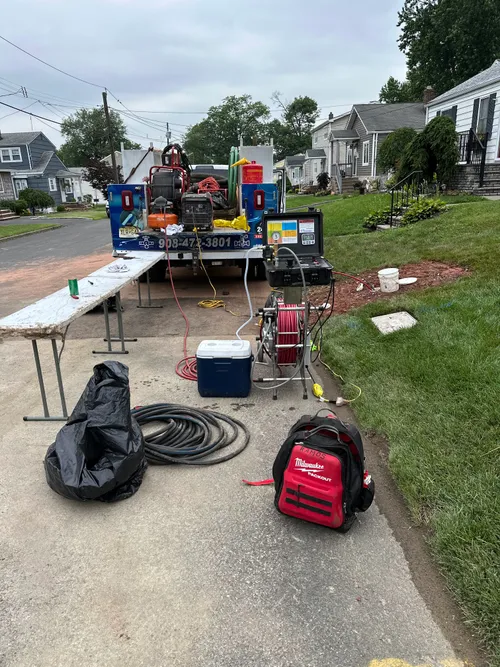
Arrow Sewer and Drain
165 Union Ave, Middlesex, NJ 08846
Arrow Sewer and Drain is a septic tank inspection and repair company serving New York, NY. They specialize in trenchless sewer repair methods that avoid excavation, preserving property while fixing cracked or corroded underground pipes. Their services include sewer inspections, pipe repairs, hydro-jetting, and emergency plumbing. The company offers 24/7 emergency plumbing service to address urgent sewer line problems quickly with professional camera inspections and effective solutions. Arrow Sewer and Drain serves a wide area including Middlesex and Somerset Counties in New Jersey, providing residential, commercial, and municipal sewer and plumbing projects.
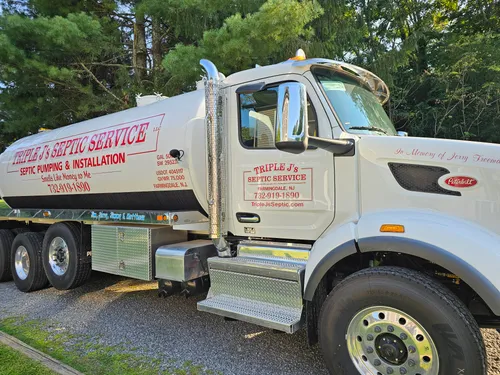
Triple J's Septic Services LLC
34 Asbury Ave, Farmingdale, NJ 07727
Triple J's Septic Services LLC is a family-owned business based in Lakewood, NJ, providing septic tank pumping, repairs, and installation services. Established in the late 1980s by Gerald Freeman, the company holds an A-901 State License, ensuring compliance with New Jersey regulations. They also offer grease trap pumping and manage complex projects involving engineering and additional contractors. With decades of experience, Triple J's supports customers through every step of septic system care and maintenance.
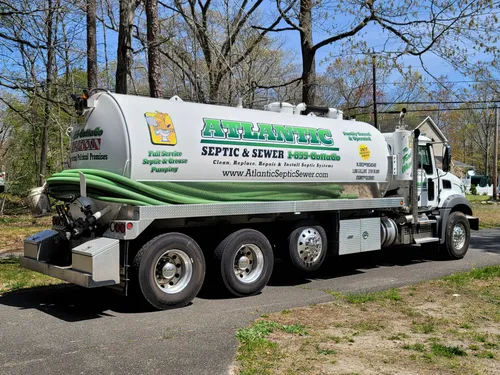
Atlantic Sitton Services, Inc.
647 Herman Rd, Jackson Township, NJ 08527
Atlantic Sitton Services, Inc. provides septic system installation, repair, inspection, and pumping services in Lakewood, NJ. They serve residential, commercial, and government clients across New Jersey, offering additional services such as grease trap cleaning, grease tank pumping, and used cooking oil collection for recycling. Their certified technicians handle septic system jetting, sludge and liquid waste removal, and new construction excavation. With over 30 years of experience, Atlantic Sitton Services emphasizes environmentally conscientious practices and offers emergency services 24/7 to support system functionality and environmental health.
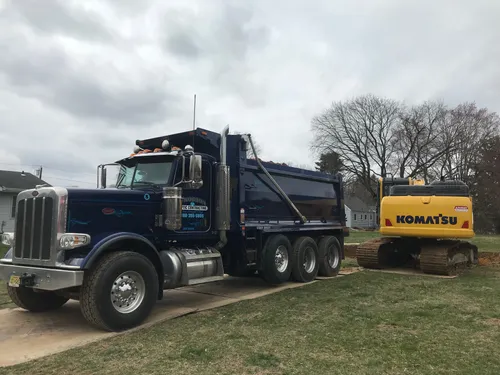
A Norton Septic Contracting
3171 US-9, Old Bridge, NJ 08857
A Norton Septic Contracting is a full-service septic company based in New York, NY, offering septic tank pumping, inspections, repairs, and installations. They serve residential and commercial clients and specialize in alternative septic systems like Hoot and Infiltrator. With over 30 years of experience, they provide NJDEP-compliant inspections and have developed effective repair methods for systems that fail prematurely. The company emphasizes proper maintenance and offers consultations to troubleshoot septic issues. They provide personalized service and handle each project from start to finish.
WHERE OLD MEETS NEW LLC
2a Great Meadow Ln, East Hanover, NJ 07936
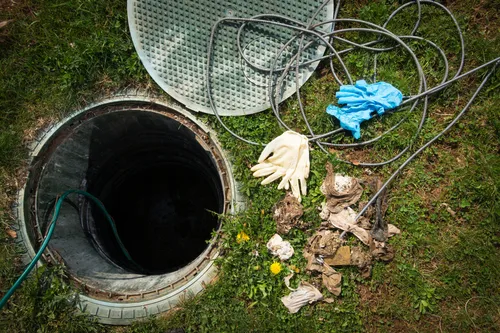
WHERE OLD MEETS NEW LLC is a family-operated septic service company based near New York, NY, serving the communities of Northern New Jersey. They provide full-service septic system maintenance, repair, and installation for both residential and commercial properties. With over 50 years of experience, the company offers expertise in all aspects of septic systems, including planning and permitting for new installations. WHERE OLD MEETS NEW LLC is licensed and insured, continuing a legacy that began with B Horstmann Septic Service founded in 1978.
Understanding Septic System Failures in Piscataway
A septic system is a complex onsite wastewater treatment system. When it malfunctions, the signs are often unmistakable. Common indicators include slow-draining sinks and toilets, foul odors around the drain field or tank area, soggy or unusually lush grass over the leach field, and sewage backups in the home. These symptoms point to issues ranging from a full tank to a clogged distribution box, broken pipes, or a completely failed drain field.
In Piscataway, the underlying cause of failure is frequently related to the local soil conditions and aging infrastructure. Many systems in the area were installed decades ago and may not meet current standards. Furthermore, any repair or alteration to your septic system is strictly regulated. The Piscataway Health Department, in accordance with New Jersey state codes (NJAC 7:9A), must approve all plans and witness the installation or repair work. Starting a repair without proper permits can result in significant fines and legal complications.
The Mandatory Inspection & Diagnosis Process
Before any septic repair can be planned, a thorough professional inspection is required to diagnose the exact problem. This is not a simple check; it's a detailed evaluation that often involves multiple steps.
Initial Assessment & Pumping: The process typically begins with locating all system components, including the tank, distribution boxes (D-boxes), and the drain field. The tank must be pumped out to allow for a proper internal inspection. The technician will measure scum and sludge layers, which can indicate if routine maintenance has been neglected.
Structural Evaluation: Once empty, the tank is inspected for cracks, leaks, or damage to the inlet and outlet baffles. A video camera is frequently snaked through the distribution lines to check for blockages, sagging pipes, root intrusion, or collapse 1 2. The distribution boxes are opened and examined for proper flow.
Soil & System Evaluation: For issues suspected to be in the drain field, more advanced diagnostics are needed. This may include a soil evaluation and percolation (perc) test conducted by a licensed engineer to determine the soil's absorption capacity. The final inspection report will classify the system as a pass, conditional pass (requiring specific repairs), or fail (necessitating major repairs or full replacement) 3.
Navigating Piscataway's Repair Permits & Regulations
The regulatory path for septic work in Piscataway is defined and must be followed meticulously. Only state-licensed and authorized professionals should perform installation or repair work on septic systems in New Jersey.
The Permit Process:
- Hire a Licensed Engineer: For most repairs beyond simple component swaps, you'll need to hire a licensed professional engineer or an authorized septic contractor to evaluate the site and create repair plans.
- Submit Plans for Approval: The engineered plans must be submitted to the Piscataway Health Department for review and approval.
- Pay Permit Fees: Upon approval, permit fees must be paid. For repairs in Piscataway, the permit fee is approximately $165. If the repair requires new soil logs or a percolation test, additional fees apply-around $135 for soil logs and $200 for a perc test 4 5.
- Department Witness: A representative from the Piscataway Health Department must witness the critical stages of the repair installation before the work is backfilled 6.
Compliance with NJAC standards and local amendments is non-negotiable. These regulations ensure repairs protect public health and groundwater quality, which is especially important in New Jersey's densely populated environment 7.
Common Repairs & Associated Cost Ranges
Septic system fixes can vary widely in scope and price, largely dependent on which component has failed and the extent of the damage.
Minor Repairs ($500 - $5,000): This cost range covers the most common fixes. Examples include repairing or replacing broken concrete or PVC baffles in the tank, swapping out a malfunctioning effluent pump, or repairing a damaged distribution box. Replacing deteriorated or missing tank access risers and lids also falls into this category and is critical for safety and easy future maintenance.
Major Repairs and Partial Replacements ($5,000 - $15,000): More extensive issues lead to higher costs. This tier includes repairing or replacing a large section of collapsed drainage pipe or addressing a partially failing drain field. Sometimes, a new leaching area can be added (a "repair field") if soil conditions allow. Full septic tank replacement, if the drain field is still functional, typically costs between $10,000 and $15,000.
Complete System Replacement ($15,000 - $60,000+): When the drain field has completely failed and cannot be repaired, or the tank has collapsed, a full system replacement is necessary. This is the most expensive scenario. Costs depend heavily on soil conditions, system size, and site accessibility. In Northern New Jersey, including Piscataway, a full conventional system replacement often starts around $15,000 and can exceed $35,000, with complex sites or alternative system technologies pushing costs toward $60,000 or more 8 9 10. Permit and engineering fees for a project of this scale can themselves range from $250 to $1,500, with soil inspection and percolation testing adding another $500 to $1,500 8 11.
Find the perfect septic system repair companies for your needs
Get personalized recommendations and expert advice
Choosing a Qualified Septic Repair Specialist
Given the technical and regulatory complexity, selecting the right contractor is your most important decision. Look for a company with extensive experience specifically in Piscataway and Middlesex County. They should be intimately familiar with the local Health Department's inspectors, processes, and any township-specific code amendments.
A reputable provider will handle the entire process transparently, from the initial diagnostic inspection to securing the necessary permits and scheduling the Health Department witness. They should provide detailed, written estimates that clearly separate labor, materials, and permit/engineering fees. Always verify that they carry proper New Jersey state licensing for septic system construction and repair, along with adequate insurance. Don't hesitate to ask for references from recent repair projects in the area and check online reviews.
Proactive Maintenance to Avoid Future Repairs
The best repair is the one you never need. Proactive maintenance is the most effective way to avoid the high costs and hassles of septic system failure. The state of New Jersey recommends pumping your septic tank every 2-3 years, depending on household size and usage 12. This routine service prevents sludge and scum from overflowing into the drain field, which is the leading cause of field failure.
Be mindful of what goes down your drains. Avoid flushing anything other than human waste and toilet paper. Never pour grease, chemicals, or medications down the drain, as they can kill the essential bacteria in your tank and contaminate groundwater. Conserve water to avoid hydraulically overloading the system. Investing in regular inspections and pumping is a minor expense compared to the cost of a major drain field repair or replacement.
Frequently asked questions
Sources
Footnotes
-
Copy of Inspections - New Jersey Septic Management Group - https://nj-septic.com/inspections-copy/ ↩
-
The Real Cost of Septic Installation in New Jersey (2025) - https://www.atsenvironmental.com/blog/the-real-cost-of-septic-installation-in-new-jersey-2025/ ↩
-
How Septic System Inspections Are Performed in New Jersey - https://thesewerkings.com/blog/septic-system-inspections/ ↩
-
SEPTIC MANAGEMENT PLAN COMPONENT WITH MUNICIPAL - https://www.nj.gov/dep/wqmp/docs/20240617-septic-management-plan-somerset-county-smp-document.pdf ↩
-
Chapter 10: Health Regulations - Township of Piscataway, NJ - https://ecode360.com/34884493 ↩
-
Health Department - Piscataway Township - https://www.piscatawaynj.org/departments/health_department/index.php ↩
-
New Jersey Septic System Rules - 2026 Guide - https://thesewerkings.com/blog/new-jersey-septic-system-rules/ ↩
-
Septic Repair vs Replacement in NJ: Costs & Signs - https://www.atsenvironmental.com/blog/septic-repair-vs-replacement/ ↩ ↩2
-
How Much Does It Cost To Replace A Septic System In Northern NJ? - https://dsepticservice.com/b/septic-system-replacement-cost-new-jersey/ ↩
-
Navigating Septic System Regulations: Expert Guidance for New Jersey Property Owners - https://www.mapengineering.net/navigating-septic-system-regulations/ ↩
-
NJ Septic Regulations for 2026: Inspections, Permits & Rules - https://www.atsenvironmental.com/blog/nj-septic-regulations-for-2026/ ↩
-
SEPTIC - NJ.gov - https://dep.nj.gov/wp-content/uploads/dwq/pdf/septicmn.pdf ↩