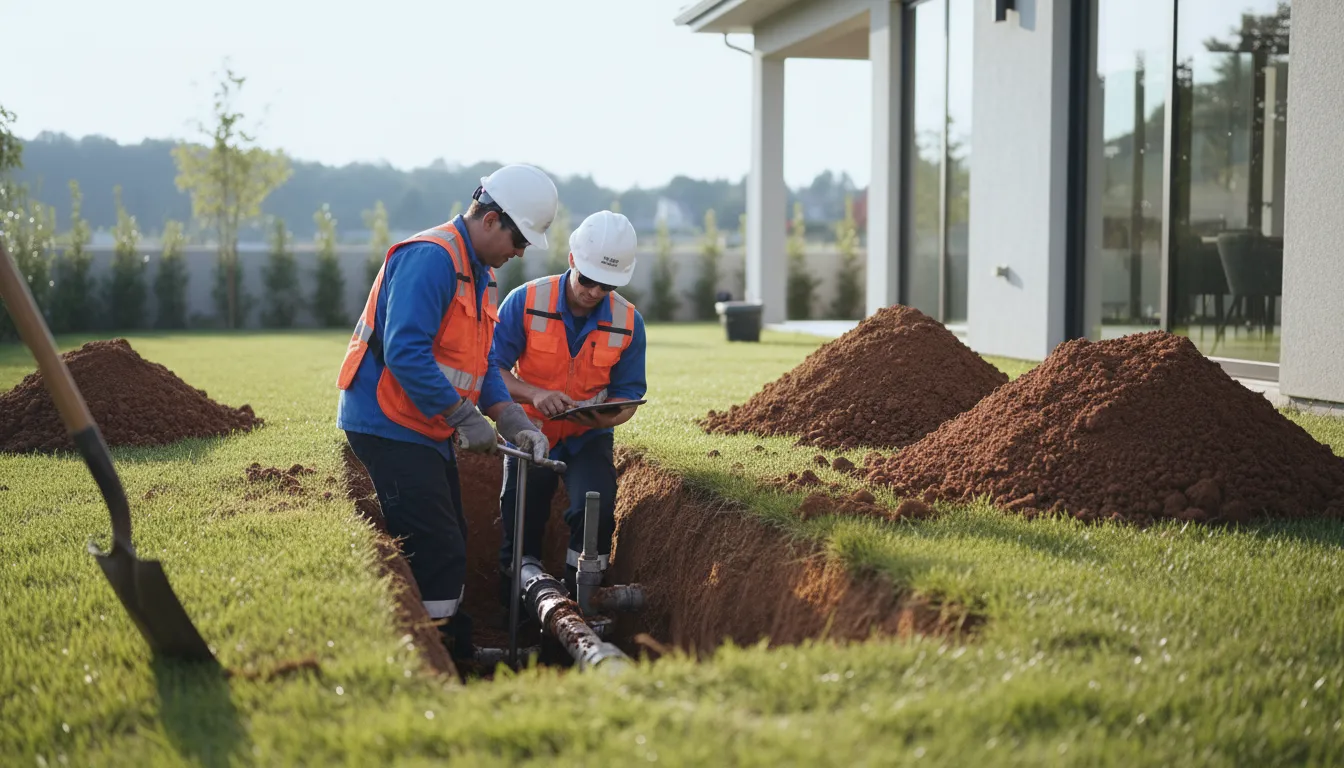
Find the Best Septic System Repair Companies for Your Business
No obligation • Fast responses • Nationwide coverage

Why you can trust Septic Spot
Septic Spot is a leading United States resource for understanding and comparing septic services. Our editors review providers using consistent criteria and verify key business details. Listings and scores are independent, and companies cannot pay to influence our content.
Search providers near you
Top Septic System Repair Companies in Plainfield, New Jersey Ranked
A failing septic system is more than an inconvenience; it's a potential health hazard and a significant property issue. Septic system repair involves diagnosing and fixing problems with your private sewage disposal system, from the tank to the drain field. In Plainfield, these repairs are strictly regulated to protect groundwater and public health. This guide explains the local repair process, common issues, and how to connect with qualified, licensed professionals who can ensure your system is restored correctly and legally.
Arrow Sewer and Drain
165 Union Ave, Middlesex, NJ 08846
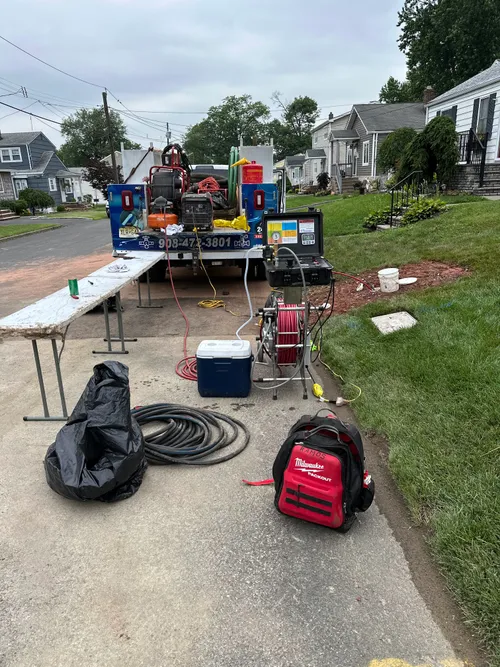
Arrow Sewer and Drain is a septic tank inspection and repair company serving New York, NY. They specialize in trenchless sewer repair methods that avoid excavation, preserving property while fixing cracked or corroded underground pipes. Their services include sewer inspections, pipe repairs, hydro-jetting, and emergency plumbing. The company offers 24/7 emergency plumbing service to address urgent sewer line problems quickly with professional camera inspections and effective solutions. Arrow Sewer and Drain serves a wide area including Middlesex and Somerset Counties in New Jersey, providing residential, commercial, and municipal sewer and plumbing projects.
Zuidema Septic Services & Portable Toilets
90 Midland Ave, Midland Park, NJ 07432
Zuidema Septic Services & Portable Toilets provides residential and commercial septic services along with portable toilet and restroom trailer rentals in New York, NY. With over 100 years of experience since 1919, they offer septic tank pumping, inspections, repairs, and grease trap services. Their use of advanced sewer camera technology helps identify and address sewer line issues effectively. Zuidema also offers 24/7 emergency service for septic and portable toilet needs, ensuring support is available at any time.
Water Resource Technologies
2 Kanouse Rd, Newfoundland, NJ 07435
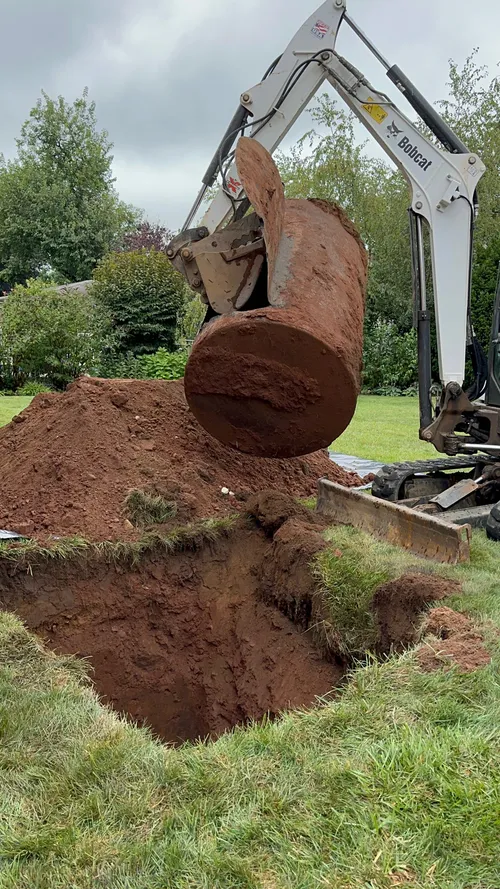
Water Resource Technologies is a full-service environmental remediation and consulting company based near New York, NY. They specialize in septic system repair and installation, as well as residential heating oil tank services and environmental site remediation. Their expertise includes environmental drilling and borings, supporting a range of environmental and septic system needs.
A Norton Septic Contracting
3171 US-9, Old Bridge, NJ 08857
A Norton Septic Contracting is a full-service septic company based in New York, NY, offering septic tank pumping, inspections, repairs, and installations. They serve residential and commercial clients and specialize in alternative septic systems like Hoot and Infiltrator. With over 30 years of experience, they provide NJDEP-compliant inspections and have developed effective repair methods for systems that fail prematurely. The company emphasizes proper maintenance and offers consultations to troubleshoot septic issues. They provide personalized service and handle each project from start to finish.
WHERE OLD MEETS NEW LLC
2a Great Meadow Ln, East Hanover, NJ 07936
WHERE OLD MEETS NEW LLC is a family-operated septic service company based near New York, NY, serving the communities of Northern New Jersey. They provide full-service septic system maintenance, repair, and installation for both residential and commercial properties. With over 50 years of experience, the company offers expertise in all aspects of septic systems, including planning and permitting for new installations. WHERE OLD MEETS NEW LLC is licensed and insured, continuing a legacy that began with B Horstmann Septic Service founded in 1978.
Understanding Local Regulations for Septic Repairs
In Plainfield and throughout Will County, residential septic systems are regulated by the Will County Health Department (WCHD) and the Illinois Department of Public Health (IDPH) 1. Any construction, repair, or alteration to a septic tank system requires a permit from the local health authority before work begins. Will County enforces strict ordinances to prevent health hazards from malfunctioning systems. Navigating these rules is the first critical step in any repair project.
The core regulatory requirements include:
- Permit Necessity: A sewage permit must be issued by the WCHD before any construction or repair starts. Permits are valid for one year from the date of issue.
- Licensing: Contractors performing the work must be state-certified and licensed by IDPH and must register annually with Will County 2.
- Homeowner DIY Option: A homeowner may repair a system on their own property if they successfully pass a WCHD-administered examination.
- Mandatory Inspections: Repaired systems must be inspected and approved by the Health Authority before being covered with soil or placed back into operation.
- Setbacks & Space: If a repair site has insufficient space to meet required setbacks (e.g., 50 feet from a well), alternative solutions like a sealed holding tank may be mandated 3.
Common Types of Septic System Repairs
Depending on the failure's cause, repairs may range from minor component replacement to full field restoration 4. A professional assessment is essential to determine the correct course of action. Common repair scenarios include:
- Tank Maintenance and Repair: This often starts with pumping to remove built-up sludge, which should ideally not exceed 33% of the tank's liquid capacity 5 6. Other tank repairs involve replacing damaged inlet or outlet baffles, fixing cracked pipes, or installing modern components like effluent filters and tank risers for easier future access.
- Drain Field Restoration: This is often the most complex and costly repair. Issues include clogged pipes, soil compaction (biomat formation), or tree root intrusion in the leach field. Solutions can range from jet-cleaning pipes to replacing sections of the field or even installing a completely new drain field.
- System Upgrades: In some cases, a traditional repair isn't viable. Installing an aerobic treatment unit (ATU) or an individual mechanical sewage treatment system may be necessary, especially if soil conditions are poor or space is limited 7 8.
The Professional Inspection: What to Expect
Before a repair plan is formulated, a thorough inspection is required. A professional inspection typically takes 1-2 hours and follows a detailed process. Understanding this can help homeowners prepare.
The primary steps of a septic system inspection are:
- Preparation: The technician will locate the tank and drain field using "as-built" diagrams from the county or specialized equipment like pipe locators.
- Access: The tank lid and inspection ports are uncovered. Having these accessible beforehand can save time and money.
- Visual Assessment: The inspector checks the tank walls, inlet/outlet pipes, and baffles for cracks, leaks, or structural integrity issues 9.
- Sludge and Scum Measurement: Using specialized tools, the depth of the sludge and scum layers is measured to determine if the tank requires immediate pumping 10.
- Functional Testing: To check the drain field, toilets are flushed and water levels are monitored to ensure wastewater is being absorbed correctly and not backing up 11 12.
Find the perfect septic system repair companies for your needs
Get personalized recommendations and expert advice
Permit and Fee Structure in Will County
Fees for septic work are established by county ordinance and are subject to change. As of the current local fee schedule, common costs associated with septic system repair in the Plainfield area include 13:
| Service Type | Fee Amount |
|---|---|
| Repair Permit (Existing System) | $225 |
| Site Inspection Fee | $125 |
| Verification of Existing System | $65 |
| Homeowner's Test Fee (for DIY repair) | $60 |
| Soil Evaluation Fee | $175 |
| Permit Re-issuance (after 1 year) | $100 |
These fees are paid to the Will County Health Department and are separate from the costs charged by a licensed contractor for the actual repair work. Always confirm the latest fee schedule directly with the WCHD before applying for a permit.
Choosing a Licensed Repair Contractor
Selecting the right professional is crucial for a compliant and lasting repair. Always verify that a contractor holds a current Illinois Private Sewage Disposal Installation Contractor license from the IDPH and is registered with Will County 14 15. A reputable contractor will:
- Pull the necessary permit on your behalf.
- Provide a detailed written estimate outlining the repair scope and costs.
- Use appropriate equipment and techniques for the specific repair.
- Schedule and coordinate the required county inspections.
- Offer guidance on proper system maintenance after the repair is complete.
For homeowners considering the DIY route, passing the county-administered exam is mandatory 16. This ensures you understand the health codes, installation standards, and safety procedures required to perform a legal and effective repair on your own property.
Maintaining Your System Post-Repair
Once your septic system restoration is complete and approved, proper maintenance is key to preventing future failures. This includes regular pumping every 3-5 years (depending on usage), conserving water to avoid overloading the system, and avoiding flushing harmful chemicals or non-biodegradable materials. A well-maintained system protects your investment, your property value, and the local environment.
Frequently asked questions
Sources
Footnotes
-
§ 51.05 SEWAGE TREATMENT OR DISPOSAL SYSTEMS. - https://codelibrary.amlegal.com/codes/willcounty/latest/willcounty_il/0-0-0-31672 ↩
-
§ 51.05 SEWAGE TREATMENT OR DISPOSAL SYSTEMS. - https://codelibrary.amlegal.com/codes/willcounty/latest/willcounty_il/0-0-0-31672 ↩
-
Can You Have a Septic Tank Without a Leach Field at Home? - https://shanksterbros.net/can-septic-tank-without-leach-field/ ↩
-
Septic Repair & Restoration in Plainfield, IL | FreeFlow - https://freeflowusa.com/septic-repair-plainfield-illinois/ ↩
-
Preparing for Septic Tank Inspection: 7 Key Steps - https://septic911.com/preparing-for-septic-tank-inspection/ ↩
-
Illinois Septic Tank Requirements - https://www.ntotank.com/blog/illinois-septic-tank-requirements ↩
-
Private Sewage Disposal - Illinois Department of Public Health - https://dph.illinois.gov/topics-services/environmental-health-protection/private-sewage-disposal.html ↩
-
§ 51.08 INDIVIDUAL MECHANICAL SEWAGE TREATMENT ... - https://codelibrary.amlegal.com/codes/willcounty/latest/willcounty_il/0-0-0-31758 ↩
-
DIY Septic Tank Inspections - Flohawks - https://flohawks.com/diy-septic-tank-inspections-a-step-by-step-guide/ ↩
-
How to Get Septic to Pass Inspection - https://www.guardianangelinspections.com/how-to-get-septic-to-pass-inspection ↩
-
Septic System Inspection | Expectations - https://septicspecialistinc.com/what-to-expect-during-a-septic-system-inspection/ ↩
-
Septic Inspection Process: What Homeowners Should Know ... - https://www.lunspro.com/vlog/the-septic-system-inspection-process-what-homeowners-should-know ↩
-
§ 51.10 CONTRACTOR'S LICENSE AND EXAMINATION. - https://codelibrary.amlegal.com/codes/willcounty/latest/willcounty_il/0-0-0-31792 ↩
-
Private Sewage Disposal - Illinois Department of Public Health - https://dph.illinois.gov/topics-services/environmental-health-protection/private-sewage-disposal.html ↩
-
Sewage Facility Ordinance - Will County Health Department - https://willcountyhealth.org/wp-content/uploads/2018/08/2016-Sewage-Ordinance-1.pdf ↩
-
Illinois Septic Tank Requirements - https://www.ntotank.com/blog/illinois-septic-tank-requirements ↩