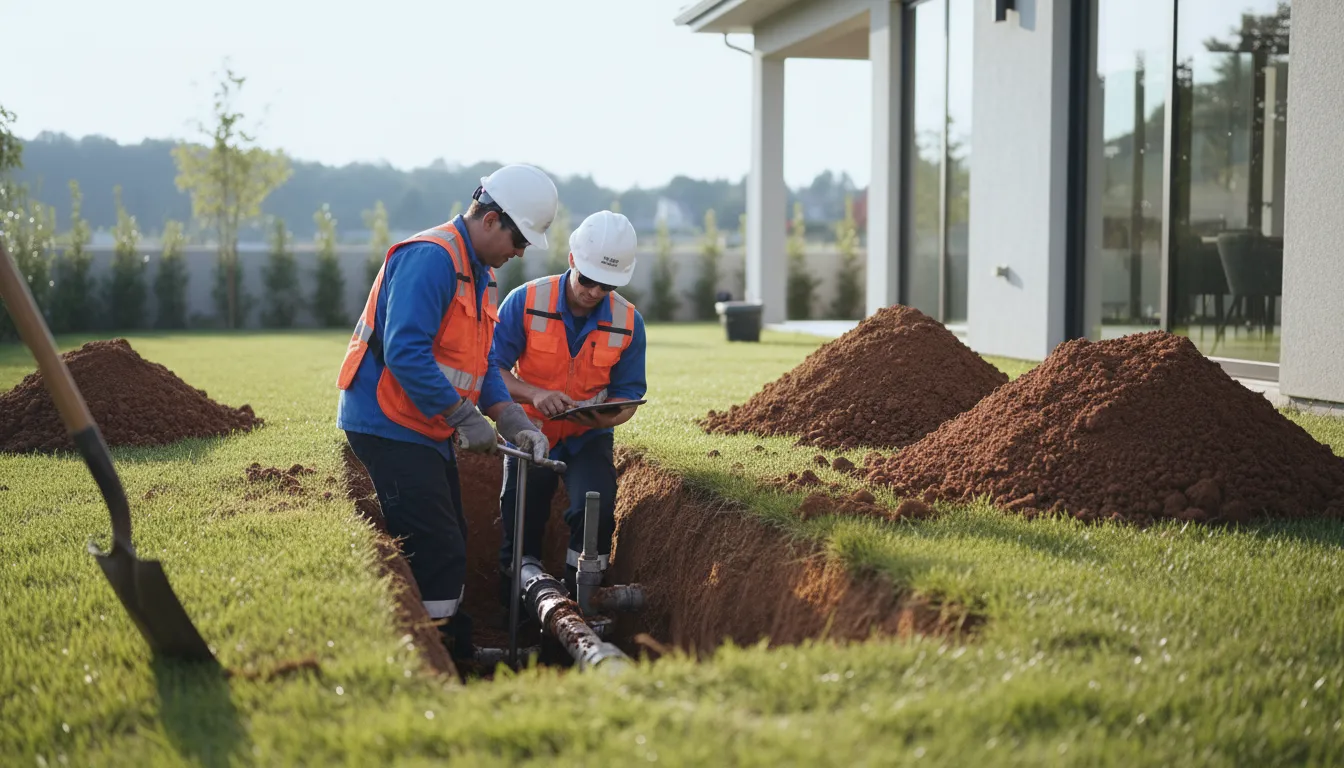
Find the Best Septic System Repair Companies for Your Business
No obligation • Fast responses • Nationwide coverage

Why you can trust Septic Spot
Septic Spot is a leading United States resource for understanding and comparing septic services. Our editors review providers using consistent criteria and verify key business details. Listings and scores are independent, and companies cannot pay to influence our content.
Search providers near you
Top Septic System Repair Companies in Sayreville, New Jersey Ranked
A failing septic system is more than an inconvenience; it's a public health and environmental concern that requires immediate, professional attention. Septic system repair involves diagnosing and fixing issues with your onsite wastewater treatment system, from the tank to the drain field. In Sayreville, this work is strictly regulated to protect local groundwater and public safety. This guide explains the common repair needs, the local regulatory process, and how to connect with qualified professionals who can restore your system to proper function.
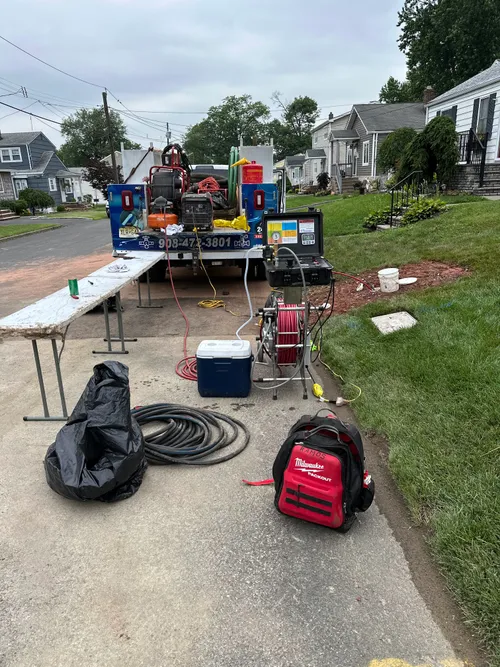
Arrow Sewer and Drain
165 Union Ave, Middlesex, NJ 08846
Arrow Sewer and Drain is a septic tank inspection and repair company serving New York, NY. They specialize in trenchless sewer repair methods that avoid excavation, preserving property while fixing cracked or corroded underground pipes. Their services include sewer inspections, pipe repairs, hydro-jetting, and emergency plumbing. The company offers 24/7 emergency plumbing service to address urgent sewer line problems quickly with professional camera inspections and effective solutions. Arrow Sewer and Drain serves a wide area including Middlesex and Somerset Counties in New Jersey, providing residential, commercial, and municipal sewer and plumbing projects.
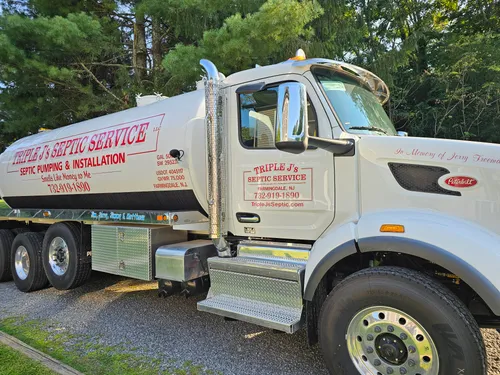
Triple J's Septic Services LLC
34 Asbury Ave, Farmingdale, NJ 07727
Triple J's Septic Services LLC is a family-owned business based in Lakewood, NJ, providing septic tank pumping, repairs, and installation services. Established in the late 1980s by Gerald Freeman, the company holds an A-901 State License, ensuring compliance with New Jersey regulations. They also offer grease trap pumping and manage complex projects involving engineering and additional contractors. With decades of experience, Triple J's supports customers through every step of septic system care and maintenance.
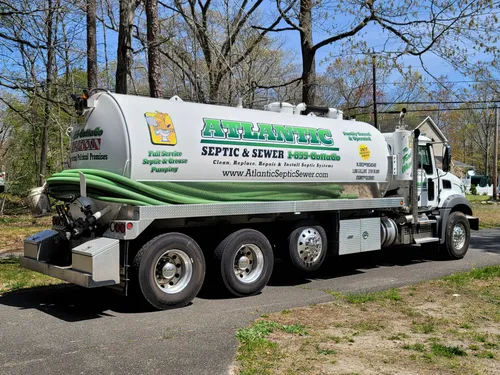
Atlantic Sitton Services, Inc.
647 Herman Rd, Jackson Township, NJ 08527
Atlantic Sitton Services, Inc. provides septic system installation, repair, inspection, and pumping services in Lakewood, NJ. They serve residential, commercial, and government clients across New Jersey, offering additional services such as grease trap cleaning, grease tank pumping, and used cooking oil collection for recycling. Their certified technicians handle septic system jetting, sludge and liquid waste removal, and new construction excavation. With over 30 years of experience, Atlantic Sitton Services emphasizes environmentally conscientious practices and offers emergency services 24/7 to support system functionality and environmental health.
A Norton Septic Contracting
3171 US-9, Old Bridge, NJ 08857
A Norton Septic Contracting is a full-service septic company based in New York, NY, offering septic tank pumping, inspections, repairs, and installations. They serve residential and commercial clients and specialize in alternative septic systems like Hoot and Infiltrator. With over 30 years of experience, they provide NJDEP-compliant inspections and have developed effective repair methods for systems that fail prematurely. The company emphasizes proper maintenance and offers consultations to troubleshoot septic issues. They provide personalized service and handle each project from start to finish.
B.J. Sewer & Septic
39 Pitney Ln, Jackson Township, NJ 08527
B.J. Sewer & Septic is a septic tank inspection and repair company serving Lakewood, NJ. They provide detailed system evaluations using advanced diagnostic tools to identify leaks, blockages, and structural issues in septic tanks and connected plumbing. Their services include thorough inspections of all critical components, such as tanks, piping, and drain fields, helping homeowners detect problems early and maintain system efficiency. The company also offers eco-friendly septic solutions that focus on sustainability by reducing water usage and minimizing environmental impact. These practices support long-term system health and responsible maintenance.
Understanding Septic System Malfunctions
The first step in addressing a problem is recognizing the signs of a failing system. Common red flags in Sayreville homes include:
- Sewage backups in household drains or toilets.
- Foul odors around the yard, especially near the tank or drain field area.
- Persistently wet, soggy, or spongy ground over the leach field, even in dry weather.
- Unusually lush, green grass over the drain field compared to the rest of the lawn.
- Gurgling sounds in your plumbing.
Ignoring these symptoms can lead to environmental contamination, costly fines from the county, and a complete system failure requiring a full replacement. Prompt diagnosis and repair are crucial.
The Regulatory Landscape in Middlesex County
All septic system maintenance and remediation in Sayreville falls under the jurisdiction of the Middlesex County Environmental Health Division (MCEHD). They enforce New Jersey state code (N.J.A.C. 7:9A) to ensure repairs meet strict safety and environmental standards.
Key regulations homeowners and contractors must follow include:
- Permit Requirements: Nearly all repair work requires a permit from the MCEHD. This includes direct replacements of tanks, distribution boxes, or pipes. Any modification with a value typically exceeding $1,000 will necessitate a permit 1 2.
- Professional Licensing: Repairs must be performed by a state-licensed septic installer or a professional engineer. Hiring an unlicensed individual can result in improper work and permit denials 3.
- Plan Submission: For significant repairs, four copies of the application and engineered plans must be submitted to the MCEHD for review before any work begins 4.
- Setback Compliance: All repairs must adhere to minimum distance requirements from wells, property lines, and building foundations. These setbacks are generally 50-100 feet from wells and 10-25 feet from structures and property lines.
Navigating this process is a primary reason to work with an experienced local professional familiar with Middlesex County's specific protocols.
Common Types of Septic Repairs in Sayreville
Not all system failures require a full replacement. Many issues can be resolved with targeted repairs. Here are the most common septic fixes performed in the area:
1. Baffle or Effluent Filter Replacement
The baffles inside your tank (or the effluent filter on newer systems) prevent solids from escaping into the drain field. If these are broken, damaged, or clogged, they are a common source of downstream problems. Repairing or replacing them is often a straightforward fix, typically costing between $800 and $1,500.
2. Distribution Box Repair
The distribution box (D-box) evenly disperses liquid effluent to the various pipes in the drain field. Over time, it can settle, become clogged, or crack. Leveling, cleaning, or replacing a D-box is a common repair, with costs generally ranging from $1,200 to $3,000.
3. Tank Repair or Replacement
A cracked or leaking septic tank is a serious issue. Sometimes, cracks at the inlet/outlet or on risers can be sealed. However, significant structural damage requires full tank replacement. Replacing a standard residential tank in Sayreville typically costs between $10,000 and $15,000, depending on size and site accessibility.
4. Drain Field Restoration
A failing leach field is often the most expensive component to address. Full excavation and replacement of a drain field can cost $15,000 to $35,000 or more 5. However, in some cases, less invasive restoration techniques can be effective. One method involves using a tool like TerraLift to fracture compacted soil around the drain lines, restoring permeability and flow without a full dig-up 6.
5. Pipe Repair and Cleaning
Broken, collapsed, or root-clogged pipes between the tank and drain field can cause backups. Repair may involve excavating to replace a section of pipe. Often, high-pressure water jetting can clear roots and blockages from pipes, which is a more affordable remediation option.
Find the perfect septic system repair companies for your needs
Get personalized recommendations and expert advice
The Professional Diagnostic Process
Before any repair plan is formulated, a licensed professional will conduct a thorough inspection to pinpoint the exact problem. This diagnostic process typically involves:
- Records Review: Checking the original system design and any past repair records on file with the MCEHD.
- Locating & Exposing: Using probes and excavation to find and uncover the septic tank lids and distribution box for visual inspection 7.
- Pumping & Tank Inspection: Pumping the tank is necessary to evaluate its structural integrity, check for cracks, and inspect the baffles 8.
- Drain Field Evaluation: Inspecting the leach field area for signs of saturation, surfacing effluent, or overly lush vegetation.
- Functional Testing: Often, a hydraulic load test is performed-running a significant amount of water into the system to observe how it handles flow and if it leads to surfacing wastewater 9.
This inspection itself usually costs between $300 and $800 in the Sayreville area. The findings from this evaluation will determine whether a repair or a full system replacement is necessary.
Repair vs. Replacement: Making the Decision
A key question for any homeowner facing a malfunction is whether to repair or replace the entire system. Factors that influence this decision include:
- Age of the System: Systems over 20-30 years old may be nearing the end of their functional lifespan.
- Extent of Damage: Is the issue isolated (a single broken pipe) or systemic (a completely failed drain field saturated with biomat)?
- Soil Condition: Has the soil in the leach field become permanently compacted and impermeable?
- Local Regulations: The MCEHD may mandate a replacement if the existing system is too close to a new well or cannot be brought up to current code through repair.
A reputable contractor will provide a clear assessment and explain the long-term viability of a repair versus the investment in a new system. While a minor repair like a baffle replacement may cost $300 to $1,200, a full system replacement in Sayreville can range from $35,000 to $60,000 depending on soil conditions and system size 10 11 12.
Frequently asked questions
Sources
Footnotes
-
NJ Septic Regulations for 2026: Inspections, Permits & Rules - https://www.atsenvironmental.com/blog/nj-septic-regulations-for-2026/ ↩
-
New Jersey Septic Tank Rules And Regulations - https://www.arrowsewernj.com/blog/septic-tanks-in-new-jersey-what-you-need-to-know/ ↩
-
Septic System Program | Middlesex County NJ - https://www.middlesexcountynj.gov/government/departments/department-of-public-safety-and-health/office-of-health-services/environmental-health/septic-system-program ↩
-
NJ Septic Regulations for 2026: Inspections, Permits & Rules - https://www.atsenvironmental.com/blog/nj-septic-regulations-for-2026/ ↩
-
Septic Repair vs Replacement in NJ: Costs & Signs - https://www.atsenvironmental.com/blog/septic-repair-vs-replacement/ ↩
-
Septic Repair vs Replacement in NJ: Costs & Signs - https://www.atsenvironmental.com/blog/septic-repair-vs-replacement/ ↩
-
How to Never Worry About Your NJ Septic System Again - https://www.youtube.com/watch?v=7xPdvCiGV5g ↩
-
SEPTIC - NJ.gov - https://dep.nj.gov/wp-content/uploads/dwq/pdf/septicmn.pdf ↩
-
How Septic System Inspections Are Performed in New Jersey - https://thesewerkings.com/blog/septic-system-inspections/ ↩
-
Septic System Repair & Troubleshooting in NJ - https://excavatingnj.com/services/septic/repairs/ ↩
-
How Much Does It Cost To Replace A Septic System In Northern NJ? - https://dsepticservice.com/b/septic-system-replacement-cost-new-jersey/ ↩
-
New Jersey Septic System Rules - 2026 Guide - https://thesewerkings.com/blog/new-jersey-septic-system-rules/ ↩