Find the Best Septic Tank Inspection Companies for Your Business
No obligation • Fast responses • Nationwide coverage

Why you can trust Septic Spot
Septic Spot is a leading United States resource for understanding and comparing septic services. Our editors review providers using consistent criteria and verify key business details. Listings and scores are independent, and companies cannot pay to influence our content.
Search providers near you
Best Septic Tank Inspection Companies in Maine Ranked
A septic tank inspection is a professional assessment of your onsite wastewater system's condition and compliance with state regulations. In Maine, these evaluations are crucial for protecting public health, preserving water quality, and ensuring your property's value. Whether you're buying a home, maintaining your system, or planning an upgrade, understanding the inspection process helps you find qualified local professionals to conduct this essential service.
Why Septic Inspections Are Required in Maine
Maine has specific rules governing subsurface wastewater systems to protect its extensive coastline, lakes, and groundwater. State law mandates inspections under certain conditions to prevent system failures that could contaminate the environment.
The most common trigger for a mandatory inspection is a property transfer. If the property is located in a coastal shoreland zone-within 250 feet of a coastal wetland-a system inspection is required upon the transfer of ownership. This rule highlights the state's focus on safeguarding sensitive marine ecosystems.
Inspections are also a required part of the installation process for any new, expanded, or replacement system. The Local Plumbing Inspector (LPI) must inspect the system at least twice: once after site preparation and again before the final backfilling. All systems must be permitted by the LPI, and the permit is valid for work commenced within 24 months of issuance.
The Maine Septic Inspection Process: What to Expect
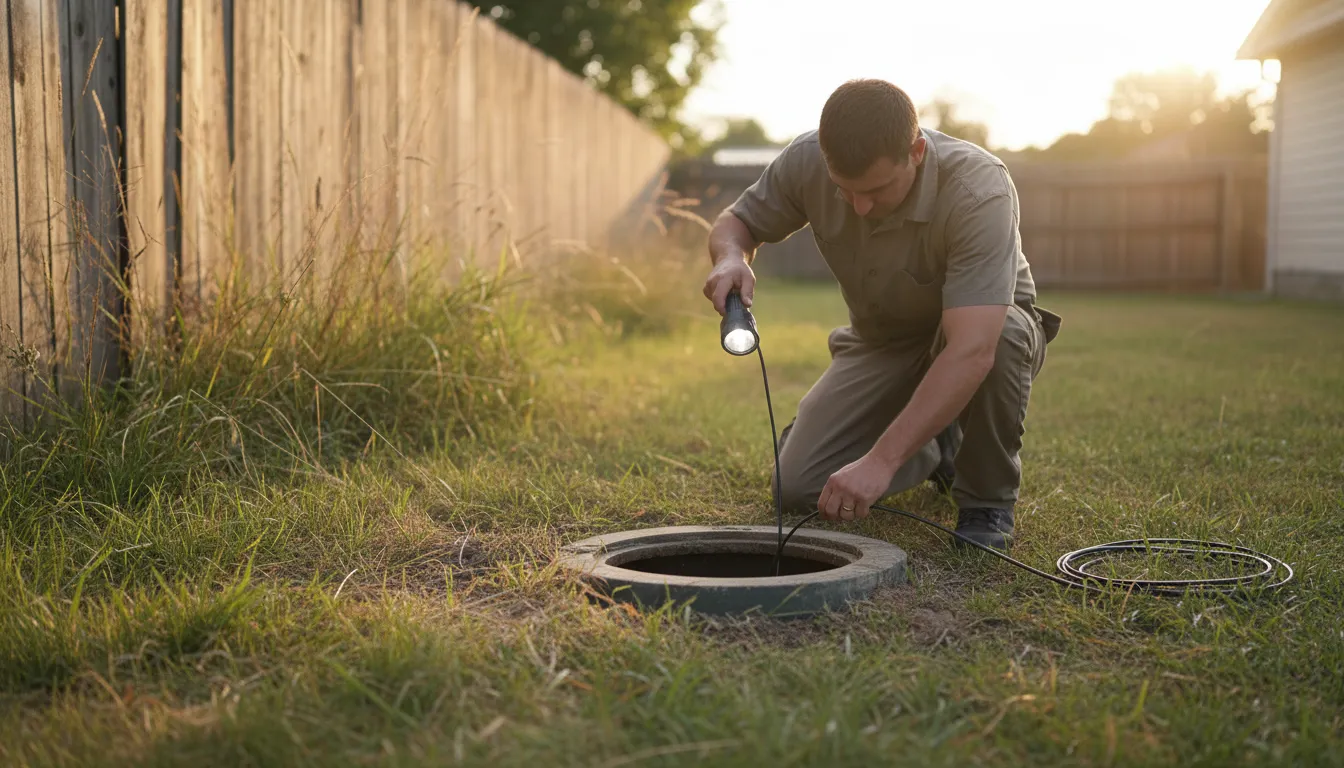
A thorough septic system evaluation in Maine follows a standardized procedure to assess all critical components. Licensed inspectors, often certified by the state, will typically follow these steps:
- System Location & Documentation: The inspector will locate the tank, distribution box, and leach field. They review any available permits and "as-built" diagrams.
- Tank Access & Integrity: Inspectors check for proper, watertight risers that extend to the finished grade-a requirement for all new systems under updated rules. The tank is opened to examine its structural integrity.
- Internal Component Check: The outlet baffle (or effluent filter) is inspected to ensure it is intact and functioning, which is vital for preventing solids from entering the drainfield.
- Sludge and Scum Measurement: The levels of sludge (at the bottom) and scum (at the top) are measured. Excessive accumulation indicates the need for pumping.
- Hydraulic Load Test: Water is run into the system to check for proper drainage and to identify any backups or surfacing effluent in the leach field area.
- Leach Field Evaluation: The inspector examines the soil absorption area for signs of failure, such as soggy ground, foul odors, or unusually lush vegetation.
- Compliance Review: The inspector verifies that the system's design and condition comply with current Maine Subsurface Wastewater Disposal Rules (10-144 CMR Chapter 241).
Find the perfect septic tank inspection companies for your needs
Get personalized recommendations and expert advice
Understanding Inspection Costs in Maine
The price of a septic inspection in Maine varies based on the inspection's scope and complexity. It's important to get detailed quotes from certified inspectors.
- Routine Maintenance Inspection: A standard check-up to assess sludge levels and overall function typically costs between $200 and $900.
- Real Estate Transaction Inspection: A comprehensive inspection for a property sale, which includes a full hydraulic load test and detailed report for lenders, can range from $550 to $1,300 or more1.
- Additional Fees: Be aware of potential extra costs. If the system needs to be located or dug up for access, digging services can cost around $100 per hour2. Always confirm what is included in the quoted price.
Maine's Regulatory Framework and Who Can Inspect
Maine's inspection standards are established and enforced through a combination of state and local authorities.
- Governing Rules: All systems must comply with the Subsurface Wastewater Disposal Rules (10-144 CMR Chapter 241), which were updated in September 2023 3 4.
- Local Plumbing Inspector (LPI): The LPI in your municipality is the primary permit-issuing and enforcement official for installation and repair projects 5.
- Licensed Professionals: For property transfer inspections and detailed evaluations, you must hire a licensed Site Evaluator, a Professional Engineer, or a state-certified inspector6 7. These professionals have the training to evaluate soil conditions, system design, and compliance with state law.
The High Cost of Neglect: Signs of a Failing System
Avoiding inspections can lead to costly emergencies. Recognizing early warning signs can save you time and money:
- Sewage odors around the tank or drainfield.
- Standing water or soggy soil over the septic system area.
- Slow-draining sinks, tubs, or toilets inside the home.
- Gurgling sounds in plumbing.
- Unusually bright green, lush grass over the drainfield.
A failing system is a serious health hazard and environmental risk. The cost to replace a failed septic system in Maine often starts at $12,000 or more, far exceeding the cost of routine inspections and maintenance 8 9.
Key Considerations for Homeowners and Buyers
- For Sellers: If your property is in a coastal shoreland zone, a pre-listing inspection can identify issues early and smooth the real estate transaction. Ensure your system has compliant, accessible risers.
- For Buyers: Always make your offer contingent on a satisfactory septic inspection by a certified professional. Review the inspection report carefully and understand any recommended repairs or upgrades.
- For All Owners: Keep records of all inspections, pumping, and repairs. Schedule routine inspections every 1-3 years, depending on usage, to extend your system's lifespan and avoid failures.
Finding a Qualified Inspector in Maine
When searching for inspection services, prioritize licensed and certified professionals. Look for inspectors who are members of industry associations like the Maine Certified Septic & Sewer Inspectors Association, which promotes standardized practices 10. Verify their license status with the state and ask for references. A reputable inspector will provide a clear, written report detailing the system's condition, measurements, compliance status, and any recommendations for repair or maintenance.
Frequently asked questions
Sources
Footnotes
-
Maine State Certified Septic Inspections - https://www.annruelhomeinspections.com/septic.html ↩
-
How Much Does a Septic Inspection Cost? [2026 Data] - Angie's List - https://www.angi.com/articles/septic-inspection-cost.htm ↩
-
Subsurface Wastewater Disposal Rule, 10-144 CMR Ch. 241 - https://www.maine.gov/dhhs/about/rulemaking/subsurface-wastewater-disposal-rule-10-144-cmr-ch-241-2023-09-21 ↩
-
Maine Subsurface Wastewater Rules - https://www.maine.gov/dhhs/mecdc/services/business-services/hydrology-and-wastewater/maine-subsurface-wastewater-rules ↩
-
Subsurface Wastewater System Permitting - Maine.gov - https://www.maine.gov/dhhs/mecdc/services/business-services/hydrology-and-wastewater/subsurface-wastewater-system-permitting ↩
-
MAINE STATE LEGISLATURE - https://lldc.mainelegislature.org/Open/Rpts/td433_b68_2020.pdf ↩
-
Subsurface Wastewater Licensing & Certification - Maine.gov - https://www.maine.gov/dhhs/mecdc/services/business-services/hydrology-and-wastewater/subsurface-wastewater-licensing-certification ↩
-
Septic System Inspection - Maine.gov - https://www.maine.gov/dep/land/watershed/septic.pdf ↩
-
Septic Systems - Maine.gov - https://www.maine.gov/dep/water/groundwater/septic_systems.pdf ↩
-
Maine Certified Septic & Sewer Inspectors Association - http://mainesepticinspectors.com/inspection.html ↩