Find the Best Septic Tank Inspection Companies for Your Business
No obligation • Fast responses • Nationwide coverage

Why you can trust Septic Spot
Septic Spot is a leading United States resource for understanding and comparing septic services. Our editors review providers using consistent criteria and verify key business details. Listings and scores are independent, and companies cannot pay to influence our content.
Search providers near you
Find Septic Tank Inspection Companies near you
A septic tank inspection is a critical health and maintenance check for your home's wastewater system. It provides a professional assessment of your septic tank and drain field to ensure everything is functioning properly and to identify potential problems before they become costly failures. For homeowners, regular inspections are a cornerstone of responsible property care, and for buyers and sellers, they are an essential step in a real estate transaction. This guide explains what a septic system inspection entails, how often you need one, what it costs, and how to find qualified local professionals to perform this vital service.
Search providers near you
Why Septic System Inspections Are Essential
Your septic system is an out-of-sight, but never out-of-mind, component of your property. Unlike a municipal sewer connection, you are solely responsible for its maintenance and repair. A professional septic inspection is the most effective way to protect your investment. It confirms that the system is safely processing household wastewater, preventing environmental contamination and health hazards. Skipping these checks is a significant risk; undetected issues can lead to complete system failure, with repair bills often ranging from $1,500 to $5,000 or more, and full replacements can exceed $25,0001. An inspection provides peace of mind and is far less expensive than emergency repairs.
Recommended Inspection Frequency
How often should you schedule a septic tank check? The general guideline from the U.S. Environmental Protection Agency (EPA) is to have your system inspected every one to three years. However, the ideal schedule depends on several factors:
- System Age: Older systems (more than 20 years old) often require annual inspections due to wear and tear. Newer systems (less than 10 years old) may only need a check every three to five years.
- Household Size and Usage: More occupants and greater water use put more strain on the system, potentially necessitating more frequent checks.
- Local Health Department Regulations: Many counties and towns have mandatory inspection schedules, especially for properties near water bodies. Always verify requirements with your local health department 2.
- Key Life Events: An inspection is highly recommended when purchasing a home. This is often a more detailed evaluation than a routine maintenance check and is crucial for understanding the property's condition3 4. Inspections are also wise before listing a home for sale or after periods of heavy use.
What a Professional Inspection Includes
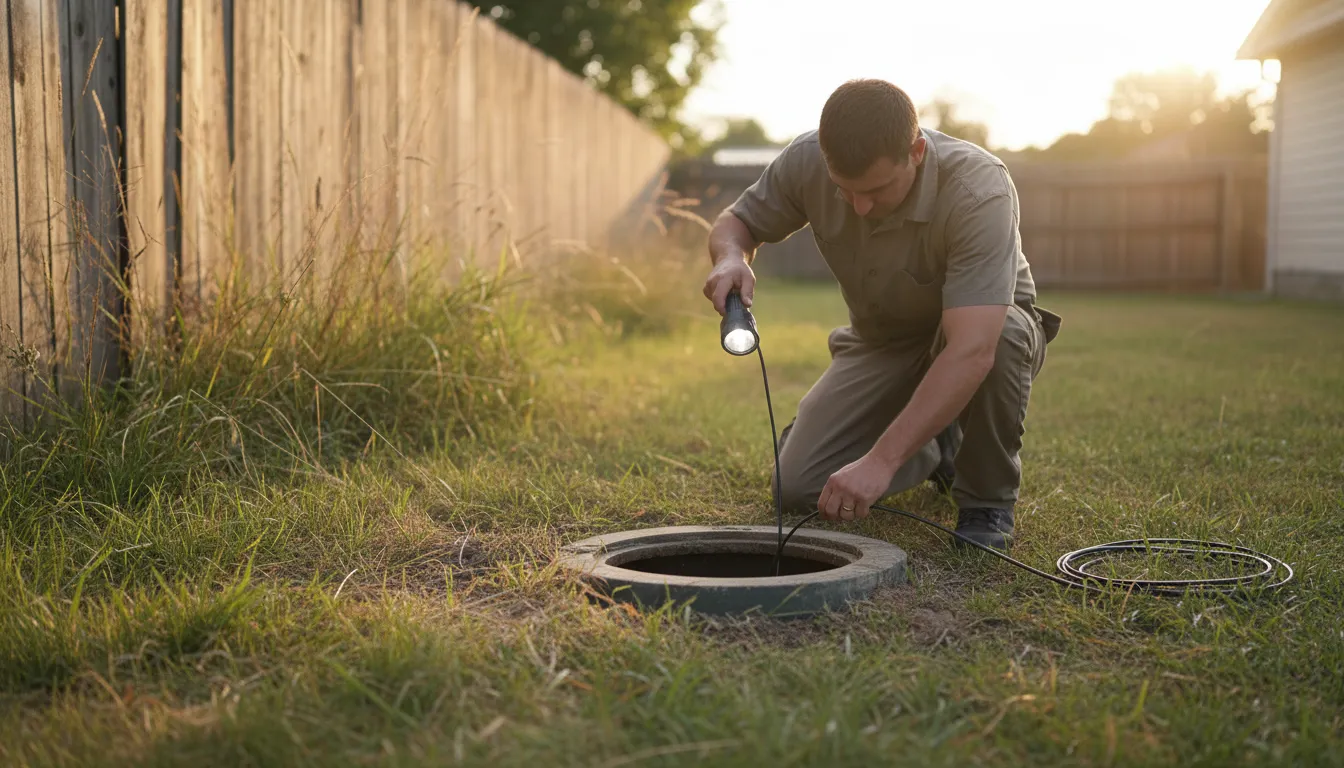
A comprehensive septic system evaluation is a multi-step process conducted by a trained specialist. It typically takes one to two hours and involves assessing all major components 5.
- Preparation & Access: The inspector will first locate the tank and dig to access the inspection lids. Note that if the lids are buried, an excavation fee of $50 to $250 may apply.
- Tank Interior Assessment: This is the core of the inspection. The inspector will:
- Inspect Baffles and Outlets: The inlet and outlet baffles (or tees) are checked to ensure they are intact and properly positioned. These components are vital for preventing solids from leaving the tank.
- Drain Field Evaluation: The inspector will examine the soil absorption area (leach field) for signs of failure, such as:
- Soggy ground or standing water.
- Foul odors.
- Unusually lush or green grass over the field lines.
- Hydraulic Load Test: To see how the system performs under use, the inspector may run a significant amount of water into the house (e.g., multiple faucets and showers) and monitor the tank and drain field for proper drainage and any signs of backup or surfacing effluent.
- Component Check: For systems with pumps, filters, or alarms, the inspector will test these electrical and mechanical components to ensure they are operational 9.
Find the perfect septic tank inspection companies for your needs
Get personalized recommendations and expert advice
Understanding Inspection Costs
The cost of a septic inspection varies based on the type of inspection, system complexity, and your location. On average, homeowners can expect to pay between $300 and $700 for a standard professional inspection.
- Typical Range: Most routine inspections fall between $200 and $900.
- Real Estate or Detailed Inspection: A more thorough inspection for a home purchase, which often includes a comprehensive written report and may involve county health department certification, can range from $400 to $1,300 or more 10.
- Additional Fees: Remember to account for potential extra costs like excavation to uncover tank lids ($50-$250) or a separate pumping service if the inspection reveals the tank is full11 12.
While this is an out-of-pocket expense, it is a prudent investment. The cost of an inspection pales in comparison to the expense of repairing a failed drain field or replacing an entire septic system.
The Home Buying & Selling Inspection
A septic inspection for real estate is a non-negotiable step in most rural and suburban property transactions. For buyers, it's a key part of the due diligence process, revealing the condition of a critical system. For sellers, having a recent inspection report can make a property more attractive and streamline the sale13 14.
This type of inspection is often more rigorous. It may need to comply with specific local or lender requirements and could include a "flow test" to simulate household water use and a detailed evaluation of the drain field's absorption capacity. Always ensure the inspector you hire is qualified to provide the documentation required for your real estate transaction.
Maintaining Your System Between Inspections
Professional inspections are vital, but day-to-day homeowner care extends the life of your system. Good practices include:
- Conserving water to avoid overloading the system.
- Avoiding flushing anything besides human waste and toilet paper.
- Never pouring grease, chemicals, or paints down the drain.
- Keeping vehicles and heavy structures off the drain field area.
- Mapping the location of your tank and drain field for easy future access.
Finding a Qualified Inspector
Not all plumbers or contractors are experts in septic systems. Look for professionals who specialize in septic services, are licensed according to your state's requirements, and carry proper insurance. They should be familiar with local health codes and able to provide a clear, detailed report of their findings. Asking for references and comparing detailed quotes from a few local specialists is the best way to ensure you receive a thorough and accurate assessment of your septic system's health.
Frequently asked questions
Sources
Footnotes
-
How Often Should You Have Your Septic Tank Checked? - https://www.drsepticsd.com/news/how-often-should-you-have-your-septic-tank-checked/ ↩
-
How Much Should a Septic Inspection Cost: Ultimate Money-Saving ... - https://www.firstcallseptic.com/septic-blog/how-much-should-a-septic-inspection-cost ↩
-
Septic System Inspections: What Every Homeowner Needs to Know - https://www.coxenterprisesllc.com/septic-system-inspections-homeowner-guide/ ↩
-
What Does a Septic Inspection Entail? - https://www.homelight.com/blog/septic-inspection/ ↩
-
Understanding the Price of Septic Tank Inspections - https://www.theflushfellas.com/understanding-the-price-of-septic-tank-inspections ↩
-
Septic Inspections Made Easy: What Every Contractor Needs to ... - https://flengineeringllc.com/septic-inspections-guide-contractors-2025/ ↩
-
Essential Septic System Inspection Guide for Homeowners - https://smartsepticpros.com/blog/septic-system-inspection-for-homeowners/ ↩
-
Inspection of Septic Systems | Oklahoma State University - https://extension.okstate.edu/fact-sheets/inspection-of-septic-systems.html ↩
-
Septic Inspection Guide: Homeowner Tips & Best Practices - https://www.rciseptic.com/comprehensive-guide-to-septic-inspection-what-homeowners-need-to-know ↩
-
How Much Does a Septic System Inspection Cost? [2025 Data] - https://www.homeadvisor.com/cost/plumbing/septic-inspection-cost/ ↩
-
How Much Does a Septic Inspection Cost? [2026 Data] | Angi - https://www.angi.com/articles/septic-inspection-cost.htm ↩
-
Understanding Septic Tank Inspections: A Complete Homeowner's Guide to the Process - https://septic-masters.com/septic-tank-inspection-homeowner-guide/ ↩
-
Septic Inspections | Septic Tank Inspections for Home Sales - https://shanksterbros.net/our-home-septic-system-inspection-services/ ↩
-
Septic Inspection Requirements for Home Sellers - https://mountain-living.com/summit-county-sellers/septic-inspection-requirements-for-home-sellers/ ↩