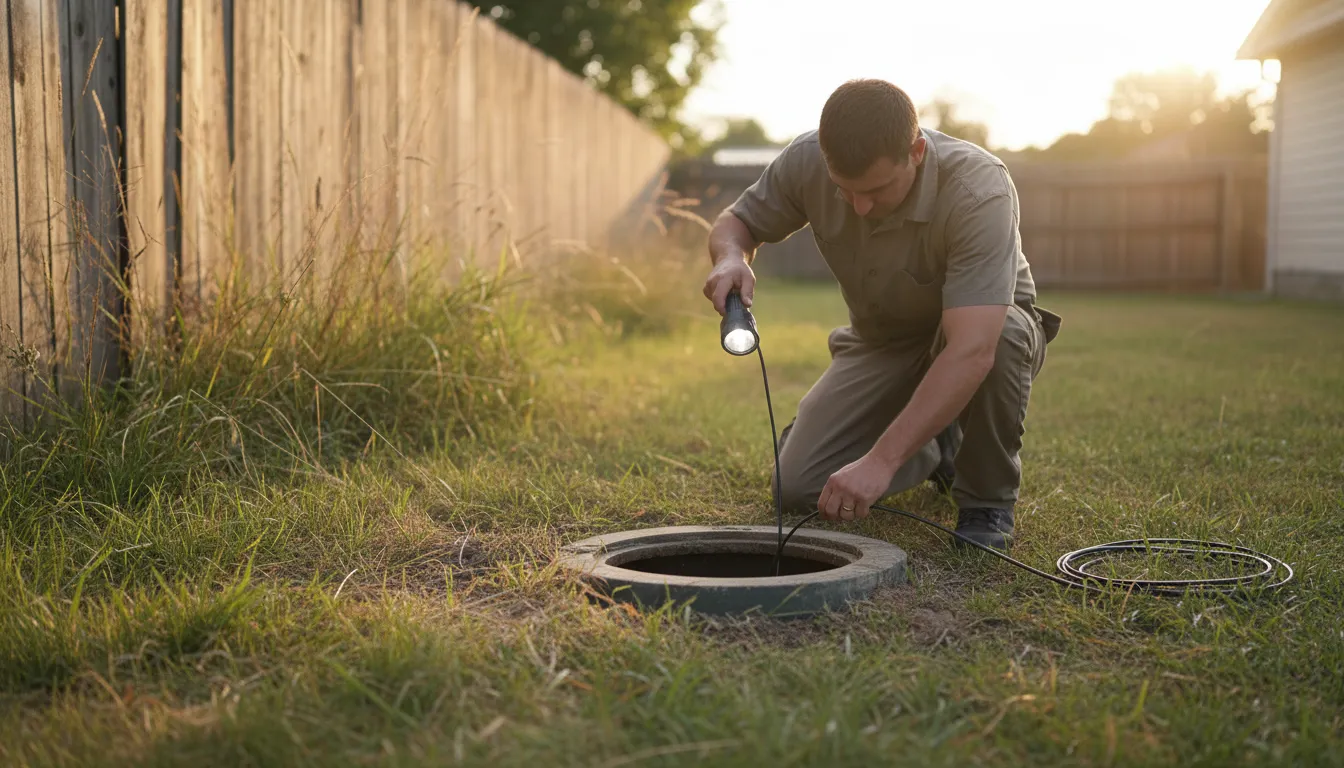
Find the Best Septic Tank Inspection Companies for Your Business
No obligation • Fast responses • Nationwide coverage

Why you can trust Septic Spot
Septic Spot is a leading United States resource for understanding and comparing septic services. Our editors review providers using consistent criteria and verify key business details. Listings and scores are independent, and companies cannot pay to influence our content.
Search providers near you
Top Septic Tank Inspection Companies in Jersey City, New Jersey Ranked
A septic tank inspection is a critical evaluation of your onsite wastewater treatment system's health and functionality. For the few properties in Jersey City not connected to the municipal sewer, these assessments are essential for protecting your investment, ensuring public health, and complying with local and state environmental regulations. This guide explains the process, requirements, and local considerations for septic system evaluations, helping you understand what to expect and how to find qualified professionals to perform this vital service.
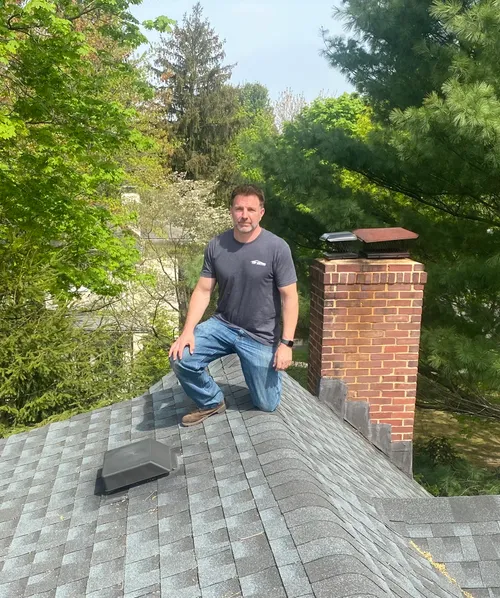
Top Notch Home Inspection
68 Garden Rd, Little Silver, NJ 07739
Top Notch Home Inspection is a septic tank inspection company based in New York, NY. They offer a range of property inspection services including septic and sewer evaluations, wood-destroying insect inspections, oil tank sweeps, chimney assessments, and pool inspections. Their team encourages clients to participate during inspections to better understand their home's systems and the inspection process.
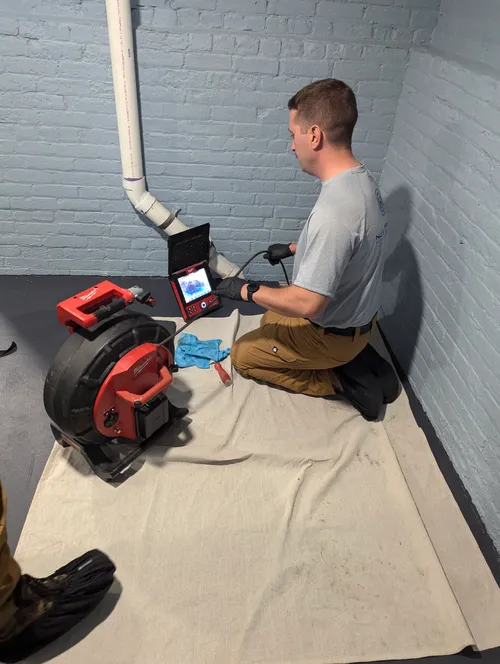
NJ Sewer Scopes
New York, NY
NJ Sewer Scopes is a septic tank inspection company based in New York, NY. They assist home buyers, sellers, and owners by providing inspections that help clients make informed decisions about their septic systems.
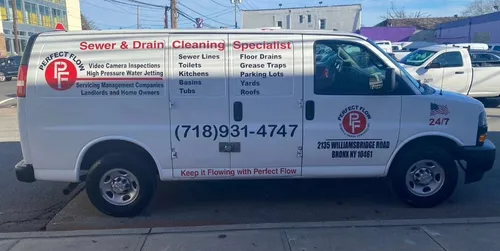
Perfect Flow Sewer & Drain Services
2135 Williamsbridge Rd, Bronx, NY 10461
Perfect Flow Sewer & Drain Services provides septic tank inspection and septic system repair in Yonkers, NY. They offer thorough inspections, efficient cleaning, and precise repairs to maintain reliable sewer and drain systems. Their services focus on ensuring seamless flow and system functionality.
Arrow Sewer and Drain
165 Union Ave, Middlesex, NJ 08846
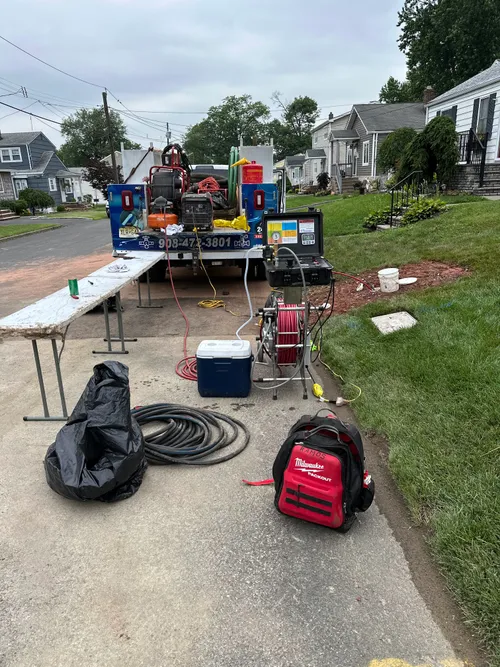
Arrow Sewer and Drain is a septic tank inspection and repair company serving New York, NY. They specialize in trenchless sewer repair methods that avoid excavation, preserving property while fixing cracked or corroded underground pipes. Their services include sewer inspections, pipe repairs, hydro-jetting, and emergency plumbing. The company offers 24/7 emergency plumbing service to address urgent sewer line problems quickly with professional camera inspections and effective solutions. Arrow Sewer and Drain serves a wide area including Middlesex and Somerset Counties in New Jersey, providing residential, commercial, and municipal sewer and plumbing projects.
USTA Home Inspections
25 Continental Dr Unit C, Wayne, NJ 07470
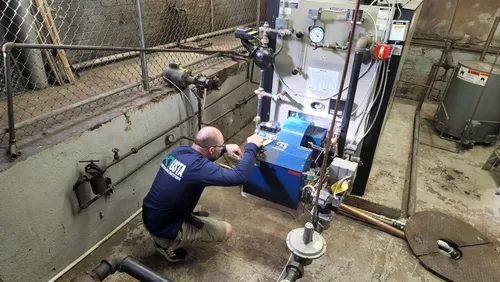
USTA Home Inspections is a septic tank inspection company serving New York, NY, and surrounding areas. They provide comprehensive home inspection services covering major components such as roofing, structural elements, electrical systems, HVAC, oil tank sweeps, foundation integrity, radon testing, termite inspections, and septic tank inspections. The company focuses on helping homebuyers make informed decisions by delivering clear and reliable inspection reports. USTA Home Inspections serves multiple counties in New Jersey and New York, including Passaic, Morris, Bergen, Essex, and Union. They emphasize protecting clients' investments and ensuring safety before moving into a new home.
Understanding Septic Systems in Jersey City
While Jersey City is overwhelmingly served by a municipal sewer system, some properties, particularly in less densely developed areas, may still rely on private septic systems. These onsite wastewater treatment and disposal systems are regulated by the New Jersey Department of Environmental Protection (NJDEP), with enforcement typically handled at the county or local health department level. For Jersey City, the Hudson County Regional Health Commission is a key point of contact for specific, up-to-date requirements.
Owning a property with a septic system comes with the responsibility of regular maintenance and inspection to prevent system failure, groundwater contamination, and costly repairs. A professional evaluation, or septic system assessment, is the best way to gauge your system's condition.
New Jersey & Local Inspection Requirements
Septic system oversight in New Jersey involves a combination of state guidelines and local enforcement. Understanding these rules is crucial for compliance.
State Guidelines & Local Enforcement: The NJDEP provides the technical standards for all septic systems in the state. However, local health departments permit and oversee systems that discharge less than 2,000 gallons of wastewater per day. This means that while the inspection procedures are standardized at the state level, the permits, records, and specific compliance orders for your Jersey City property are managed locally.
Common Triggers for an Inspection:
- Real Estate Transactions: New Jersey does not have a universal statewide mandate for inspections during property sales. However, many local municipalities and health departments do require a septic system certification before a sale can close 1. It's a common contingency in purchase agreements.
- Routine Maintenance: The NJDEP recommends having your septic tank inspected and pumped every three to five years to prevent sludge and scum from clogging the drainfield 2. Maintaining written records of all inspections and pumping for at least five years is a requirement 2.
- System Performance Issues: Signs of trouble like slow drains, sewage odors, or soggy areas in your yard are clear indicators that an immediate system evaluation is needed.
- After Periods of Inactivity: If a property has been vacant for more than a week, a specific Hydraulic Load Test is often required to verify the system can handle active use again before occupancy.
Regulatory Compliance: Inspectors are advised to review records from the local health department 48 hours prior to conducting an inspection. If an inspection reveals a system malfunction or illegal discharge, the inspector or system operator is obligated to notify the NJDEP 3 4.
Find the perfect septic tank inspection companies for your needs
Get personalized recommendations and expert advice
The Step-by-Step Septic Inspection Process
A comprehensive septic system evaluation in New Jersey follows a detailed protocol to assess every component. Here's what a typical inspection entails:
- Record Review & Site Evaluation: The process begins before any digging. A qualified inspector will review the property's file with the local health department to understand the system's design and history. On site, they will perform a visual survey of the property.
- Locating & Exposing System Components: The inspector must locate the septic tank, distribution box, and drainfield. This may involve using probe rods or electronic locating equipment. All tank access points (lids) are then carefully uncovered.
- Tank Inspection & Pumping: The tank is opened, and the inspector checks for structural integrity-looking for cracks, corrosion, or leaks. They will measure the levels of sludge and scum to determine if pumping is needed. Pumping the tank is typically a standard part of a full inspection to allow for a complete internal evaluation.
- Component Assessment: Key internal parts are examined, including the inlet and outlet baffles (or tees) to ensure they are intact and functioning. If the system includes a pump, lift station, or alarms, these are tested for proper operation.
- Drainfield Evaluation: This is a critical phase. The inspector will probe the soil over the drainfield (leach field) to check for signs of saturation, ponding, or effluent breakout. They look for overly green grass or foul odors, which indicate a failing field 5.
- Hydraulic Load Test (if required): For real estate transactions or after vacancy, this test is performed. A large volume of water is run into the system (often using multiple fixtures simultaneously) to simulate normal household use and confirm the system accepts and disperses the flow without backing up or surfacing 6 7.
- Reporting: Finally, the inspector provides a detailed report of their findings, including the system's condition, any deficiencies found, and recommendations for repairs, maintenance, or further investigation.
Understanding Inspection Costs in New Jersey
The cost of a septic system inspection can vary based on the system's complexity, property size, and specific tests required.
- Standard Inspection Cost: In New Jersey, a full septic system inspection generally ranges from $500 to $2,000 8 9. The price depends on factors like the difficulty of locating the tank and access points, the size and type of system (e.g., conventional vs. alternative technology), and whether the tank needs to be pumped.
- Pumping Costs: Pumping is usually included in the inspection fee. If done as a standalone service, it can cost several hundred dollars, depending on tank size 10.
- Repair and Replacement Costs: The inspection may uncover needed repairs. Minor fixes can be affordable, but a complete system failure requiring a new drainfield or full system replacement is a major expense, often ranging from $15,000 to $35,000 or more in New Jersey 11. It's worth noting that inspection and regulatory compliance can account for 20-25% of overall project costs for new installations or major repairs 11 12.
Investing in a thorough inspection is far more economical than dealing with the consequences of a neglected, failing system.
Choosing a Qualified Septic Inspector in Hudson County
Given the technical and regulatory complexity, selecting the right professional is paramount. Look for an inspector who:
- Is licensed and insured to perform septic system work in New Jersey.
- Has extensive experience with the specific types of systems common in the Northeast and local soil conditions.
- Is familiar with the regulations enforced by the Hudson County Regional Health Commission and the NJDEP.
- Provides a clear, detailed scope of work and a comprehensive written report.
- Can explain their findings and recommendations in understandable terms.
A proper evaluation by a knowledgeable expert provides peace of mind, ensures regulatory compliance, and forms the foundation for a long-lasting, functional wastewater system for your home.
Frequently asked questions
Sources
Footnotes
-
NJ Septic Regulations for 2026: Inspections, Permits & Rules - https://www.atsenvironmental.com/blog/nj-septic-regulations-for-2026/ ↩
-
New Jersey Septic System Rules - 2026 Guide - https://thesewerkings.com/blog/new-jersey-septic-system-rules/ ↩ ↩2
-
Compliance Advisory - NJ.gov - https://www.nj.gov/dep/enforcement/advisories/2023-07.pdf ↩
-
NJDEP| Division of Water Quality | Permitting Information - https://dep.nj.gov/dwq/wastewater/septic-systems/permitting-information/ ↩
-
Residential On-Site Sewage Disposal System INSPECTION REPORT - https://assets.marincounty.gov/marincounty-prod/public/2024-08/residential-on-site-inspection-report-checklist.pdf ↩
-
Technical Guidance for Inspections of Onsite Wastewater Treatment ... - https://www.gloucestercountynj.gov/DocumentCenter/View/4864/Onsite-Septic-Inspection-Technical-Guidance-for-Inspections-of-Onsite-Wastewater-Treatment-and-Disposal-Systems-PDF ↩
-
SEPTIC - NJ.gov - https://dep.nj.gov/wp-content/uploads/dwq/pdf/septicmn.pdf ↩
-
Septic Tank Inspection Cost: Here's The 2026 Average - iBuyer.com - https://ibuyer.com/blog/how-much-is-a-septic-tank-inspection/ ↩
-
2026 Septic Inspection Costs | Tank, System, & Title 5 - https://homeguide.com/costs/septic-tank-inspection-cost ↩
-
How Septic System Inspections Are Performed in New Jersey - https://thesewerkings.com/blog/septic-system-inspections/ ↩
-
The Real Cost of Septic Installation in New Jersey (2025) - https://www.atsenvironmental.com/blog/the-real-cost-of-septic-installation-in-new-jersey-2025/ ↩ ↩2
-
Who Pays for Septic Tank Inspection? - https://123oil.co.uk/blog/who-pays-for-septic-tank-inspection/ ↩