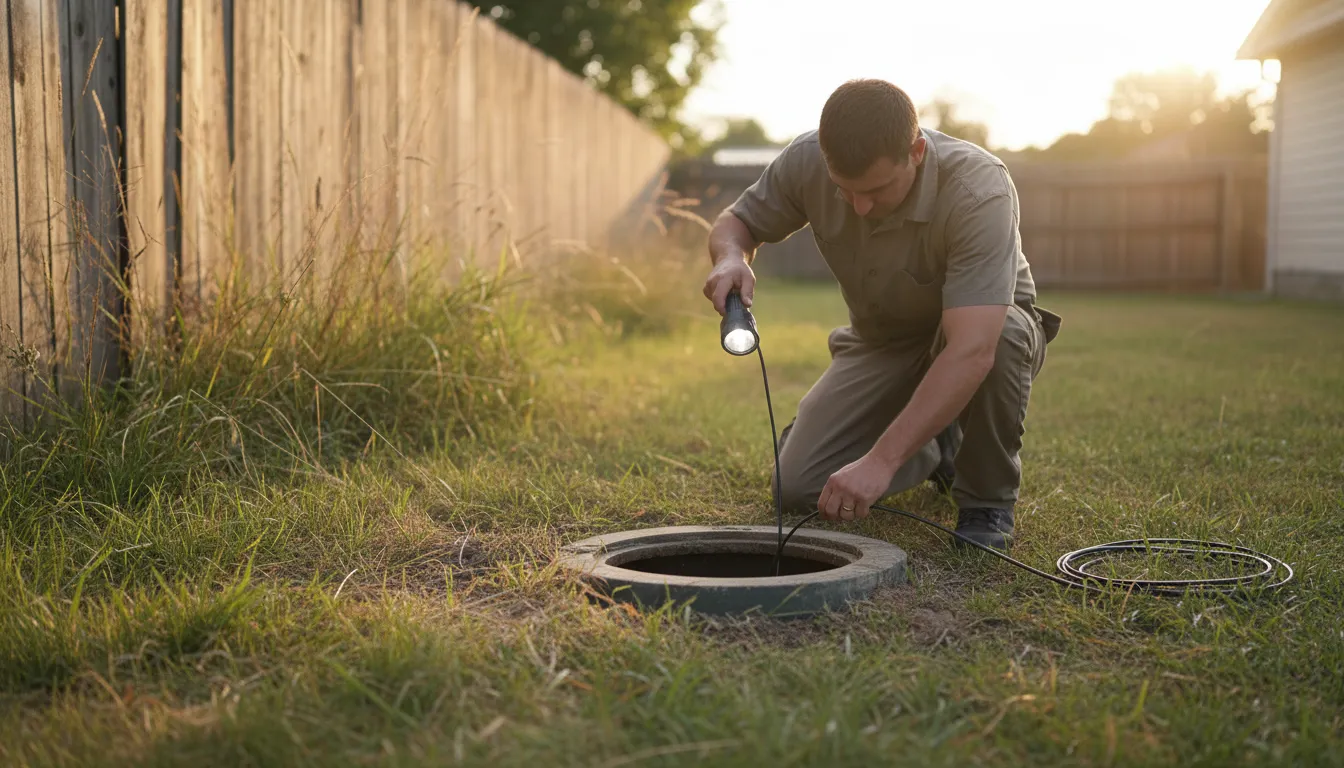
Find the Best Septic Tank Inspection Companies for Your Business
No obligation • Fast responses • Nationwide coverage

Why you can trust Septic Spot
Septic Spot is a leading United States resource for understanding and comparing septic services. Our editors review providers using consistent criteria and verify key business details. Listings and scores are independent, and companies cannot pay to influence our content.
Search providers near you
Top Septic Tank Inspection Companies in Monroe, New Jersey Ranked
A septic system inspection is a critical evaluation of your property's on-site wastewater treatment system, ensuring it functions safely and complies with local health regulations. In Monroe, these assessments are especially important due to local requirements for real estate transfers and the need to protect groundwater quality. This guide helps you understand the inspection process, local rules, and how to find qualified professionals to evaluate your system.
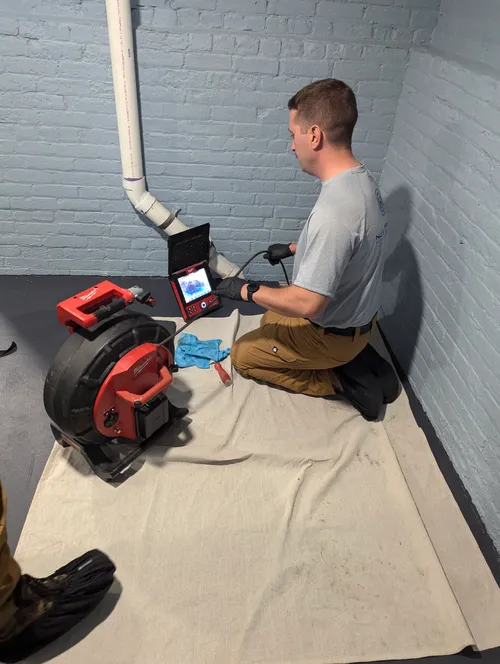
NJ Sewer Scopes
New York, NY
NJ Sewer Scopes is a septic tank inspection company based in New York, NY. They assist home buyers, sellers, and owners by providing inspections that help clients make informed decisions about their septic systems.
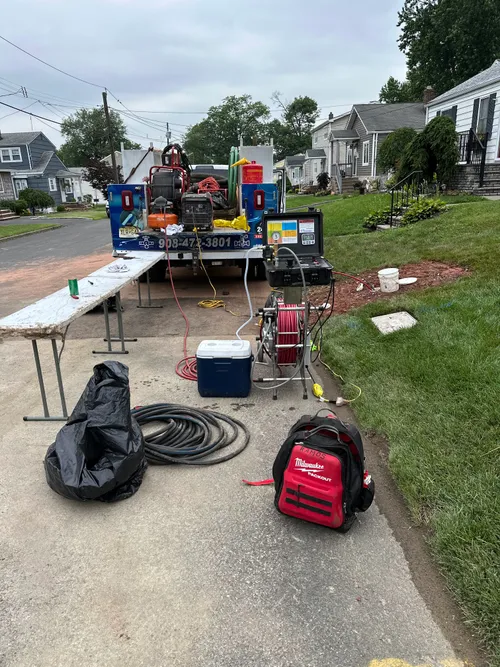
Arrow Sewer and Drain
165 Union Ave, Middlesex, NJ 08846
Arrow Sewer and Drain is a septic tank inspection and repair company serving New York, NY. They specialize in trenchless sewer repair methods that avoid excavation, preserving property while fixing cracked or corroded underground pipes. Their services include sewer inspections, pipe repairs, hydro-jetting, and emergency plumbing. The company offers 24/7 emergency plumbing service to address urgent sewer line problems quickly with professional camera inspections and effective solutions. Arrow Sewer and Drain serves a wide area including Middlesex and Somerset Counties in New Jersey, providing residential, commercial, and municipal sewer and plumbing projects.
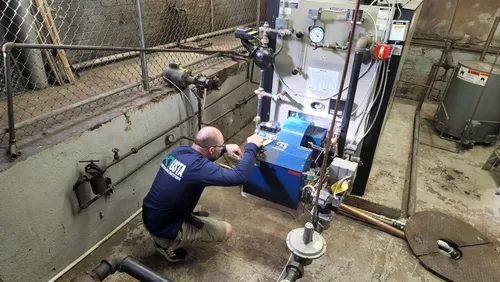
USTA Home Inspections
25 Continental Dr Unit C, Wayne, NJ 07470
USTA Home Inspections is a septic tank inspection company serving New York, NY, and surrounding areas. They provide comprehensive home inspection services covering major components such as roofing, structural elements, electrical systems, HVAC, oil tank sweeps, foundation integrity, radon testing, termite inspections, and septic tank inspections. The company focuses on helping homebuyers make informed decisions by delivering clear and reliable inspection reports. USTA Home Inspections serves multiple counties in New Jersey and New York, including Passaic, Morris, Bergen, Essex, and Union. They emphasize protecting clients' investments and ensuring safety before moving into a new home.
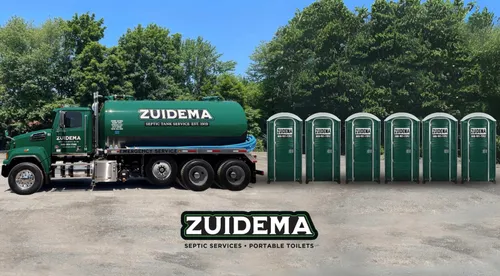
Zuidema Septic Services & Portable Toilets
90 Midland Ave, Midland Park, NJ 07432
Zuidema Septic Services & Portable Toilets provides residential and commercial septic services along with portable toilet and restroom trailer rentals in New York, NY. With over 100 years of experience since 1919, they offer septic tank pumping, inspections, repairs, and grease trap services. Their use of advanced sewer camera technology helps identify and address sewer line issues effectively. Zuidema also offers 24/7 emergency service for septic and portable toilet needs, ensuring support is available at any time.
EarthCare, a Wind River Company
New York, NY
EarthCare, a Wind River Company, provides septic tank pumping, inspection, and grease services in New York, NY, and surrounding areas including North Jersey and Hudson Valley. Serving residential, commercial, and municipal clients, they offer comprehensive waste management solutions such as pumping, cleaning, hauling, disposal, and environmental compliance support. Established in 1946, EarthCare operates one of the industry's largest fleets and provides 24/7 emergency services to ensure continuous system operation and regulatory compliance.
Why Septic Inspections Are Essential in Monroe Township
Septic system evaluations are not just a formality; they are a vital safeguard for your property, your health, and your investment. In Monroe, the local health department typically requires a system inspection during a home sale to verify the system is operational and compliant before the transfer is finalized 1. Beyond real estate, regular assessments help homeowners catch minor issues-like a failing baffle or early drain field saturation-before they escalate into costly repairs or complete system failure, which can cost $15,000 to $35,000+ to replace. Proactive inspections protect you from environmental contamination and potential liability.
Understanding Monroe's Local Inspection Requirements
While New Jersey does not have a blanket state law mandating inspections for all home sales, local health departments have the authority to set their own rules. In Monroe Township, an inspection is commonly required as part of the real estate transfer process. It's often recommended that this inspection be completed within 12 months of the closing date. For any new installation or major modification to a septic system, a permit from the Monroe Township Health Department is mandatory 2. Always contact the local health department directly to confirm the most current municipal ordinances before proceeding with any real estate transaction or system work.
Key System Standards Inspectors Check
A professional inspector will evaluate your system against established New Jersey standards, including:
- Capacity: Tanks for single-family homes generally require a minimum of 250 gallons per bedroom, with a typical minimum total tank size of 1,000 gallons 3.
- Setbacks: Systems must maintain specific clearances: at least 100 feet from wells, 50 feet from property lines, and 25 feet from building foundations 4.
- Component Integrity: All parts, from the tank to the distribution box, must be intact and functional.
The Step-by-Step Septic Inspection Process
A standard septic inspection in Monroe, often called a "certification," is a thorough multi-step procedure conducted by a certified professional. Here's what you can expect during a comprehensive system evaluation.
1. Locating the System
The inspector begins by locating all components of your septic system, including the tank lid, inlet and outlet pipes, and the drain field area. This may involve consulting property records or using probing tools.
2. Pumping and Internal Tank Inspection
For a proper assessment, the tank must be pumped out. This allows the inspector to examine the interior for structural issues like cracks, leaks, or corrosion. They will also check the baffles (or tees) at the inlet and outlet, which are crucial for preventing scum and sludge from escaping into the drain field 5.
3. Flow Test and Hydraulic Function Check
This is a key part of the inspection. The inspector will run a significant amount of water through the household plumbing to "load" the system. They then observe how quickly the water drains from the tank and, critically, monitor the drain field for any signs of surfacing sewage or hydraulic failure, which indicates a clogged or failing field 6 7.
4. Distribution Box and Drain Field Evaluation
If accessible, the distribution box (D-box) is checked to ensure it is level and distributing effluent evenly to all legs of the drain field. The inspector will also walk the drain field area, looking for tell-tale signs of failure such as overly lush green grass, soggy soil, or foul odors 8.
5. Final Inspection Report
Upon completion, you will receive a formal, documented report detailing the system's condition, compliance with local and state regulations, and any recommendations for repair or maintenance. This report is the official document often required for real estate transactions 9 10.
Find the perfect septic tank inspection companies for your needs
Get personalized recommendations and expert advice
Cost Guide for Septic Inspections in Monroe
Understanding the potential costs helps in budgeting for this essential service. Pricing can vary based on the property size, system complexity, and the extent of the evaluation.
- Standard Pre-Purchase Inspection: The typical range for a full inspection, which usually includes pumping, is between $400 and $800.
- Pumping-Only Service: If you need just a routine pump-out without a full inspection, costs generally range from $250 to $500.
- Advanced Engineering or Soil Testing: If an inspection reveals problems or for new system design, percolation (perc) tests and soil evaluations can cost between $500 and $1,500 11.
It's important to note that while pumping is often bundled with an inspection fee, some companies may list them separately. Always clarify what is included in a quoted price.
Choosing a Certified Septic Inspector in Monroe
Selecting a qualified professional is paramount. It is strongly recommended to use a certified septic inspector who is familiar with Monroe Township's specific regulations. Look for providers with:
- Certification: Proof of licensing or certification for septic system inspection in New Jersey.
- Local Experience: Familiarity with Monroe Township Health Department procedures and common soil types in the area.
- Detailed Process: Willingness to explain their inspection process, which should align with the steps outlined above.
- Comprehensive Reporting: A commitment to providing a thorough, written report suitable for submission to local authorities.
A DIY inspection is not advisable, as professionals have the tools, knowledge, and authority to provide a legally recognized certification 12.
Maintaining Your System After Inspection
A clean inspection report is great news, but system health requires ongoing care. To extend the life of your septic system:
- Pump Regularly: Schedule pumping every 3-5 years, depending on household size and usage.
- Conserve Water: Spread out laundry loads and fix leaks to avoid overloading the drain field.
- Mind What You Flush: Only human waste and toilet paper should go down the drain. Avoid chemicals, grease, and non-biodegradable items.
- Protect the Drain Field: Never park vehicles or place heavy structures over the drain field, and direct surface water runoff away from it.
Regular maintenance is the most cost-effective way to avoid the surprise and significant expense of emergency repairs.
Frequently asked questions
Sources
Footnotes
-
New Jersey Septic System Rules - 2026 Guide - https://thesewerkings.com/blog/new-jersey-septic-system-rules/ ↩
-
Navigating Septic System Regulations: Expert Guidance for ... - https://www.mapengineering.net/navigating-septic-system-regulations/ ↩
-
NJDEP| Division of Water Quality | Permitting Information - https://dep.nj.gov/dwq/wastewater/septic-systems/permitting-information/ ↩
-
New Jersey Septic Tank Rules and Regulations - Arrow Sewer & Drain - https://www.arrowsewernj.com/blog/septic-tanks-in-new-jersey-what-you-need-to-know/ ↩
-
Septic Inspection | Wrightstown, NJ | Don E. Miller Septic Service Inc. - https://www.donemillerseptic.com/septic-inspections ↩
-
NJDEP| Division of Water Quality | Inspection Guidance - https://dep.nj.gov/dwq/wastewater/septic-systems/inspection-guidance/ ↩
-
What to Expect from a Septic Inspection - https://www.wrenvironmental.com/blog/2023/may/what-to-expect-from-a-septic-inspection/ ↩
-
Inspections - New Jersey Septic Management Group - https://nj-septic.com/inspections/ ↩
-
What to Expect During a Septic Inspection in New Jersey - https://www.luxeservicegroup.com/sellers/new-jersey-septics-and-inspections/ ↩
-
Septic Inspection | Wrightstown, NJ - https://www.donemillerseptic.com/septic-inspections ↩
-
NJ Septic Regulations for 2026: Inspections, Permits & Rules - https://www.atsenvironmental.com/blog/nj-septic-regulations-for-2026/ ↩
-
DIY vs Professional Septic Inspections: Do You Need Pro Help? - https://www.sterlingsepticandplumbing.com/blog/diy-vs-pro-septic-inspections/ ↩