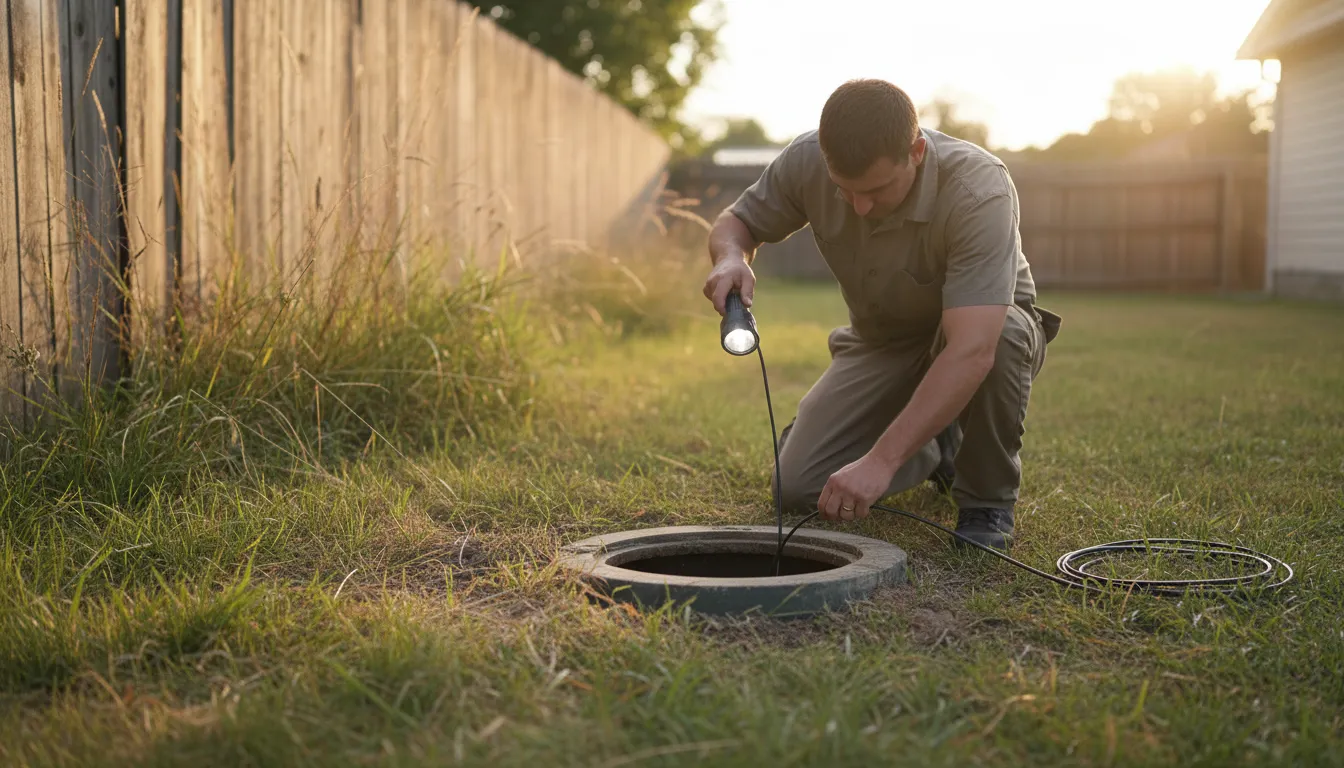
Find the Best Septic Tank Inspection Companies for Your Business
No obligation • Fast responses • Nationwide coverage

Why you can trust Septic Spot
Septic Spot is a leading United States resource for understanding and comparing septic services. Our editors review providers using consistent criteria and verify key business details. Listings and scores are independent, and companies cannot pay to influence our content.
Search providers near you
Top Septic Tank Inspection Companies in Paterson, New Jersey Ranked
A septic tank inspection is a professional assessment of your onsite wastewater treatment system's condition and functionality. In Paterson, these evaluations are crucial for protecting your property value, ensuring public health, and complying with state and local environmental guidelines. This guide explains what a septic system inspection entails, why it's important for local homeowners, and how you can find qualified professionals to perform this essential service.
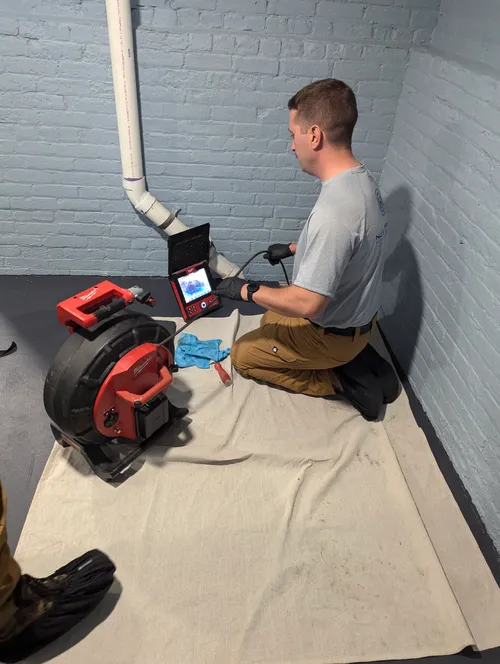
NJ Sewer Scopes
New York, NY
NJ Sewer Scopes is a septic tank inspection company based in New York, NY. They assist home buyers, sellers, and owners by providing inspections that help clients make informed decisions about their septic systems.
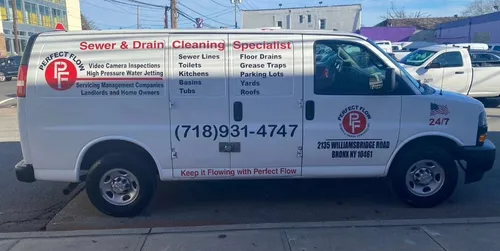
Perfect Flow Sewer & Drain Services
2135 Williamsbridge Rd, Bronx, NY 10461
Perfect Flow Sewer & Drain Services provides septic tank inspection and septic system repair in Yonkers, NY. They offer thorough inspections, efficient cleaning, and precise repairs to maintain reliable sewer and drain systems. Their services focus on ensuring seamless flow and system functionality.
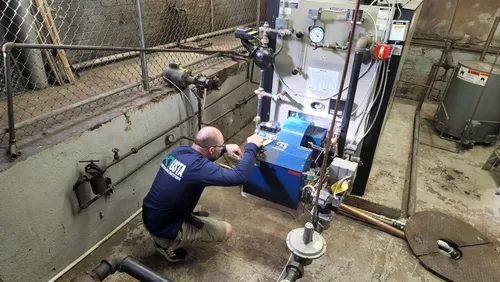
USTA Home Inspections
25 Continental Dr Unit C, Wayne, NJ 07470
USTA Home Inspections is a septic tank inspection company serving New York, NY, and surrounding areas. They provide comprehensive home inspection services covering major components such as roofing, structural elements, electrical systems, HVAC, oil tank sweeps, foundation integrity, radon testing, termite inspections, and septic tank inspections. The company focuses on helping homebuyers make informed decisions by delivering clear and reliable inspection reports. USTA Home Inspections serves multiple counties in New Jersey and New York, including Passaic, Morris, Bergen, Essex, and Union. They emphasize protecting clients' investments and ensuring safety before moving into a new home.
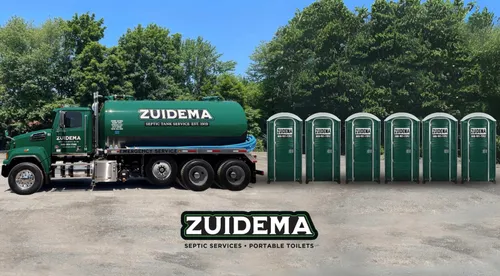
Zuidema Septic Services & Portable Toilets
90 Midland Ave, Midland Park, NJ 07432
Zuidema Septic Services & Portable Toilets provides residential and commercial septic services along with portable toilet and restroom trailer rentals in New York, NY. With over 100 years of experience since 1919, they offer septic tank pumping, inspections, repairs, and grease trap services. Their use of advanced sewer camera technology helps identify and address sewer line issues effectively. Zuidema also offers 24/7 emergency service for septic and portable toilet needs, ensuring support is available at any time.
EarthCare, a Wind River Company
New York, NY
EarthCare, a Wind River Company, provides septic tank pumping, inspection, and grease services in New York, NY, and surrounding areas including North Jersey and Hudson Valley. Serving residential, commercial, and municipal clients, they offer comprehensive waste management solutions such as pumping, cleaning, hauling, disposal, and environmental compliance support. Established in 1946, EarthCare operates one of the industry's largest fleets and provides 24/7 emergency services to ensure continuous system operation and regulatory compliance.
Understanding Septic System Evaluations in Paterson
For homes not connected to Paterson's municipal sewer lines, a private septic system is responsible for treating all household wastewater. A septic inspection, often called a system evaluation or assessment, involves a certified professional thoroughly examining the tank, pipes, drain field, and other components. This process verifies that the system is operating safely and not posing a risk of contamination to groundwater or nearby properties. Regular checks are a key part of responsible homeownership in areas reliant on these independent systems.
Why Regular Septic Inspections Are Essential
Scheduling periodic septic system evaluations is not just a recommendation; it's a critical maintenance practice. Catching small issues like a failing baffle or a minor tank crack early can prevent catastrophic and expensive failures later, such as a drain field collapse or sewage backup into your home. Furthermore, many mortgage lenders and prospective buyers will require a recent, certifiable inspection during a real estate transaction to confirm the system is functional before finalizing a sale 1. Proactive inspections help you avoid last-minute surprises and maintain your property's marketability.
New Jersey and Paterson Inspection Guidelines
Septic system oversight in Paterson falls under the New Jersey Department of Environmental Protection (NJDEP) and the local health department. While New Jersey state law does not mandate annual inspections for every system, the NJDEP strongly recommends an evaluation every 1 to 3 years, coupled with pumping every 3 to 5 years, depending on usage and tank size 2. The local Paterson Health Department is responsible for approving system designs, issuing permits for new installations or major repairs, and maintaining records for each property.
The Inspection Process: What to Expect
A comprehensive septic tank inspection in Paterson follows standardized steps to ensure nothing is overlooked. Reputable providers will typically follow a process aligned with NJDEP technical guidance 3.
1. Record Review & System Location The inspector will start by reviewing any available permits, as-built diagrams, and maintenance history from the municipal health department records. This file review is a recommended step to understand the system's design and history before the physical inspection begins 4. They will then locate and expose the tank lid, distribution box, and assess the general area of the drain field.
2. Tank Integrity Assessment The tank is opened, and the liquid and scum levels are measured. The inspector checks the tank's interior and exterior for cracks, signs of leakage, and assesses the condition of the inlet and outlet baffles or tees. These components are vital for preventing solids from escaping into the drain field 5.
3. Hydraulic Load Test & Drain Field Evaluation A core part of the inspection is evaluating the drain field's absorption capacity. The inspector may perform a hydraulic load test, which involves running a significant amount of water into the system to see if the drain field can properly absorb the liquid without surfacing or backing up. This test is often crucial if the home has been vacant for a period 6 7.
4. Pumping and Final Analysis Often, the tank is pumped during the inspection. This allows the inspector to check for backflow from the drain field into the empty tank, a clear sign of drain field failure. After pumping, they can also get a better view of the tank's structural integrity. The inspection concludes with a detailed report of the findings, noting any needed repairs or maintenance.
Find the perfect septic tank inspection companies for your needs
Get personalized recommendations and expert advice
Common Issues Uncovered During Inspections
Understanding what can go wrong helps you appreciate the value of an inspection. Common problems found in Paterson-area systems include:
- Failing Baffles: Broken or deteriorated baffles allow solids to flow into the drain field, leading to premature clogging and failure.
- Tank Damage: Cracks in concrete tanks or damage to fiberglass/plastic tanks can lead to leaks, groundwater contamination, or soil collapse around the tank.
- Drain Field Failure: This is the most serious and costly issue. Signs include soggy ground over the field, sewage odors, and plumbing backups. Failure can be caused by age, lack of pumping, or compaction from vehicles or structures.
- Clogged Pipes: Blockages in the pipes leading from the house to the tank or from the tank to the distribution box can cause immediate backups.
Cost of Septic Inspections and Related Services
The cost for a standard, comprehensive septic system inspection in the Paterson area typically ranges from approximately $300 to $500 8 9. This fee generally covers the visual assessment, basic testing, and a written report. If the tank is pumped as part of the inspection, that will be an additional cost, which varies based on tank size (commonly 1,000 to 2,000 gallons). Some companies offer inspection and pumping as a bundled package.
It's important to budget for potential repairs. While minor fixes like replacing a baffle may be a few hundred dollars, major repairs or a full system replacement involve significant engineering assessments, permits, and excavation. These projects can range from several thousand dollars to over $10,000, with preliminary environmental and engineering assessments alone sometimes costing between $3,000 and $7,000 10 11.
Permitting for Repairs and Installations
Any significant alteration, repair, or new installation of a septic system in Paterson requires a permit from the local health department 12. A professional inspection is often the first step in this process, as the findings will determine the scope of work needed. Your septic service provider can usually guide you through the permitting process, which ensures all work meets current NJDEP standards for environmental protection and public health.
Maintaining Your System Between Inspections
A professional evaluation is just one part of system care. To extend the life of your septic system and avoid emergencies:
- Conserve Water: Spread out laundry and dishwasher use to avoid overwhelming the drain field.
- Dispose Properly: Never flush anything besides human waste and toilet paper. Avoid pouring grease, chemicals, or medications down drains.
- Protect the Drain Field: Never drive or park vehicles on it, and keep rainwater drainage systems directed away from the area.
- Keep Records: Maintain a log of all inspections, pumpings, and repairs. This is invaluable for troubleshooting and during property sales.
Disclaimer: Regulations and guidelines can change. For the most current local requirements, always contact the Paterson Health Department directly.
Frequently asked questions
Sources
Footnotes
-
Septic Inspection Guide for Home Buyers | Hunterdon & Warren ... - https://www.luxeservicegroup.com/buyers/performing-a-new-jersey-septic-inspection/ ↩
-
NJ Septic Regulations for 2026: Inspections, Permits & Rules - https://www.atsenvironmental.com/blog/nj-septic-regulations-for-2026/ ↩
-
SEPTIC - NJ.gov - https://dep.nj.gov/wp-content/uploads/dwq/pdf/septicmn.pdf ↩
-
Technical Guidance for Inspections of Onsite Wastewater Treatment ... - https://dep.nj.gov/wp-content/uploads/dwq/inspection_guidance.pdf ↩
-
Free Septic Tank Inspection Templates | PDF - https://safetyculture.com/checklists/septic-tank-inspection ↩
-
Inspections - New Jersey Septic Management Group - https://nj-septic.com/inspections/ ↩
-
Compliance Advisory - NJ.gov - https://www.nj.gov/dep/enforcement/advisories/2023-07.pdf ↩
-
Frequent Questions on Septic Systems | US EPA - https://www.epa.gov/septic/frequent-questions-septic-systems ↩
-
How Septic System Inspections Are Performed in New Jersey - https://thesewerkings.com/blog/septic-system-inspections/ ↩
-
Navigating Septic System Regulations: Expert Guidance for New Jersey Property Owners - https://www.mapengineering.net/navigating-septic-system-regulations/ ↩
-
How Often Should You Pump Your Septic Tank: 3 Factors Solved - https://www.frasiers.com/blog/sewage-tank-pump-frequency/ ↩
-
NJDEP| Division of Water Quality | Permitting Information - https://dep.nj.gov/dwq/wastewater/septic-systems/permitting-information/ ↩