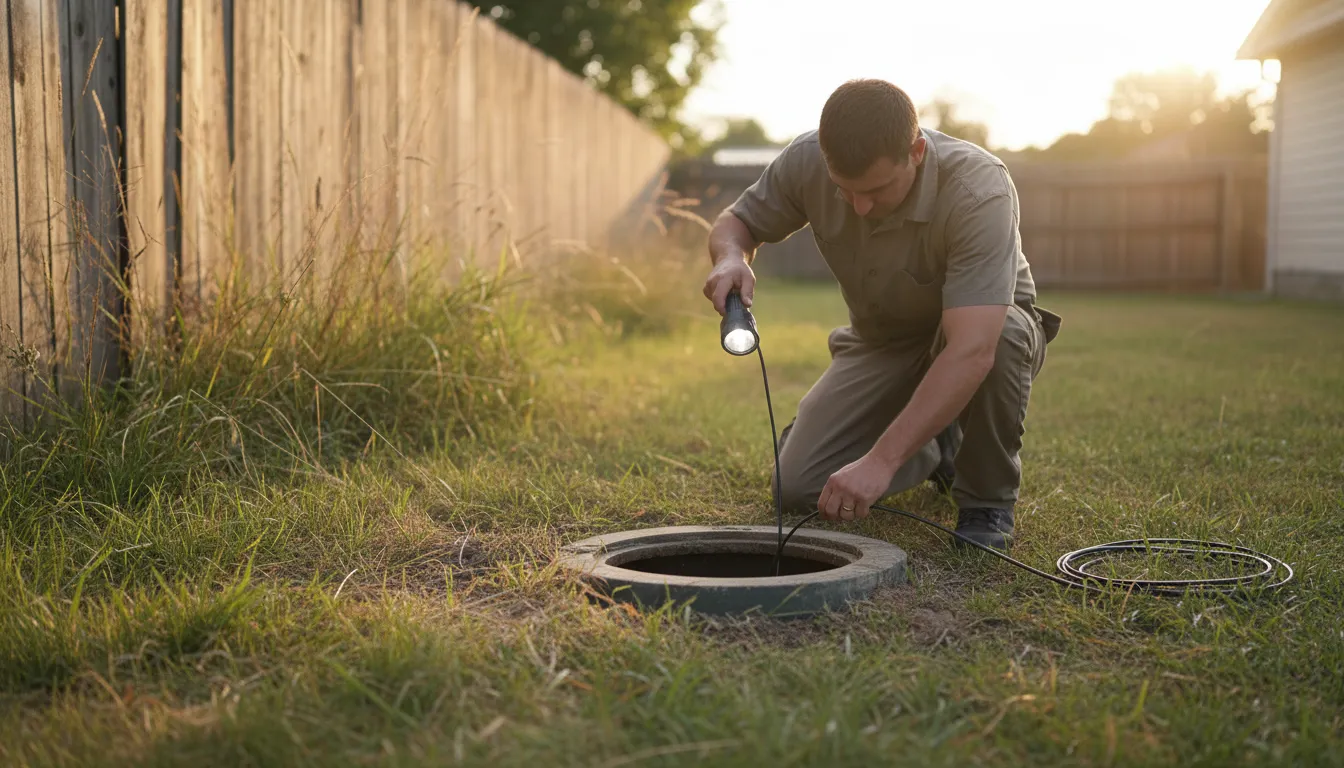
Find the Best Septic Tank Inspection Companies for Your Business
No obligation • Fast responses • Nationwide coverage

Why you can trust Septic Spot
Septic Spot is a leading United States resource for understanding and comparing septic services. Our editors review providers using consistent criteria and verify key business details. Listings and scores are independent, and companies cannot pay to influence our content.
Search providers near you
Top Septic Tank Inspection Companies in Washington, New Jersey Ranked
A septic system inspection is a critical evaluation of your property's on-site wastewater treatment system. In New Jersey, where many homes rely on septic systems, regular inspections are not just a good idea-they are often required by state and local regulations to protect public health and the environment. This guide explains the inspection process, state rules, and typical costs, helping you understand when you need an inspection and how to find qualified local professionals to perform this essential service.
NJ Sewer Scopes
New York, NY
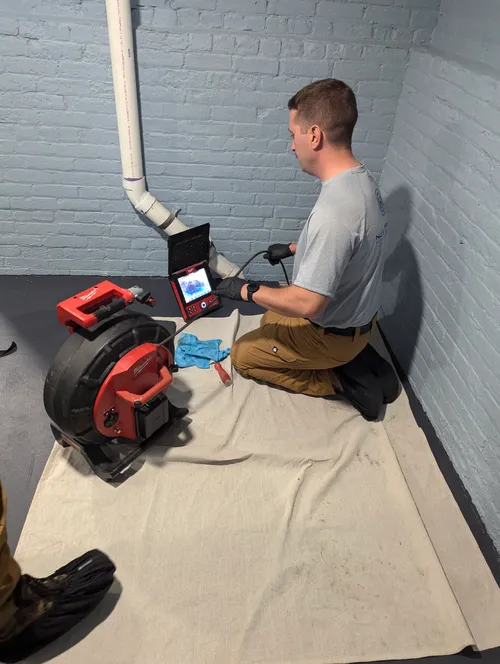
NJ Sewer Scopes is a septic tank inspection company based in New York, NY. They assist home buyers, sellers, and owners by providing inspections that help clients make informed decisions about their septic systems.
Arrow Sewer and Drain
165 Union Ave, Middlesex, NJ 08846
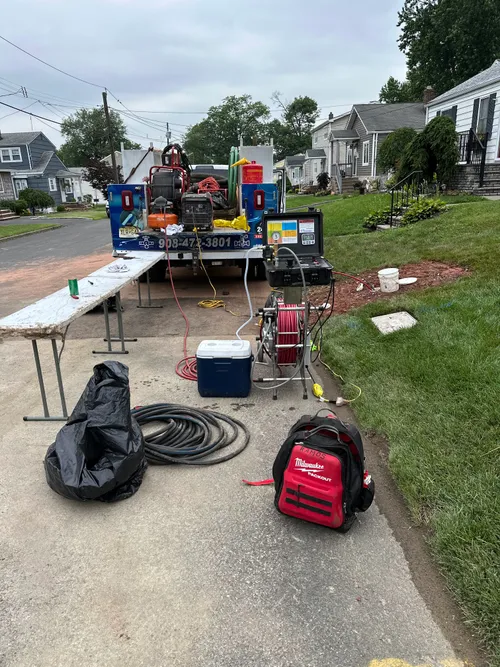
Arrow Sewer and Drain is a septic tank inspection and repair company serving New York, NY. They specialize in trenchless sewer repair methods that avoid excavation, preserving property while fixing cracked or corroded underground pipes. Their services include sewer inspections, pipe repairs, hydro-jetting, and emergency plumbing. The company offers 24/7 emergency plumbing service to address urgent sewer line problems quickly with professional camera inspections and effective solutions. Arrow Sewer and Drain serves a wide area including Middlesex and Somerset Counties in New Jersey, providing residential, commercial, and municipal sewer and plumbing projects.
Septix
455 Texas Rd, Easton, PA 18042
Septix is a septic tank pumping, inspection, repair, and installation company based in Allentown, PA. They offer comprehensive septic system services, including emergency response for alarms and backups. Septix provides 24/7 emergency services to address urgent septic problems promptly. Customers can schedule consultations to diagnose issues and receive repair or replacement solutions.
Lehigh Valley Plumbing Experts
502 Jefferson St Suite B, Whitehall Township, PA 18052
Lehigh Valley Plumbing Experts is a plumbing company serving Allentown, PA, and the surrounding Lehigh Valley area. They provide a range of plumbing services including septic tank pumping, septic system care, tank inspection, and high-tech sewer jetting. The company offers both residential and commercial plumbing solutions, with capabilities in drain cleaning, leak detection, and plumbing maintenance. Their team has nearly two decades of experience and provides 24/7 emergency plumbing services for urgent needs.
Understanding New Jersey Septic System Regulations
Septic systems in New Jersey are regulated by a combination of state and local authorities. The New Jersey Department of Environmental Protection (NJDEP) establishes the overarching technical standards and regulations, known as N.J.A.C. 7:9A 1. However, the day-to-day enforcement, permitting, and inspection approvals are typically handled by your local or county Board of Health. This means that while state rules provide the baseline, your specific township or municipality may have additional, more stringent requirements.
Key state-level standards include tank sizing: for a single-family home, the minimum tank capacity is generally 1,000 gallons or 250 gallons per bedroom, whichever is greater. There are also mandatory setback distances that dictate where a system can be installed. Systems must be at least 25 feet from property lines, 50 feet from private wells, and 100 feet from lakes, streams, or other water bodies. Understanding these regulations is crucial whether you're maintaining an existing system or planning a new installation.
When Is a Septic Inspection Required?
Knowing the triggers for a mandatory inspection can save you from legal and financial headaches. The most common scenarios include:
- Property Sale: This is the most frequent reason for a septic inspection. In New Jersey, it is standard practice-and often a requirement from the buyer's lender-to have the system inspected before a real estate transaction closes. A clean inspection report can facilitate a smooth sale, while a failed inspection can become a significant negotiating point.
- Local Health Department Mandates: Many municipalities in New Jersey have ordinances requiring periodic inspections, typically every 1 to 3 years. These routine checks are designed to catch problems early before they become environmental hazards.
- System Malfunction: If you notice signs of failure, such as sewage backing up into drains, water pooling over the drain field, or foul odors around the tank area, an immediate inspection is necessary to diagnose the problem.
- For Seasonal Properties: Homes that are closed for part of the year, like shore houses, often require an inspection during both the spring opening and fall closing procedures to ensure the system is functioning properly after periods of disuse.
- Permitting for Work: Any application for a permit to repair, alter, or replace an existing septic system will likely require a current inspection report to justify the need for the work.
The Septic Inspection Process: What to Expect
A thorough septic inspection in New Jersey is more than just a quick look. A qualified inspector will follow a multi-step process to assess the entire system's health.
- Record Review & Site Evaluation: The inspector starts by reviewing any available system records (as-built plans, past maintenance reports) and visually assessing the property. They locate the tank and drain field, checking for obvious issues like soggy ground, unauthorized structures built over the system, or nearby tree root intrusion.
- Tank Access and Scum/Sludge Measurement: The inspector will locate and uncover the tank's access ports. Using specialized tools, they measure the depth of the scum layer (floating solids) and the sludge layer (settled solids) at the bottom of the tank. This measurement determines if the tank needs to be pumped. If the combined sludge and scum occupy more than one-third of the tank's liquid depth, pumping is necessary.
- Component Inspection: The inspector examines the tank's inlet and outlet baffles (or tees) for damage or blockage, checks the integrity of the tank walls and lid for cracks, and assesses the condition of the distribution box (if present).
- Hydraulic Load Test (Dye Test): For a more detailed inspection, often required during a property sale, the inspector may perform a hydraulic load test. This involves running a significant amount of water through the household plumbing and sometimes introducing a non-staining dye into the system. The inspector then monitors the drain field to see if the dyed water surfaces, which would indicate a failure in the absorption area.
- Report Generation: After the evaluation, the inspector provides a detailed written report. This document will state whether the system passed or failed, list any deficiencies found, and recommend necessary repairs or maintenance, such as pumping 2.
Find the perfect septic tank inspection companies for your needs
Get personalized recommendations and expert advice
Costs of Septic Inspections and Related Services in NJ
The price of a septic inspection in New Jersey varies based on the type of inspection, system size, and property location.
- Standard Annual Inspection: A basic inspection to check sludge levels and component integrity typically costs between $200 and $400.
- Pre-Purchase/Comprehensive Inspection: This more in-depth inspection, which often includes a hydraulic load test or dye test, ranges from $400 to $800 on average 3 4. It's important to note that this fee usually does not include pumping the tank if needed, which is an additional service.
- Septic Tank Pumping: Pumping is a separate service, recommended every 3 to 5 years, and is crucial for maintaining system health 5. The cost for pumping in NJ generally falls between $300 and $600, depending on tank size.
- Major Repairs or Replacement: If an inspection reveals a failed system, costs escalate significantly. Repairing a drain field or replacing a septic system in New Jersey is a major undertaking, with costs commonly ranging from $15,000 to $35,000 or more, including permits, engineering, and installation 6 7.
Consequences of a Failed Inspection
A failing septic inspection report is a serious matter. It means the system is not treating wastewater adequately, posing a risk to human health and potentially contaminating groundwater. The local Board of Health will typically issue a notice of violation requiring corrective action within a specified timeframe.
Options following a failure include:
- Repairs: Fixing a broken pipe, replacing a damaged baffle, or addressing minor issues.
- System Rehabilitation: This could involve cleaning and jetting the drain field lines or adding additional drainage area.
- Complete System Replacement: In cases of catastrophic failure or an old, undersized system, a full replacement according to current NJDEP codes is the only solution.
Failure to address a violation can result in significant fines from the local health department and legal action 8.
Maintaining Your System to Pass Inspections
Proactive maintenance is the best way to ensure your system passes every inspection and lasts for decades.
- Pump Regularly: Have the tank pumped by a licensed professional every 3 to 5 years, or as determined by an inspection.
- Conserve Water: Reduce strain on the system by fixing leaks and using water-efficient fixtures.
- Mind What You Flush: Only human waste and toilet paper should go down the drain. Never flush chemicals, grease, diapers, wipes (even "flushable" ones), coffee grounds, or medications.
- Protect the Drain Field: Never drive or park vehicles over the drain field. Avoid planting trees or shrubs with deep roots nearby. Keep roof drains and sump pumps from discharging into this area 9.
- Keep Detailed Records: Maintain a file with all inspection reports, pumping receipts, repair invoices, and the original system design. This is invaluable for inspections and is a key document during a property sale.
Frequently asked questions
Sources
Footnotes
-
NJDEP| Division of Water Quality | Professional Information - https://dep.nj.gov/dwq/wastewater/septic-systems/professional-information/ ↩
-
How Septic System Inspections Are Performed in New Jersey - https://thesewerkings.com/blog/septic-system-inspections/ ↩
-
NJ Septic Regulations for 2026: Inspections, Permits & Rules - https://www.atsenvironmental.com/blog/nj-septic-regulations-for-2026/ ↩
-
How Much Does a Septic Inspection Cost? [2026 Data] - Angi - https://www.angi.com/articles/septic-inspection-cost.htm ↩
-
SEPTIC - NJ.gov - https://dep.nj.gov/wp-content/uploads/dwq/pdf/septicmn.pdf ↩
-
Licensed Septic Service NJ - Requirements - The Sewer Kings - https://thesewerkings.com/blog/licensed-septic-service-professionals/ ↩
-
New Jersey Septic Tank Rules And Regulations - https://www.arrowsewernj.com/blog/septic-tanks-in-new-jersey-what-you-need-to-know/ ↩
-
Compliance Advisory - NJ.gov - https://www.nj.gov/dep/enforcement/advisories/2024-09.pdf ↩
-
New Jersey Septic System Rules - 2026 Guide - https://thesewerkings.com/blog/new-jersey-septic-system-rules/ ↩