Find the Best Septic Tank Installation & Replacement Contractors for Your Business
No obligation • Fast responses • Nationwide coverage

Why you can trust Septic Spot
Septic Spot is a leading United States resource for understanding and comparing septic services. Our editors review providers using consistent criteria and verify key business details. Listings and scores are independent, and companies cannot pay to influence our content.
Search providers near you
Best Septic Tank Installation & Replacement Contractors in Delaware Ranked
Installing or replacing a septic system is a significant investment in your property's infrastructure and environmental health. In Delaware, this process is a carefully regulated partnership between the homeowner, licensed professionals, and the Delaware Department of Natural Resources and Environmental Control (DNREC). A properly designed and installed system protects groundwater, public health, and your property value. This guide outlines the key steps, regulations, and considerations for navigating septic system work in Delaware, helping you understand what to expect and how to connect with qualified local experts.
Delaware's Regulatory Framework
All on-site wastewater treatment and disposal system (OWTDS) work in Delaware is governed by DNREC under Title 7, Administrative Code 7101. This framework mandates a three-step professional licensing process to ensure systems are safe and effective:
- Site Evaluation (Class D Professional): A licensed soil scientist must evaluate your property's soil conditions, percolation rate, and depth to groundwater.
- System Design (Class C or B Designer): Based on the site evaluation, a licensed designer creates a system plan that meets all state requirements for your specific property.
- Installation (Class E Contractor): Only a DNREC-licensed Class E installer can perform the physical installation or replacement of the system 1.
A construction permit from DNREC is mandatory before any installation or repair work begins. Attempting to bypass this licensed, permitted process can result in fines, system failure, and environmental contamination.
The Step-by-Step Installation & Replacement Process
1. Initial Site Evaluation and Design
The process begins with a site evaluation conducted by a Class D soil scientist. This evaluation determines the soil's ability to absorb and treat wastewater, which directly dictates the type of system you can install 2. Key factors assessed include soil texture, structure, and the seasonal high water table.
Following the evaluation, a Class C or B designer uses the site report to create a custom system design. In Delaware, common system types include conventional gravity-fed systems, pressure distribution systems, and more complex mound or raised bed systems for properties with high water tables or poor soil. In environmentally sensitive areas like the Inland Bays and Nanticoke River watersheds in Sussex County, Innovative/Alternative (I/A) systems with advanced nitrogen removal are often required 3 4. The designer will prepare the permit application package, including the detailed design plans, for submission to DNREC.
2. Sizing and System Specifications
Your system must be sized correctly to handle your household's wastewater flow. Delaware regulations base septic tank capacity primarily on the number of bedrooms in the home 5 6:
- 3 Bedrooms: 1,000-gallon tank (1,500 gallons if a garbage disposal is present)
- 4 Bedrooms: 1,250-gallon tank (1,875 gallons with disposal)
- 5-6 Bedrooms: 1,500-gallon tank (2,250 gallons with disposal)
The drainfield size is determined by the soil's percolation rate and daily wastewater flow. The system must also adhere to strict separation distances from wells, property lines, buildings, and surface water bodies 7 8.
3. Permitting and Approval
Once the design is complete, your installer or designer will submit the permit application to DNREC. Permit fees typically range from $150 to $500, depending on the complexity and type of system. Review times can vary, so it's crucial to factor this into your project timeline. No physical work should commence until you have the approved permit in hand.
Find the perfect septic tank installation & replacement contractors for your needs
Get personalized recommendations and expert advice
4. Installation and Inspections
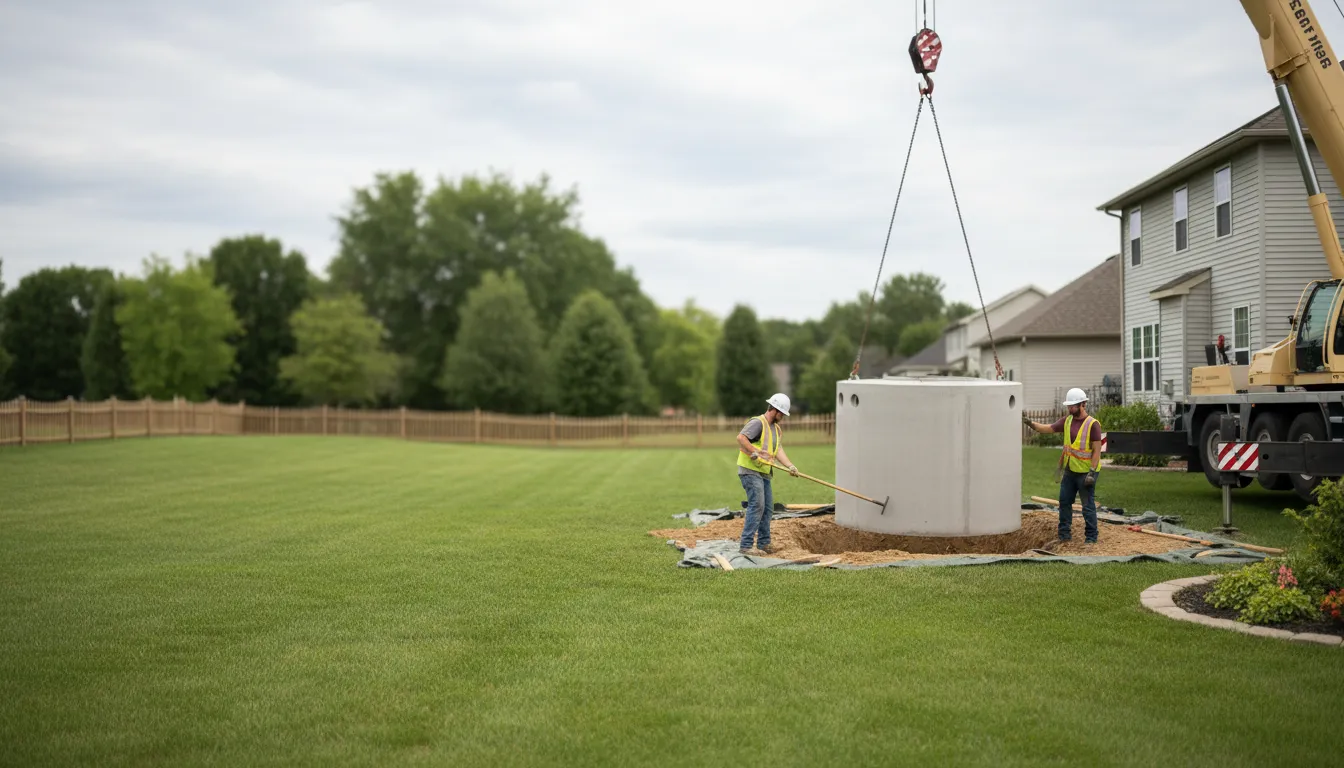
The licensed Class E contractor will install the system according to the approved plans. Delaware law requires mandatory inspections during this critical phase 9 10. A DNREC inspector or authorized agent must inspect the excavation, tank placement, and distribution lines before they are covered. This ensures the installation matches the permitted design.
For system replacements, the process is similar but begins with an assessment of why the existing system failed. The old tank and drainfield must be properly abandoned, often by crushing and filling with clean soil, before a new system is designed and installed in a suitable location on the property.
5. Final Approval and Maintenance Planning
After installation passes inspection and is covered, the contractor must submit an "as-built" plan to DNREC, documenting the system's final location and configuration. Keeping a copy of this plan, along with all permits and design documents, is essential for future reference, maintenance, and property sales.
Your responsibility as a homeowner begins at this point. Regular maintenance, primarily pumping the tank every 3-5 years, is required to prevent solids from clogging the drainfield 11. For I/A systems, state regulations mandate, at minimum, annual inspections and servicing by a certified Class H Operation and Maintenance provider 12 13.
Understanding Costs in Delaware
The total cost for a septic system installation or replacement in Delaware varies widely based on system type, soil conditions, and property specifics.
- Conventional Gravity Systems: For suitable sites, these are typically the most affordable option, with costs generally ranging from $5,000 to over $15,000.
- Mound or Raised Bed Systems: Required for poor soil or high water tables, these involve importing sand and more complex construction, increasing costs.
- Innovative/Alternative (I/A) Systems: These advanced treatment systems, often required in sensitive watersheds, involve sophisticated components and ongoing monitoring, leading to significantly higher costs, often exceeding $20,000 to $30,000 14.
Remember to budget for the permit fees, site evaluation and design fees, and the required inspections. While the upfront cost is substantial, a properly installed and maintained system is a long-term asset that protects your property and the local environment.
Special Considerations for Delaware Homeowners
- Property Transactions: A functioning septic system is often a condition of sale. Having your records (permits, as-builts, maintenance logs) readily available is highly advantageous.
- System Failure: Signs include slow drains, sewage backups, or soggy, foul-smelling areas in the yard. Contact a licensed professional immediately. DNREC must approve any repair or replacement plan.
- Record Keeping: Maintain a file with your site evaluation, design plan, permit, as-built drawing, and all maintenance receipts. This is your system's life history and is invaluable 15.
- Water Conservation: Reducing water use extends your system's life. Fix leaks, install water-efficient fixtures, and spread out laundry loads.
Choosing the right licensed professionals is the most important decision you will make in this process. Look for established, DNREC-licensed contractors with strong local references and experience with the specific type of system your property requires.
Frequently asked questions
Sources
Footnotes
-
Septic Systems - DNREC - https://dnrec.delaware.gov/water/residential/septic-systems/ ↩
-
Delaware Septic Tank Requirements | On-Site Wastewater ... - https://www.ntotank.com/blog/delaware-septic-tank-requirements ↩
-
Kendall County Septic Requirements: 2026 Permitting Guide - https://thegahmrealestateteam.com/kendall-county-septic-requirements-guide/ ↩
-
Septic Installation Sacramento County | Step-by-Step Guide | Blog - https://www.blueribbonseptic.com/blog/septic-installation-sacramento-county ↩
-
department of natural resources and environmental control - https://regulations.delaware.gov/register/november2013/proposed/17%20DE%20Reg%20488a%2011-01-13.htm ↩
-
Delaware Septic Tank Requirements - https://septiccalculator.com/states/de ↩
-
department of natural resources and environmental control - https://regulations.delaware.gov/api/register/april2005/aa9b2d58-3bee-40c9-bbab-92460ab70fa0 ↩
-
Sewage Treatment Systems - Delaware Public Health District - https://www.delawarehealth.org/wp-content/uploads/2017/08/New-Sewage-System-Owner-Packet.pdf ↩
-
Septic System Basics by Dolby & Associates - http://www.dolbyandassociates.com/septic-system-basics.html ↩
-
DEPARTMENT OF NATURAL RESOURCES AND ... - http://archive.regulations.delaware.gov/register/november2013/proposed/17%20DE%20Reg%20488a%2011-01-13.pdf ↩
-
Maintaining Your Septic System - DNREC - Delaware.gov - https://dnrec.delaware.gov/water/residential/septic-systems/maintaining/ ↩
-
Simply Septic (PDF) - Clean Delaware Inc. - https://cleandelaware.com/wp-content/uploads/Simply-Septics.pdf ↩
-
o You Need a Permit to Install a Septic Tank - Guide - https://superiorsewersolutions.com/septic/do-you-need-a-permit-to-install-a-septic-tank-guide/ ↩
-
Understanding Septic Tank Permits and Regulations - https://westcoastsanitationinc.com/understanding-septic-tank-permits-and-regulations/ ↩
-
Navigating Septic System Regulations: Expert Guidance for New Jersey Property Owners - https://www.mapengineering.net/navigating-septic-system-regulations/ ↩