Find the Best Septic Tank Installation & Replacement Contractors for Your Business
No obligation • Fast responses • Nationwide coverage

Why you can trust Septic Spot
Septic Spot is a leading United States resource for understanding and comparing septic services. Our editors review providers using consistent criteria and verify key business details. Listings and scores are independent, and companies cannot pay to influence our content.
Search providers near you
Find Septic Tank Installation & Replacement Contractors near you
For millions of homes not connected to municipal sewer lines, a properly functioning septic system is a critical piece of infrastructure. Installing or replacing a septic system is a significant project that involves careful planning, regulatory compliance, and professional expertise. This guide explains the key steps, costs, and options for septic system installation and replacement in the United States, helping you understand the process and what to look for in a qualified installer.
Search providers near you
Understanding Your Septic System Options
A septic system is an onsite wastewater treatment system that processes household waste through natural and mechanical means. The right type of system for your property depends almost entirely on local soil conditions and environmental regulations. The main categories are conventional and alternative (or engineered) systems.
Conventional Gravity System This is the most common and typically least expensive design, suitable for properties with deep, permeable soil and low groundwater. Wastewater flows by gravity from the home to a septic tank, where solids settle. The liquid effluent then flows into a network of perforated pipes in a drainfield, where it percolates into the soil for final treatment. These systems are often the first choice when site conditions allow.
Mound System Used when soil is too shallow to bedrock, has a high water table, or drains too slowly, a mound system is an above-ground drainfield. Sand and gravel are used to construct a raised bed, and effluent is pumped from the tank into the mound for treatment before dispersing into the natural soil. This is a common alternative system.
Aerobic Treatment Unit (ATU) An ATU injects air into the treatment tank, encouraging oxygen-loving bacteria to break down waste more efficiently than in an anaerobic (no-oxygen) conventional tank. This results in a higher quality of effluent, allowing for a smaller drainfield. ATUs are often used in areas with poor soil or space constraints but require more frequent maintenance and electricity to run the aerator 1.
Drip Distribution System Instead of a traditional gravel trench, this system uses a network of small-diameter, flexible tubing to slowly drip effluent over a larger, shallower area. It's ideal for shallow soil, clay soil, or sloping sites, as it requires less soil depth and can be installed on contours 2 3. A dose tank and pump are required to distribute the effluent in timed cycles.
The Regulatory and Permitting Process
Septic systems are regulated at the state and local level, typically by county or city health departments. The U.S. Environmental Protection Agency (EPA) provides guidelines, but enforcement and specific rules are local. Navigating this process is non-negotiable and must be your first step.
1. Site Evaluation and Soil Testing Before any plans are drawn, a professional must conduct a site evaluation. This involves digging deep soil profile holes (often called "perc holes" or "test pits") to examine soil layers, texture, and structure, and to check the depth to groundwater or bedrock 4 5. The critical component is the soil percolation ("perc") test, which measures how quickly water drains through the soil 5 6. A failed perc test-indicating soil that drains too fast (poor filtration) or too slow (ponding)-means a conventional system is not suitable, and an alternative design will be necessary 4 7.
2. Obtaining Permits You must obtain the proper permits from your local health department before any construction begins. The permit application will require the site evaluation results, a detailed system design from a licensed engineer or designer, and a plot plan showing the proposed system location with required setbacks from wells, property lines, streams, and buildings. These setback distances are strictly enforced to protect public health and water quality 8.
3. Design and Inspection A licensed professional creates the system design based on the soil test results, household size, and local codes. Once permitted and installed, the system must be inspected and approved by the local health authority before it can be covered and put into use 9 10. The entire process from initial evaluation to permit in hand can take 3 to 8 weeks.
Find the perfect septic tank installation & replacement contractors for your needs
Get personalized recommendations and expert advice
Cost Breakdown for Installation and Replacement
The cost of a new septic system varies dramatically based on system type, soil conditions, property accessibility, and local labor rates. It's one of the most substantial investments for an off-grid home.
Conventional System Costs For a standard gravity-fed septic tank and drainfield, homeowners can expect to pay between $3,600 and $18,000, with a national average often cited between $10,000 and $18,000 11 12. The lower end assumes ideal, straightforward site conditions, while the higher end accounts for larger tanks, more drainfield area, or moderately challenging soil.
Alternative System Costs When a conventional system isn't possible, costs rise significantly. Engineered systems like mounds, ATUs, and drip irrigation typically range from $23,000 to over $32,000 13 14. These systems require more complex designs, specialized materials, pumps, electrical components, and often more extensive excavation.
Replacement Costs Replacing a failed system generally costs as much as a new installation, if not more. You are often constrained by the existing infrastructure and may face additional costs for excavating and disposing of the old tank and contaminated soil. If the original failure was due to poor soil, a replacement will still require an alternative system, keeping costs in the higher range. Factors like rocky soil (common in areas like the Texas Hill Country) that require rock excavation can add thousands to the total bill.
Key Steps in the Installation Process
Understanding the sequence of events can help you manage the project effectively.
- Professional Consultation & Site Evaluation: Hire a licensed septic designer or engineer to perform the mandatory site and soil evaluation.
- System Design & Permitting: The designer creates plans tailored to your property, which you submit with a permit application to the health department.
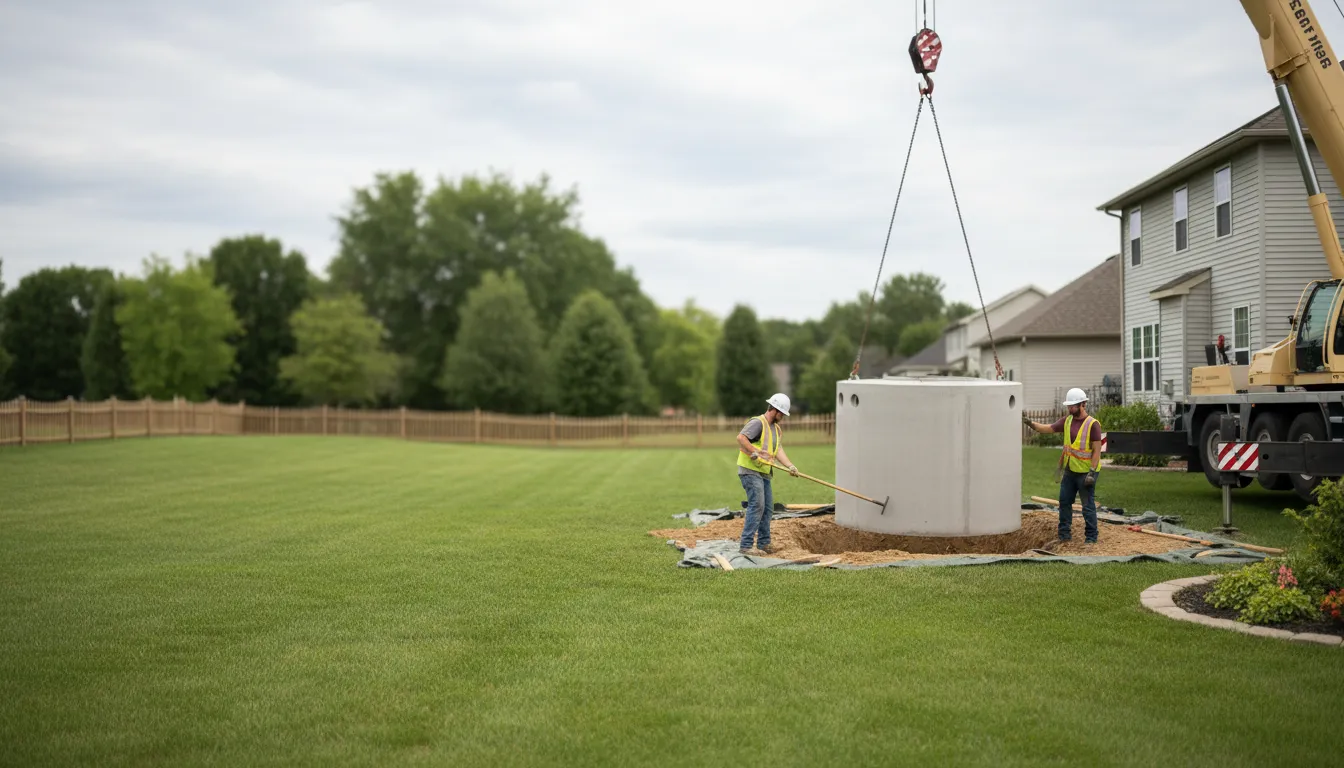
- Excavation & Tank Placement: Once permitted, the installer excavates the hole for the septic tank and the trenches or area for the drainfield. The tank is set and leveled.
- Drainfield Construction: For a conventional system, perforated pipes are laid in gravel-filled trenches. For alternative systems, this stage involves building the mound, placing the ATU, or laying the drip tubing network.
- Plumbing Connection & Inspection: The pipe from the house is connected to the tank inlet, and all components are assembled. A health department inspector must visit the site to approve the installation before backfilling.
- Backfilling & Restoration: After passing inspection, the tank and drainfield are carefully backfilled with soil, and the site is graded and seeded or sodded to prevent erosion.
Planning for Long-Term System Health
A new system is a major investment that should last for decades with proper care. Regular maintenance is not optional; it's essential to prevent premature failure, which can lead to costly repairs, environmental contamination, and health hazards 15.
- Pump the Tank Regularly: Sludge and scum accumulate in the tank. Depending on household size and tank capacity, pumping is typically needed every 3 to 5 years.
- Conserve Water: Excessive water flow can overwhelm the system, pushing solids into the drainfield and causing clogging.
- Mind What You Flush: Only human waste and toilet paper should go into the system. Avoid chemicals, grease, diapers, and wipes (even "flushable" ones).
- Protect the Drainfield: Never drive or park vehicles over it, and avoid planting trees with deep roots nearby. Keep roof drains and surface water away from the area.
Frequently asked questions
Sources
Footnotes
-
Septic System Types: Smart Septic Pros' Guide - https://smartsepticpros.com/blog/what-are-the-3-types-of-septic-systems/ ↩
-
Types of Septic Systems | US EPA - https://www.epa.gov/septic/types-septic-systems ↩
-
Engineered Septic System Design: A Complete Guide - https://landperc.com/engineered-septic-system-design/ ↩
-
Perc Testing and Soil Testing - What You Need to Know - https://buildingadvisor.com/buying-land/septic-systems/soil-and-perc-testing/ ↩ ↩2
-
Septic Systems - Permit Sonoma - https://permitsonoma.org/divisions/engineeringandconstruction/wellandsepticsystems/septicsystems ↩ ↩2
-
Septic Tank Plans: A Complete Homeowner's Guide - Land Perc - https://landperc.com/septic-tank-plans-guide/ ↩
-
Perc Test for Septic System: A Complete Guide - https://landperc.com/perc-test-for-septic-system/ ↩
-
Septic Tank Regulations (PDF) - Shelby County Health Department - https://www.shelbytnhealth.com/DocumentCenter/View/174/Septic-Tank-Regulations-PDF ↩
-
Septic and Septage - Idaho Department of Environmental Quality - https://www.deq.idaho.gov/water-quality/wastewater/septic-and-septage/ ↩
-
Septic Systems (OWTS) - | Larimer County - https://www.larimer.gov/health/environmental-health/septic-systems/septic-systems-owts ↩
-
Septic & Onsite Wastewater Treatment Systems - https://dem.ri.gov/environmental-protection-bureau/water-resources/permitting/septic-onsite-wastewater-treatment-owts ↩
-
How Much Does a Septic System Cost? [2026 Data] | Angi - https://www.angi.com/articles/what-does-it-cost-install-septic-system.htm ↩
-
What You Should Know About Septic Systems When Building ... - https://riverhillsbuilder.com/septic-systems-hill-country/ ↩
-
How Much Does a Septic System & Septic Tank Cost - NexGen Septics - https://www.nexgenseptics.com/septic-system-cost/ ↩
-
Septic Systems Reports, Regulations, Guidance, and Manuals - EPA - https://www.epa.gov/septic/septic-systems-reports-regulations-guidance-and-manuals ↩