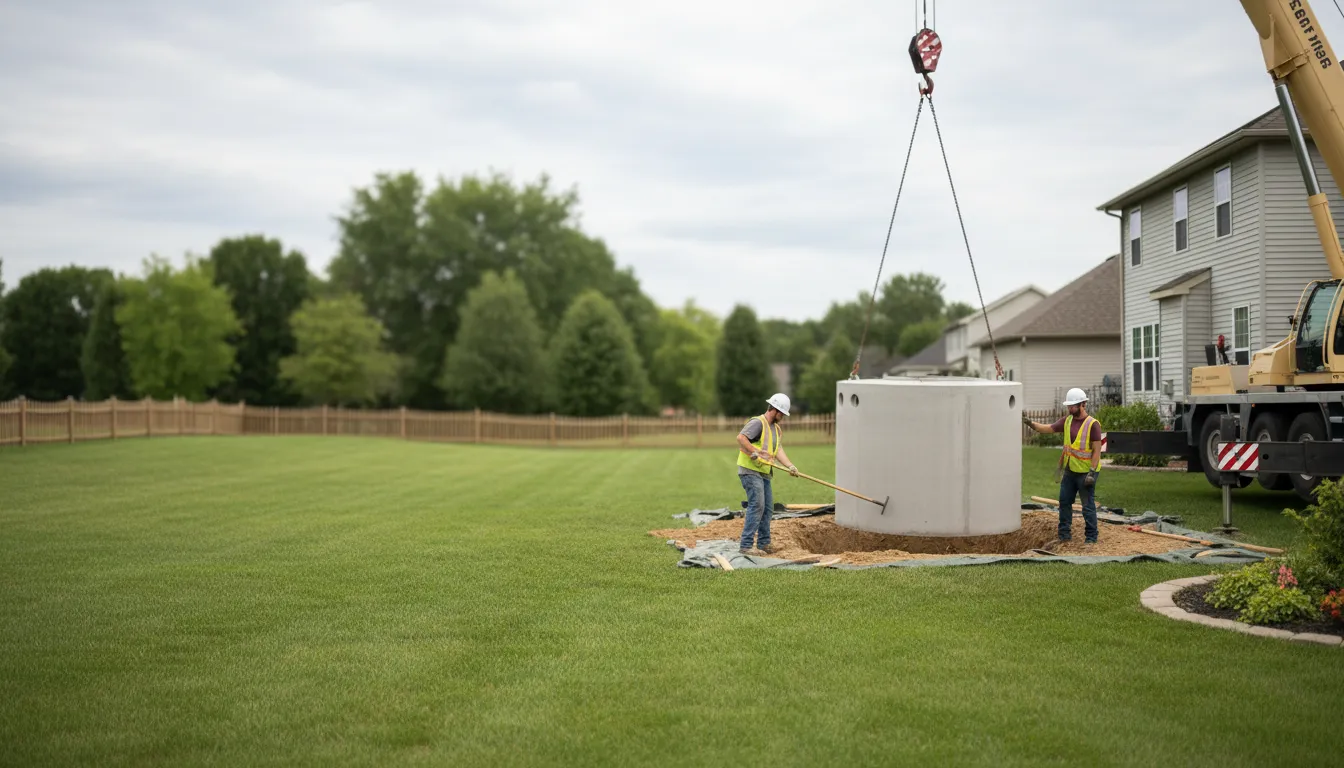
Find the Best Septic Tank Installation & Replacement Contractors for Your Business
No obligation • Fast responses • Nationwide coverage

Why you can trust Septic Spot
Septic Spot is a leading United States resource for understanding and comparing septic services. Our editors review providers using consistent criteria and verify key business details. Listings and scores are independent, and companies cannot pay to influence our content.
Search providers near you
Best Septic Tank Installation & Replacement Contractors in Maine Ranked
Installing or replacing a septic system is a significant investment in your property's health and value. In Maine, this process is carefully regulated to protect the state's sensitive groundwater and unique soil conditions. This guide explains the key steps, rules, and costs involved in septic work in Maine, helping you understand what to expect and how to connect with qualified local professionals for your project.
Understanding Maine's Regulatory Framework
Septic system work in Maine is governed by the Subsurface Wastewater Disposal Rules 1. Unlike some states, Maine emphasizes a site-specific, engineered approach over standardized designs. The goal is to create a system that functions properly for decades while preventing contamination of Maine's abundant lakes, streams, and coastal waters.
Two key professionals are required by law for most new installations or full replacements:
- Licensed Site Evaluator (LSE): This professional conducts a detailed soil and site evaluation to design a system tailored to your property's conditions.
- Local Plumbing Inspector (LPI): This municipal official issues the required permit (HHE-200 Form) and conducts mandatory inspections during installation.
The Step-by-Step Process
1. Site Evaluation and Design
The process begins with a site evaluation by a Licensed Site Evaluator. Maine uses a soil profile description method instead of traditional percolation tests. The evaluator will assess:
- Soil type and depth to determine absorption rates.
- Groundwater levels and seasonal high-water table.
- Required setbacks from wells, property lines, buildings, and water bodies like rivers, lakes, and coastal wetlands.
- Available space for the system and a replacement area (for future use).
Based on this evaluation, the LSE designs a system sized for your home's design flow, typically calculated at 150 gallons per day for a two-bedroom home, plus 25 gallons per day for each additional bedroom. The design will specify all components, including the tank, distribution box, and absorption area (which could be a conventional trench bed or an engineered alternative system).
2. Permitting
With a design in hand, you or your contractor must apply for a Subsurface Wastewater Disposal System Permit (HHE-200 Form) through your town's Local Plumbing Inspector. This permit is valid for 24 months from the date of issue, meaning work must commence within that timeframe. It's important to note that a permit is required for the entire system; simply replacing a failing tank usually still requires permit review, as it is part of the overall wastewater disposal system.
3. Installation by Certified Professionals
Installation must be performed by a state-certified installer 2. Maine law requires installers to be licensed, ensuring they understand state codes and proper construction techniques 2 3. Key installation standards include:
- Watertight risers must be installed to grade for easy future access 4.
- Pre-installation inspection: The LPI must inspect the excavated site and components before any installation begins.
- Specific material requirements: For engineered systems, such as those using Eljen GSF modules, specifications are very precise, requiring, for example, 6 inches of sand below the module and 9 inches at the sides 5.
4. Inspections and Final Approval
Maine requires a two-part inspection by the Local Plumbing Inspector 6:
- Pre-construction/Site Prep Inspection: After excavation but before any tanks or piping are placed.
- Final Inspection: After the system is fully installed but before it is backfilled.
For systems within 250 feet of a coastal wetland, the inspection must be performed by a state-certified inspector in addition to the LPI 7. Once the system passes final inspection and is covered, the LPI will file the completion paperwork with the state.
Find the perfect septic tank installation & replacement contractors for your needs
Get personalized recommendations and expert advice
Costs and Considerations for Maine Homeowners
Understanding the financial scope is crucial. While a routine pump and inspection may cost under $300, a full system replacement or new installation typically starts at $12,000 and can go significantly higher depending on system type, soil conditions, and site challenges 8. Engineered alternative systems for difficult sites are more expensive than conventional trench systems.
Replacement vs. Repair: If only the septic tank has failed, it may be possible to replace just the tank. However, if the soil absorption area (leach field) has failed, a full system replacement in a new location is usually necessary. Your site evaluator will determine this.
Property Records: If you're unsure about your existing system's location or design, you can request records from your town office or the Maine Department of Health and Human Services 9 10.
Alternative Options: For remote or challenging sites, alternatives like composting toilets are permitted, but they still require a permitted system for managing gray water (from sinks, showers, and laundry) 11 12.
Choosing the Right Provider in Maine
Given the complexity of regulations and site-specific nature of septic work in Maine, selecting the right team is essential. Look for professionals who are not only licensed but also have extensive local experience. They will be familiar with the common soil types in your region, the preferences of your local LPI, and the most reliable system technologies for Maine's climate.
A qualified installer will handle the permit application process, schedule all required inspections, and ensure the work meets every detail of the approved design and state code. They should provide a clear, detailed contract outlining the scope of work, the specific system components to be used, the total cost, and the project timeline.
Frequently asked questions
Sources
Footnotes
-
Maine Subsurface Wastewater Rules - https://www.maine.gov/dhhs/mecdc/services/business-services/hydrology-and-wastewater/maine-subsurface-wastewater-rules ↩
-
An Act To License Septic System Installers - Maine Legislature - https://mainelegislature.org/legis/bills/bills_124th/billpdfs/HP064001.pdf ↩ ↩2
-
Maine Septic License & Certification | 2024 Contractor Guide - https://www.servicetitan.com/licensing/septic/maine ↩
-
the Basic Subsurface Wastewater Disposal System Installation - https://www.maine.gov/dhhs/mecdc/environmental-health/plumb/powerpoint/2010-basic-installer-training-doug-brent.pdf ↩
-
Design & Installation Manual Maine - Eljen Corporation - https://eljen.com/wp-content/uploads/2022/10/Maine-Design-and-Install-Manual-4.19.21.pdf ↩
-
MAINE STATE LEGISLATURE - https://lldc.mainelegislature.org/Open/Rpts/td433_b68_2020.pdf ↩
-
Septic System Inspection - Maine.gov - https://www.maine.gov/dep/land/watershed/septic.pdf ↩
-
Septic Systems - Maine.gov - https://www.maine.gov/dep/water/groundwater/septic_systems.pdf ↩
-
Subsurface Wastewater System Permitting - Maine.gov - https://www.maine.gov/dhhs/mecdc/services/business-services/hydrology-and-wastewater/subsurface-wastewater-system-permitting ↩
-
Subsurface Wastewater System Permitting - https://www.maine.gov/dhhs/mecdc/services/business-services/hydrology-and-wastewater/subsurface-wastewater-system-permitting ↩
-
Septic Tank Plans: A Complete Homeowner's Guide - https://landperc.com/septic-tank-plans-guide/ ↩