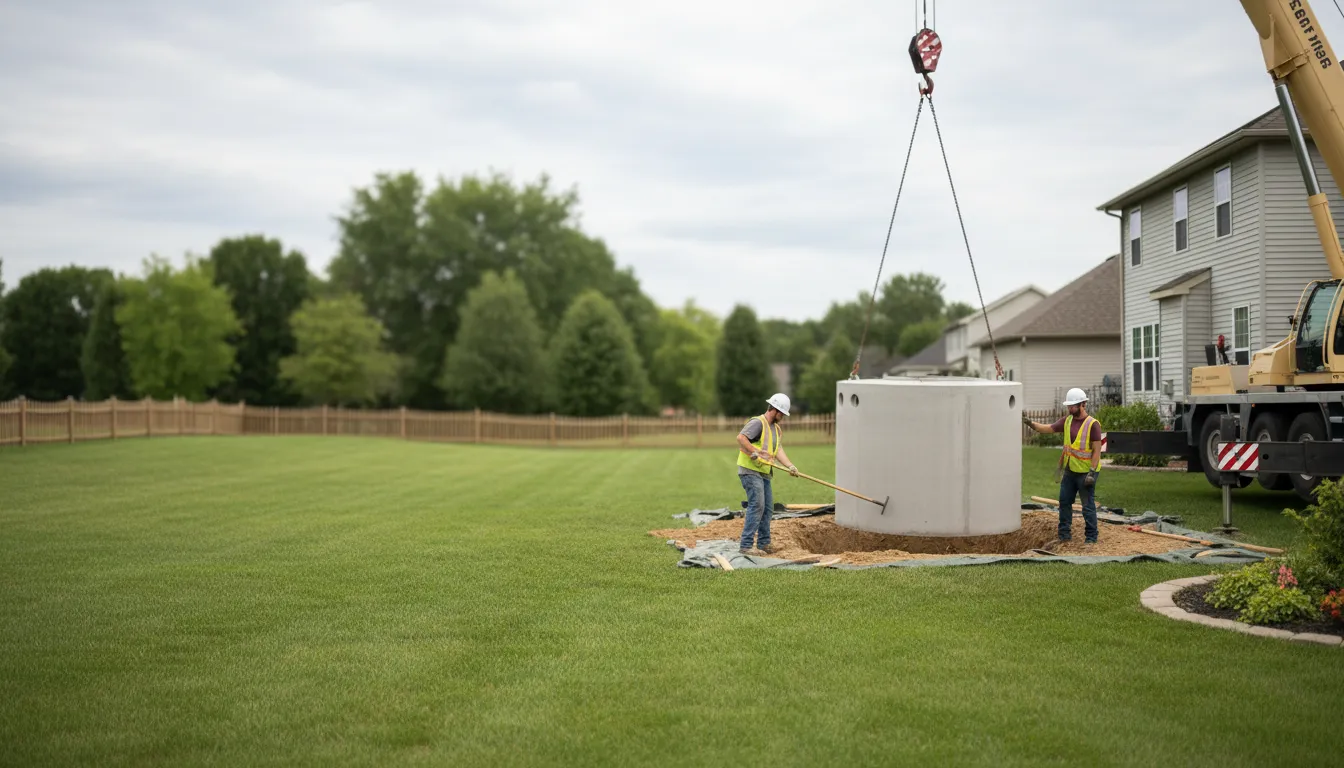
Find the Best Septic Tank Installation & Replacement Contractors for Your Business
No obligation • Fast responses • Nationwide coverage

Why you can trust Septic Spot
Septic Spot is a leading United States resource for understanding and comparing septic services. Our editors review providers using consistent criteria and verify key business details. Listings and scores are independent, and companies cannot pay to influence our content.
Search providers near you
Top Septic Tank Installation & Replacement Contractors in Irvington, New Jersey Ranked
Installing or replacing a septic system is a significant home improvement project that ensures the safe and efficient treatment of household wastewater. In Irvington, this process is governed by strict state and local health codes designed to protect public health and the environment. Understanding the requirements, costs, and steps involved can help you navigate this complex undertaking. This guide provides essential information to help you connect with qualified local professionals for your septic system project.
Water Resource Technologies
2 Kanouse Rd, Newfoundland, NJ 07435
Water Resource Technologies is a full-service environmental remediation and consulting company based near New York, NY. They specialize in septic system repair and installation, as well as residential heating oil tank services and environmental site remediation. Their expertise includes environmental drilling and borings, supporting a range of environmental and septic system needs.
A Norton Septic Contracting
3171 US-9, Old Bridge, NJ 08857
A Norton Septic Contracting is a full-service septic company based in New York, NY, offering septic tank pumping, inspections, repairs, and installations. They serve residential and commercial clients and specialize in alternative septic systems like Hoot and Infiltrator. With over 30 years of experience, they provide NJDEP-compliant inspections and have developed effective repair methods for systems that fail prematurely. The company emphasizes proper maintenance and offers consultations to troubleshoot septic issues. They provide personalized service and handle each project from start to finish.
Ken Van Wyk land Improvement
106 Werimus Rd, Woodcliff Lake, NJ 07677
Ken Van Wyk Land Improvement is a septic tank installation contractor based in New York, NY. The company offers a range of excavation services including demolition, residential and commercial excavation, septic system installation, and rock wall installation. With over 40 years of experience, they handle tasks from land clearing to site grading, providing comprehensive site preparation for construction projects.
WHERE OLD MEETS NEW LLC
2a Great Meadow Ln, East Hanover, NJ 07936
WHERE OLD MEETS NEW LLC is a family-operated septic service company based near New York, NY, serving the communities of Northern New Jersey. They provide full-service septic system maintenance, repair, and installation for both residential and commercial properties. With over 50 years of experience, the company offers expertise in all aspects of septic systems, including planning and permitting for new installations. WHERE OLD MEETS NEW LLC is licensed and insured, continuing a legacy that began with B Horstmann Septic Service founded in 1978.
Michael Smith Excavating & Septic Systems LLC
205 Bordentown Turnpike, Monroe Township, NJ 08831
Michael Smith Excavating & Septic Systems LLC is a locally owned company based in Monroe Township, NJ, serving New York, NY, and surrounding areas. Established in 1970, the company specializes in septic system installation, repair, inspection, and excavation services for both residential and commercial properties. Their expertise includes comprehensive septic system repairs, drain field replacement, and land excavation tailored to client needs. With over 55 years of experience, they hold certification as septic professionals and are members of the New Jersey Septic Management Association.
Understanding Septic System Basics in Essex County
A septic system, or onsite wastewater treatment system, is a self-contained unit for homes not connected to a municipal sewer line. It consists of a septic tank, which separates solids from liquids, and a drain field (or leach field), where the treated liquid effluent is dispersed into the soil for final purification. In Irvington, part of Essex County, all new installations and replacements must comply with the New Jersey Administrative Code (N.J.A.C. 7:9A) standards. These regulations ensure systems are designed to handle your household's capacity while preventing groundwater contamination.
The Permit Process: Your First Critical Step
Before any excavation begins, you must secure the proper permits from the Irvington Township Health Department. This is not a simple formality; it's a mandatory review process that validates your property's suitability and the proposed system's design.
- Design Submission: A licensed professional engineer (PE) must design the system based on specific site data. You cannot submit a generic plan.
- Application Review: The health department reviews the engineered design, soil test results, and property details. This review can take 4 to 8 weeks.
- Permit Fees: Be prepared for permit fees ranging from $300 to $1,500, depending on the project's complexity and the required inspections.
Operating without a permit can result in significant fines and an order to cease all work, making compliance the most important first step.
The Role of Soil Testing and Site Evaluation
The heart of your septic system design is the soil on your property. New Jersey law requires a thorough site evaluation to determine the absorption capability of your soil, which directly dictates the size and type of system you can install.
- Percolation Test (Perc Test): This test measures how quickly water drains through your soil. A slower percolation rate means you'll need a larger drain field.
- Deep Test Pit Inspection: A licensed installer or engineer must excavate test pits to identify the seasonal high water table and any restrictive layers like bedrock or clay. State law requires at least 2 feet of suitable soil between the bottom of the drain field and these restrictive layers.
- Professional Requirement: These tests must be observed and approved by a health department official. The resulting soil logs and percolation data are non-negotiable components of your engineering design.
Choosing Between Installation and Full Replacement
Understanding your project's scope is key to planning and budgeting.
- New Installation: This is for new construction on vacant land or for a property converting from a failed cesspool. It follows the standard permit, design, and build process.
- System Replacement: This occurs when an existing septic system has catastrophically failed (e.g., surfacing sewage, persistent backups). Replacement is often more expensive than a new installation, typically costing $3,000 to $5,000 more, due to the added costs of demolishing the old tank, removing contaminated soil, and navigating existing utilities and landscaping.
Find the perfect septic tank installation & replacement contractors for your needs
Get personalized recommendations and expert advice
Key Installation Requirements and Inspections
Once permits are secured and your contractor begins work, the project will be subject to multiple mandatory inspections. Do not allow any critical component to be covered before it is inspected.
- Pre-Construction/Soil Test Inspection: A health official verifies the test pit locations and soil conditions match the submitted design 1.
- Open Hole Inspection: This is the most critical inspection. Before the septic tank or distribution box is backfilled, an inspector will check for proper placement, structural integrity, watertight seals, and correct connections.
- Final Inspection: After the entire system is installed and the landscape is restored, a final inspection grants approval for the system to be put into operation.
For properties with high water tables or poor soil, a mounded system may be required. This involves building an elevated sand mound to create a suitable drain field, which must also be inspected during construction 2.
Breakdown of Project Costs in Irvington
The total investment for a septic system in Irvington is substantial and varies based on soil conditions, system type, and property access. Here's a typical cost breakdown:
- Engineering & Design: $2,000 - $4,000 for a licensed PE to conduct the site evaluation and create stamped plans.
- Soil Testing: $500 - $1,500 for percolation tests and deep test pit analysis.
- Permit Fees: $300 - $1,500 paid to the local health department.
- Equipment & Installation: This is the largest cost, covering excavation, the septic tank (minimum 1,000 gallons or 250 gallons per bedroom), piping, drain field materials, and labor 3.
- Total Project Cost: For a standard residential system, expect a range of $15,000 to $35,000. Complex sites requiring advanced treatment or mounded systems can easily exceed $40,000 4 5 6.
Timeline from Planning to Completion
Patience is necessary. A septic system project is not a quick fix. From the moment you hire an engineer to the day your system is operational, you should anticipate a timeline of 12 to 20 weeks 7. This period includes design, permit review, contractor scheduling, the installation itself, and the mandatory waiting periods for inspections.
Selecting a Qualified Contractor
Your choice of professional is critical. In New Jersey, septic system installers must be licensed. Always verify their license status and ask for proof of insurance. Look for contractors who work regularly with local health departments in Essex County and have experience with the specific soil challenges found in the Irvington area. A reputable installer will handle permit submissions and coordinate inspections as part of their service.
Maintaining Your New System
After this significant investment, proper maintenance is essential for longevity. This includes having the tank pumped every 3-5 years, conserving water, and avoiding flushing harmful chemicals or non-biodegradable materials. A well-maintained system can last for decades, protecting your property value and the local environment.
Frequently asked questions
Sources
Footnotes
-
The Complete Guide to Soil Testing for Septic System Design - https://www.mapengineering.net/the-complete-guide-to-soil-testing-for-septic-system-design/ ↩
-
The Complete Guide to Septic System Installation and ... - https://excavatingnj.com/blog/the-complete-guide-to-septic-system-installation-and-permitting-in-new-jersey/ ↩
-
NJDEP| Division of Water Quality | Permitting Information - https://dep.nj.gov/dwq/wastewater/septic-systems/permitting-information/ ↩
-
NJ Septic Regulations for 2026: Inspections, Permits & Rules - https://www.atsenvironmental.com/blog/nj-septic-regulations-for-2026/ ↩
-
New Jersey Septic Tank Rules and Regulations - Arrow Sewer & Drain - https://www.arrowsewernj.com/blog/septic-tanks-in-new-jersey-what-you-need-to-know/ ↩
-
The Real Cost of Septic Installation in New Jersey (2025) - https://www.atsenvironmental.com/blog/the-real-cost-of-septic-installation-in-new-jersey-2025/ ↩
-
NJDEP| Division of Water Quality | Professional Information - https://dep.nj.gov/dwq/wastewater/septic-systems/professional-information/ ↩