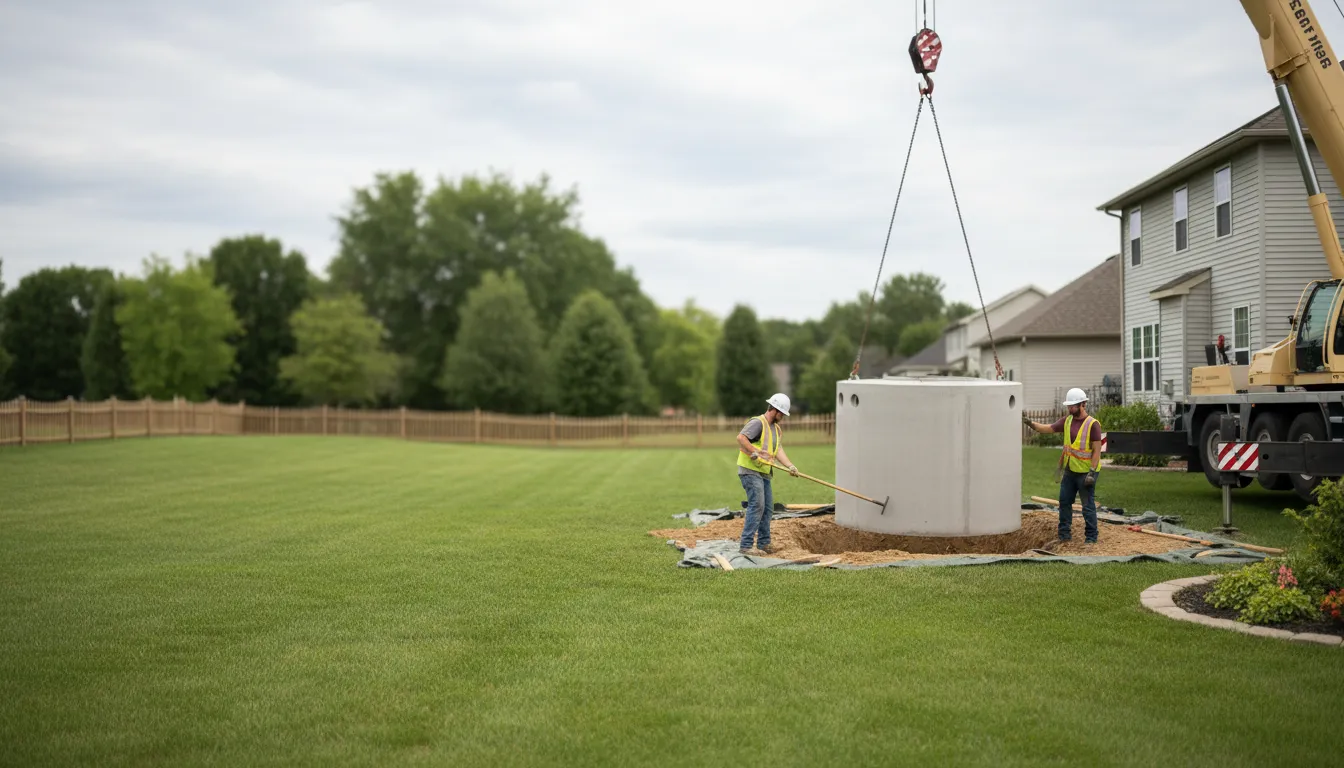
Find the Best Septic Tank Installation & Replacement Contractors for Your Business
No obligation • Fast responses • Nationwide coverage

Why you can trust Septic Spot
Septic Spot is a leading United States resource for understanding and comparing septic services. Our editors review providers using consistent criteria and verify key business details. Listings and scores are independent, and companies cannot pay to influence our content.
Search providers near you
Best Septic Tank Installation & Replacement Contractors in Utah Ranked
Installing or replacing a septic system is a significant investment in your property's long-term functionality and environmental safety. In Utah, this process is governed by specific state and local health regulations designed to protect groundwater and public health. This guide explains the key steps, rules, and considerations for septic system work in Utah, helping you understand what to expect and how to find qualified local professionals to ensure your project is done correctly.
Understanding Utah's Regulatory Framework
All septic system installation and replacement in Utah falls under Utah Administrative Rule R317-4 for Onsite Wastewater Systems. This rule establishes the minimum standards for design, construction, and operation. The primary enforcement and permitting authority, however, rests with your local county health department. Before any shovel hits the ground, you must obtain a construction permit from this local agency.
The rationale for these strict controls is Utah's varied geography and the critical need to protect water resources. Improperly sited or installed systems can contaminate wells, streams, and groundwater. The permitting process ensures your system is designed for your specific soil conditions and lot layout, minimizing environmental risk and maximizing system longevity.
The Step-by-Step Process for Installation or Replacement
1. Site Evaluation and Soil Testing
The first technical step is a professional site evaluation. A certified professional (typically a Level 2 or 3 Wastewater Certified Individual in Utah) must visit your property to conduct soil exploration and percolation tests. These tests determine:
- Soil absorption rate: How quickly water drains through your native soil.
- Depth to groundwater or bedrock: Critical for determining the vertical separation required.
- Soil texture and structure.
This data is the foundation of your system's design. You cannot skip this step or use generic plans; the system must be engineered for your specific parcel.
2. System Design and Permit Application
Using the soil test results, a designer (often the same certified professional) creates a detailed system plan. This design must account for:
- Tank Sizing: Based primarily on the number of bedrooms in the home, as per state guidelines.
- Drainfield Sizing: Calculated from the soil percolation rate and daily wastewater flow.
- Setbacks: The design must maintain strict minimum distances from property lines, buildings, wells (typically 100 feet), streams, and other sensitive areas.
- System Type: Whether a conventional gravity system, pressure distribution, or an alternative system (like a mound) is required based on site constraints.
This design package is submitted with a permit application to your local health department for review and approval.
3. Installation by Certified Professionals
In Utah, the actual installation must be performed by a certified installer1. Key installation standards include:
- Ensuring the septic tank is watertight and properly leveled.
- Installing the drainfield (or leach field) at the correct depth and grade.
- Using approved materials and construction methods.
- Protecting the system from surface water intrusion and vehicle traffic.
For system replacement, the old tank and drainfield must be properly abandoned (often filled with clean gravel or soil), and the new system must meet all current codes, even if the old one was legal when installed2.
4. Inspections and Final Approval
Health department inspections are mandatory at key stages:
- Pre-installation: To verify the staked location matches the approved plan.
- During construction: To inspect the open excavation, tank placement, and distribution lines before they are covered.
- Final inspection: After installation is complete but before the system is backfilled or put into use 3 4.
Only after the final inspection is passed will the health department issue an approval to cover and operate the system. Never backfill the system without this final inspection.
Find the perfect septic tank installation & replacement contractors for your needs
Get personalized recommendations and expert advice
Key Design and Sizing Requirements
Utah's rules provide specific technical requirements that directly impact your system's design and cost.
- Tank Capacity: Minimum septic tank capacities are determined by bedroom count. For example, a standard three-bedroom home requires a larger tank than a two-bedroom home5 6. Sizing ensures adequate settling time for solids.
- Vertical Separation: There must be a minimum of 48 inches of suitable soil between the bottom of the drainfield and the high groundwater table or bedrock. In some cases, with approved pre-treatment technology, this can be reduced to 24 inches.
- Setback Distances: These are non-negotiable buffers. Common Utah setbacks include 100 feet from wells or springs, 50 feet from streams or lakes, 10 feet from property lines, and 5 feet from building foundations7 8. Your design must fit within these constraints.
- Alternative Systems: If your soil is too slow-draining, shallow, or the site has a high water table, a conventional gravity system may not be possible. In these cases, you may need an alternative system like a mound, sand filter, or aerobic treatment unit (ATU). These systems are more complex and expensive but are engineered solutions for difficult sites.
Cost Considerations for Utah Homeowners
The cost of a new septic system or replacement in Utah varies dramatically based on site conditions and system type. It's important to budget for all components:
- Permitting and Design: The professional site evaluation, soil testing, and design work typically range from $2,000 to $6,000.
- Installation/Replacement: For a conventional gravity system on a favorable site, total installed costs often start around $5,000 to $10,000. However, costs can quickly rise to $15,000-$25,000 or more for larger homes or sites requiring alternative systems like mounds9 10.
- Factors Influencing Cost:
- Soil and Site Conditions: Rocky soil, high groundwater, or steep slopes increase excavation and material costs.
- System Size and Type: More bedrooms and complex systems cost more.
- Local Labor and Material Rates.
- Permit Fees: Vary by county.
Always get detailed, written estimates from multiple certified installers that break down design, permit, installation, and inspection fees.
Choosing a Qualified Professional in Utah
Given the regulatory and technical complexity, selecting the right professional is crucial. Look for:
- Valid Utah Certification: Ensure they hold current Level 2 or 3 Wastewater Certification from the Utah Department of Environmental Quality11 12.
- Local Experience: Choose a provider familiar with your county's health department inspectors and specific requirements.
- Comprehensive Services: Many firms offer "design-build" services, handling the entire process from soil test to final inspection.
- References and Reputation: Ask for references from recent jobs in your area and check online reviews.
- Clear Contracts: The proposal should detail all costs, the scope of work, the system type and size, and a timeline.
A qualified professional will guide you through the permit process, ensure the design is compliant, and build a system that will function properly for decades.
Frequently asked questions
Sources
Footnotes
-
TriCounty Health Department TCHD-WW-0317 Wastewater Regulation - https://www.utah.gov/pmn/files/938461.pdf ↩
-
Utah Admin. Code R317-4-6 - Design Requirements - https://www.law.cornell.edu/regulations/utah/Utah-Admin-Code-R317-4-6 ↩
-
Can You Dig a Septic System Yourself in Utah? - https://www.mwranches.com/blog/can-you-dig-a-septic-system-yourself-in-utah ↩
-
Onsite Wastewater Treatment Systems Regulation - Utah.gov - https://site.utah.gov/webermorgan/wp-content/uploads/sites/60/2023/05/Onsite-Wastewater-Treatment-Systems-Regulation.pdf ↩
-
Septic & Onsite Wastewater Systems - Waste - Salt Lake County - https://www.saltlakecounty.gov/health/waste/septic/ ↩
-
Septic Tank Drawing with Dimensions: Ultimate Guide - https://landperc.com/septic-tank-drawing-dimensions/ ↩
-
DAR File No. 38271 - Utah Administrative Rules - https://rules.utah.gov/publicat/bulletin/2014/20140215/38271.htm ↩
-
Septic System Design Salt Lake City, UT - Civil Solutions Group - https://civilsolutionsgroup.net/septic-system-design-salt-lake-city-ut/ ↩
-
Anderson Engineering: Septic Tank Design Services in Utah - https://www.andersoneng.com/septic-tank-system-and-onsite-wastewater-treatment-design-utah/ ↩
-
Residential Septic System Installs: Comparing Designs For Modern Homes - Septic Tank Man - https://www.theseptictankman.com/blog/residential-septic-system-installs-comparing-designs-for-modern-homes ↩
-
Wastewater Certification Permit Guide - Utah Department of ... - https://deq.utah.gov/permits/permit-guide/wastewater-certification-permit-guide ↩
-
Septic Systems - Southwest Utah Public Health Department - https://swuhealth.gov/septic-systems/ ↩