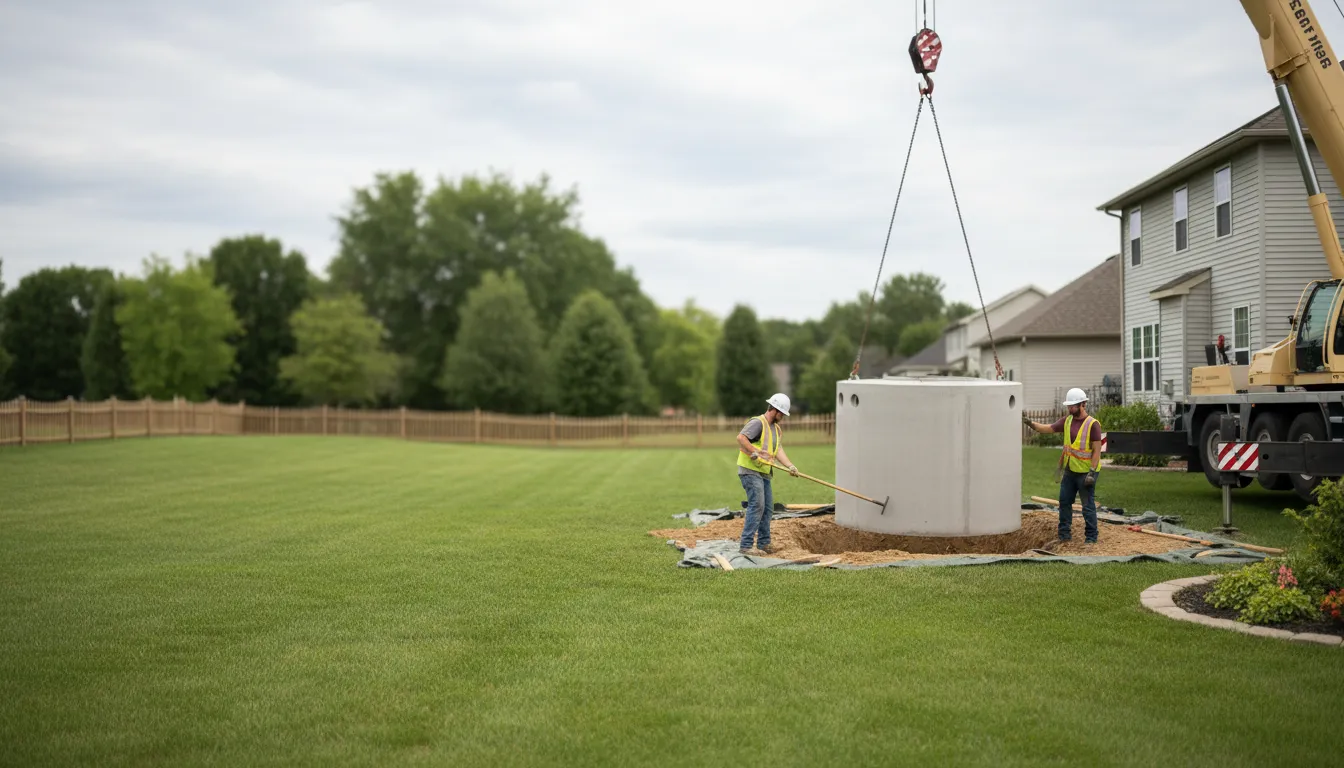
Find the Best Septic Tank Installation & Replacement Contractors for Your Business
No obligation • Fast responses • Nationwide coverage

Why you can trust Septic Spot
Septic Spot is a leading United States resource for understanding and comparing septic services. Our editors review providers using consistent criteria and verify key business details. Listings and scores are independent, and companies cannot pay to influence our content.
Search providers near you
Top Septic Tank Installation & Replacement Contractors in Danville, Virginia Ranked
Installing or replacing a septic system is a significant investment in your property's infrastructure and the health of Virginia's environment. This process is strictly regulated by the Virginia Department of Health (VDH) to protect groundwater and public safety. Whether you're building a new home, adding onto an existing one, or facing a system failure, understanding the state's requirements is crucial. This guide provides a clear overview of the regulations, steps, and considerations for septic work in Virginia, helping you navigate the process and connect with the licensed professionals required to do the job correctly.
Virginia's Regulatory Framework
All septic system installation, replacement, and major repair work in Virginia is governed by the VDH's Sewage Handling and Disposal Regulations. The primary goal is to ensure that wastewater is treated effectively before it re-enters the environment, preventing contamination of wells, streams, and groundwater. The state mandates that all such work be permitted and performed by or under the supervision of professionals licensed by the Department of Professional and Occupational Regulation (DPOR) 1.
The local health department is your point of contact. To begin, a property owner must submit a formal "petition for services" to their local VDH office. For new systems, this application must include a site evaluation and design from a private-sector consultant licensed by DPOR as an onsite soil evaluator 2. This shift toward utilizing private licensed professionals helps streamline the process while maintaining rigorous standards.
The Permit Process: A Step-by-Step Guide
Navigating the permit process is the first critical hurdle. Here's a typical sequence for a new installation:
- Hire a Licensed Soil Evaluator: Your first step is to engage a DPOR-licensed soil evaluator (often called a "site evaluator" or "perk tester"). This professional will conduct a thorough site assessment 3.
- Site Evaluation & Percolation Test: The evaluator performs soil analysis and a percolation ("perk") test to determine the soil's absorption rate. This is the single most important factor in dictating the type and size of system your property can support.
- System Design: Based on the site evaluation and your home's size (number of bedrooms), the licensed professional creates a detailed septic system design plan. This plan specifies the tank size, drainfield location, dimensions, and construction methods.
- Submit Permit Application: The completed design plan is submitted as part of your construction permit application to the local VDH health department 4.
- Permit Issuance & Pre-Construction Meeting: Once VDH reviews and approves the design, they will issue a construction permit. A pre-construction meeting with a VDH inspector is often required.
- Construction & Inspection: A DPOR-licensed installer must construct the system exactly according to the permitted plans. VDH inspectors will conduct one or more inspections during critical phases of the installation to ensure compliance 5.
- Final Inspection & Operation Permit: After construction is complete and passes a final inspection, VDH will issue an Operation Permit, officially approving the system for use.
For system repairs or replacements, the process is similar, though it may begin with a diagnostic inspection to determine the cause of failure. If you are modifying your home-such as adding a bedroom-you must obtain a certification letter from VDH confirming your existing septic system has the capacity to handle the increased flow.
System Sizing and Design Requirements
Virginia law provides specific criteria for how septic systems must be designed. Sizing is primarily based on the number of bedrooms, which serves as a proxy for daily wastewater flow 6.
Tank Capacity:
- 1-2 Bedrooms: Minimum 1,000-gallon tank.
- 3 Bedrooms: Minimum 1,000-gallon tank.
- 4 Bedrooms: Minimum 1,250-gallon tank.
- 5-6 Bedrooms: Minimum 1,500-gallon tank 7.
If the home includes a garbage disposal, the required tank size increases significantly-for example, to 1,500 gallons for a 3-bedroom home or 1,875 gallons for a 4-bedroom home 8. Tanks must be watertight, typically constructed of concrete, and have at least two compartments 8.
Drainfield Sizing: The drainfield (or absorption area) size is determined by the soil's percolation rate from the site evaluation. Regulations stipulate a minimum of 400 square feet of absorption area for a single-family dwelling, but poor soil conditions can require a much larger field 9 10.
Conventional vs. Alternative Onsite Sewage Systems (AOSS)
Not all properties have soil suitable for a conventional gravity-fed septic system. When soil conditions are poor (e.g., slow percolation, high groundwater, shallow bedrock), an Alternative Onsite Sewage System (AOSS) is necessary.
- Conventional Systems: These are gravity-based systems with a septic tank and a subsurface drainfield. They are the most common and least expensive option where soil conditions allow.
- AOSS: These are engineered systems that may include pumps, advanced treatment units, sand filters, or drip irrigation to treat wastewater to a higher standard before dispersal. They are regulated under a separate chapter of the Virginia code (Chapter 613) and have stricter operational requirements, including mandatory annual inspections by a licensed operator.
Find the perfect septic tank installation & replacement contractors for your needs
Get personalized recommendations and expert advice
Inspection Protocols and New Regulations
Regular inspections are vital for the long-term health of any septic system. VDH recommends an inspection at least every three years for conventional systems. For AOSS, annual inspections by a licensed operator are required by law 11.
Important New Standards (Effective 2026): New legislation (HB1178/SB401) establishes stricter standards for inspection contracts to protect homeowners. Starting July 1, 2025, inspectors must provide a written, signed contract that details:
- The scope of services to be performed.
- All associated costs.
- A clear statement that pumping the tank is optional but is recommended for a complete inspection 12 13.
The inspection procedure itself must include a review of the system's operation permit, an inspection of the tank, pump tanks (if any), distribution devices, and the dispersal field. A written report must be provided to the homeowner within 10 business days 14.
Understanding Costs
The cost of septic system installation or replacement in Virginia varies widely based on site-specific conditions.
- Conventional System Installation: Typically ranges from $6,000 to $15,000 or more. The final price depends on tank size, soil conditions, and installation complexity 15.
- Alternative/Engineered System (AOSS) Installation: Significantly more expensive, often ranging from $15,000 to $30,000+ due to the added technology, materials, and engineering required 16 17.
- Replacement/Repair Costs: These are highly variable. Replacing just a failed tank is less costly than a full system replacement that requires a new drainfield. If the drainfield has failed and a new suitable area must be found on the property, costs can approach or exceed those of a new installation 18.
The single biggest cost factor is the soil condition on your property, which dictates the system type. Always get multiple detailed quotes from licensed installers.
Maintenance: Protecting Your Investment
Once your system is installed, proper maintenance is your responsibility as a homeowner 19. This includes:
- Regular Pumping: Have the septic tank pumped by a licensed professional every 3-5 years (or as recommended based on usage).
- Water Conservation: Reducing water flow extends the system's life.
- Mindful Flushing: Only human waste and toilet paper should go into the system. Avoid chemicals, grease, wipes, and other non-biodegradables.
- Protect the Drainfield: Never drive or park vehicles over it, and keep roof drains and other surface water away from the area.
Following these steps, along with periodic professional inspections, is the best way to avoid premature system failure and costly repairs.
Frequently asked questions
Sources
Footnotes
-
Frequently Asked Environmental Health Questions - VDH.Virginia.gov - https://www.vdh.virginia.gov/content/uploads/sites/84/2017/02/Frequently-Asked-Environmental-Health-Questions_Onsite.pdf ↩
-
Septic, Sewage, and Well Applications - Virginia Department of Health - https://www.vdh.virginia.gov/environmental-health/onsite-sewage-water-services-updated/have-you-considered-using-the-private-sector/ ↩
-
Septic System Design & Site Evaluation Services - https://www.lyttleco.com/services/septic-system-site-evaluation-design/ ↩
-
12VAC5-610-250. Procedures for obtaining a construction permit for ... - https://law.lis.virginia.gov/admincode/title12/agency5/chapter610/section250/ ↩
-
Onsite Program (Well and Septic) - Virginia Department of Health - https://www.vdh.virginia.gov/southside/environmental-health-services/onsite-program-well-and-septic/ ↩
-
Septic Tank Sizing Per Bedroom - HomeField East Valley - https://www.homefieldonsite.com/east-valley/septic-tank-sizing-per-bedroom/ ↩
-
Septic Tank Requirements in Virginia - https://septiccalculator.com/states/va ↩
-
Chapter 8 Tanks: Virginia Private Sewage Disposal Code 2021 - https://up.codes/viewer/virginia/ipsdc-2021/chapter/8/tanks ↩ ↩2
-
12VAC5-610-950. Absorption area design. - Virginia Law - https://law.lis.virginia.gov/admincode/title12/agency5/chapter610/section950/ ↩
-
Part V. Design and Construction Criteria - Virginia Law - https://law.lis.virginia.gov/admincodefull/title12/agency5/chapter610/partV/ ↩
-
Chapter 613. Regulations for Alternative Onsite Sewage Systems - https://law.lis.virginia.gov/admincodefull/title12/agency5/chapter613/ ↩
-
Virginia-2026-SB401-Introduced - LegiScan - https://legiscan.com/VA/text/SB401/id/3322778/Virginia-2026-SB401-Introduced.html ↩
-
New Virginia Septic Inspection Requirements - VOWRA Frequently ... - https://dullesarea.com/wp-content/uploads/2025/07/VOWRA-FAQs-V3.1-7-7-25.pdf ↩
-
Virginia-2026-SB401-Enrolled - LegiScan - https://legiscan.com/VA/text/SB401/id/3381661/Virginia-2026-SB401-Enrolled.html ↩
-
Septic Tank Installation Cost 2025 | What It Really Costs - https://www.blueribbonseptic.com/blog/septic-savings-how-much-does-a-new-septic-tank-installation-really-cost ↩
-
How Much Does A Septic System Cost In Virginia? - Soils Inc. - https://soils-inc.com/how-much-does-a-septic-system-cost-in-virginia/ ↩
-
Trusted Septic System Installation in Virginia with a 5-Star Rating! - https://vaseptic.com/septic-system-installation-virginia/ ↩
-
How Much Does It Cost to Replace a Septic Tank and Drain Field? - https://www.bobvila.com/articles/cost-to-replace-septic-tank-and-drainfield/ ↩
-
Onsite Sewage System Owner Responsibilities - Environmental Health - https://www.vdh.virginia.gov/environmental-health/onsite-sewage-system-owner-responsibilities/ ↩