Find the Best Septic Tank Installation & Replacement Contractors for Your Business
No obligation • Fast responses • Nationwide coverage

Why you can trust Septic Spot
Septic Spot is a leading United States resource for understanding and comparing septic services. Our editors review providers using consistent criteria and verify key business details. Listings and scores are independent, and companies cannot pay to influence our content.
Search providers near you
Best Septic Tank Installation & Replacement Contractors in Vermont Ranked
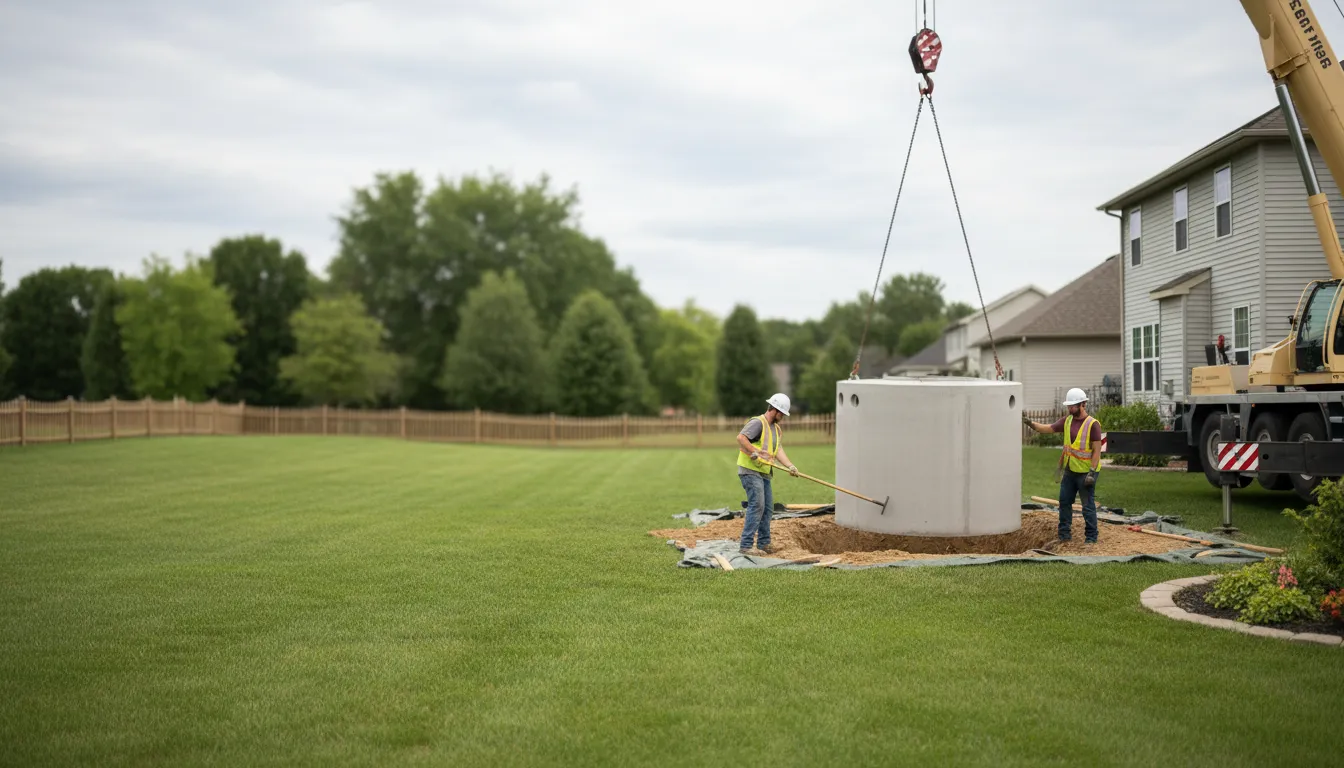
Installing or replacing a septic system in Vermont is a significant undertaking governed by strict state regulations to protect public health and the environment. This process is essential for homes not connected to municipal sewer lines, ensuring wastewater is safely treated and disposed of on your property. Navigating Vermont's permit requirements, soil evaluations, and system design can be complex, but understanding the key steps helps you work effectively with licensed professionals to achieve a compliant and functional system.
Vermont's Regulatory Framework
All new septic system installations, replacements of failed systems, or expansions that increase water use (like adding a bedroom) require a state permit from the Vermont Department of Environmental Conservation (DEC) 1. Vermont operates under the Wastewater System and Potable Water Supply Rules, which set the standards for soil-based wastewater disposal 1. These rules are designed to prevent groundwater contamination, a critical concern in a state with abundant water resources.
A unique aspect of Vermont's approach is the "best fix" permit option. For properties with failed systems on challenging sites where a fully compliant system cannot be installed, the state may allow an alternative solution that improves upon the existing failing system, even if it doesn't meet all standard requirements 2 3. This provides a practical pathway for homeowners with severe site constraints.
The Design and Sizing Process
System design is not a DIY project in Vermont. A licensed designer or professional engineer must create the system plans and submit them for the state permit. The design starts with determining the design flow, which is typically based on 70 gallons per person per day. Sizing is primarily tied to the number of bedrooms, with the first three bedrooms generally assumed to house two people each.
The most critical factor in design is the site-specific soil evaluation. A licensed designer must visit the property to examine soils and determine the Estimated Seasonal High Groundwater Table (ESHGWT). This evaluation, often involving a percolation (perc) test, dictates the type of system your property can support. Vermont also often imposes a maximum flow capacity of 1,000 gallons per day per lot.
Common System Types in Vermont
The soil conditions and groundwater depth on your property will determine the necessary system type.
- In-Ground (Conventional) Systems: These are suitable only for sites with deep, permeable soils and a groundwater table at least 6 to 7 feet below the surface 4. They consist of a septic tank and a subsurface leaching field.
- Mound or Alternative Systems: Due to Vermont's prevalent shallow groundwater and bedrock, mound systems are frequently required. These systems involve constructing an elevated sand mound above the natural soil surface to provide adequate treatment depth. Other alternative systems might include sand filters or aerobic treatment units (ATUs) for sites with severe limitations.
The Installation and Inspection Timeline
Proper installation and verification are legally mandated. The process follows these key stages:
- Pre-Construction: A licensed designer creates the system plans and obtains the state permit.
- During Construction: Inspections by a licensed designer are mandatory at critical phases, such as before the tank is set, during piping installation, and before the system is backfilled 5. These inspections ensure the installation matches the permitted design.
- Final Inspection & Testing: Specific watertightness inspections are required, including leak testing of tanks, pipes, and pump stations 6. Once the designer confirms compliance, they issue a "Letter of Certification" to the state.
- Ongoing Maintenance: To protect your investment and the environment, annual inspections are strongly recommended for all systems and are legally required for certain larger systems 7. These inspections typically involve checking the tank, pump (if present), and cleaning effluent filters.
Find the perfect septic tank installation & replacement contractors for your needs
Get personalized recommendations and expert advice
Understanding Costs in Vermont
The cost for septic system installation or replacement in Vermont varies widely and is highly dependent on your specific site conditions. It's important to budget for the entire process, including design, permitting, excavation, materials, and inspection.
- Small or Standard System Replacement: For a straightforward replacement on a favorable site, costs can start in the range of $10,000 to $15,000.
- Complex or Mound System Replacement: For the more common scenario requiring a mound or alternative system due to soil or groundwater issues, costs frequently exceed $20,000. On complex sites with difficult access, need for significant fill material, or other challenges, total costs can easily reach $30,000 to $40,000 or more 8 9 10.
These figures underscore why the initial soil evaluation and professional design are so valuable-they help identify potential cost drivers early in the process.
Planning for a System Replacement
If your existing system is failing (evidenced by slow drains, soggy ground in the drain field, or sewage backups), planning for a replacement should begin immediately. Start by contacting a licensed Vermont septic system designer. They will evaluate your site, discuss your household's needs, and guide you through the permit application. It's also wise to consult with your local town office, as some municipalities have additional regulations or requirements.
For new construction, the septic system design and permitting process is integrated into the overall building permit timeline. Never begin construction on a new home without first having a permitted septic system design in place.
Frequently asked questions
Sources
Footnotes
-
Wastewater System and Potable Water Supply Rules - https://dec.vermont.gov/sites/dec/files/dwgwp/ropermits/pdf/doineedapermit.15.10.09.pdf ↩ ↩2
-
WW Permit- Frequently Asked Questions - https://dec.vermont.gov/drinking-water-and-groundwater-protection/wastewater-systems-and-potable-water-supply-program-2/ww ↩
-
Septic System Primer - https://dec.vermont.gov/sites/dec/files/wsm/lakes/Lakewise/docs/LP_BMPSepticSystemPrimer.pdf ↩
-
Health Regulations Related to On-Site Sewage Disposal Systems - https://readingvt.govoffice.com/index.asp?SEC=367F39E7-F412-4760-AACD-91E7BFE75A19&DE=7F6F217F-69A7-444C-A3DB-182CB1B53189 ↩
-
septic system inspection guideline - https://dec.vermont.gov/sites/dec/files/dwgwp/indirect/pdfs/septicsysteminspectguideline.pdf ↩
-
Quality Control Inspection & State Letter - Hogg Hill Design, LLC - http://www.vtsepticdesign.com/septic-construction-inspection-certification ↩
-
Septic Guide Cover - Northwest Regional Planning Commission - https://www.nrpcvt.com/wp-content/uploads/2025/01/SepticSystemGuide_2025_January22.pdf ↩
-
A Guide to Owning & Maintaining a Septic System in Northwest ... - https://www.nrpcvt.com/wp-content/uploads/2024/07/SepticSystemGuide2024.pdf ↩
-
Vermont Septic System Design - https://www.trinityeng.com/service/vermont-septic-system-design/ ↩
-
Applications/Plans/System Design - Vermont.gov - https://dec.vermont.gov/sites/dec/files/dwgwp/rorules/pdf/2019.02.27%20Designer%20Training%20Subchapters%209%20-%2012.pdf ↩