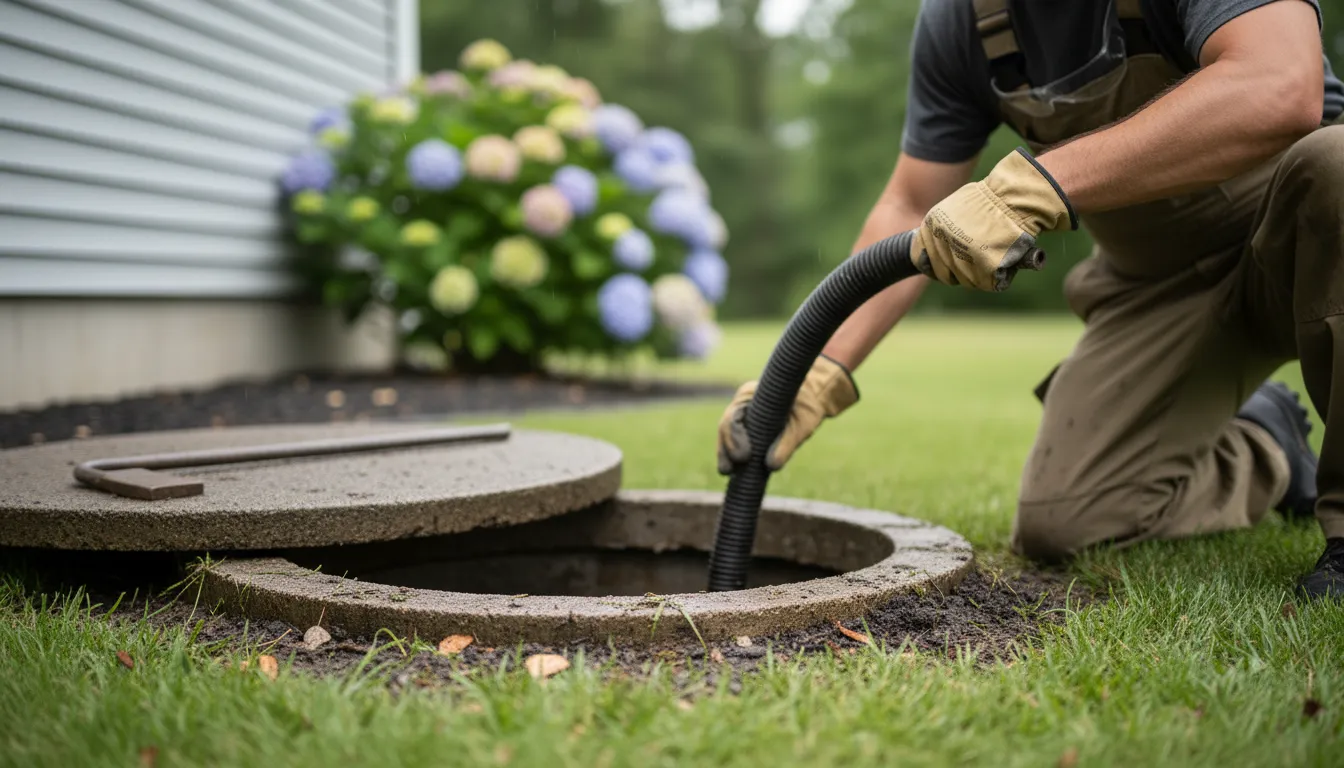
Find the Best Septic Tank Pumping Contractors for Your Business
No obligation • Fast responses • Nationwide coverage

Why you can trust Septic Spot
Septic Spot is a leading United States resource for understanding and comparing septic services. Our editors review providers using consistent criteria and verify key business details. Listings and scores are independent, and companies cannot pay to influence our content.
Search providers near you
Top Septic Tank Pumping Contractors in Auburn, Alabama Ranked
Maintaining your septic system is a crucial responsibility for Alabama homeowners. Regular septic tank pumping prevents system failure, protects your property value, and safeguards public health and local water quality. This guide provides clear, actionable information on Alabama's regulations, recommended maintenance schedules, and practical tips to help you understand your system and connect with qualified, licensed professionals for service.
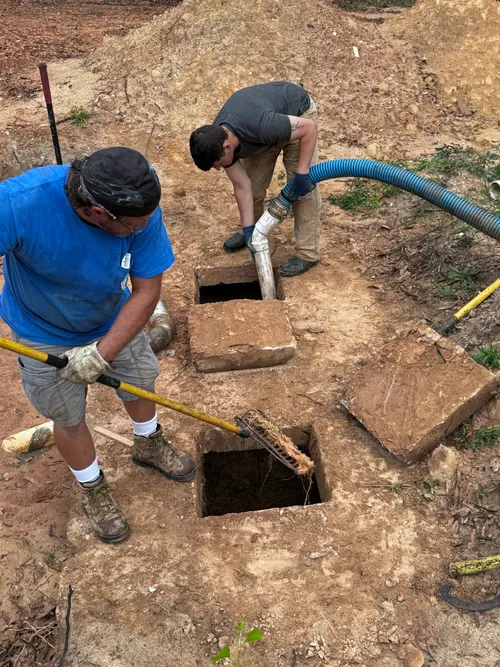
Garner Grading & Septic LLC
5816 Notasulga Rd, Notasulga, AL 36866
Garner Grading & Septic LLC provides a full range of septic services in Montgomery, AL, including septic system installation, repairs, pumping, and inspections. They also offer precision grading work to support construction and landscaping projects. With years of industry experience, Garner Grading & Septic focuses on maintaining the health and functionality of septic systems for homeowners, business owners, and contractors.
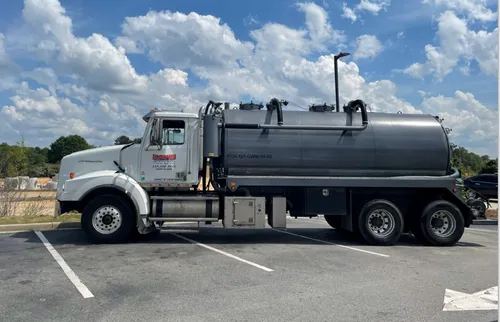
Columbus Septic Services
Columbus, GA
Columbus Septic Services is a locally owned company serving Columbus, GA, with over 20 years of experience in septic system care. They offer a full range of services including septic tank pumping, cleaning, installation, maintenance, and repairs. Their team is equipped to handle complex septic system issues and also provides grease trap cleaning for commercial clients. The company operates 24/7 to address emergency septic needs promptly and uses fully equipped trucks to ensure thorough service.
Dykes & Son Inc
2808 Opelika Rd, Phenix City, AL 36870
Dykes & Son Inc is a company based near Columbus, GA, offering septic system services for both commercial and residential clients. Their services include septic tank pumping, drain field repair, and installation of new field lines. The company has the equipment and expertise to handle various septic system needs and excavation work.
Understanding Your Septic System and Alabama Regulations
A septic system is an on-site wastewater treatment structure, typically consisting of a tank and a drain field. In Alabama, all septic tank cleaners, pumpers, and installers must be licensed by the Alabama Onsite Wastewater Board. This licensing ensures that technicians are trained in proper procedures and state health codes. Vehicles used for pumping must display a valid Alabama Department of Public Health (ADPH) decal and the firm's name and address on both sides1 2.
Homeowners are responsible for the proper operation and maintenance of their systems. The ADPH provides a comprehensive Homeowner's Guide that serves as a valuable record-keeping tool for inspections, pumping, and repairs. Keeping detailed records is not only good practice but also essential information for future property owners.
Recommended Pumping and Inspection Schedule
How often you need to pump your tank depends on several household factors. The general rule for most Alabama households is to have the tank pumped by a licensed professional every 3 to 5 years 3. However, this is a guideline, not a strict rule.
An annual or biennial inspection is the best way to determine the exact need. The ADPH recommends having your tank inspected for sludge and scum levels every 1 to 3 years. During an inspection, a technician measures the accumulated solids to assess if pumping is required.
You may need more frequent service-potentially every 2 to 3 years-if your household has any of the following characteristics4 5:
- A larger family (increased water usage)
- Regular use of a garbage disposal
- A smaller-sized septic tank
- If the scum layer becomes too thick or the effluent filter becomes clogged, immediate service is required.
What to Expect: The Pumping Process and Costs
When you hire a licensed pumper, they will locate and uncover your tank's access lids. Using a specialized vacuum truck, they will remove all the contents-scum, sludge, and liquid-from the tank. A thorough professional will also inspect the tank's components, including baffles and the effluent filter (if present), and may rinse the tank interior.
In Alabama, most homeowners can expect to pay between $350 and $500 or more for standard septic tank pumping6 7. The final cost can vary based on:
- Tank Size: Larger tanks cost more to pump.
- Accessibility: Difficult access (e.g., overgrown vegetation, buried lids, long hose runs) can increase the price.
- Solids Volume: Tanks that are severely overdue for service may incur higher fees due to the extra time and disposal required.
Find the perfect septic tank pumping contractors for your needs
Get personalized recommendations and expert advice
Proactive Maintenance for a Healthy System
Pumping is the cornerstone of maintenance, but other daily habits are equally important to extend your system's life and avoid costly repairs.
Mind What Goes Down the Drain: Your septic system relies on a balance of bacteria to break down waste. Avoid flushing or draining anything that can disrupt this process or clog the system 8:
- Non-biodegradable items: Wet wipes (even "flushable" ones), feminine hygiene products, dental floss, cat litter, and cigarette butts.
- Food waste: Limit use of a garbage disposal, and avoid pouring cooking grease or coffee grounds down the sink.
- Chemicals: Harsh cleaners, paints, solvents, pesticides, and excessive bleach can kill the essential bacteria in your tank.
Protect Your Drain Field: The drain field is where treated wastewater is filtered back into the soil. Compacting the soil or damaging the pipes leads to system failure.
- Avoid driving or parking any vehicles, heavy equipment, or placing structures like sheds over the drain field.
- Do not pave over the area.
- Plant trees and shrubs at least 10 feet away from the drain field, as roots can infiltrate and clog the pipes9.
Conserve Water and Manage Runoff: Sudden large volumes of water can overwhelm the system.
- Fix leaky faucets and toilets promptly.
- Spread out laundry loads throughout the week instead of doing many loads in one day.
- Ensure that roof drains, sump pumps, and other surface water are directed away from your septic tank and drain field.
Key Upgrades and Long-Term Care
Consider these upgrades to make maintenance easier and improve system longevity:
- Install Risers: Adding risers from the tank access ports to the ground surface makes locating and pumping your tank much simpler and less costly.
- Install an Effluent Filter: If your tank doesn't have one, an effluent filter installed on the outlet baffle helps prevent solids from flowing into the drain field, which is a leading cause of failure10 11.
- Keep Your Records: Maintain a file with all inspection reports, pumping receipts, repair records, and a sketch of your system's location. This is invaluable for troubleshooting and is a key document during property transfer.
Frequently asked questions
Sources
Footnotes
-
Sewage Tank Pumping Permit - Alabama Administrative Code - https://admincode.legislature.state.al.us/administrative-code/420-3-6-.23 ↩
-
Ala. Admin. Code r. 420-3-6-.23 - Sewage Tank Pumping Permit - https://www.law.cornell.edu/regulations/alabama/Ala-Admin-Code-r-420-3-6-.23 ↩
-
Alabama Septic Tank Requirements - https://www.ntotank.com/blog/alabama-septic-tank-requirements ↩
-
Septic Tank Maintenance | Alabama Department of Public ... - https://www.alabamapublichealth.gov/onsite/maintenance.html ↩
-
Homeowner's Guide to Septic Systems - https://marionhealth.org/wp-content/uploads/2024/02/EPA_Homeowner_Guide_Septic_Systems.pdf ↩
-
Septic Pumping Cost Guide - https://milnerseptic.com/septic-pumping-cost-guide ↩
-
Septic System FAQs | Pumping, Inspections & Maintenance ... - https://northalseptic.com/faqs ↩
-
Household - Pelham, AL - https://pelhamalabama.gov/DocumentCenter/View/1907/Septic-Tanks---Alabama-Co-op-Extension ↩
-
Caring for Septic Systems - Alabama Extension - https://www.aces.edu/blog/topics/fish-water/caring-for-septic-systems/ ↩
-
Septic Tank System: Homeowner's Guide & Records Folder - https://www.alabamapublichealth.gov/onsite/assets/homeownersguide.pdf ↩
-
Septic Tank Maintenance | Alabama Department of Public Health (ADPH) - https://www.alabamapublichealth.gov/baldwin/septic-tank-maintenance.html ↩