Find the Best Septic Tank Pumping Contractors for Your Business
No obligation • Fast responses • Nationwide coverage

Why you can trust Septic Spot
Septic Spot is a leading United States resource for understanding and comparing septic services. Our editors review providers using consistent criteria and verify key business details. Listings and scores are independent, and companies cannot pay to influence our content.
Search providers near you
Top Septic Tank Pumping Contractors in Gilbert, Arizona Ranked
Maintaining a healthy septic system is a crucial responsibility for homeowners in Gilbert, Arizona, who are not connected to municipal sewer lines. Septic tank pumping is the essential process of removing accumulated solids from your tank to prevent system backups, costly repairs, and environmental contamination. This guide will help you understand the local requirements, costs, and best practices for septic system maintenance, empowering you to find qualified local professionals to keep your system functioning smoothly for years to come.
Macho Contracting
6424 E Greenway Pkwy #100, Scottsdale, AZ 85254
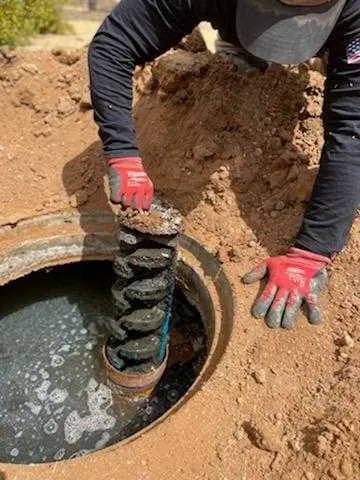
Macho Contracting is a family-owned plumbing and septic company serving Phoenix, AZ, and the surrounding Valley since 2016. They specialize in septic tank pumping, inspections, system repairs, and pump replacement services, with over 25 years of combined experience in onsite wastewater management. Their expertise includes handling underground systems, sewer line repairs, and complex septic system designs tailored to Arizona soil conditions. The company is fully licensed, NAWT-certified, and OSHA-trained, emphasizing safety and compliance in all projects.
Black Mountain Septic & Drain Services
Phoenix, AZ
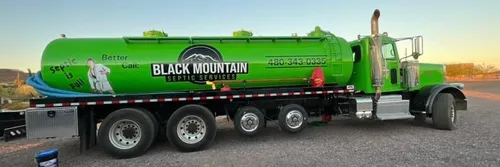
Black Mountain Septic & Drain Services is a septic tank pumping company based in Phoenix, AZ. They provide septic services across a wide area in Arizona, including Cave Creek, Desert Ridge, Rio Verde, Anthem, Paradise Valley, Carefree, New River, Desert Valley, Black Canyon City, North Scottsdale, North Phoenix, Fountain Hills, and Desert Hills. Their services focus on septic tank pumping and maintenance to support the diverse landscape of the region.
Macho Contracting
1974 E Deer Valley Dr, Phoenix, AZ 85024
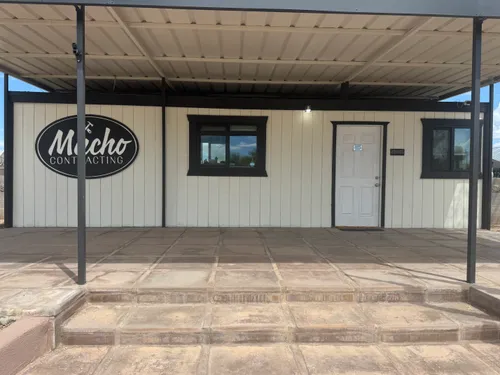
Macho Contracting is a family-owned plumbing and septic company based in Phoenix, AZ, serving the Valley and surrounding areas. They specialize in septic tank pumping, inspections, system repairs, and pump replacements, with over 25 years of experience in onsite wastewater management. Their services include handling underground systems, sewer line repairs, and complex septic system designs tailored to Arizona soil conditions. Since 2016, Macho Contracting has provided licensed and certified plumbing and septic solutions, including pump and lift station services, with a focus on innovative and quality workmanship.

Down South Septic & Drain
Phoenix, AZ
Down South Septic & Drain is a family-owned business based in East Mesa, Arizona. They provide septic system services including septic tank cleaning and pumping, ADEQ septic inspections, and drain clean outs. The company serves the East Valley area, covering locations such as Apache Junction, Mesa, Gilbert, Gold Canyon, Queen Creek, San Tan Valley, and Florence.

Priority Pumping
2480 S Higley Rd, Gilbert, AZ 85295
Priority Pumping, now operating as HomeField Onsite Environmental, provides septic tank pumping, inspections, and installations in Phoenix, AZ. The company also offers services for grease traps and advanced wastewater management. Their certified technicians deliver tailored solutions to maintain and improve septic and wastewater systems. As a local, woman-owned business, they emphasize education and community support. The team is known for its skilled, certified professionals and positive approach to customer service.
Understanding Your Septic System in Gilbert
A septic system is an on-site wastewater treatment structure, commonly used in areas like parts of Gilbert where centralized sewer service is unavailable. The system typically consists of a septic tank and a drain field (or leach field). Wastewater from your home flows into the tank, where solids settle to the bottom as sludge, and fats and oils float to the top as scum. The liquid effluent in the middle layer then exits the tank into the drain field, where it is naturally filtered through the soil.
Regular septic system maintenance, including periodic pumping and inspections, is vital. A neglected system can lead to sewage backing up into your home, foul odors in your yard, and contamination of groundwater-a serious concern for public health and the environment. The Arizona sun and soil conditions add unique factors to system care, making local expertise particularly valuable.
Recommended Pumping Frequency for Gilbert Homes
How often you need to schedule septic tank cleaning depends on several key household factors. General guidelines suggest that septic tanks should be pumped every 3 to 5 years to prevent system failure and protect the drain field.
However, this is a general rule, and your specific schedule may vary based on:
- Tank Size: Smaller tanks fill with solids faster.
- Household Size: More people generate more wastewater and solid waste.
- Overall Water Usage: Habits like long showers, frequent laundry loads, and using a garbage disposal accelerate accumulation.
For example, while an average household might follow the 3-5 year cycle, a large family or a home with high water usage may need septic service every 1 to 2 years to maintain optimal performance 1 2. The only way to know for sure is through regular inspections, which can measure the levels of sludge and scum in your tank.
The Importance of Regular Septic Inspections
Scheduling a professional inspection is the most reliable way to determine if your tank needs to be pumped. Experts recommend having your system inspected every 1 to 3 years 3. During an inspection, a qualified professional will:
- Locate and access your tank and drain field.
- Measure the levels of sludge and scum, particularly near the outlet baffle, to determine if pumping is needed.
- Check for signs of damage, such as cracks, leaks, or root intrusion.
- Clean the effluent filter (if your system has one), a task recommended annually to prevent clogs.
In Arizona, inspections should be conducted by state-registered sanitarians, professional engineers, or licensed septic pumpers to ensure they meet local standards 4. An inspection provides peace of mind and can identify small problems before they become expensive emergencies.
What to Expect: The Septic Pumping Process
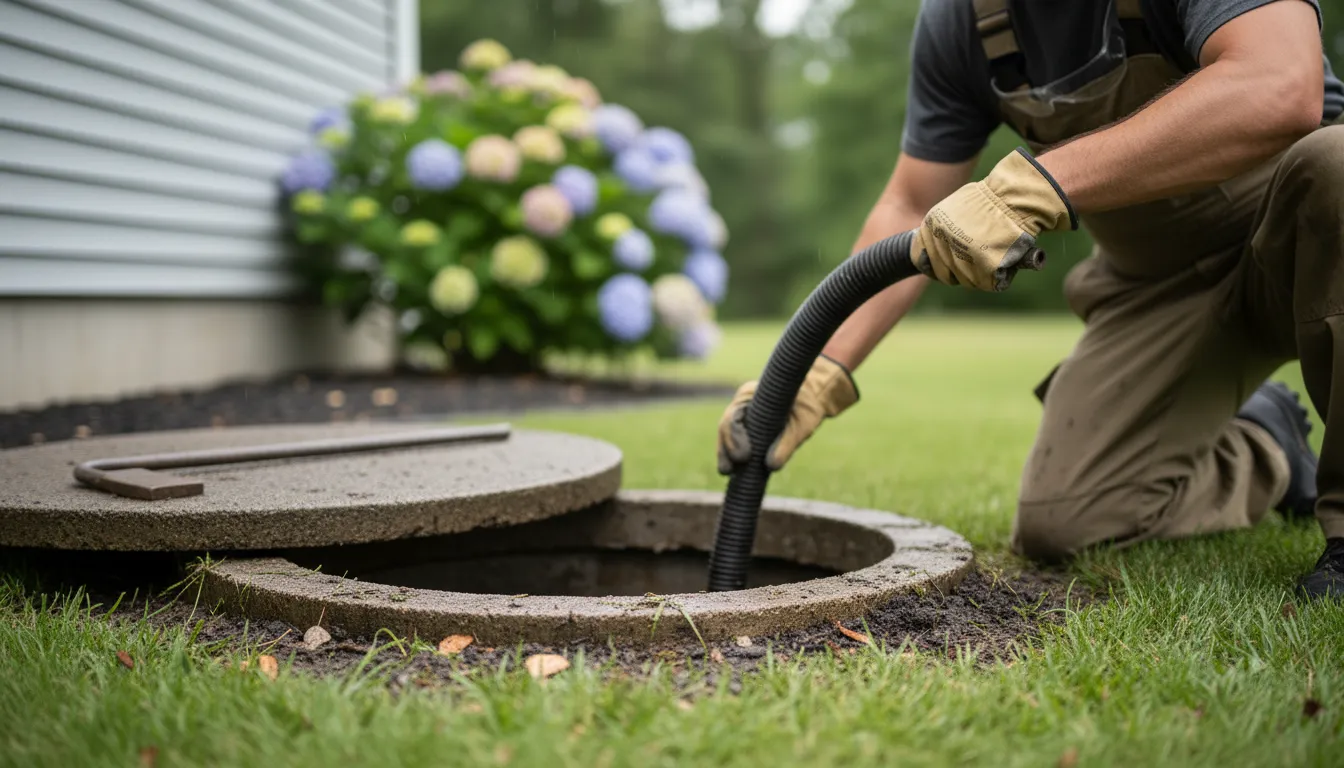
When you hire a professional for septic tank pumping, you can expect a systematic process. A licensed pumper will arrive with a vacuum truck. They will locate and uncover the tank's access lids, then insert a large hose to vacuum out all the contents-sludge, scum, and liquid. The waste is transported to an approved treatment facility. A thorough pumper will also inspect the tank's components, such as baffles and tees, for damage during the service. After pumping, the tank is left empty and ready to begin the treatment process anew. It's a straightforward but critical job that requires proper training and equipment.
Find the perfect septic tank pumping contractors for your needs
Get personalized recommendations and expert advice
Cost of Septic Tank Pumping in Gilbert
The cost for septic tank pumping in Gilbert and the surrounding area varies primarily based on the size (capacity) of your tank. Prices are typically for standard access and conditions; additional fees may apply for difficult access, locating the tank, or emergency service.
Based on local cost reports:
- Pumping a 1,000-gallon tank averages around $278, with a typical range from $256 to $301 5.
- For tanks up to 1,250 gallons, average costs are around $400.
- Pumping a 1,500-gallon tank averages about $500.
- Larger residential tanks (e.g., 2,000+ gallons) can cost $700 to $1,000 or more to pump 6.
It's always wise to get a few estimates from licensed local providers. Remember, while cost is a factor, the reliability, licensing, and reputation of the service provider are paramount for this important home maintenance task.
Best Practices for Septic System Care
Pumping is a major part of maintenance, but what you do between services greatly impacts your system's health and longevity. Follow these guidelines to protect your investment:
Conserve Water and Spread Out Usage: Reducing the flow of water into the tank allows solids to settle properly and prevents the system from being overwhelmed. Fix leaky faucets and toilets promptly, and consider installing water-efficient fixtures.
Mind What Goes Down the Drain:
- Avoid using a garbage disposal frequently, as it significantly increases the amount of solids entering the tank.
- Never flush non-decomposable items like wipes (even "flushable" ones), feminine hygiene products, dental floss, diapers, or cigarette butts.
- Do not pour fats, oils, grease, coffee grounds, or harsh chemicals (paints, solvents, pesticides) down the drain.
Protect Your Drain Field:
- Never drive or park vehicles, or place heavy structures like sheds, on top of the drain field. This can compact the soil and crush pipes.
- Plant trees and shrubs well away from the drain field, as roots can seek out moisture and infiltrate and clog the pipes 7.
- Divect rainwater drainage from roofs and gutters away from the drain field area to prevent saturation.
For comprehensive local guidance, Maricopa County provides detailed recommendations on operating and maintaining your onsite system 8.
Signs Your Septic Tank Needs Attention
Don't wait for a complete failure. Be alert for these warning signs that your system may need pumping or repair:
- Slow drains or gurgling sounds from plumbing fixtures throughout the house.
- Sewage backups in toilets, showers, or sinks.
- Unpleasant odors around the septic tank or drain field area, especially outdoors.
- Unusually lush, green grass or soggy, wet spots over the drain field, even in dry weather.
- Standing water or surfacing sewage in your yard.
If you notice any of these signs, contact a professional septic service provider immediately to assess the situation.
Finding a Qualified Service Provider in Gilbert
When it's time for maintenance, choosing the right professional is key. Look for providers who are:
- Licensed and Insured: Ensure they hold current licensing from the state of Arizona and carry adequate liability insurance.
- Experienced with Local Systems: Familiarity with Gilbert's soil types, regulations, and common system designs is a plus.
- Reputable: Seek out companies with positive reviews, testimonials, and a professional demeanor.
- Transparent: They should provide clear, written estimates and explain the services they will perform.
A trustworthy provider will be happy to answer your questions, show their credentials, and help you develop a long-term maintenance plan for your septic system.
Frequently asked questions
Sources
Footnotes
-
Maintaining Your Septic System in Arizona How Often Should ... - https://www.duckspumping.com/single-post/maintaining-your-septic-system-in-arizona-how-often-should-you-pump-your-tank-for-optimal-performanc ↩
-
Optimizing Septic Tank Pumping Frequency for Households - https://www.unitedsewerservice.com/frequency-of-septic-tank-pumping-for-different-household-sizes/ ↩
-
Frequent Questions on Septic Systems | US EPA - https://www.epa.gov/septic/frequent-questions-septic-systems ↩
-
What You Should Know When You're Having Your Septic ... - https://extension.arizona.edu/publication/what-you-should-know-when-youre-having-your-septic-system-inspected-transfer-ownership ↩
-
Arizona Septic Systems Costs & Prices - ProMatcher Cost Report - https://septic-systems.promatcher.com/cost/arizona.aspx ↩
-
Septic Tank Pumping Costs in Arizona | SewerTime Blog - https://sewertime.com/blog/septic-tank-pumping-costs/ ↩
-
Wastewater FAQs - Gila County - https://www.gilacountyaz.gov/government/community_development/wastewater/wastewater_faqs.php ↩
-
Operation & Maintenance Recommendations For an Onsite ... - https://www.maricopa.gov/DocumentCenter/View/7466/Operations-and-Maintenance-Recommendations-for-Septic-Systems-PDF ↩