Find the Best Septic Tank Pumping Contractors for Your Business
No obligation • Fast responses • Nationwide coverage

Why you can trust Septic Spot
Septic Spot is a leading United States resource for understanding and comparing septic services. Our editors review providers using consistent criteria and verify key business details. Listings and scores are independent, and companies cannot pay to influence our content.
Search providers near you
Top Septic Tank Pumping Contractors in Prescott Valley, Arizona Ranked
Maintaining a healthy septic system is a crucial responsibility for homeowners in Prescott Valley. Septic tank pumping, also known as septic tank cleaning or septic system servicing, is the essential process of removing accumulated solids from your tank to prevent system failure and protect your property and the local environment. This guide explains why regular maintenance is vital, outlines the specific regulations and recommendations for Yavapai County, and helps you understand what to expect when you need to schedule this important service with a local professional.
Why Regular Septic Maintenance is Non-Negotiable
Your septic system is a silent workhorse, treating all the wastewater from your home. When functioning properly, you hardly think about it. However, neglecting routine septic tank pumping can lead to catastrophic and expensive failures. The primary purpose of pumping is to remove the sludge (heavy solids) and scum (lightweight fats and greases) that accumulate over time. If these layers become too thick, solids can flow out of the tank and into the drain field, clogging the soil pores. A clogged drain field cannot absorb liquid, leading to sewage backups in your home, soggy ground and foul odors in your yard, and contamination of groundwater 1 2 3. In Prescott Valley's environment, protecting groundwater is especially important. Regular pumping is the most cost-effective way to avoid a total system replacement, which can cost tens of thousands of dollars.
Prescott Valley & Yavapai County Pumping Guidelines
How often should you schedule septic tank pumping? There's no single answer, as it depends on your household size, tank capacity, and overall water usage. However, Yavapai County provides clear baseline guidance.
- Standard Recommendation: For a typical household, the county recommends having your septic tank pumped every 3 to 5 years.
- High-Usage Households: If your home has four or more residents, uses a garbage disposal frequently, or has higher-than-average water usage (like from frequent laundry or long showers), you may need to pump more frequently-potentially every 1 to 2 years 4.
- The Inspection Rule: A more precise method is to have your tank inspected annually. A professional will measure the sludge and scum layers. The tank requires pumping if the sludge layer is within 12 inches of the outlet baffle or if the scum layer is within 6 inches of the bottom of the outlet device.
Scheduling an inspection can save you money by ensuring you only pump when necessary, not too early or too late.
Arizona's Legal Requirement: The Property Transfer Inspection
Arizona state law adds a critical layer of regulation that every Prescott Valley homeowner should know. Before any property transfer (sale) can be completed, the septic system must be inspected by a qualified professional. This inspection must be completed within six months prior to the transfer of ownership 5.
The inspector-who must be a licensed contractor, sanitarian, or professional engineer-will provide a comprehensive evaluation. They check for tank leaks, inspect baffles and effluent filters, measure sludge and scum levels, and assess the condition of the drain field 6 7. This inspection is designed to protect both the buyer and the seller, ensuring the system is functional and identifying any needed repairs before the sale is finalized. It's a mandatory step in the real estate process for homes on septic.
What to Expect: The Septic Pumping Process
Understanding what happens during a septic service visit can make the process smoother. When a certified technician arrives, they will typically:
- Locate and Uncover the tank's access manholes.
- Inspect the tank's inlet and outlet baffles or tees for damage or blockages.
- Agitate the contents to break up solids.
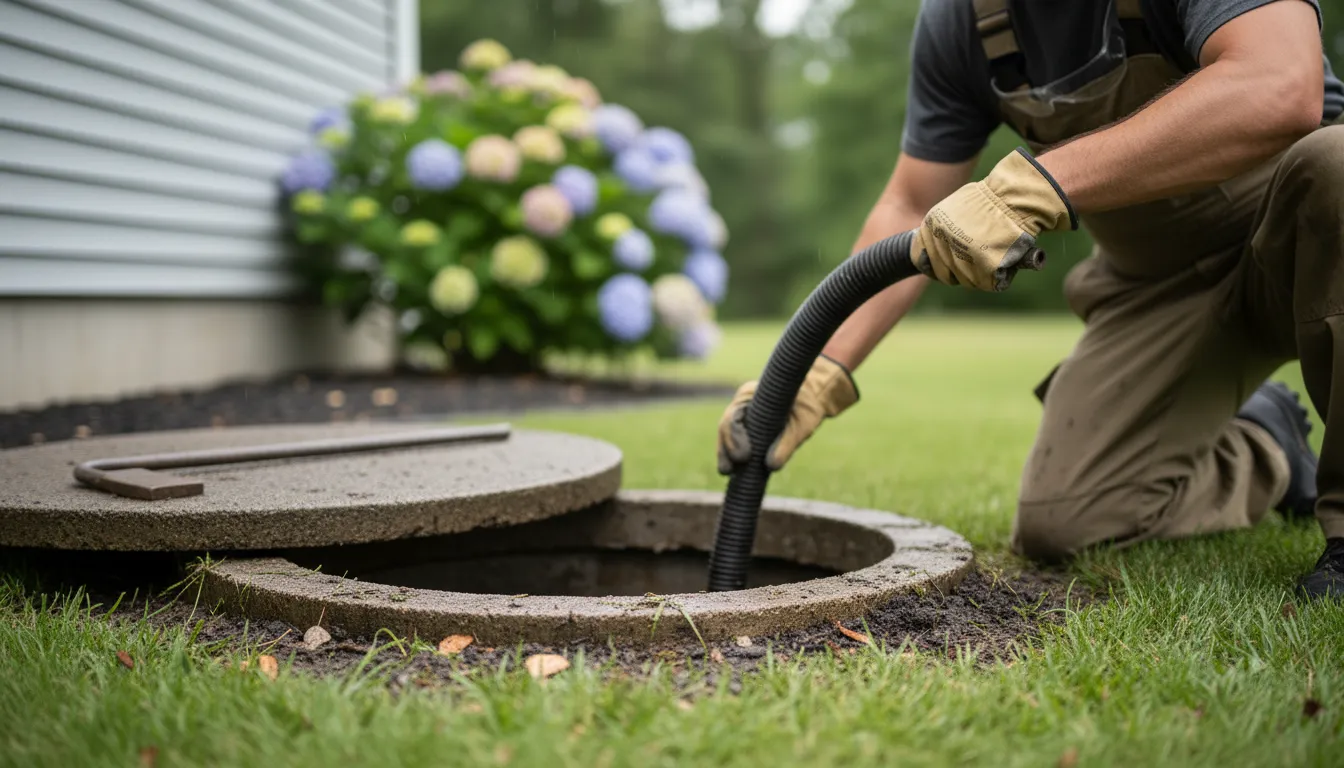
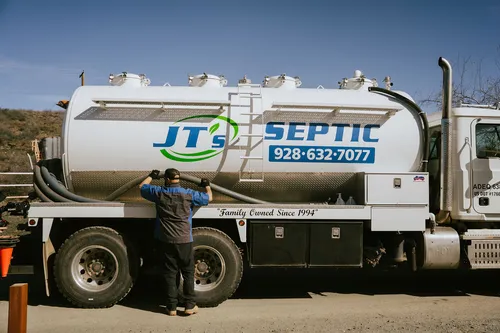
- Pump all the liquid and solid waste from the tank into a specialized vacuum truck.
- Clean the tank interior (often with water) and inspect it for cracks, leaks, or structural issues.
- Document the sludge and scum levels measured before pumping and note any observations about the system's condition.
This is also an excellent time to ask the technician about the overall health of your system and get their recommendation for your next service interval based on what they observed.
Find the perfect septic tank pumping contractors for your needs
Get personalized recommendations and expert advice
Understanding Costs for Septic Tank Pumping in Prescott Valley
The cost to pump a septic tank in the Prescott Valley area varies based on tank size, accessibility, and the amount of solids present. Having local cost data helps you budget appropriately.
- Average Cost Range: For a standard service, most homeowners can expect to pay between $389 and $510, with a broader reported range of $207 to $832 for the area 8.
- Tank Size Matters: Pumping a common 1,000-gallon tank typically costs between $265 and $312 9. For larger homes with tanks of 1,500 gallons or more, the price can increase to $500 to $1,000 10 11.
- What Influences Price: Factors that may increase the quoted price include a tank that is difficult to locate or access, a need for additional cleanout or riser installation, or an emergency service call. Always ask for a detailed estimate before work begins.
While price is a consideration, the expertise, reliability, and proper licensing of the service provider are paramount. A poorly executed pumping job can damage your system.
Beyond Pumping: Essential System Care
Pumping is the cornerstone of maintenance, but a complete care routine involves more.
- Annual Inspections: Even if you're on a 3-5 year pumping schedule, a quick annual check of sludge/scum levels and component function (like pumps or alarms) can catch small issues before they become big problems 12.
- Efficient Water Use: Spreading out laundry loads, fixing leaky faucets, and installing high-efficiency fixtures reduces the hydraulic load on your system, helping it work better and last longer.
- Mind What You Flush: Your septic system is designed for human waste and toilet paper. Never flush wipes (even "flushable" ones), feminine hygiene products, dental floss, cooking grease, or chemicals. These can clog pipes, baffles, and the drain field.
- Protect Your Drain Field: Never park or drive heavy vehicles over the drain field. Keep roof drains, sump pumps, and other surface water away from the area. Also, avoid planting trees or deep-rooted shrubs near the field.
Taking these proactive steps in conjunction with timely pumping is the best strategy for a long-lasting, trouble-free septic system.
Signs Your System Needs Immediate Attention
Don't wait for your scheduled maintenance if you notice any of these warning signs. They indicate your tank may be full or your system is failing:
- Slow Drains throughout the house, especially gurgling sounds in pipes.
- Sewage Backups in toilets, showers, or floor drains.
- Unpleasant Odors around the septic tank or drain field area.
- Unusually Lush, Green Grass or soggy, spongy ground over the drain field.
- Standing Water or surfacing sewage in your yard.
If you observe any of these issues, contact a septic professional in Prescott Valley immediately to diagnose and address the problem before it escalates.
Frequently asked questions
Sources
Footnotes
-
Homeowners' Guide to Septic Systems - Yavapai, AZ - https://www.yavapaiaz.gov/Resident-Services/Flood-Control/Stormwater-Management-Program/Homeowners-Guide-to-Septic-Systems ↩
-
Frequent Questions on Septic Systems | US EPA - https://www.epa.gov/septic/frequent-questions-septic-systems ↩
-
HOMEOWNER'S MANUAL Septic Systems 101 - https://www.yavapaiaz.gov/files/sharedassets/public/development-and-permits/zoning-amp-planning/documents/homeownersepticmanual.pdf ↩
-
Septic Systems | Department of Environmental Protection - https://www.pa.gov/agencies/dep/residents/my-water/septic-systems ↩
-
Arizona Septic Tank Requirements - https://www.ntotank.com/blog/arizona-septic-tank-requirements ↩
-
Arizona Septic Tank Inspection Guide - https://www.clickapro.com/septic-tank-inspection-guide/ ↩
-
What You Should Know When You're Having Your Septic ... - https://extension.arizona.edu/sites/extension.arizona.edu/files/attachment/az1554-12-12-11_TransferOfOwnershipInspection_revised_2-24-12.pdf ↩
-
Septic Tank Cleaning in Prescott, AZ - Costs 02 / 2026 - Homeyou - https://www.homeyou.com/az/septic-tank-cleaning-prescott-costs ↩
-
How Much Does It Cost to Pump a Septic Tank? [2026 Data] | Angi - https://www.angi.com/articles/how-much-does-septic-tank-pumping-cost.htm ↩
-
Prescott Septic Systems Costs & Prices - ProMatcher Cost Report - https://septic-systems.promatcher.com/cost/prescott-az-septic-systems-costs-prices.aspx ↩
-
Septic Tank Pumping Costs in Arizona | SewerTime Blog - https://sewertime.com/blog/septic-tank-pumping-costs/ ↩
-
Maintaining Your Septic System in Arizona How Often Should ... - https://www.duckspumping.com/single-post/maintaining-your-septic-system-in-arizona-how-often-should-you-pump-your-tank-for-optimal-performanc ↩