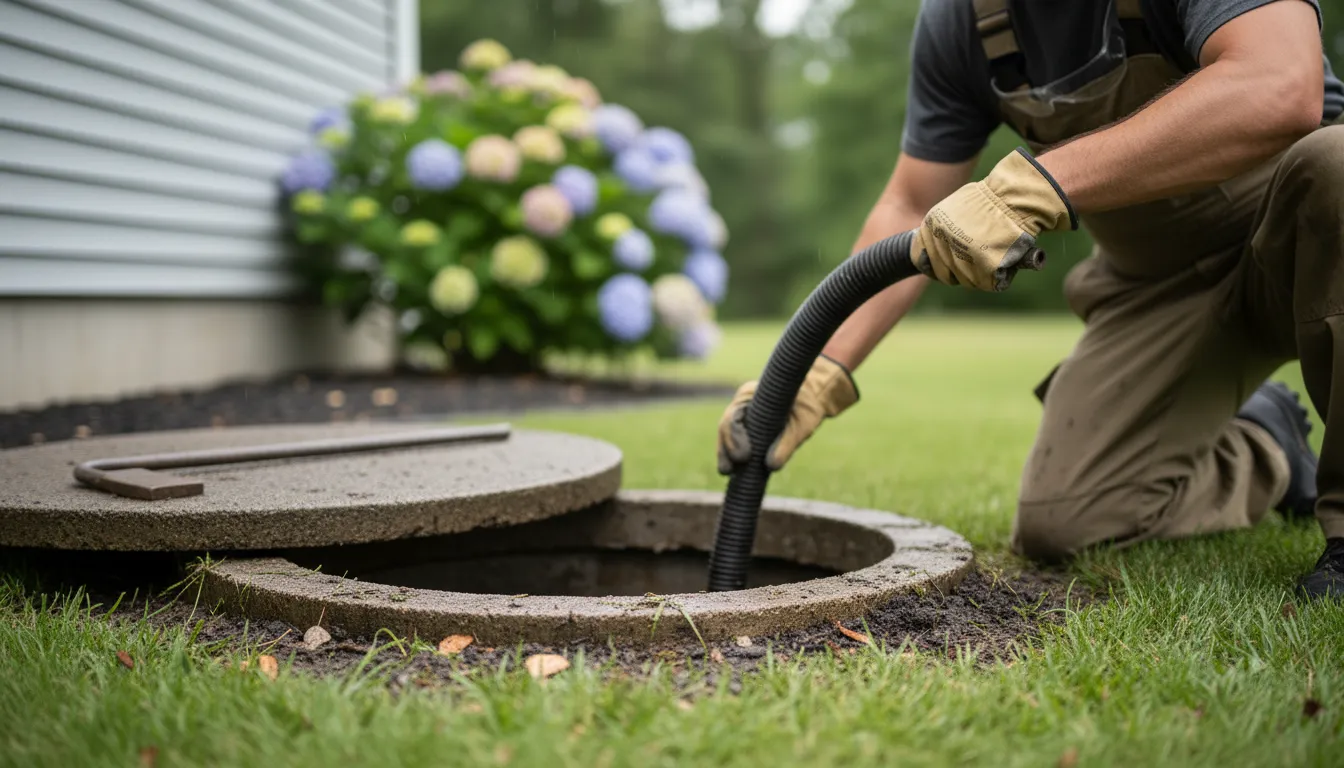
Find the Best Septic Tank Pumping Contractors for Your Business
No obligation • Fast responses • Nationwide coverage

Why you can trust Septic Spot
Septic Spot is a leading United States resource for understanding and comparing septic services. Our editors review providers using consistent criteria and verify key business details. Listings and scores are independent, and companies cannot pay to influence our content.
Search providers near you
Top Septic Tank Pumping Contractors in Manchester, Connecticut Ranked
Maintaining your septic system is a critical responsibility for Connecticut homeowners. Regular septic tank pumping removes accumulated solids, preventing system failure, costly repairs, and environmental contamination. In Connecticut, this maintenance is not just a recommendation-it's often a legal requirement enforced by local health codes. This guide provides clear, practical information to help you understand your obligations, find qualified local professionals, and protect your property and investment.
Septicology
47 Plantation Rd Unit D, Broad Brook, CT 06016
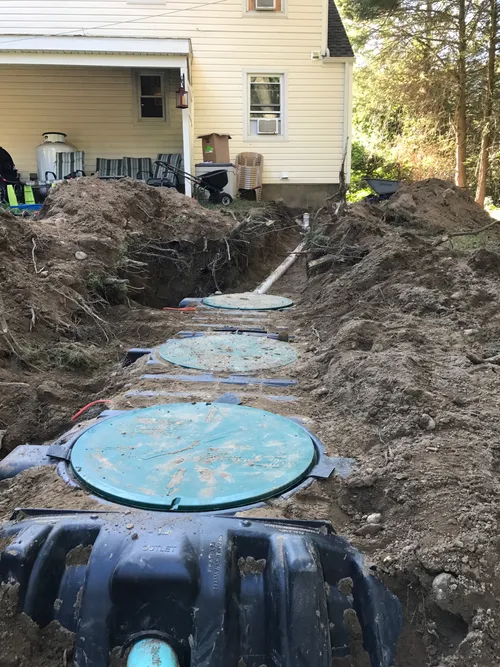
Septicology is a family-owned septic company serving Hartford, CT, and all towns across Connecticut. Since 2017, they have provided septic system inspections, repairs, installations, and pumping services throughout the state. Their inspection reports include detailed analyses, color photos, and system location drawings, offering clear insights into septic system conditions. Septicology emphasizes flexible scheduling to accommodate customer needs and maintains open communication throughout the service process.

Skips Wastewater Services
21 Courtney Dr, Ellington, CT 06029
Skips Wastewater Services provides septic tank pumping, inspection, repair, and installation services in Hartford, CT. They serve residential and commercial clients across multiple counties in Connecticut, including Hartford, Middlesex, New London, Tolland, Windham, and New Haven. The company operates with a large fleet of pump trucks and uses advanced technology to handle septic emergencies and routine maintenance efficiently. With over 60 years of experience, Skips Wastewater Services offers 24/7 emergency support to address issues like sewage backups and slow drains promptly.
Clean Septics Inc
252 West St, Ludlow, MA 01056
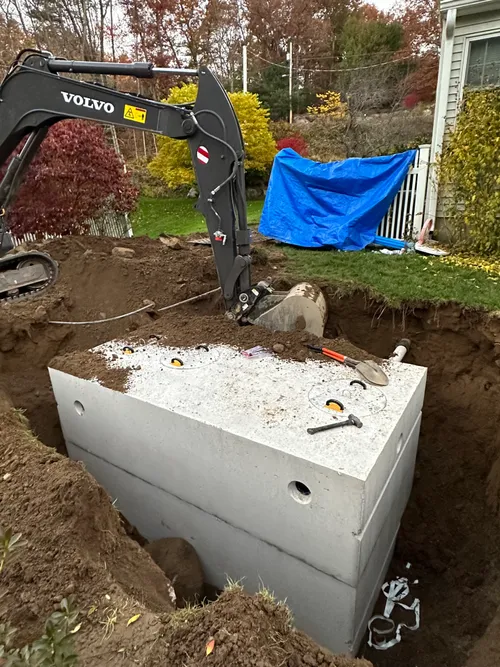
Clean Septics Inc is a septic tank pumping and inspection company based near Springfield, MA. They provide septic services for both residential and commercial properties throughout the Pioneer Valley, including many surrounding towns. The company also offers Title V inspections across Massachusetts, ensuring compliance with state regulations.
The Christopher Bryant Co. LLC
126 W Dudley Town Rd, Bloomfield, CT 06002
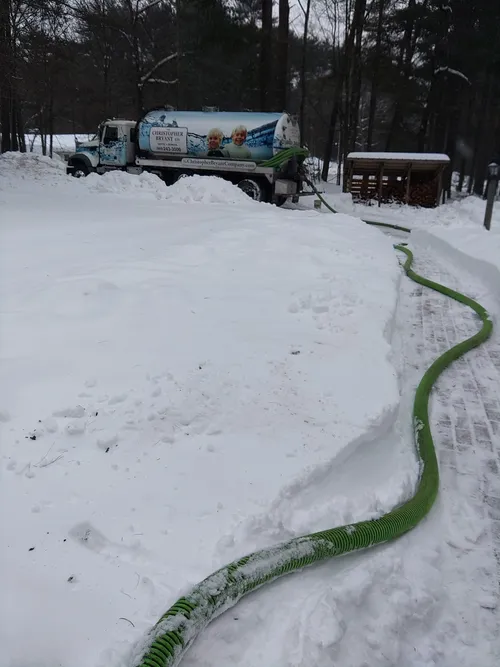
The Christopher Bryant Co. LLC is a family-owned septic service provider based in Hartford, CT, serving Hartford County and surrounding communities since 1995. They offer a full range of septic system services including pumping, inspection, repair, and installation. The company is known for its hands-on ownership and expertise in septic riser installation, which facilitates easier maintenance and inspection. With over 30 years in business, they provide 24/7 emergency service and same-day service options to address urgent septic needs.
Fletcher Sewer & Drain
824 Perimeter Rd, Ludlow, MA 01056
Fletcher Sewer & Drain is a family-owned septic tank pumping company serving Springfield, MA, and the surrounding areas of Western Massachusetts and Northern Connecticut. They provide services for both residential and commercial customers, including septic system pumping, drain line services, and sewer and storm drain camera inspections. Their certified crews use advanced CCTV camera technology for thorough inspections of large drain lines. With over 40 years of experience, Fletcher Sewer & Drain offers reliable septic system maintenance to prevent system malfunctions and sewage buildup.
Understanding Your Legal Responsibilities
In Connecticut, the homeowner is legally responsible for the proper operation and maintenance of their on-site sewage disposal system 1. This means ensuring your septic tank is pumped and inspected at regular intervals by a licensed professional. State and local regulations are in place to protect public health and water quality.
- State Mandate: Connecticut law requires that only licensed septic system cleaners or pumpers can empty and service your system. Hiring an unlicensed individual is against the law and risks improper handling of waste.
- Local Ordinances: Many Connecticut towns have specific ordinances that mandate pumping. For example, the town of Clinton requires the inspection and pumping of septic tanks at least once every five years 2. Check with your local health department for the exact rules in your municipality.
- Consequences of Failure: If a system fails, the permit to discharge is revoked by the local health department. The homeowner is then legally obligated to repair or replace the system in full compliance with the Connecticut Public Health Code, which can be a significant financial undertaking 3.
How Often Should You Pump Your Septic Tank in CT?
The general rule for a typical household in Connecticut is to pump your septic tank every 3 to 5 years 4. However, this is a guideline, not a one-size-fits-all schedule. The actual frequency depends on several factors unique to your household.
Key factors that require more frequent pumping (every 2-3 years) include:
- Use of a Garbage Disposal: Disposals significantly increase the amount of solids entering the tank.
- Household Size: A larger family generates more wastewater and solid waste.
- Tank Size: An undersized tank for your home's needs will fill up faster.
- Water Usage: High water use from leaky fixtures, long showers, or frequent laundry loads can overwhelm the system.
The most reliable method to determine pumping need is through a professional inspection. A key indicator is the depth of the sludge and scum layers inside the tank. Pumping is required when the scum layer is within 2 inches of the outlet baffle or the sludge layer is within 12 inches of it 5.
What to Expect: The Pumping and Inspection Process
A proper service visit involves more than just removing waste. A licensed professional will perform a comprehensive check to ensure all components are functioning.
Typical Service Includes:
- Locating and Uncovering the tank access lids.
- Inspecting the inlet and outlet baffles (or tees) for blockages or damage. These are crucial for preventing solids from flowing into the drain field.
- Measuring the scum and sludge layers to confirm the need for pumping and record baseline levels.
- Pumping all contents from the tank using a vacuum truck.
- Cleaning the Effluent Filter: Tanks installed since 2000 are required to have an effluent filter, which must be cleaned during pumping 6.
- Inspecting the tank structure for cracks, leaks, or signs of deterioration.
- Providing a report detailing the services performed, measurements taken, and any recommendations for repairs or future maintenance.
Find the perfect septic tank pumping contractors for your needs
Get personalized recommendations and expert advice
Cost of Septic Tank Pumping in Connecticut
The cost for septic tank pumping in Connecticut typically ranges from $340 to $480 per session, with the final price primarily dependent on the size (capacity in gallons) of your tank 7 8. Other factors that can influence cost include:
- Tank Accessibility: Difficult access (e.g., overgrown area, long hose run) may increase the price.
- Condition of Lids: If lids are buried and need to be located and dug up.
- Additional Services: Costs for repairing baffles, replacing lids, or other minor repairs will be extra.
Always get a detailed estimate before work begins. Remember, the lowest price may not equate to the most thorough or compliant service. Verifying the provider's state license is essential.
Maintaining Your System Between Pumpings
Proper daily care extends the life of your system and helps avoid emergencies between scheduled pumpings.
Do:
- Conserve water by fixing leaky faucets and toilets promptly.
- Spread out laundry loads over the week instead of doing many loads in one day.
- Dispose of waste properly. Only human waste and toilet paper should be flushed.
- Keep detailed records of pumping, inspections, repairs, and the system's location/diagram.
Don't:
- Park or drive vehicles or heavy equipment over the drain field or tank.
- Plant trees or shrubs with deep roots near the system.
- Pour grease, oil, or harsh chemicals down the drain.
- Use the toilet as a trash can for items like feminine hygiene products, wipes (even "flushable" ones), dental floss, or coffee grounds.
Signs Your System Needs Immediate Attention
Don't wait for your scheduled pumping if you notice these warning signs of a potential problem or failure:
- Slow drains or gurgling sounds in plumbing fixtures.
- Sewage odors in your home or yard, especially near the drain field.
- Wet, soggy, or bright green grass over the drain field, even during dry weather.
- Sewage backing up into household drains.
- Standing water or surfacing sewage in the area of your tank or drain field.
If you observe any of these signs, contact a licensed professional immediately to inspect your system.
Finding and Choosing a Licensed Professional
When searching for service, prioritize licensed, experienced, and reputable providers. Ask potential pumpers for their Connecticut license number and verify it. Seek recommendations from neighbors, check online reviews, and don't hesitate to ask questions about their inspection process, what's included in the price, and how they handle the waste. A trustworthy professional will be transparent and knowledgeable about state and local regulations.
Frequently asked questions
Sources
Footnotes
-
Why Maintain Your Septic System | US EPA - https://www.epa.gov/septic/why-maintain-your-septic-system ↩
-
On-site Sewage Disposal System Maintenance Ordinance | Clinton, ... - https://clintonct.org/336/Pump-out-Ordinance ↩
-
STATE SEPTIC CODE EXAMPLES: - https://watershedcouncil.org/uploads/7/2/5/1/7251350/appendix_a_-_state_septic_code_examples.pdf ↩
-
SEPTIC SYSTEMS - CT.gov - https://portal.ct.gov/-/media/Departments-and-Agencies/DPH/dph/environmental_health/environmental_engineering/pdf/SepticSystems101pdf.pdf ↩
-
How Often Should You Pump Your Septic Tank: 3 Factors Solved - https://www.frasiers.com/blog/sewage-tank-pump-frequency/ ↩
-
Operation and Maintenance - CT.gov - https://portal.ct.gov/dph/environmental-health/environmental-engineering/operation-and-maintenance ↩
-
Septic Systems Explained - Connecticut's Conservation Districts - https://conservect.org/southwest/wp-content/uploads/2018/01/SepticBrochures2014Revision3.pdf ↩
-
Septic related FAQ for CT - Andrews-Perry Construction - https://www.andrewsperryconstruction.com/septic-faq-ct.html ↩