Find the Best Septic Tank Pumping Contractors for Your Business
No obligation • Fast responses • Nationwide coverage

Why you can trust Septic Spot
Septic Spot is a leading United States resource for understanding and comparing septic services. Our editors review providers using consistent criteria and verify key business details. Listings and scores are independent, and companies cannot pay to influence our content.
Search providers near you
Top Septic Tank Pumping Contractors in New Orleans, Louisiana Ranked
Maintaining a healthy septic system is a critical responsibility for many homeowners in New Orleans. Regular septic tank pumping is the cornerstone of this maintenance, preventing backups, protecting your property, and ensuring your system operates efficiently for years to come. This guide explains the local regulations, best practices, and key factors that determine your pumping schedule, helping you connect with qualified professionals to keep your system in top shape.

Thigpen Septic Tank Services, LLC
102 Trey Thigpen Rd, Picayune, MS 39466
Thigpen Septic Tank Services, LLC is a family-owned septic company serving New Orleans, LA. Since 1973, they have provided a full range of septic services including tank pumping, system installation, repairs, and drain field replacement. With over 50 years of experience, they handle both residential and commercial septic needs with a focus on quality and attention to detail.
Honey Dippers Septic
219 Chestnut Oak Dr, Mandeville, LA 70448
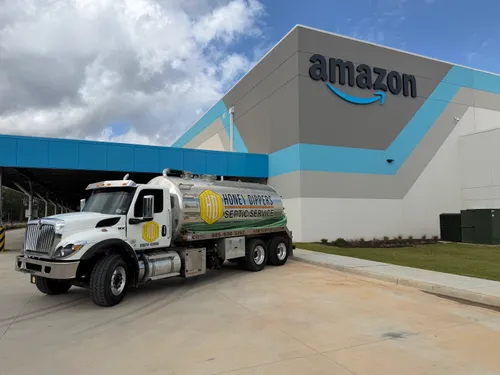
Honey Dippers Septic is a family-owned septic tank pumping company serving New Orleans, LA, and the surrounding St. Tammany Parish area. Since 2005, they have provided full-service wastewater system maintenance for residential, commercial, municipal, and mobile home properties. Their services include pump-out service, pump maintenance, and parts replacement, focusing on handling septic system needs professionally and correctly the first time.
Beyond Septic Solutions
New Orleans, LA
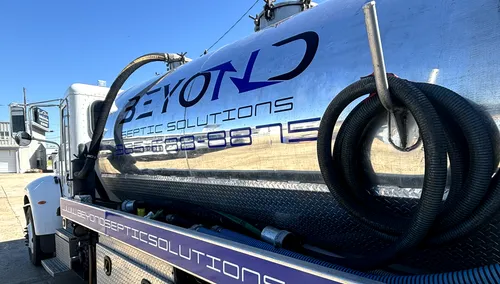
Beyond Septic Solutions is a licensed and insured septic tank pumping company serving New Orleans, LA, and the surrounding areas including Houma, Thibodaux, and Grand Isle. They offer septic vacuuming, grease trap cleaning, waste oil removal, and portable restroom rentals for both residential and commercial clients. Their services also include temporary fencing and comprehensive event and project support. Beyond Septic Solutions uses advanced equipment to provide environmentally responsible waste management solutions. They provide 24/7 emergency service to address urgent septic and grease trap issues.
Pounds Sewer Systems
20378 LA-36, Covington, LA 70433
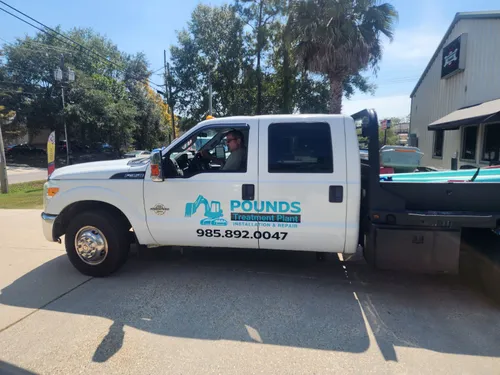
Pounds Sewer Systems is a family-owned business serving New Orleans, LA, and surrounding areas with septic tank installation, sewer treatment plant systems, and septic system repair. The company offers residential and commercial services, including pump replacement, drain line repair, and installation of lift stations and spray irrigation systems. Established in 1997, Pounds Sewer Systems continues a legacy of four generations in the septic and sewer system industry, originally started in the early 1950s. They are licensed and insured in both Louisiana and Mississippi and provide service that includes obtaining necessary permits and site planning.

Nathan's Septic Service
New Orleans, LA
Nathan's Septic Service provides a full range of septic system services in New Orleans, LA, including cleaning, inspections, repairs, and installations. Serving St. Bernard, Jefferson, and St. Tammany Parishes, the locally owned company employs licensed professionals to ensure septic systems function properly. Their expertise includes certified septic tank inspections and customized new tank installations. Nathan's Septic Service has built a reputation for quality and customer satisfaction across the region.
Understanding Septic System Maintenance in Louisiana
A septic system is an on-site wastewater treatment structure, commonly used in areas without centralized sewer lines. In New Orleans and surrounding parishes, these systems handle all the water and waste from your home. The tank itself separates solids from liquids; solids settle as sludge at the bottom, while fats and oils float as scum. The clarified liquid then flows out to a drain field for further treatment in the soil. Over time, the sludge and scum layers accumulate, and if not removed, they can flow into and clog the drain field, leading to system failure-a costly and disruptive problem 1.
Pumping, or septic tank cleaning, is the process of using a vacuum truck to remove these accumulated solids. It's a vital service that resets your tank's capacity and is the most effective way to prevent premature system failure. While out of sight, your septic system should never be out of mind. Proactive maintenance through regular pumping is far more affordable than emergency repairs or a full drain field replacement.
Official Louisiana Regulations and Recommendations
The Louisiana Department of Health (LDH) sets the minimum legal requirements for septic system maintenance. According to state code, septic tanks must be inspected every six years and pumped at least every eight years by a licensed sewage hauler. These are the baseline rules designed to protect public health and the environment.
However, these state-mandated intervals are considered maximum timeframes. The U.S. Environmental Protection Agency (EPA) and industry experts universally recommend more frequent service for optimal system performance and longevity. Relying solely on the eight-year rule is often a recipe for problems, as most households will need pumping sooner.
Why More Frequent Pumping is Often Necessary
The 3-to-5-year pumping cycle is the standard recommendation from septic professionals nationwide, and it applies to many homes in the New Orleans area. This frequency is based on average household size and tank capacity. Waiting longer increases the risk of solids escaping the tank and causing irreversible damage to the drain field.
Think of the state's eight-year requirement as the absolute latest you should pump, not a target schedule. Proactive homeowners who pump every 3-5 years invest in their system's long-term health, avoiding the stress and high cost of failures.
Key Factors That Determine Your Pumping Schedule
Your household is unique, so your septic tank servicing schedule should be too. Several key factors can significantly shorten the time between necessary pump-outs.
Household Size and Water Usage: This is the most significant factor. A family of four will fill a tank with solids much faster than a single person. More people mean more showers, laundry, and toilet flushes, accelerating sludge buildup. Industry guidelines often use a family of four as a benchmark for the 3-5 year recommendation 2.
Tank Size: Older homes may have smaller tanks (e.g., 500 or 750 gallons), which fill up more quickly. A standard 1,000-gallon tank is common, but even it may require more frequent attention for larger families. Knowing your tank's capacity is the first step in creating a maintenance plan.
Garbage Disposal Use: Using a garbage disposal introduces substantial additional organic solids into your septic system. These ground-up food particles decompose slowly and contribute heavily to the sludge layer. If you use a disposal regularly, you should plan on pumping every 2-3 years, regardless of other factors 3 4.
Other Appliances: Water softeners that backwash into the septic system, hot tubs that drain, and even efficient washing machines that use less water but more frequent cycles can all impact the tank's balance and treatment process.
Find the perfect septic tank pumping contractors for your needs
Get personalized recommendations and expert advice
The Critical Role of Professional Inspections
Before you pump, you should inspect. A professional inspection tells you exactly what's happening inside your tank. Louisiana regulations stipulate that inspections must be performed by a licensed sewage hauler or other qualified professional.
During an inspection, the technician will locate and open the tank's access ports. They will measure the thickness of the scum layer (on top) and the sludge layer (on the bottom). When the combined depth of these layers reaches about 25-33% of the tank's liquid depth, pumping is recommended to prevent solids from exiting into the drain field 5. An inspection provides a data-driven answer to the question, "Is it time to pump?"
Skipping inspections and only pumping on a set calendar schedule can lead to unnecessary service or, worse, pumping too late. An annual or bi-annual check is a small investment that provides peace of mind and allows you to budget for pumping service well in advance.
What to Expect: The Pumping Process and Costs
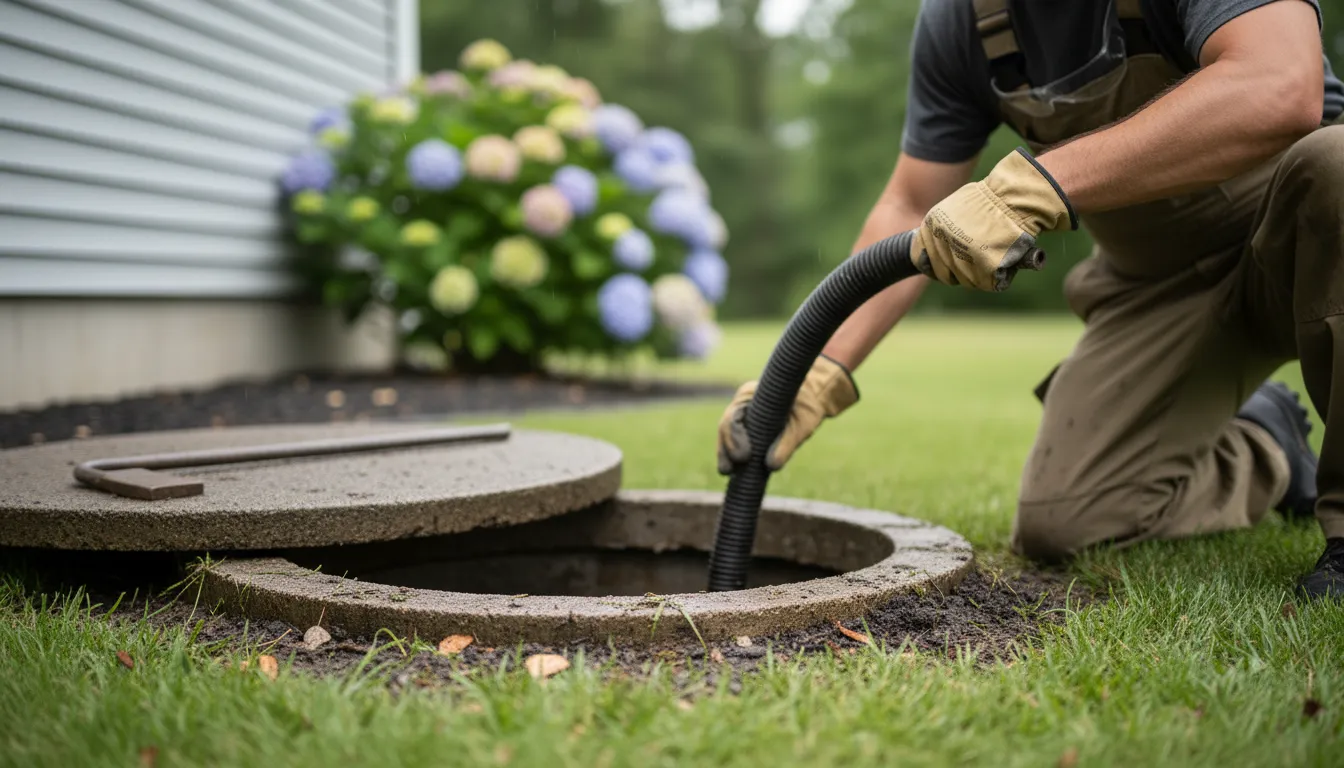
When you schedule septic tank pumping in New Orleans, a licensed hauler will arrive with a large vacuum truck. They will locate and uncover your tank's manhole, insert a large hose, and remove all the liquid and solid contents. A thorough professional will also briefly rinse the tank interior to remove residual sludge and inspect the baffles and outlet filter (if present) for damage or clogs.
Cost Considerations: The price for septic tank pumping in the New Orleans area typically ranges from $275 to $600+, with the national average around $445 6. Several variables affect the final cost:
- Tank Size: Pumping a standard 1,000-gallon tank often falls in the $325-$700 range, while a larger 1,500-gallon tank may cost $450-$1,100 7.
- Tank Accessibility: If the tank is buried deep, under a structure, or difficult for the truck to reach, the price may increase.
- Condition: Tanks that have never been pumped or are severely overdue may require more labor or additional steps.
Always get a detailed quote beforehand and ensure the company is licensed by the Louisiana Department of Health to perform sewage hauling.
Consequences of Neglect and System Abandonment
Postponing necessary septic tank maintenance is a gamble with high stakes. A clogged or failing drain field can manifest as:
- Sewage backups in household drains or toilets.
- Damp, soggy spots or standing water over the drain field.
- Unpleasant sewage odors around the yard or house.
- Unusually green, lush grass over the tank or drain field.
Repairing or replacing a failed drain field is a major excavation project that can easily exceed $10,000 8. Regular pumping, which costs a few hundred dollars, is the most cost-effective way to avoid this scenario.
If you are connecting to a new municipal sewer line or demolishing a structure, proper system abandonment is required by law. The old tank must be pumped clean by a licensed hauler and then either physically removed from the ground or filled with an inert material like sand or concrete. Never simply leave an old tank in place to collapse, as it creates a dangerous hidden hazard on your property.
Finding the Right Local Service Provider
Your septic system is a long-term investment, and choosing the right professional to maintain it is crucial. Look for providers who are licensed, insured, and have strong local reputations. They should be willing to explain the process, provide a clear inspection report, and offer guidance on a maintenance schedule tailored to your specific household and system. By staying informed and proactive, you can ensure your septic system remains a reliable and trouble-free part of your New Orleans home for decades.
Frequently asked questions
Sources
Footnotes
-
Louisiana Administrative Code - https://ldh.la.gov/assets/oph/Center-EH/sanitarian/onsitewastewater/8145.pdf ↩
-
How Often to Pump Your Septic Tank? 2025 Guide & Tips - https://www.splashplumbing.com/how-often-to-pump-septic-tank-for-a-family-of-4-essential-maintenance-guidelines/ ↩
-
Smart Solutions for Optimizing Septic Tank Pumping Frequency - https://smartsepticpros.com/blog/septic-tank-pumping-frequency/ ↩
-
Factors Affecting Pumping Frequency: Septic 101 Proven Guide - https://www.unitedsewerservice.com/factors-affecting-pumping-frequency/ ↩
-
Optimal Schedule: How Often to Pump Septic Tank Family of 4 - https://www.rciseptic.com/optimal-schedule-how-often-to-pump-septic-tank-family-of-4 ↩
-
Septic Tank Pumping Frequency: Crucial Maintenance Guide - https://septic911.com/septic-tank-pumping-frequency/ ↩
-
How Much Does Septic Tank Pumping Cost in 2025? - HomeAdvisor - https://www.homeadvisor.com/cost/plumbing/clean-septic-tank/ ↩
-
How Often Should You Pump Your Septic Tank? - https://tlsepticpumper.com/septic-system-education/how-often-pump-septic-tank/ ↩