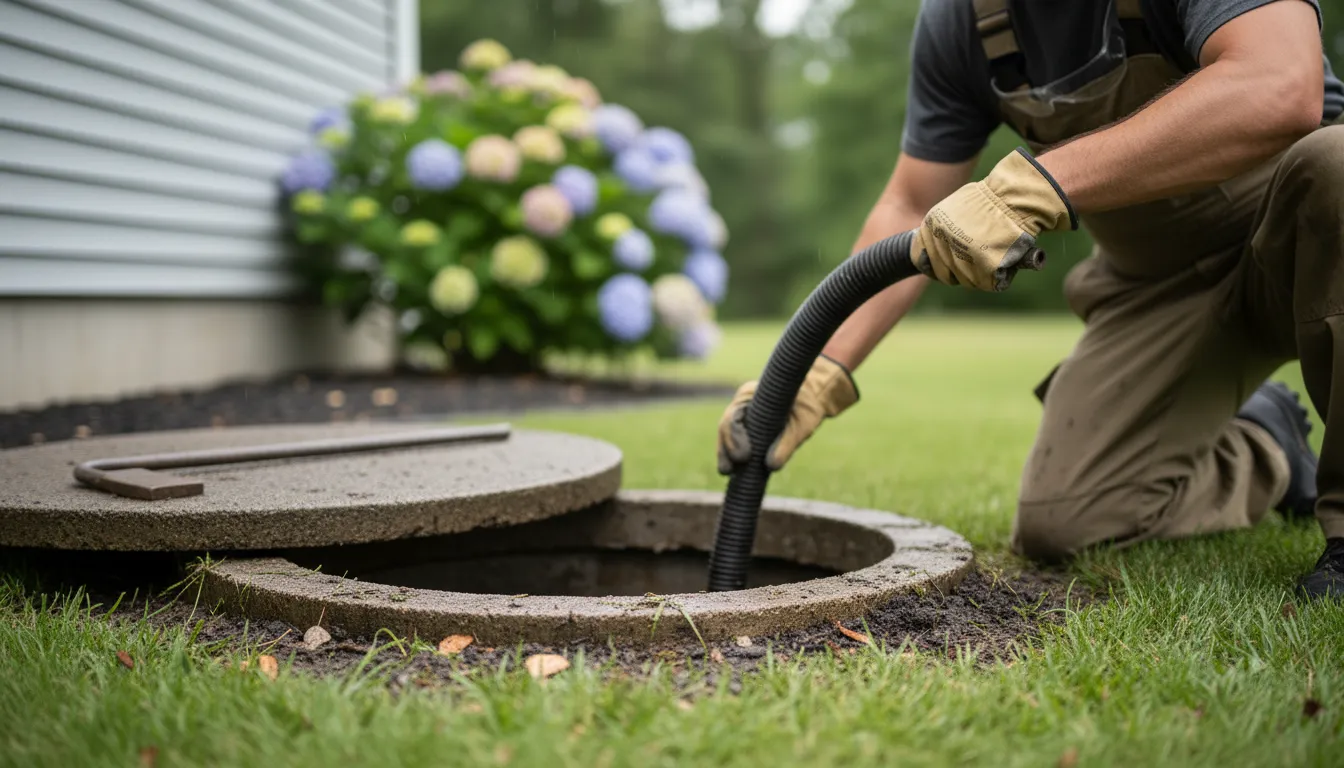
Find the Best Septic Tank Pumping Contractors for Your Business
No obligation • Fast responses • Nationwide coverage

Why you can trust Septic Spot
Septic Spot is a leading United States resource for understanding and comparing septic services. Our editors review providers using consistent criteria and verify key business details. Listings and scores are independent, and companies cannot pay to influence our content.
Search providers near you
Top Septic Tank Pumping Contractors in Jackson, Mississippi Ranked
Maintaining your septic system is a crucial responsibility for any homeowner not connected to a municipal sewer line. Regular septic tank pumping and inspection are the most effective ways to prevent messy, expensive, and environmentally damaging system failures. This guide provides essential information on septic maintenance, costs, and local regulations in Jackson, New Jersey, helping you make informed decisions to protect your home and property.
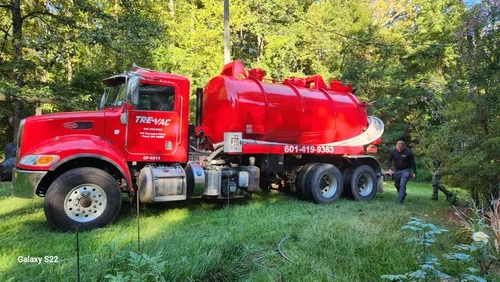
Trevac LLC
Jackson, MS
Trevac LLC is a septic tank pumping company based in Jackson, MS. They provide septic system maintenance services to help prevent common malfunctions such as wastewater backup, slow drainage, and sewage odors. Their expertise includes pumping septic tanks every 3 to 5 years to avoid costly repairs and maintain system health. Trevac LLC emphasizes proper septic system care to protect household health and the environment.

Dier's Vacuum Truck Service
4527 Henderson Rd, Byram, MS 39272
Dier's Vacuum Truck Service is a septic tank pumping company based in Jackson, MS, serving residential and commercial properties in Central Mississippi. With over 40 years of experience since 1983, they specialize in septic tank pumping, lift station cleaning, and grease trap cleaning. Their technicians use advanced tools like drain cameras and hydrojetting to diagnose and address septic system issues efficiently. The company offers 24/7 emergency response to handle urgent septic problems at any time.
Understanding Your Septic System
A septic system is an on-site wastewater treatment structure, commonly used in areas without centralized sewer systems like many parts of Jackson. It consists of two main parts: the septic tank and the drainfield (or leach field). The tank is a watertight container, typically made of concrete, fiberglass, or polyethylene, buried underground. All wastewater from your home flows into this tank.
Here, solids settle to the bottom to form sludge, while oils and grease float to the top as scum. The liquid wastewater (effluent) then exits the tank into the drainfield, where it is percolated into the soil for final treatment. The septic tank's primary job is to separate and partially decompose solid waste, but it does not eliminate it. Over time, the accumulated sludge and scum must be physically removed through pumping to prevent them from flowing into and clogging the drainfield, which is the most common cause of system failure.
Why Regular Pumping is Non-Negotiable
Neglecting to pump your septic tank is the leading cause of system backup and drainfield failure. When a tank becomes too full, solids can be carried out with the effluent, clogging the perforated pipes in the drainfield. This leads to sewage surfacing in your yard, foul odors, and wastewater backing up into your home through drains and toilets. Repairing or replacing a failed drainfield is a major, disruptive, and costly project, often costing tens of thousands of dollars.
Regular septic service is far more economical. It also protects public health by preventing groundwater contamination and safeguards the local environment, including nearby streams and lakes in Ocean County. Furthermore, New Jersey state regulations and local health departments mandate proper maintenance, and you may be required to provide proof of pumping during a property transfer 1.
Recommended Pumping Frequency for Jackson Homes
A common misconception is that septic tanks need pumping on a rigid annual schedule. The reality is that the ideal interval depends on several household-specific factors. The general guideline for an average household is to schedule septic tank cleaning every 3 to 5 years 2.
However, you should consider a more frequent schedule of every 1 to 3 years if any of the following apply:
- High Water Usage: The number of people in your home is a primary factor. A 1,000-gallon tank serving four or more people will fill with solids much faster than a tank serving two people.
- Small Tank Size: Older homes may have smaller tanks (e.g., 750 gallons) that require more frequent attention.
- Garbage Disposal Use: Using a garbage disposal regularly significantly increases the amount of solids entering the tank, shortening the time between necessary pump-outs.
- System Type: Advanced treatment systems, such as sand mounds or aerobic treatment units (ATUs), often have specific, more frequent maintenance requirements, sometimes as often as every 1-3 years 3.
The only way to know for sure is through a professional inspection. A licensed technician can measure the sludge and scum layers in your tank and give you a precise recommendation for your next pumping date.
What to Expect During a Pumping Service
A professional septic pumping service involves more than just removing waste. A reputable provider will follow a comprehensive process:
- Locating and Uncovering: The technician will locate your tank's access lids (manholes) and dig to expose them.
- Initial Inspection: Before pumping, they may check inlet/outlet baffles and tees to ensure they are intact. Damaged baffles can allow solids to escape.
- Pumping: Using a large tank truck with a powerful vacuum hose, all contents-sludge, scum, and liquid-are pumped out and transported to an approved wastewater treatment facility.
- System Evaluation: After the tank is empty, the technician can inspect the tank's interior for cracks, leaks, or structural issues. They will also check the drainfield for signs of failure.
- Final Steps: The lids are securely replaced, and the area is tidied. You should receive a service report detailing what was done, the condition of your system, and the recommended next service date.
Never allow a service provider to "pump through the inspection pipe." Proper service requires pumping from the main tank access lids to ensure all compartments are thoroughly cleaned.
Find the perfect septic tank pumping contractors for your needs
Get personalized recommendations and expert advice
Key Maintenance Tips Beyond Pumping
Pumping is the cornerstone of maintenance, but a holistic approach will maximize your system's lifespan.
- Conserve Water: Spread out laundry loads, fix leaky faucets and toilets promptly, and install water-efficient fixtures. Sudden large volumes of water can stir up solids in the tank and overwhelm the drainfield.
- Watch What You Flush: The toilet is not a trash can. Never flush anything besides human waste and toilet paper. Avoid "flushable" wipes, feminine hygiene products, dental floss, diapers, cigarette butts, and cat litter.
- Mind the Kitchen: Avoid pouring cooking oils, grease, or fat down the drain. Minimize use of the garbage disposal. Do not pour harsh chemicals like paint thinner, pesticides, or large amounts of bleach down the drain, as they can kill the beneficial bacteria in your tank that break down waste 4 5.
- Protect the Drainfield: Never park or drive heavy vehicles over the drainfield. Do not plant trees or shrubs with deep roots nearby. Keep roof drains, sump pumps, and other surface water runoff directed away from the area.
Understanding Costs for Septic Pumping in Jackson, NJ
The cost for septic tank pumping is an investment in your property's health. In New Jersey, the average cost to pump a standard 1,000-gallon tank typically ranges from $324 to $611, with many homeowners paying between $350 and $450 for this service 6 7 8.
Several factors can influence the final price:
- Tank Size and Capacity: Larger tanks (1,500 gallons or more) cost more to pump than smaller ones.
- Tank Accessibility: If the tank is buried deep, requires extensive digging, or is located far from where the truck can park, labor costs will increase.
- Condition of the Tank: If the lids are stuck, baffles are damaged, or the tank requires additional inspection, the service may be more involved.
- Additional Services: Costs will be higher if the service includes a detailed inspection with a camera, drainfield evaluation, or minor repairs.
Always get written estimates from a few licensed, insured local providers. The lowest price isn't always the best value; ensure the quote includes a full inspection and proper disposal of waste.
Local Regulations and Compliance
Jackson Township and Ocean County operate under New Jersey state septic system regulations enforced by the New Jersey Department of Environmental Protection (NJDEP) and local health departments. Key points for homeowners include:
- Licensing: Any individual or company performing septic system pumping, inspection, repair, or installation in New Jersey must be licensed by the NJDEP.
- Inspections: The NJDEP recommends inspections at least every three years by a licensed professional 9. Inspections are often mandatory during real estate transactions.
- Pumping Records: Keep all service receipts and reports. You may need to show them to a health department inspector or a potential buyer.
- System Upgrades: If you are selling your home or applying for a building permit for an addition, your system may need to be inspected and brought up to current code, which could require upgrades like adding risers for easier access or replacing a failing component.
For the most specific and up-to-date compliance information, contacting the Jackson Township Health Department or the Ocean County Health Department is advised.
Signs Your Septic Tank Needs Immediate Attention
Don't wait for a disaster. Contact a professional immediately if you notice any of these warning signs:
- Slow Drains: Sinks, showers, and toilets that drain slowly, especially if gurgling sounds accompany them.
- Sewage Backups: Wastewater backing up into household drains.
- Foul Odors: Unpleasant sewage smells inside your home or around the tank/drainfield area in your yard.
- Lush, Green Grass: Patches of unusually green, spongy grass over the drainfield, especially when it's not rainy.
- Standing Water: Puddles or soggy soil over the tank or drainfield.
Addressing these issues quickly can mean the difference between a simple pumping and a catastrophic system replacement.
Frequently asked questions
Sources
Footnotes
-
New Jersey Septic Tank Rules And Regulations - https://www.arrowsewernj.com/blog/septic-tanks-in-new-jersey-what-you-need-to-know/ ↩
-
How Often Should You Pump Your Septic Tank? - https://tlsepticpumper.com/septic-system-education/how-often-pump-septic-tank/ ↩
-
Maintenance Tips for 1000-Gallon Septic Tanks - https://allproseptictexas.com/2021/01/maintenance-tips-for-1000-gallon-septic-tanks/ ↩
-
How to Care for Your Septic System | US EPA - https://www.epa.gov/septic/how-care-your-septic-system ↩
-
Frequent Questions on Septic Systems | US EPA - https://www.epa.gov/septic/frequent-questions-septic-systems ↩
-
Septic Tank Pumping Frequency: Crucial Maintenance Guide - https://septic911.com/septic-tank-pumping-frequency/ ↩
-
New Jersey Plumbing Service Costs & Prices - ProMatcher.com - https://plumbers.promatcher.com/cost/new-jersey.aspx ↩
-
New Jersey Septic System Rules - 2026 Guide - The Sewer Kings - https://thesewerkings.com/blog/new-jersey-septic-system-rules/ ↩
-
SEPTIC - NJ.gov - https://dep.nj.gov/wp-content/uploads/dwq/pdf/septicmn.pdf ↩