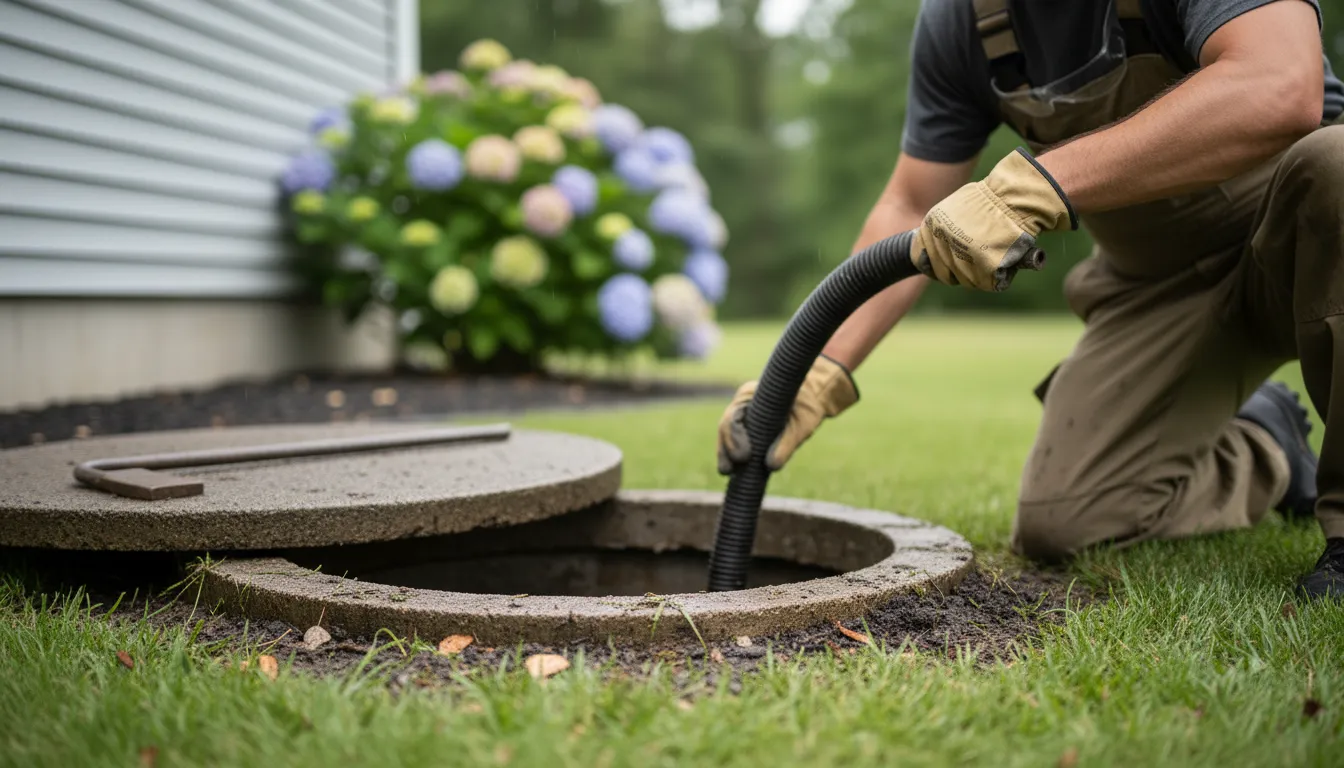
Find the Best Septic Tank Pumping Contractors for Your Business
No obligation • Fast responses • Nationwide coverage

Why you can trust Septic Spot
Septic Spot is a leading United States resource for understanding and comparing septic services. Our editors review providers using consistent criteria and verify key business details. Listings and scores are independent, and companies cannot pay to influence our content.
Search providers near you
Best Septic Tank Pumping Contractors in North Dakota Ranked
Maintaining your septic system is a critical responsibility for North Dakota homeowners. Proper septic tank pumping and regular inspections prevent costly system failures, protect your property value, and safeguard local groundwater from contamination. This guide provides clear, practical information on state regulations, maintenance schedules, and how to find qualified, licensed professionals in your area to ensure your system functions reliably for years to come.

Understanding Your Septic System Responsibilities
In North Dakota, the operation and maintenance of an onsite wastewater treatment system falls squarely on the homeowner 1. This means you are legally responsible for ensuring your septic tank is pumped at appropriate intervals and that the entire system is inspected regularly to catch potential issues early. Neglecting this duty can lead to sewage backups into your home, drainfield failure requiring a costly replacement, and environmental contamination that violates state codes.
Local public health units, such as the First District Health Unit, enforce state regulations and are an essential resource for county-specific rules. A core principle of proper maintenance is preventing solids from escaping the septic tank, as these can clog the soil in the drainfield, leading to irreversible failure. By proactively managing your system, you protect your investment and your community's health.
Recommended Pumping and Inspection Schedule
How often you need to pump your septic tank isn't a one-size-fits-all answer; it depends on your tank size, household size, and water usage. However, general guidelines provide a reliable starting point for North Dakota residents.
- Standard Systems: For a typical family and a conventional septic system, pumping is generally required every 3 to 5 years. A common example is a 1,000-gallon tank serving a family of four, which often needs cleaning every 3 years.
- Alternative Systems: Systems with electrical components, such as pumps, aerators, or advanced treatment units, require more frequent attention. The North Dakota Department of Environmental Quality (NDDEQ) and the EPA recommend these be inspected at least once per year, with pumping frequency determined by the inspector 2.
- Key Factors: Heavy use of a garbage disposal significantly increases the accumulation of solids and sludge, necessitating more frequent pumping-potentially every 1-2 years. Larger households or smaller tanks also accelerate the need for service.
Find the perfect septic tank pumping contractors for your needs
Get personalized recommendations and expert advice
The Importance of Professional Inspections
An inspection is more than just checking if the tank is full. A thorough evaluation by a licensed professional should determine whether pumping is needed and assess the overall health of your system.
During an inspection, the service provider will locate and access your tank, measure the depths of the sludge (solid waste at the bottom) and scum (floating materials) layers, and examine critical components like inlet and outlet baffles or tees. According to maintenance guides, pumping is necessary when:
- The sludge layer is within 12 inches of the outlet tee.
- The scum layer is within 6 inches of the bottom of the outlet tee 3 4.
Inspections also check for leaks, assess the drainfield for signs of failure (like soggy soil or foul odors), and ensure all parts are structurally sound. This proactive approach is far less expensive than emergency repairs after a failure.
North Dakota Regulations and Licensing
The state has specific rules governing septic system work to protect public health and the environment. Understanding these regulations ensures you hire qualified professionals and that work is done correctly.
- Pumper Licensing: The NDDEQ mandates that only state-licensed septic pumpers are permitted to remove and transport sewage sludge for disposal. Hiring a licensed pumper guarantees that waste is disposed of at an approved facility, preventing illegal dumping that contaminates groundwater.
- Tank Standards: State code requires that septic tanks be watertight, structurally sound, and equipped with proper baffles or tees to prevent solids from entering the drainfield 5. Any new installation or repair must meet these standards.
- Permits and Inspections: Any new system installation or major repair requires a permit from your local health unit. Crucially, a final inspection from the health department is required before the system can be backfilled and put into use 6. Always check with your local public health unit for specific requirements in your county.
What to Expect: Service and Cost Overview
When you schedule septic tank pumping in North Dakota, the process typically involves a pump truck extracting all liquids and solids from your tank. The licensed professional will then properly transport the waste to a designated treatment facility.
While municipal fees can vary, the typical cost for septic tank pumping in North Dakota ranges from $275 to over $6007 8. Several factors influence the final price:
- Tank Size and Accessibility: Larger tanks (e.g., 1,500 gallons) cost more to pump than standard 1,000-gallon tanks. Difficult access or the need for additional digging can also increase labor costs.
- Location: Travel distance for the service provider in rural areas may be factored into the price.
- Scope of Service: A basic pump-out is less expensive than a full inspection or any minor repairs discovered during the service.
The pumping fee covers the labor, equipment use, and the regulated, safe disposal of the waste, which is a key component of the environmental protection mandate 9 10.
Maintaining Your System Between Pumpings
Proper day-to-day care extends the life of your system and reduces the frequency of required pumping. Key maintenance tips include:
- Conserve Water: Fix leaks and spread out laundry loads to avoid overwhelming the system.
- Mind What You Flush: Only flush human waste and toilet paper. Never flush chemicals, grease, diapers, wipes (even "flushable" ones), or feminine hygiene products.
- Use Garbage Disposals Sparingly: Compost food scraps instead. Excessive use adds substantial solids to your tank 11 12.
- Protect the Drainfield: Never drive or park vehicles over it. Keep roof drains, sump pumps, and other surface water away from the area.
Frequently asked questions
Sources
Footnotes
-
Frequent Questions on Septic Systems | US EPA - https://www.epa.gov/septic/frequent-questions-septic-systems ↩
-
On-site Wasterwater Treatment Systems - https://deq.nd.gov/publications/WQ/3_WM/NDWaterArticles/2025-08-OnSiteWastewaterTreatmentSystems.pdf ↩
-
Your Septic System is Your Responsibility! - https://northeasthealthdistrict.org/wp-content/uploads/2023/05/homeowner_guide_long.pdf ↩
-
Home Owner's Guide: Septic Systems - https://milivcounty.gov/wp-content/uploads/Home-Owners-Guide-Septic-Systems.pdf ↩
-
chapter 62-03.1-03 private sewage disposal systems - https://ndlegis.gov/prod/acdata/pdf/62-03.1-03.pdf ↩
-
Septic (Onsite Wastewater) Systems - First District Health Unit - https://fdhu.org/environmental-health-division/septic-onsite-wastewater-systems/ ↩
-
Septic Tank Pumping Cost: Guide & Pricing in 2025 - Splash Plumbing - https://www.splashplumbing.com/how-much-does-it-cost-to-pump-septic-tank-understanding-pricing-and-factors-involved/ ↩
-
Septic Tank Pumping Frequency: Crucial Maintenance Guide | Septic System Professionals - https://septic911.com/septic-tank-pumping-frequency/ ↩
-
Septic Pumper Permits - https://deq.nd.gov/WQ/2_NDPDES_Permits/6_SepticPumper/sp.aspx ↩
-
Septic Tank Pumping Frequency: Crucial Maintenance Guide - https://septic911.com/septic-tank-pumping-frequency/ ↩
-
Individual Home Sewage Treatment Systems - First District Health Unit - https://fdhu.org/wp-content/uploads/2021/06/NDSU-Extension-Service-Individual-Home-Sewage-Treatment-Systems.pdf ↩
-
How to Care for Your Septic System | US EPA - https://www.epa.gov/septic/how-care-your-septic-system ↩