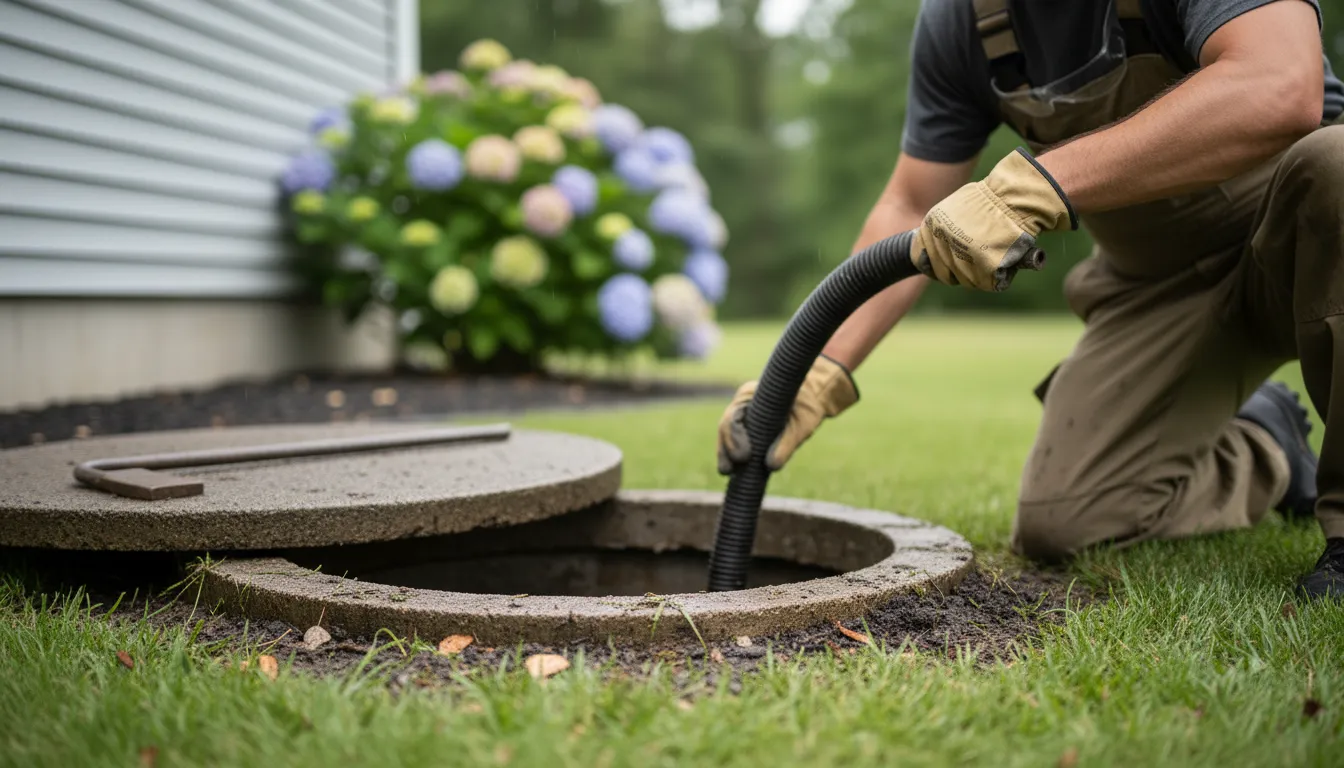
Find the Best Septic Tank Pumping Contractors for Your Business
No obligation • Fast responses • Nationwide coverage

Why you can trust Septic Spot
Septic Spot is a leading United States resource for understanding and comparing septic services. Our editors review providers using consistent criteria and verify key business details. Listings and scores are independent, and companies cannot pay to influence our content.
Search providers near you
Top Septic Tank Pumping Contractors in Fargo, North Dakota Ranked
Maintaining your septic system is a critical responsibility for any homeowner not connected to a municipal sewer line. In Fargo and Cass County, this maintenance is regulated by Fargo Cass Public Health (FCPH) to protect public health and the environment, especially given the region's high water table and clay soils that can complicate drainage. Regular septic tank pumping is the cornerstone of a healthy system, preventing backups, costly repairs, and environmental contamination. This guide will help you understand the local requirements, typical costs, and best practices for finding a qualified professional to handle your septic service needs.

Understanding Your Septic System and Local Regulations
An on-site sewage treatment system (OSTS) is a self-contained wastewater treatment plant for your property. It relies on a natural process in the tank and drainfield to treat household waste. In North Dakota, all septic system work, including inspections, pumping, and repairs, must be performed by a state-licensed professional. Fargo Cass Public Health mandates specific inspections, particularly for new construction and during property transfers, to ensure systems are functioning correctly before they are covered or ownership changes hands 1.
For a home sale, the process is strict: the septic tank must be pumped by a licensed pumper before a FCPH inspector can perform a camera evaluation of the system 2. This ensures the inspector can clearly see the tank's interior and the condition of the drainage lines. Never skip this crucial step, as an undocumented or failing system can derail a real estate transaction.
How Often Should You Schedule Septic Pumping?
There's no one-size-fits-all answer, but a general rule is to have your tank inspected every 1-3 years and pumped every 3-5 years 3. The exact frequency for your Fargo home depends on several key factors:
- Tank Size and Household Size: A standard 1,000-gallon tank serving a family of four typically requires pumping every 2-3 years 4 5.
- Water Usage: High water consumption from large families, frequent laundry loads, or long showers can fill the tank faster, necessitating more frequent service.
- Garbage Disposal Use: Using a garbage disposal increases the amount of solids entering the tank by up to 50%, significantly shortening the time between necessary pump-outs 6 7.
- System Type: A traditional septic system has different needs than a holding tank. Holding tanks, which store all wastewater until pumped and hauled away, require service much more frequently-sometimes as often as every few weeks or months depending on usage.
The most reliable method is to have a licensed professional inspect the sludge and scum layers inside your tank. A common guideline is that if the sludge layer is within 12 inches of the outlet baffle or tee, it's time to pump 8.
Find the perfect septic tank pumping contractors for your needs
Get personalized recommendations and expert advice
What to Expect: The Cost of Septic Pumping in Fargo
The cost to pump a septic tank in Fargo typically ranges from $374 to $490, though the final price can vary based on several conditions 9 10. Understanding these factors can help you budget accurately and interpret quotes from service providers.
- Tank Size and Capacity: Larger tanks (e.g., 1,500 gallons) cost more to pump than standard 1,000-gallon tanks due to the increased volume of waste.
- Tank Access and Location: Is the tank lid easily accessible at the surface, or is it buried under several feet of soil? Costs rise if the pumper needs to spend time locating and digging to access the tank lid. Tanks placed under driveways or landscaping are more expensive to service.
- Condition of the Tank: A routine pump-out of liquid and normal sludge is standard. However, if the tank has compacted, hardened sludge or a thick crust (often called a "septic tank cake"), the pumper may need to break it up with high-pressure water jets, adding to the labor and cost 11 12.
- Additional Services: Many companies offer bundled services. You might pay a bit more for a visit that includes a full inspection, effluent filter cleaning, and a detailed report, but this comprehensive service provides greater value and peace of mind.
Proactive Maintenance to Extend Your System's Life
Pumping is essential, but what you do between service visits is just as important. Proper care can prevent emergencies and add years to your system's lifespan.
- Conserve Water: Spread out water-intensive activities. Doing all your laundry on one day can flood the drainfield, hindering the treatment process. Fix leaky faucets and toilets promptly.
- Mind What You Flush: Only human waste and toilet paper should go down the drain. Avoid flushing wipes (even "flushable" ones), feminine hygiene products, dental floss, cooking grease, and chemicals. These can clog pipes, disrupt bacterial balance, and damage components.
- Protect the Drainfield: This is the heart of your system's treatment process. Never drive, park, or build structures (like sheds or patios) over the drainfield. The weight compacts the soil, crushing the pipes and ruining its ability to absorb and filter effluent.
- Maintain Effluent Filters: Most systems installed after 1999 include an effluent filter on the tank's outlet to prevent solids from entering the drainfield. This filter should be cleaned every time the tank is pumped. Some homeowners learn to check and rinse it themselves annually.
Recognizing Signs of Septic System Trouble
Don't wait for a complete failure. Be alert to these warning signs that your system needs immediate attention from a licensed pumper or repair specialist:
- Slow Drains and Backups: Gurgling pipes, slow-draining sinks and tubs, or sewage backing up into the home are the most urgent signs.
- Unpleasant Odors: Foul smells around the tank or drainfield area, or even inside the house, indicate a problem.
- Lush or Soggy Lawn: An overly green, spongy, or wet patch of grass over the drainfield, especially when it hasn't rained, signals that untreated effluent is surfacing.
- Standing Water: Puddles or surfacing sewage in your yard is a clear sign of system failure.
If you notice any of these issues, contact a licensed septic professional in Fargo immediately to diagnose and address the problem before it becomes an environmental hazard 13.
Finding and Choosing a Licensed Septic Service Provider
Always verify that a contractor holds a current Septic Pumper License from the North Dakota Department of Environmental Quality 14. Licensed professionals understand local codes, obtain the necessary permits for inspections, and dispose of septage at approved treatment facilities. When getting estimates, ask what the quote includes (e.g., pumping, inspection, filter cleaning, site cleanup) and whether there are potential additional charges for difficult access. Reading local reviews and asking neighbors for referrals can also lead you to reliable, experienced companies familiar with the specific soil and water table challenges in the Fargo area.
Frequently asked questions
Sources
Footnotes
-
On-site Sewage Treatment System - The City of Fargo - https://fargond.gov/city-government/departments/fargo-cass-public-health/environmental-health/on-site-sewage-treatment-systems ↩
-
North Dakota Septic License & Certification | 2024 Contractor Guide - https://www.servicetitan.com/licensing/septic/north-dakota ↩
-
How Often to Pump Your Septic Tank? Splash Plumbing's Guide - https://www.splashplumbing.com/how-often-should-septic-tank-be-pumped-for-optimal-maintenance-and-longevity/ ↩
-
How Often to Pump Septic Tank: 2026 Maintenance Guide - https://dandhsepticservices.com/how-often-to-pump-septic-tank/ ↩
-
How Often Should You Really Pump Your Septic Tank? A ... - https://graybrothersseptic.com/how-often-should-you-really-pump-your-septic-tank-a-homeowners-guide/ ↩
-
Septic Tanks - Preventative Routine Maintenance - https://des.sc.gov/permits-regulations/septic-tanks/homeowner-resources/septic-tanks-preventative-routine-maintenance ↩
-
SEPTIC SYSTEM USE & MAINTENANCE Minimize Water Usage ... - https://alexanderhealth.org/health/wp-content/docs/enviroHealth/SepticSystemUseMaintenance.pdf ↩
-
Homeowner's Guide to Septic Systems - https://marionhealth.org/wp-content/uploads/2024/02/EPA_Homeowner_Guide_Septic_Systems.pdf ↩
-
How Much Does It Cost to Pump a Septic Tank? [2026 Data] - https://www.angi.com/articles/how-much-does-septic-tank-pumping-cost.htm ↩
-
Septic Pumping in Fargo, ND - Costs 12 / 2025 - Homeyou - https://www.homeyou.com/nd/septic-pumping-fargo-costs ↩
-
How Much Does it Cost to Pump a Septic Tank? - https://rescueheroplumbing.com/how-much-does-it-cost-to-pump-a-septic-tank ↩
-
How Much Does it Cost to Pump a Septic Tank? 2026 Price Guide - Plumbers Blog - https://rescueheroplumbing.com/how-much-does-it-cost-to-pump-a-septic-tank ↩
-
Septic Tank Pumping Frequency: What to Know - https://www.septicblue.com/septic-tank-pumping-frequency-what-to-know ↩
-
Septic Pumper - North Dakota Department of Environmental Quality - https://deq.nd.gov/WQ/2_NDPDES_Permits/6_SepticPumper/sp.aspx ↩