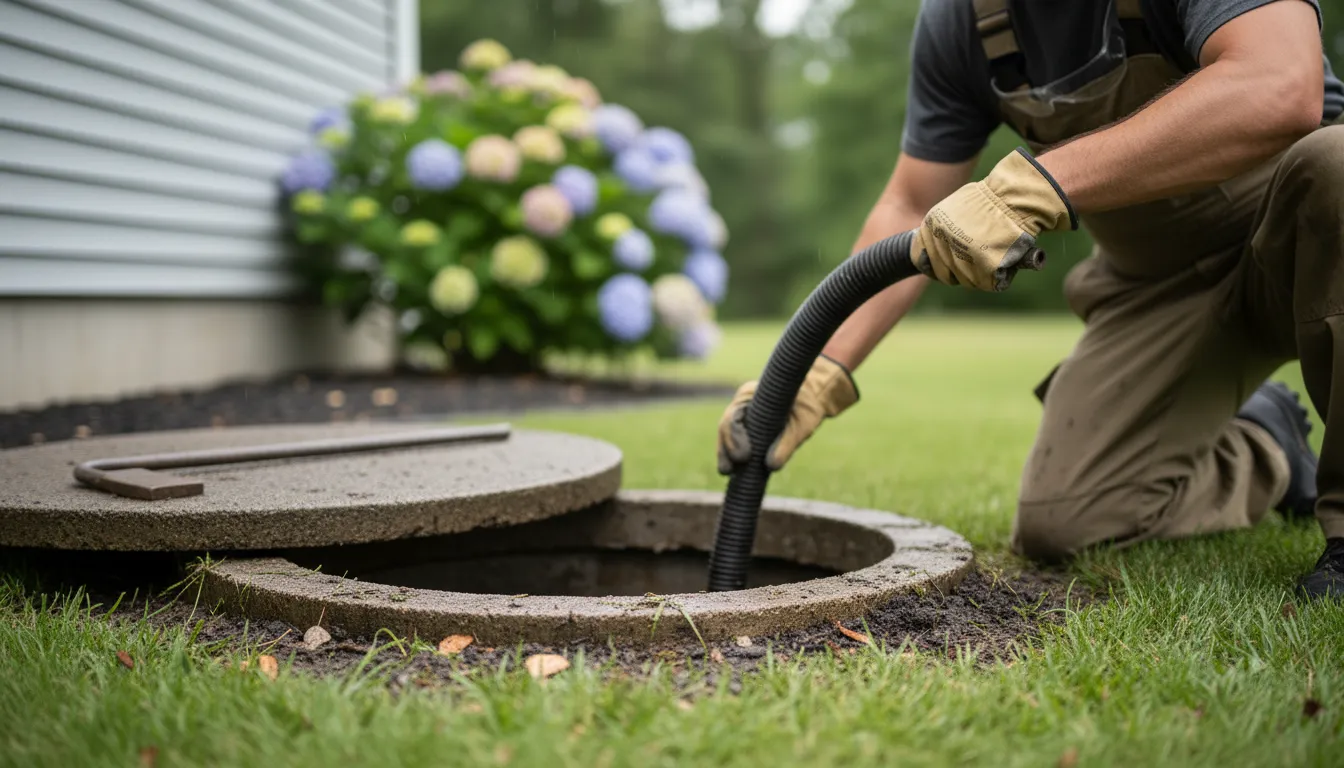
Find the Best Septic Tank Pumping Contractors for Your Business
No obligation • Fast responses • Nationwide coverage

Why you can trust Septic Spot
Septic Spot is a leading United States resource for understanding and comparing septic services. Our editors review providers using consistent criteria and verify key business details. Listings and scores are independent, and companies cannot pay to influence our content.
Search providers near you
Top Septic Tank Pumping Contractors in Nashua, New Hampshire Ranked
Maintaining your septic system is a critical responsibility for any homeowner in Nashua. Regular septic tank pumping and inspection are essential to prevent system failures, protect public health, and safeguard the local environment, including the Merrimack River and its tributaries. This guide explains the local regulations, recommended maintenance schedules, and costs for septic services in Nashua, helping you find qualified local professionals to ensure your system operates effectively for years to come.

Rooterman
67 Andover Rd, Billerica, MA 01821
Rooterman is a septic tank pumping, inspection, repair, and installation company serving Boston, MA. With over 50 years of experience since 1970, they provide residential and commercial septic services including certified Title V inspections and sewer and drain maintenance. Their team is licensed and insured, offering same-day service for most non-emergency issues and supporting property owners in maintaining safe and compliant septic systems.
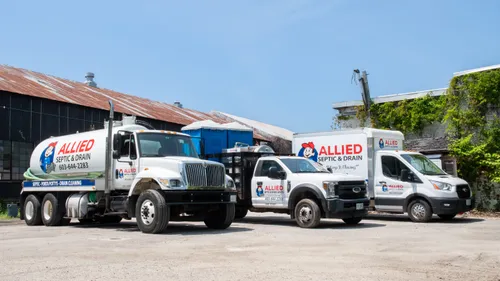
Allied Septic & Drain LLC
76 Maple St, Manchester, NH 03103
Allied Septic & Drain LLC is a septic tank pumping company based in Manchester, NH. They specialize in septic and grease system services, including pumping and maintenance to support on-site treatment. The company also addresses drain clogs and blockages and offers portable toilet rentals for events and construction sites. With over twenty years of experience, Allied Septic & Drain LLC provides a range of waste management solutions tailored to local needs.
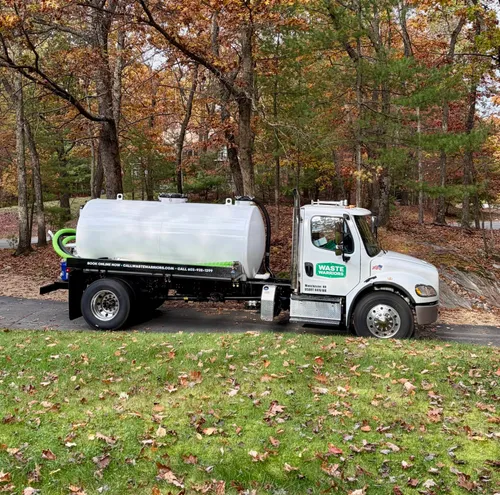
Waste Warriors
Manchester, NH
Waste Warriors is a septic tank pumping company based in Manchester, NH, serving both New Hampshire and Massachusetts. They specialize in septic tank pumping and emergency septic services. The company uses hydro jetting equipment to clear clogs and perform preventative maintenance, ensuring efficient septic system operation. Waste Warriors emphasizes cleanliness by using new protective suits for each job.
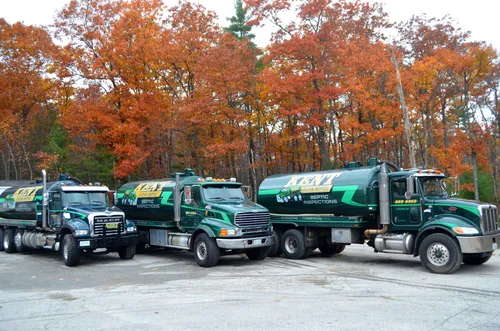
Kent Septic LLC
4 Crane Way # B, Hooksett, NH 03106
Kent Septic LLC is a septic tank pumping and inspection company serving Manchester, NH. They provide pump station installation and repair for private residences, housing complexes, and municipalities. Their services include septic inspections to help homeowners understand system conditions and maintenance tips. Kent Septic also offers jetting services to clean lines up to 300 feet and provides pumping services for homeowners and condo associations.
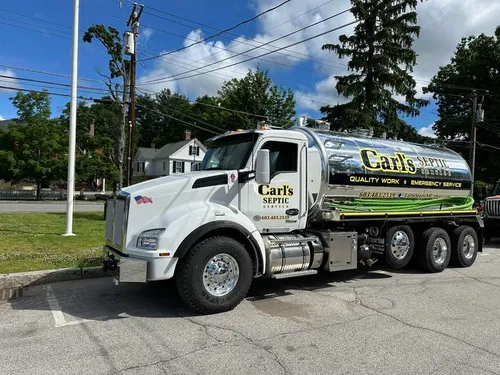
Carl's Septic Systems and Services in New Hampshire
320 Baker Rd, Candia, NH 03034
Carl's Septic Systems and Services in New Hampshire provides septic tank pumping, repair, and installation services in Manchester, NH. With over 40 years of experience, they serve both residential and commercial clients across New Hampshire. Their offerings include emergency septic services, routine maintenance, and commercial septic solutions, ensuring systems operate efficiently and meet regulatory standards. The company emphasizes reliable emergency response and comprehensive septic system care.
Understanding Your Septic System in Nashua
A septic system is an on-site wastewater treatment system common in areas not served by municipal sewer lines. In Nashua, many homes rely on these systems to safely process household water from toilets, showers, sinks, and appliances. The system typically consists of a septic tank and a soil absorption field (leach field). Solid waste settles as sludge in the tank, while fats and oils float to the top as scum. The liquid effluent in the middle layer flows out to the leach field, where it is further treated by the soil.
Proper maintenance, primarily through periodic septic tank cleaning and pumping, is non-negotiable. A neglected system can lead to backups into your home, foul odors, and contamination of groundwater and surface water. The Nashua Environmental Health Department oversees local septic system ordinances and works in conjunction with the New Hampshire Department of Environmental Services (NHDES) to enforce regulations designed to protect water quality.
Nashua and New Hampshire Septic Pumping Regulations
Septic system maintenance in Nashua is governed by a combination of state rules and local ordinances, which were updated as recently as January 2025 1. Understanding these rules is the first step in responsible homeownership.
- Licensed Haulers Only: In New Hampshire, only licensed septage haulers are permitted to pump out septic tanks. This ensures proper disposal of waste at approved facilities.
- Mandatory Receipts: After a pump-out, the hauler must provide a receipt detailing the quantity of waste removed in gallons. Homeowners should keep this record, as local officials may request it 2.
- Property Transfer Laws: A significant new state law, effective September 1, 2024, requires a professional septic system evaluation (inspection) prior to the transfer of any waterfront property where the system is within 250 feet of a shoreland 3 4. Furthermore, if a system is found to be failing during a property transfer in Nashua, it must be repaired or replaced within 180 days 3.
- System Repairs: Any major repair or replacement of a failing system must be approved by the Nashua Environmental Health Department and must meet current state standards, which include a minimum 4-foot vertical separation from the seasonal high-water table 5 6.
How Often Should You Pump Your Septic Tank in Nashua?
The standard recommendation for septic tank maintenance in New Hampshire is to pump your tank every 3 to 5 years for optimal function. However, this is a general guideline. The actual frequency for your home depends on several factors:
- Tank Size and Household Usage: The primary determinant is the amount of solids entering the tank versus its capacity. A family of six will fill a tank faster than a couple.
- Key Indicators for More Frequent Pumping: The NHDES advises that a tank should be pumped when the combined thickness of the bottom sludge layer and the top scum layer equals one-third or more of the liquid depth of the tank 7 8. A professional inspection can measure this.
- High-Usage Situations: Homes with four or more bedrooms, garbage disposals, or habits that lead to high water usage (like frequent laundry loads or long showers) should consider a more aggressive septic service schedule, potentially every 2 to 3 years 9 10.
- Annual Inspections: While pumping may happen every few years, a professional inspection of the tank and leach field is recommended every 1 to 3 years to identify potential issues like cracks, leaks, or drainfield problems before they cause a complete failure.
Find the perfect septic tank pumping contractors for your needs
Get personalized recommendations and expert advice
What Does Septic Tank Pumping Cost in Nashua, NH?
Understanding the cost of septic system pumping helps homeowners budget for this essential maintenance. For a typical residential system in New Hampshire, you can expect to pay between $300 and $500 for a standard pump-out 11. Costs can vary based on specific job details:
- By Tank Size (2026 Estimates):
- Factors That Increase Cost:
- Inaccessibility: If your tank lid is buried and lacks a "riser" (a pipe extending the access port to the surface), the provider will need to locate and excavate it, adding labor time.
- Long Pumping Distance: If the tank is far from where the pump truck can park, requiring additional hose, the price may rise.
- Excessive Solids: A severely neglected tank with an overabundance of sludge and scum may require more time and effort to clean thoroughly.
- Additional Services: The quoted pump-out price is typically for the basic service. Costs for a full system inspection, camera scope, or minor repairs will be additional 14 15.
The Importance of Regular Inspections and Maintenance Records
Scheduling regular inspections is just as crucial as pumping. A professional inspector will check tank integrity, inlet/outlet baffles, scum and sludge levels, and the condition of the leach field 16. This proactive approach can save tens of thousands of dollars by catching a small problem before it becomes a catastrophic failure requiring a full system replacement.
Keep Detailed Records: Nashua homeowners are strongly advised to maintain a file with all septic system service records. This should include dates, receipts, inspection reports, and any repair permits. These documents are not only useful for tracking your system's health but are also increasingly required during real estate transactions 17. The new waterfront property law explicitly requires a professional evaluation report that meets specific state guidelines 18.
Signs Your Nashua Septic System Needs Attention
Don't wait for a scheduled inspection if you notice these warning signs. Contact a local septic professional immediately if you observe:
- Slow Drains: Sinks, showers, and toilets that drain slowly, especially if gurgling is involved.
- Sewage Backups: Wastewater coming back up into household drains.
- Bad Odors: Foul smells around the tank or leach field area, or even inside the house.
- Lush, Wet Grass: An unusually green and soggy patch over the leach field, particularly when it hasn't rained.
- Standing Water: Puddles or surfacing effluent in your yard near the system components.
Addressing these issues quickly can prevent more extensive environmental damage and costly repairs, ensuring your system complies with Nashua's public health standards.
Choosing a Septic Service Provider in Nashua
When it's time for maintenance or repairs, selecting the right provider is key. Look for a company that is fully licensed and insured in New Hampshire. They should be familiar with both NHDES regulations and Nashua's local ordinances. Ask about their inspection process, whether they provide detailed reports, and if they offer emergency services. A reputable provider will be transparent about pricing, explain what their service includes, and emphasize the importance of maintenance records.
Frequently asked questions
Sources
Footnotes
-
Environmental Health Department - Nashua, NH - https://nashuanh.gov/512/Environmental-Health-Department ↩
-
Rules for Septage Disposal - Nashua, NH - https://www.nashuanh.gov/510/Rules-for-Septage-Disposal ↩
-
Waterfront Septic Law Changes | News | New Hampshire ... - https://nhar.org/news/article/waterfront-septic-law-changes ↩ ↩2
-
Waterfront property transfers now require septic evaluations - https://www.des.nh.gov/news-and-media/blog/waterfront-property-transfers-now-require-septic-evaluations ↩
-
Article VII: Individual Sewage Disposal Systems - eCode360 - https://ecode360.com/8735039 ↩
-
ORDINANCE - Nashua, NH - https://www.nashuanh.gov/DocumentCenter/View/31767 ↩
-
Get Pumped! New Hampshire - https://www.des.nh.gov/land/septic-systems/get-pumped-new-hampshire ↩
-
N.H. Admin. Code § Env-Wq 1023.01 - Septic Tank Inspection ... - https://www.law.cornell.edu/regulations/new-hampshire/N-H-Admin-Code-SS-Env-Wq-1023.01 ↩
-
How Often to Pump Your Septic Tank? Splash Plumbing's Guide - https://www.splashplumbing.com/how-often-should-septic-tank-be-pumped-for-optimal-maintenance-and-longevity/ ↩
-
Septic Tank Pumping New Hampshire - https://www.townesseptic.com/septic-tank-pumping ↩
-
Average Cost of Septic Pumping in New Hampshire - https://bhcameron.com/2024/05/average-cost-of-septic-pumping-in-new-hampshire/ ↩
-
How Much Does It Cost to Pump a Septic Tank? [2026 Data] - https://www.angi.com/articles/how-much-does-septic-tank-pumping-cost.htm ↩
-
Septic Tank Pumping Cost: Guide & Pricing in 2025 - https://www.splashplumbing.com/how-much-does-it-cost-to-pump-septic-tank-understanding-pricing-and-factors-involved/ ↩
-
How Much Does It Cost to Pump a Septic Tank? - https://dillonseptic.com/how-much-does-it-cost-to-pump-a-septic-tank/ ↩
-
GET PUMPED! New Hampshire - Merrimack NH | - https://www.merrimacknh.gov/stormwater/files/get-pumped ↩
-
Frequent Questions on Septic Systems | US EPA - https://www.epa.gov/septic/frequent-questions-septic-systems ↩
-
Septic & Well Inspections in NH: What Buyers Need to Know - https://nhrealestate.com/blog/septic-well-inspections-nh ↩
-
Minimum Requirements for Septic System Evaluation Reports - https://www.law.cornell.edu/regulations/new-hampshire/N-H-Admin-Code-SS-Sep-603.01 ↩