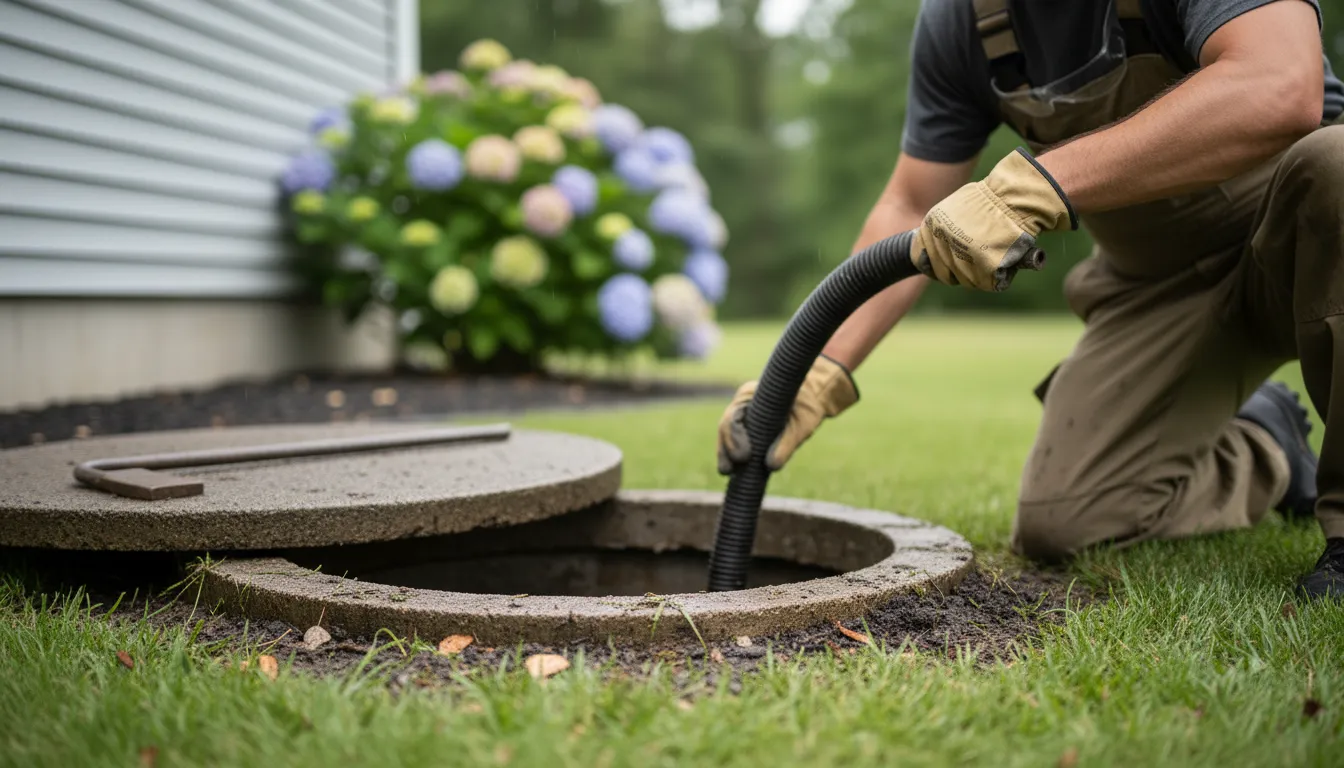
Find the Best Septic Tank Pumping Contractors for Your Business
No obligation • Fast responses • Nationwide coverage

Why you can trust Septic Spot
Septic Spot is a leading United States resource for understanding and comparing septic services. Our editors review providers using consistent criteria and verify key business details. Listings and scores are independent, and companies cannot pay to influence our content.
Search providers near you
Best Septic Tank Pumping Contractors in Nevada Ranked
Maintaining your septic system is a key responsibility of homeownership in Nevada. Regular septic tank pumping is essential to prevent system failure, protect your property value, and safeguard public health and local groundwater. This guide explains Nevada's specific regulations, recommended maintenance schedules, and how to identify qualified local professionals to handle this critical service for your home.
Las Vegas Septic Service
Las Vegas, NV
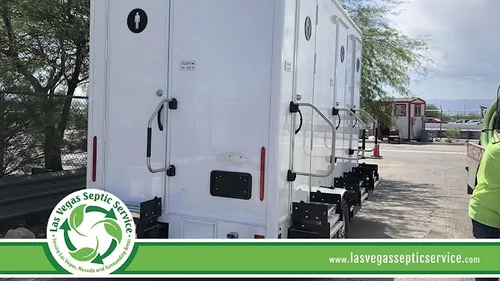
Las Vegas Septic Service provides a range of septic tank services in Las Vegas, NV, including pumping, inspections, grease trap cleaning, and lift station pumping. They serve both residential and commercial properties and offer specialized services such as laundromat lint trap maintenance, grow house interceptor care, and sand/oil separator upkeep. Their team helps maintain septic systems to prevent clogs, backups, and costly repairs. The company also serves nearby areas including North Las Vegas, Henderson, and Moapa.
Las Vegas Septic Service
Las Vegas, NV
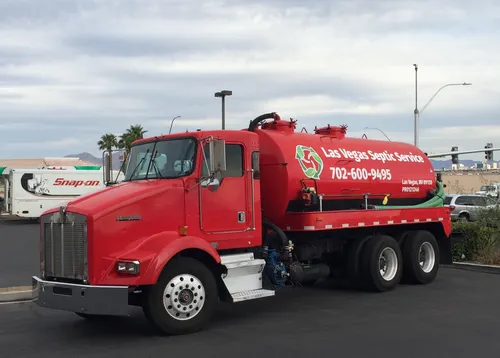
Las Vegas Septic Service is a local company providing septic tank pumping and maintenance in Las Vegas, NV, and nearby areas including Henderson. They offer a range of septic system services focused on keeping systems healthy and preventing costly repairs. Their expertise includes regular septic tank pumping, which is essential for system longevity and preventing field line clogs. The company emphasizes preventative maintenance as a key part of septic system care.
Green Valley Septic Services
3349 Pontius Pl, Carson City, NV 89706
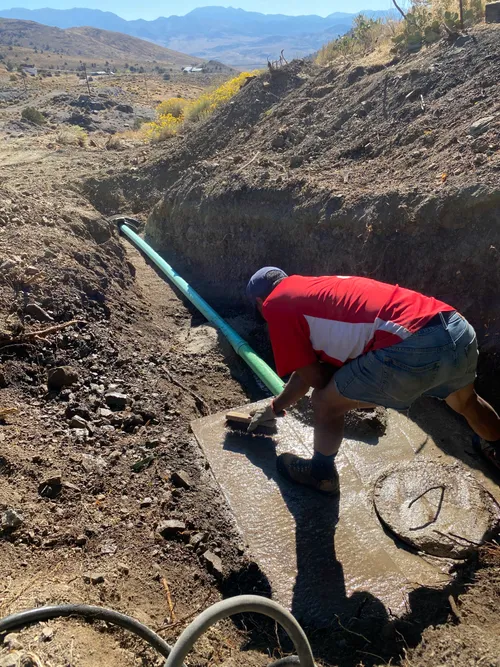
Green Valley Septic Services is a family-owned business based in Reno, NV, offering a full range of septic services including pumping, inspections, repairs, and installations. With over 19 years of experience, they use state-of-the-art equipment to provide efficient and eco-friendly septic solutions. Their capabilities include hydrojet services to maintain and clean septic systems effectively. Green Valley Septic Services focuses on environmental sustainability and aims to support a clean and healthy community through reliable septic system maintenance.

A-1 Septic & Handyman
5011 Reno Hwy, Fallon, NV 89406
A-1 Septic & Handyman provides septic tank pumping, locating, and real estate septic inspections in Reno, NV, and surrounding areas including Fallon, Fernley, and Silver Springs. They also offer drain and sewer problem solutions, water jet services, TV camera inspections for roots and broken pipes, plumbing repairs, toilet services, and welding. The company serves both commercial and residential clients and provides emergency services when needed.
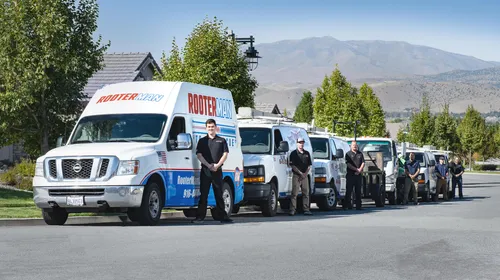
Rooter Man Plumbing of Tahoe/Truckee
1415 N Lake Blvd, Tahoe City, CA 96145
Rooter Man Plumbing of Tahoe/Truckee is a locally owned plumbing company serving the Reno, NV area. They provide a wide range of plumbing services including septic tank pumping and cleaning, hydro-jetting drain cleaning, leak detection, water heater repair, and toilet replacement. Their team is familiar with local building codes and uses advanced technology to diagnose and resolve plumbing issues efficiently. The company offers 24-hour emergency plumbing repair services year-round to address urgent plumbing needs promptly.
Understanding Your Septic System in Nevada
A septic system is an on-site wastewater treatment structure, common in rural and suburban areas not connected to municipal sewer lines. In Nevada, these systems are regulated as Individual Sewage Disposal Systems (ISDS). The system typically consists of a septic tank, where solids settle and begin to decompose, and a drain field, where liquid effluent is filtered through the soil.
Proper maintenance, with pumping as a core component, ensures this natural process works efficiently for decades. Neglect can lead to costly repairs, environmental contamination, and health hazards.
Nevada Regulations and Homeowner Responsibilities
Nevada state law, enforced by the Division of Public and Behavioral Health (DPBH) and local health districts, places the legal and financial responsibility for septic system maintenance squarely on the homeowner.
Key regulatory points include:
- Permits: A permit from your local health authority is required for any new septic tank installation, major repair, or system abandonment 1.
- Property Transfer: Some Nevada counties may require a septic system inspection at the time of property sale. It's wise to check with your local health district for specific transfer requirements 2.
- Record Keeping: Homeowners should maintain a detailed log of all inspections, pumping services, repairs, and permits. This documentation is crucial for property transfers and proving compliance with local regulations.
Recommended Septic Tank Pumping Schedule
Pumping removes the accumulated sludge and scum from your tank that cannot be broken down by bacteria. Following a consistent schedule is the most effective way to avoid emergencies.
The U.S. Environmental Protection Agency (EPA) and Nevada health authorities recommend pumping your septic tank every 3 to 5 years. However, this is a general guideline. The exact frequency for your home depends on several factors:
- Household Size: More people generate more wastewater and solids.
- Total Wastewater Generated: High water usage from laundry, showers, and appliances fills the tank faster.
- Tank Size: Smaller tanks require more frequent pumping.
- Volume of Solids: Heavy use of garbage disposals or flushing of non-degradable items can dramatically increase solid waste accumulation, necessitating more frequent service.
Find the perfect septic tank pumping contractors for your needs
Get personalized recommendations and expert advice
The Importance of Regular Inspection
Pumping should often be paired with a professional inspection. Nevada guidelines recommend having your system inspected at least every 3 years by a qualified professional 3. For systems with electrical components (like pumps or aerators in alternative systems), an annual inspection is often advised 3.
A thorough inspection will:
- Assess sludge and scum levels to determine if pumping is needed.
- Check for leaks in the tank and distribution box.
- Examine the drain field for signs of failure.
- Ensure mechanical components are working properly.
Signs Your Nevada Septic Tank Needs Pumping
Don't wait for a complete failure. Watch for these warning signs that your tank may be full or your system is struggling:
- Slow Drains: Sinks, showers, and especially toilets that drain slowly or gurgle.
- Sewage Backups: Wastewater backing up into household drains.
- Unpleasant Odors: Foul smells around the tank or drain field area.
- Lush or Soggy Lawn: Unusually green, spongy, or wet patches over the drain field, even during dry weather.
- Standing Water: Pools of effluent or sewage on the ground surface near the system 4 5 6.
Cost of Septic Tank Pumping in Nevada
The cost for routine septic tank pumping in Nevada typically ranges from $250 to $500, though this can vary 7 8. Several factors influence the final price:
- Tank Size and Accessibility: Larger tanks cost more to pump. Difficult access (e.g., long hose runs, locked gates) can add to the labor fee.
- Geographic Location: Prices may be higher in remote areas of the state.
- Condition of the Tank: If the tank lids are buried or the system has not been pumped in many years, extra labor may be required.
- Additional Services: Costs will increase if you bundle pumping with a full inspection, tank cleaning, or minor repairs.
Investing in regular pumping is far more economical than the thousands of dollars often required for drain field repair or full system replacement.
How to Maintain Your System Between Pumpings
Proper daily care extends the time between pumpings and protects your system's longevity.
Do:
- Conserve water and fix leaks promptly.
- Spread out laundry and dishwasher loads over the week.
- Only flush human waste and toilet paper.
- Direct roof drains and surface water away from the drain field.
Don't:
- Flush wipes (even "flushable" ones), feminine hygiene products, dental floss, diapers, or cat litter.
- Pour cooking grease, oil, or harsh chemicals (paint, pesticides, solvents) down the drain.
- Use excessive garbage disposal use, which adds significant solids 9 10.
- Drive or park vehicles on the drain field, which can compact soil and crush pipes.
Choosing a Service Provider in Nevada
When selecting a professional for septic pumping or inspection, due diligence is important.
- Verify Licensing: Ensure the company is licensed to operate in Nevada and holds any required local permits.
- Check Insurance: Confirm they carry liability insurance.
- Ask About Services: Do they offer both pumping and inspection? Will they provide a detailed report of their findings?
- Get Written Estimates: Obtain clear, written quotes that detail all costs, including potential charges for extra labor or disposal fees.
- Seek References: Ask for references from recent customers in your area.
Frequently asked questions
Sources
Footnotes
-
Septic Systems & Liquid Waste - Northern Nevada Public Health - https://www.nnph.org/programs-and-services/environmental-health/land-development/septic-liquid-waste.php ↩
-
nevada health authority - DPBH (nv.gov) - https://www.dpbh.nv.gov/siteassets/boards/boh/r-nnph-septic-regulation-changes-final.pdf ↩
-
Your Septic System is Your Responsibility! - Northeast Health District - https://northeasthealthdistrict.org/wp-content/uploads/2023/05/homeowner_guide_long.pdf ↩ ↩2
-
Septic Tank Pumping Cost: Guide & Pricing in 2025 - https://www.splashplumbing.com/how-much-does-it-cost-to-pump-septic-tank-understanding-pricing-and-factors-involved/ ↩
-
How Septic Pumping Services Keep Your Oilfield Running Smoothly - https://novaoilfieldservices.com/septic-pumping-services-oilfield/ ↩
-
Why Frequent Septic Pumping & Cleaning Matter [infographic] - https://americanwasteseptics.com/american-waste-septic-blog/why-frequent-septic-pumping-cleaning-matter-infographic/ ↩
-
Frequent Questions on Septic Systems | US EPA - https://www.epa.gov/septic/frequent-questions-septic-systems ↩
-
How Much Does It Cost to Pump Septic Tank: A Detailed Pricing Guide - https://www.benjaminfranklinplumbing.com/league-city/blog/2025/march/how-much-does-it-cost-to-pump-septic-tank-a-detailed-pricing-guide/ ↩
-
Homeowner's Guide to Septic Systems - https://marionhealth.org/wp-content/uploads/2024/02/EPA_Homeowner_Guide_Septic_Systems.pdf ↩
-
INDIVIDUAL SEWAGE DISPOSAL SYSTEM GUIDE - https://www.centralnevadahd.org/wp-content/uploads/2024/04/ISDS_CNHD2024.pdf ↩