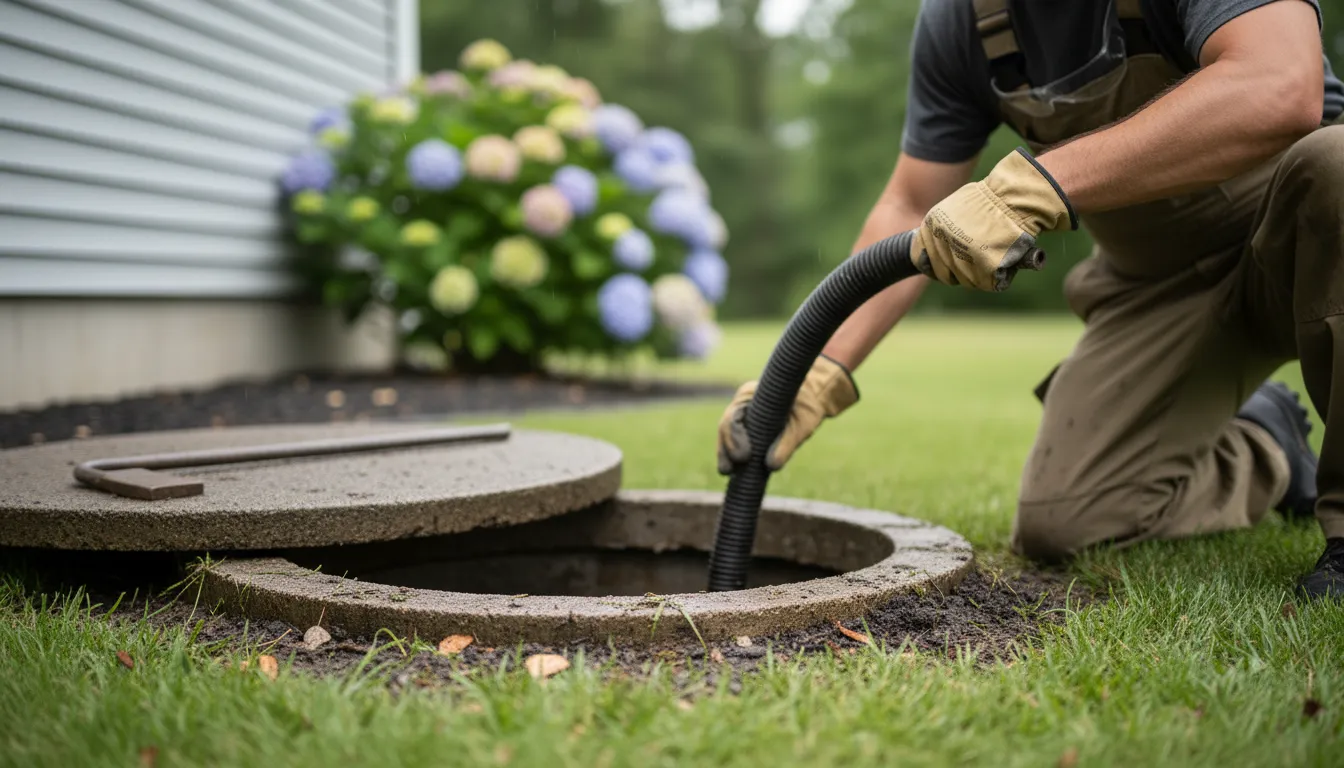
Find the Best Septic Tank Pumping Contractors for Your Business
No obligation • Fast responses • Nationwide coverage

Why you can trust Septic Spot
Septic Spot is a leading United States resource for understanding and comparing septic services. Our editors review providers using consistent criteria and verify key business details. Listings and scores are independent, and companies cannot pay to influence our content.
Search providers near you
Top Septic Tank Pumping Contractors in Albany, Oregon Ranked
Maintaining your septic system is a key responsibility for Oregon homeowners. Proper septic tank pumping prevents costly system failures, protects public health, and safeguards local water quality. This guide provides essential information on schedules, costs, regulations, and best practices to help you find a qualified, licensed professional for this critical service.
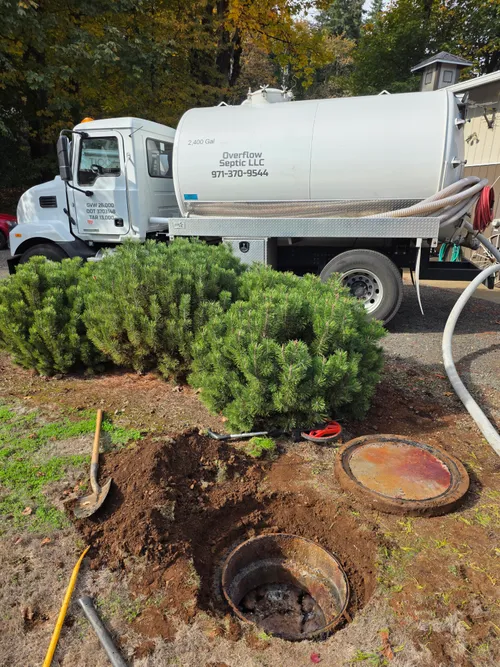
Overflow Septic LLC
Salem, OR
Overflow Septic LLC provides septic tank pumping, inspection, and repair services in Salem, OR, and surrounding areas including Silverton and Woodburn. They offer routine maintenance, system diagnostics, troubleshooting, and sewer and drain line services. The company emphasizes tailored solutions that consider the local environment and offers 24/7 emergency availability to address urgent septic issues.
Carl's Septic Tank Cleaning
8384 Wagner Ct SE, Salem, OR 97317
Carl's Septic Tank Cleaning offers septic tank pumping, cleaning, and inspection services in Salem, OR. The company is DEQ certified, licensed, and insured, providing both full septic tank flushes and routine maintenance. Carl's Septic Tank Cleaning serves Salem and nearby communities with a focus on quality and personal service.
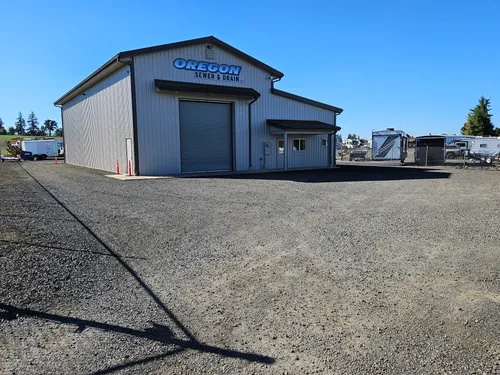
Oregon Sewer & Drain LLC
12422 Silverton Rd NE, Silverton, OR 97381
Oregon Sewer & Drain LLC is a septic tank pumping, inspection, repair, and installation company serving Salem, OR. Since 2001, they have provided residential and commercial septic, sewer, and drain services. Their capabilities include drain cleaning, jetting, video camera inspections, sewer line repairs, and trench-less pipe replacement. Oregon Sewer & Drain offers a comprehensive range of wastewater solutions for various needs.
Understanding Your Septic System
A septic system is an on-site wastewater treatment system, typically consisting of a tank and a soil-based drainfield. Wastewater from your home flows into the tank, where solids settle to the bottom as sludge, and oils and grease float to the top as scum. The liquid effluent in the middle layer then flows out to the drainfield for further treatment by the soil. The tank itself does not treat waste; it simply holds it, allowing for separation. This is why regular removal of the accumulated solids through pumping is non-negotiable for a functioning system.
In Oregon, the Department of Environmental Quality (DEQ) regulates septic systems, also known as On-Site Wastewater Treatment Systems. State and local rules govern their installation, inspection, and maintenance to prevent groundwater contamination and environmental harm.
Why Regular Pumping is Essential
Neglecting to pump your septic tank is the primary cause of system failure. When sludge and scum accumulate beyond capacity, they can flow into the drainfield. This clogs the soil pores, causing sewage to surface in your yard, back up into your home, or contaminate nearby waterways. Repairing or replacing a failed drainfield is extremely disruptive and can cost tens of thousands of dollars-a expense easily avoided with routine maintenance 1.
Beyond preventing failure, regular septic service:
- Protects Your Investment: A well-maintained system can last for decades.
- Safeguards Health: It prevents exposure to harmful pathogens from untreated sewage.
- Preserves the Environment: It keeps nitrates, bacteria, and other contaminants out of groundwater, streams, and lakes.
- Maintains Property Value: A documented, functioning septic system is crucial for real estate transactions.
Recommended Pumping Frequency
A common rule of thumb is to pump your septic tank every 3 to 5 years. However, this is a general guideline. The actual frequency depends on several household-specific factors:
- Tank Size: Smaller tanks fill with solids faster.
- Household Size: More people generate more wastewater and solids.
- Wastewater Volume: Garbage disposals, frequent laundry loads, and long showers increase the water entering the system.
- Solid Waste Accumulation: The amount of solids sent into the system is key.
A more precise method is to have the sludge and scum levels measured during an inspection. Pumping is strongly advised when the combined sludge and scum occupy more than 40% of the tank's liquid depth. For example, a household of six people with a standard 1,000-gallon tank may need pumping as often as every 1.5 years 2.
Find the perfect septic tank pumping contractors for your needs
Get personalized recommendations and expert advice
What to Expect: The Pumping Process
Hiring a DEQ-licensed pumper ensures the job is done correctly and legally. Here's what a standard service visit entails:
- Locating & Accessing the Tank: The technician will locate the tank lids. If they are buried, they may need to dig to expose them. Difficult access (e.g., under a deck or concrete patio) can increase service time and cost.
- Inspecting the System: A responsible provider will inspect the tank's inlet and outlet baffles for integrity and check for cracks or leaks before pumping. They should also note the sludge and scum levels.
- Pumping the Tank: Using a large truck-mounted vacuum hose, all contents-sludge, scum, and liquid-are removed from the tank.
- Proper Disposal: The waste is transported to a DEQ-permitted treatment facility. Never allow a pumper to dispose of waste illegally.
- Post-Service Advice: The technician may offer observations about your system's health and recommend any needed repairs or the next service date.
Cost of Septic Tank Pumping in Oregon
The average cost to pump a septic tank in Oregon typically ranges from $250 to $5003 4. Several variables influence the final price:
- Tank Size and Capacity: Larger tanks (e.g., 1,500 gallons) cost more to pump than standard 1,000-gallon tanks.
- Accessibility: Tanks with buried or difficult-to-reach lids may incur an additional fee for excavation.
- Location: Travel distance for the service provider can affect the quote.
- Condition of the Tank: If the tank requires cleaning of inlet/outlet filters or inspection of baffles, it may add to the cost.
- Additional Services: A full inspection, camera scope of lines, or minor repairs are separate services with their own costs.
While this is a necessary expense, it pales in comparison to the cost of repairing a failed drainfield, which can run from $5,000 to $20,000 or more 5.
Oregon Regulations and Homeowner Responsibilities
Oregon law requires homeowners to maintain their septic systems in good working order. Key regulations and best practices include:
- Use a Licensed Professional: Always hire a DEQ-licensed septic service provider for pumping and inspections. This ensures proper waste disposal and adherence to state standards.
- Inspection Requirements: While the state recommends annual inspections, a thorough inspection by a professional is required at least every 3 years for most systems. Some counties have stricter rules. For instance, Deschutes County requires an annual inspection and report for certain advanced treatment systems 6.
- Keep Detailed Records: Maintain a log of all pumping dates, inspection reports, repairs, and system diagrams. This is invaluable for troubleshooting and is often required during property sales.
- System Specifications: Tanks must be watertight, and for dual-compartment tanks, the first compartment should hold approximately two-thirds of the total capacity 7.
Daily Habits for a Healthy System
What you put into your system is as important as regular pumping. Follow these guidelines to extend time between pumpings and protect your drainfield:
- Conserve Water: Fix leaks, install water-efficient fixtures, and spread out laundry loads to avoid overwhelming the system.
- Mind What You Flush: Only human waste and toilet paper should go down the toilet. Never flush:
- "Flushable" wipes, feminine hygiene products, or diapers.
- Cooking grease, oil, or fat.
- Harsh chemicals, paints, solvents, or pesticides.
- Coffee grounds, eggshells, or other food scraps (minimize use of a garbage disposal).
- Protect Your Drainfield:
- Never drive or park vehicles on it.
- Do not build structures, patios, or sheds over it.
- Plant only grass over the drainfield; tree and shrub roots can clog and damage pipes.
- Direct roof drains, sump pumps, and other surface water away from the area 8.
Finding and Choosing a Service Provider
Selecting the right professional is critical. Look for a company that:
- Holds a current Oregon DEQ License for liquid waste hauling (pumping).
- Provides clear, written estimates.
- Is insured and has positive reviews from local customers.
- Offers a range of services, including inspection and minor repairs.
- Is willing to explain the process and answer your questions.
- Can provide references upon request.
A reputable provider will be transparent about their pricing, licensing, and waste disposal practices.
Frequently asked questions
Sources
Footnotes
-
Septic tank maintenance | OSU Extension Service - https://extension.oregonstate.edu/catalog/ec-1343-septic-tank-maintenance ↩
-
SEPTIC SYSTEM MAINTENANCE Homeowner's Guide - EWEB - https://www.eweb.org/documents/Customer%20Programs/source-protection/homeowners-guide-septic.pdf ↩
-
About Septic Systems : Residential Resources - Oregon.gov - https://www.oregon.gov/deq/residential/pages/onsite-about.aspx ↩
-
How Much Does It Cost to Pump Septic Tank: A Detailed Pricing Guide - https://www.benjaminfranklinplumbing.com/league-city/blog/2025/march/how-much-does-it-cost-to-pump-septic-tank-a-detailed-pricing-guide/ ↩
-
How Much Does It Cost To Pump a Septic Tank in 2025? - https://alphaenvironmental.net/blog/how-much-does-it-cost-to-pump-a-septic-tank/ ↩
-
Operation & Maintenance (O&M) Program | Deschutes County Oregon - https://www.deschutes.org/cd/page/operation-maintenance-om-program ↩
-
OAR 340, Division 73 - Construction Standards - https://secure.sos.state.or.us/oard/displayDivisionRules.action?selectedDivision=1481 ↩
-
SEPTIC SYSTEM MAINTENANCE - Springfield Oregon - https://springfield-or.gov/wp-content/uploads/2025/02/Septic_Brochure_20250219_Web.pdf ↩