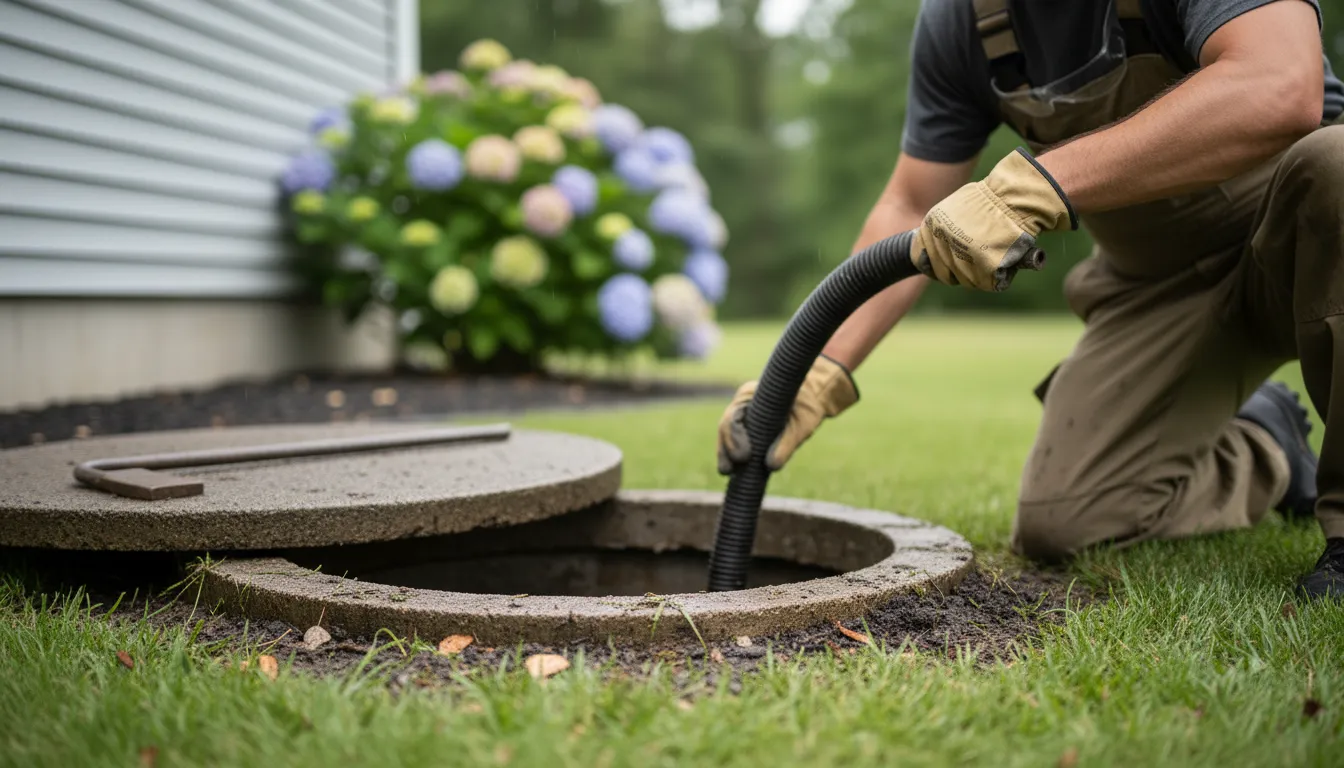
Find the Best Septic Tank Pumping Contractors for Your Business
No obligation • Fast responses • Nationwide coverage

Why you can trust Septic Spot
Septic Spot is a leading United States resource for understanding and comparing septic services. Our editors review providers using consistent criteria and verify key business details. Listings and scores are independent, and companies cannot pay to influence our content.
Search providers near you
Best Septic Tank Pumping Contractors in Rhode Island Ranked
Maintaining your septic system is a crucial responsibility for Rhode Island homeowners. Proper septic tank pumping and regular inspections protect your property, your health, and the state's delicate coastal environment. This guide provides clear, practical information on state and local requirements, recommended maintenance schedules, and how to find qualified professionals to service your Onsite Wastewater Treatment System (OWTS).
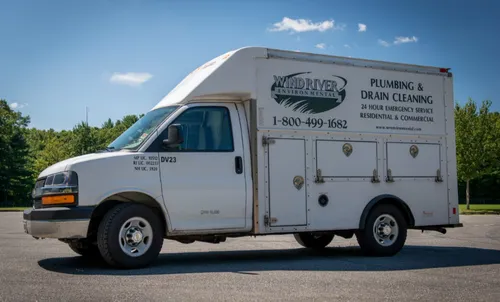
Wind River Environmental of Johnston, RI
141 Shun Pike, Johnston, RI 02919
Wind River Environmental of Johnston, RI provides septic tank pumping, inspection, and repair services in Providence, RI. Serving residential, commercial, and municipal clients, the company offers tailored solutions that comply with local codes and regulations. With a history dating back to 1946, Wind River Environmental brings decades of experience and a broad resource network to handle projects of varying complexity. The company is available 24/7 to address urgent septic and wastewater needs.

A & D Sanitation.
223 Hinchey Ln, Somerset, MA 02726
A & D Sanitation provides septic tank pumping, inspection, and repair services in Providence, RI. The company handles septic system maintenance including pumping, line snaking to clear blockages, and basic repairs such as installing filters, risers, and covers. They also offer yearly bacteria treatments and inspections required for Rhode Island point-of-sale ISDS. Their services include maintaining cesspool tight tanks and providing tank seals and jetting.

Croome Sanitation Inc
26 Hillside Ave, Rehoboth, MA 02769
Croome Sanitation Inc is a family-owned septic service company serving Providence, RI, and the surrounding areas of Southeast Massachusetts and Rhode Island. Established in 1962, the company offers a wide range of septic system services including pumping, Title 5 inspections, sewer camera diagnostics, pump station maintenance, and excavation work. Their expertise extends to wastewater treatment systems, providing comprehensive care to maintain system health and compliance with local regulations. Croome Sanitation also offers same-day and emergency services to address urgent septic needs.
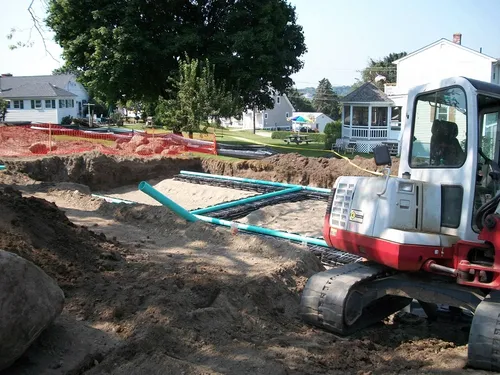
Michael Perri & Sons Septic Service, Inc.
Providence, RI
Michael Perri & Sons Septic Service, Inc. is a family-owned and operated septic company serving Providence, RI, and the entire state of Rhode Island. They provide a full range of septic services including routine pumping, cleaning, inspections, repairs, and new system installations. Their skilled team also offers hydro-jetting, backhoe services, enzyme bacteria treatments, and drainage installation to maintain and protect septic systems. With over 50 years of experience and licenses for underground utility work, they handle both residential and commercial septic needs across multiple Rhode Island communities.
Understanding Rhode Island Septic System Regulations
In Rhode Island, the Department of Environmental Management (DEM) oversees regulations for all Onsite Wastewater Treatment Systems. Homeowners are legally responsible for the proper operation and maintenance of their systems. This isn't just a recommendation; it's a requirement to prevent groundwater contamination and public health risks. Many municipalities, such as North Kingstown, have their own local ordinances that enforce state rules, requiring regular inspections and maintenance records 1. Failure to comply with these regulations can result in fines or mandatory, costly system upgrades 1.
The cornerstone of Rhode Island's approach is the mandatory inspection program. These inspections must be performed by a DEM-licensed inspector, not just any contractor 2 3. The inspection verifies that your system is functioning correctly and checks the level of solids in your septic tank. A key rule is that tanks must be pumped before the solids accumulate to 50% of the tank's capacity 3. For most households, this translates to a pumping every 3 to 5 years, but your specific schedule depends on several factors 2.
Recommended Pumping Frequency for Your Household
While the 3-5 year rule is a good baseline, the Rhode Island DEM provides more detailed guidelines based on household size. Following these recommendations helps prevent system failure and is more cost-effective than emergency repairs.
- 1-2 People: Pump every 4-5 years.
- 3-4 People: Pump every 3-4 years.
- 5-6 People: Pump every 2-3 years.
- 7+ People: Pump every 1-2 years 4.
These are guidelines for conventional septic systems. If your home has an advanced treatment unit (ATU) or other alternative system, the requirements are stricter. These systems typically require annual inspections by a licensed professional to ensure their mechanical and electrical components are working properly.
The Inspection and Pumping Process: What to Expect
Knowing what happens during service can help you prepare and ensure you get a thorough job. A standard inspection and pumping visit by a licensed professional will include several key steps.
First, the technician will locate and uncover the tank's access lids. Pro Tip: Some inspectors offer a discount if you locate and uncover the lid yourself before they arrive, which can save on labor costs 5. They will then inspect the inlet and outlet baffles for blockages or damage, assess the scum and sludge layers to determine if pumping is needed, and evaluate the drain field for any signs of failure, such as surfacing effluent or overly lush grass.
If pumping is required, they will use a vacuum truck to remove all solids and liquids from the tank. It's important they only pump out through the main central access port, not the observation pipes, to ensure a complete cleaning. After pumping, they may perform a simple flow test or dye test to check for leaks. Finally, they will provide you with a detailed report, which you should keep for your records. In municipalities like North Kingstown, you may be required to submit this report to the town as proof of compliance.
Find the perfect septic tank pumping contractors for your needs
Get personalized recommendations and expert advice
Costs for Septic Services in Rhode Island
The cost for routine septic tank inspection and pumping in Rhode Island generally ranges from $250 to $5006 7. Several variables influence the final price:
- Tank Size and Type: Larger tanks or those with alternative designs cost more to pump.
- Accessibility: If the tank lids are buried deep or under obstacles, extra labor will be needed.
- System Condition: Severe clogging or the need for minor repairs during the visit will add to the cost.
- Location: Prices can vary slightly by region within the state.
Remember, this is a maintenance investment. The cost of pumping every few years is far less than the $10,000 to $30,000+ expense of replacing a failed drain field or entire system.
Essential Homeowner Maintenance Between Pumpings
Professional pumping is vital, but your daily habits have the biggest impact on your system's longevity. Here are key maintenance do's and don'ts:
What You SHOULD Do:
- Conserve Water: Fix leaky toilets and faucets immediately. Space out laundry loads throughout the week instead of doing many loads in one day. This prevents hydraulically overloading the system 8.
- Map and Protect: Know where your tank and drain field are located. Never drive or park vehicles over the system. Do not build structures, install pools, or place heavy patios on the drain field, as compaction destroys its ability to treat wastewater.
- Keep Records: Maintain a detailed log of all inspections, pumpings, repairs, and the layout of your system.
What You MUST Avoid:
- Flushable Wipes & Non-Flushables: Even products labeled "flushable" do not break down and will clog your system. Never flush feminine hygiene products, diapers, paper towels, or cat litter.
- Chemicals and Additives: Avoid pouring grease, oils, paints, solvents, or harsh chemicals (like drain cleaner) down drains. Do not use septic tank additives or "magic bullets"; they are not necessary and can harm the bacterial ecosystem in your tank.
- Garbage Disposals: Minimize or eliminate the use of an in-sink garbage disposal. Food scraps significantly increase the solid waste load in your tank, requiring more frequent pumping 9.
Special Considerations: Selling Your Home
If you plan to sell your property in Rhode Island, be aware that a septic system inspection is required. State law mandates that an inspection be completed within 12 months prior to the transfer of the property 10. This inspection must be conducted by a DEM-licensed inspector. As the seller, you are responsible for ensuring the inspection is completed and any necessary repairs or pumpings are performed to bring the system into compliance. Having a recent inspection report and maintenance records can be a strong selling point and prevent delays in your closing process.
Finding and Choosing a Licensed Professional
Your septic system is a major investment, so choosing the right service provider is critical. Always verify that the company or individual holds a current Rhode Island DEM License for OWTS Inspection and Pumping. You can ask for their license number and confirm it with the DEM. Look for established companies with good local reputations, proper insurance, and clear, written estimates. Get quotes from multiple providers and ensure the quote details what the service includes (e.g., inspection report, pumping to a certain level, lid replacement).
Frequently asked questions
Sources
Footnotes
-
Wastewater Management | North Kingstown, RI - https://www.northkingstownri.gov/557/Wastewater-Management ↩ ↩2
-
Rhode Island Septic System Regulations for Homeowners - https://www.rockhouseconstruction.com/rhode-island-septic-system-regulations-for-homeowners ↩ ↩2
-
Frequently Asked Questions - CivicPlus.CMS.FAQ - https://www.northkingstownri.gov/m/faq?cat=30 ↩ ↩2
-
How Often Should You Pump Your Septic Tank - Rhode Island - https://www.rockhouseconstruction.com/how-often-should-you-pump-your-septic-tank-rhode-island ↩
-
Frequent Questions on Septic Systems | US EPA - https://www.epa.gov/septic/frequent-questions-septic-systems ↩
-
SepticSmart Homeowners | Rhode Island Department of Environmental Management - https://dem.ri.gov/environmental-protection-bureau/water-resources/permitting/septic-smart-home ↩
-
OWTS Inspections - What To Expect - South Kingstown, RI - https://www.southkingstownri.gov/385/OWTS-Inspections---What-to-Expect ↩
-
Septic Systems | Rhode Island Department of Environmental ... - https://dem.ri.gov/ri-stormwater-solutions/take-action/simple-steps/septic-systems.php ↩
-
RI Septic System Maintenance Recommendations - https://fostersurvey.com/ri-septic-system-maintenance-recommendations/ ↩
-
Do I Need a Septic Inspection to Sell My House: Rhode Island - https://www.rockhouseconstruction.com/do-i-need-a-septic-inspection-to-sell-my-house-rhode-island ↩