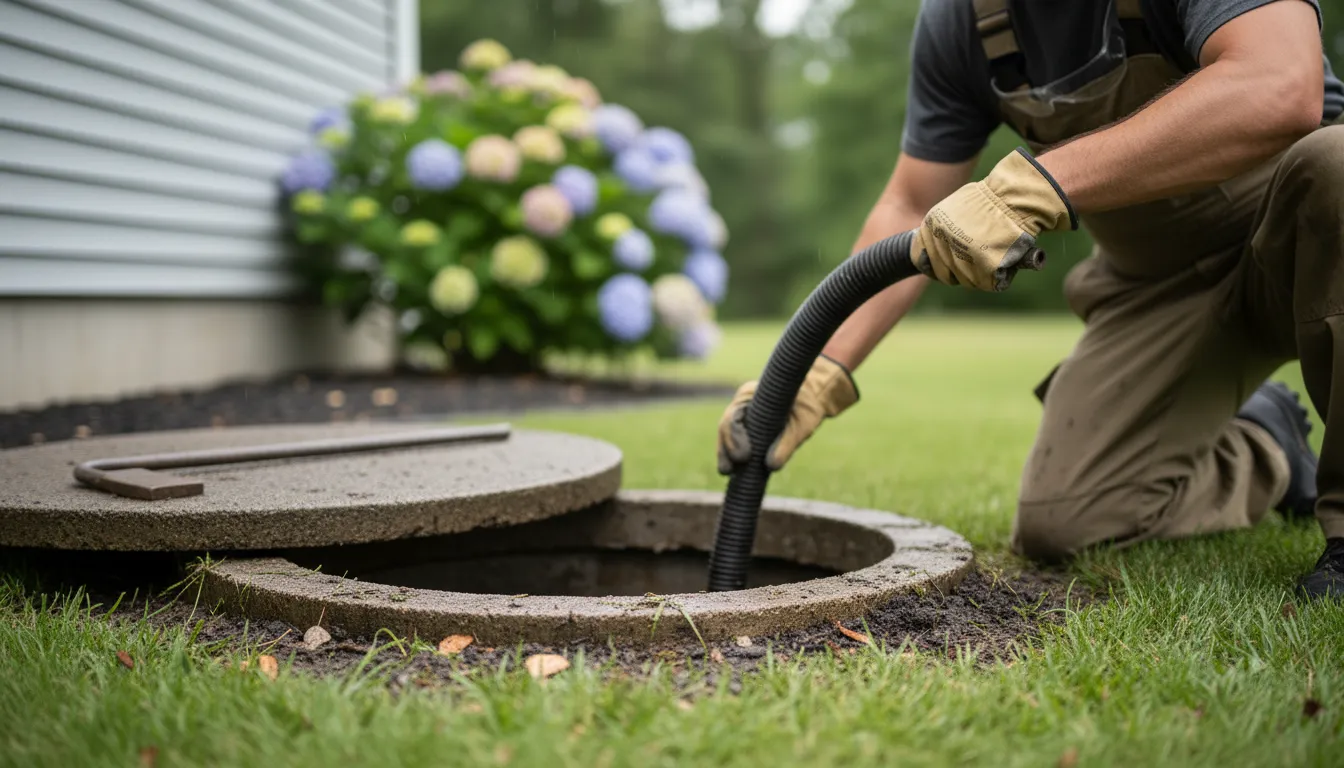
Find the Best Septic Tank Pumping Contractors for Your Business
No obligation • Fast responses • Nationwide coverage

Why you can trust Septic Spot
Septic Spot is a leading United States resource for understanding and comparing septic services. Our editors review providers using consistent criteria and verify key business details. Listings and scores are independent, and companies cannot pay to influence our content.
Search providers near you
Top Septic Tank Pumping Contractors in Riverton, Utah Ranked
Maintaining your septic system is a crucial responsibility for any Riverton homeowner not connected to a municipal sewer line. Regular septic tank pumping and inspection are the most important things you can do to prevent messy, expensive system failures and protect your property value and local environment. This guide explains the local requirements, best practices, and what to expect when scheduling this essential service, helping you connect with qualified professionals in the Riverton area.

A-1 Septic
851 N 900 W, Orem, UT 84057
A-1 Septic is a septic tank pumping, inspection, and repair company serving Provo, UT, and the surrounding Utah County area. With over 60 years of experience, they offer a wide range of septic services including tank pumping, locating, inspections, maintenance, riser installations, and troubleshooting. Their capabilities also extend to wastewater system services such as holding tank pumping, lift station maintenance, and compliant wastewater disposal. The company operates six days a week and provides emergency services on Sundays.
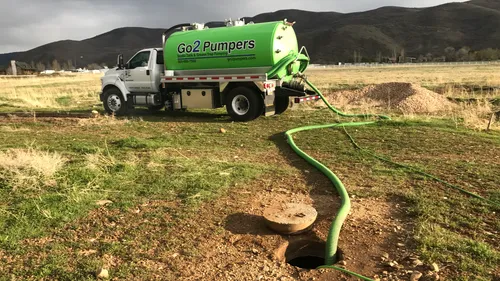
Go2 Pumpers
West Jordan, UT
Go2 Pumpers is a septic tank pumping company based in West Jordan, UT. They provide septic tank cleaning services throughout Northern Utah, specializing in pumping non-hazardous liquids. The company focuses on professional septic maintenance to support residential and commercial needs in the region.
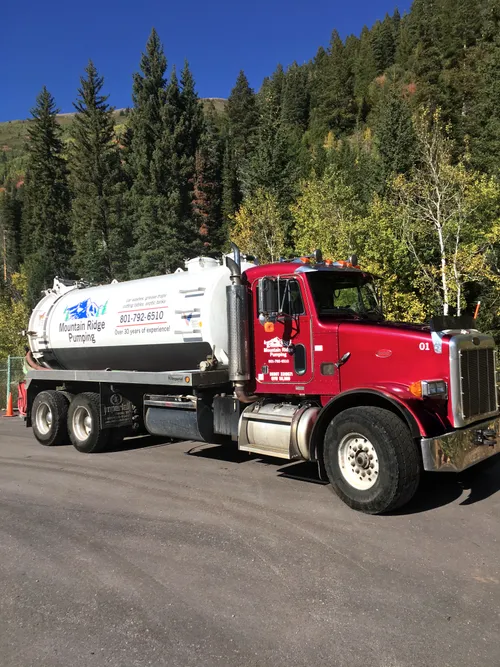
Mountain Ridge Pumping
Salt Lake City, UT
Mountain Ridge Pumping is a licensed and insured company based in Salt Lake City, UT, specializing in septic tank pumping and inspection services for both commercial and residential clients. With over 30 years of experience, they handle non-hazardous liquid waste removal from various sources including septic tanks, car wash pits, storm drains, and lift stations. The company emphasizes proper waste disposal and environmental responsibility by working with reputable waste treatment facilities.
BMS Pumping
13439 S Shaggy Mountain Rd, Herriman, UT 84096
BMS Pumping is a septic tank pumping company serving West Jordan, UT. With over 15 years of experience, they provide septic tank pumping services with a focus on personalized care and project completion on schedule. The company emphasizes a rigorous hiring process to ensure skilled professionals handle each job.
Pumpers Plus
Park City, UT 84060
Pumpers Plus is a locally owned septic tank pumping company serving Salt Lake City, UT, and surrounding areas including Heber, Park City, and the Salt Lake Valley. They specialize in pumping septic tanks, grease traps, holding tanks, RV tanks, car wash tanks, shop sumps, and other liquid non-hazardous waste. The company holds full licensing and permits for all Utah counties and uses state-of-the-art equipment to provide their services.
Understanding Your Septic System in Riverton
A septic system is an on-site wastewater treatment system, typically consisting of a tank and a drain field. All waste from your home flows into the underground tank, where solids settle to the bottom and begin to decompose. The clarified liquid then flows out into the drain field, where it is filtered through the soil. Over time, the solid sludge layer builds up. If it isn't removed through regular pumping, solids can flow into and clog the drain field, leading to system backup and failure 1.
In Riverton, these systems are regulated by the Salt Lake County Health Department, which sets standards for installation, inspection, and maintenance to protect public health and groundwater. Proper care of your onsite wastewater system is not just a recommendation-it's a requirement for keeping your home functioning smoothly and avoiding regulatory issues.
How Often Should You Pump Your Septic Tank?
The most common question homeowners have is about frequency. While a general rule is to pump every 3-5 years, the exact schedule for your Riverton home depends on several key factors.
- Household Size: This is the primary driver. A small household of 1-2 people can often extend pumping to every 4-5 years. Conversely, a large household of 4 or more people, or one with high water usage, will likely need service every 1-2 years.
- Tank Size: The capacity of your tank (e.g., 1,000 gallons vs. 1,500 gallons) determines how much waste it can hold before needing evacuation.
- Overall Water Usage: Excessive water from long showers, frequent laundry loads, or leaky fixtures fills the tank faster, reducing treatment time and requiring more frequent maintenance.
- System Type: Standard gravity systems follow the guidelines above. However, if you have an alternative system with pumps, an aerobic treatment unit (ATU), or a mound system, it will require more frequent attention, often including annual inspections and pumping every 1-3 years.
The Salt Lake County Health Department advises that septic tanks should be inspected every 1-3 years and pumped when the solids accumulate to about two-thirds of the tank's volume, which typically aligns with that 3-5 year window 2 3. A certified professional can assess the sludge and scum layers during an inspection to give you a personalized recommendation.
Local Regulations and Required Inspections
Utah and Salt Lake County have specific rules governing septic systems. Understanding these can help you avoid violations and ensure your system is legally compliant.
- Professional Licensing: All septic tank pumping and major maintenance must be performed by a licensed professional 4. Hiring a licensed provider ensures the work meets state and county standards and is documented properly.
- Mandatory Inspection at Pumping: The system should be inspected by a certified professional at every pumping event. This is the perfect time to check the tank's integrity, inlet/outlet baffles, and look for early signs of drain field issues.
- Documentation for Existing Systems: If your property lacks a "final inspection" report or system drawing from its original installation, Salt Lake County requires that the tank be pumped and an "Existing Onsite Wastewater Application" be filed to establish a record 5.
- System Protections: Regulations prohibit connecting any new source of wastewater if the flow would exceed the system's original design capacity. Furthermore, no groundwater or surface water (like roof drain runoff) is allowed to enter the septic system, as this can overwhelm it 6 7.
Find the perfect septic tank pumping contractors for your needs
Get personalized recommendations and expert advice
Recognizing Warning Signs That You Need Service
Don't wait for a complete failure. Be proactive and watch for these red flags that indicate your tank may be full or your system is in distress:
- Slow Drains: Sinks, showers, and toilets that drain slowly, especially throughout the house, can signal a full tank or a blockage.
- Sewage Odors: Unpleasant smells inside your home or in the yard near the tank or drain field are a clear sign of trouble.
- Wet, Spongy, or Lush Spots: An overly green or soggy area in your yard, particularly over the drain field, often means untreated wastewater is surfacing because the drain field is clogged 8.
- Gurgling Sounds: Strange noises from your plumbing can indicate a blockage in the system.
- Sewage Backup: The most severe sign is wastewater backing up into household drains.
If you notice any of these signs, contact a licensed septic service provider in Riverton for an inspection immediately to prevent more extensive damage.
What to Expect: The Pumping Process and Costs
When you schedule a septic tank pumping, a licensed company will arrive with a vacuum truck. They will locate and uncover the tank's access lids, visually inspect the tank's contents and components, and then use a large hose to vacuum all the solids and liquids from the tank. The waste is then transported to an approved treatment facility.
In Riverton, the average cost for this service typically ranges from $300 to $700, with the final price depending on your tank's size and how easy it is to access 9 10. For example, pumping a standard 1,000-gallon tank might cost between $250 and $400, while a 1,500-gallon tank may range from $300 to $500 9 10. Additional fees may apply if the tank lids are buried deep and require extra digging to access.
Best Practices for Septic System Care
Pumping is essential, but day-to-day habits greatly impact your system's health and longevity. Follow these tips to keep your Riverton septic system running smoothly between service visits:
- Conserve Water: Fix leaky faucets and toilets promptly. Spread out water-intensive activities like laundry over the week instead of doing many loads in one day 11.
- Mind What You Flush: Only human waste and toilet paper should go down the toilet. Avoid flushing wipes (even "flushable" ones), feminine hygiene products, dental floss, diapers, or cooking grease.
- Use Garbage Disposals Sparingly: If you have a disposal, use it minimally. Food scraps significantly increase the solid waste load in your tank, necessitating more frequent pumping 12.
- Protect Your Drain Field: Never drive or park cars, trucks, or heavy equipment over any part of your septic system, as this can compact the soil and crush pipes. Plant only grass over the drain field; tree and shrub roots can seek out moisture and infiltrate and damage pipes 13.
- Keep Records: Maintain a file of all inspection reports, pumping receipts, and system diagrams. This is invaluable for troubleshooting, future maintenance, and if you sell your home.
Frequently asked questions
Sources
Footnotes
-
Frequent Questions on Septic Systems | US EPA - https://www.epa.gov/septic/frequent-questions-septic-systems ↩
-
Septic & Onsite Wastewater Systems - Waste - Salt Lake County - https://www.saltlakecounty.gov/health/waste/septic/ ↩
-
Septic & Onsite Wastewater Systems - Waste - https://www.saltlakecounty.gov/health/waste/septic/ ↩
-
Wastewater Certification Permit Guide - https://deq.utah.gov/permits/permit-guide/wastewater-certification-permit-guide ↩
-
WATERSHED REGULATION - Salt Lake County - https://www.saltlakecounty.gov/globalassets/1-site-files/health/regulations/watershed.pdf ↩
-
Utah Admin. Code R317-4-3 - General Standards, Prohibitions, ... - LII - https://www.law.cornell.edu/regulations/utah/Utah-Admin-Code-R317-4-3 ↩
-
TriCounty Health Department TCHD-WW-0317 Wastewater Regulation - https://www.utah.gov/pmn/files/938461.pdf ↩
-
How Often to Pump Your Septic Tank? 2025 Guide & Tips - https://www.splashplumbing.com/how-often-to-pump-septic-tank-for-a-family-of-4-essential-maintenance-guidelines/ ↩
-
How Often to Pump Septic Tank: 2026 Maintenance Guide - https://dandhsepticservices.com/how-often-to-pump-septic-tank/ ↩ ↩2
-
Optimizing Septic Tank Pumping Frequency for Households - https://www.unitedsewerservice.com/frequency-of-septic-tank-pumping-for-different-household-sizes/ ↩ ↩2
-
SEPTIC SYSTEM USE & MAINTENANCE Minimize Water Usage ... - https://alexanderhealth.org/health/wp-content/docs/enviroHealth/SepticSystemUseMaintenance.pdf ↩
-
Homeowner's - https://geodata.geology.utah.gov/pages/download_progress.php?ref=83289&size=&ext=pdf&k= ↩
-
SEPTIC SYSTEM USE & MAINTENANCE Minimize Water Usage Pump Septic Tank Regularly - https://alexanderhealth.org/health/wp-content/docs/enviroHealth/SepticSystemUseMaintenance.pdf ↩