Find the Best Drain Field Repair Companies for Your Business
No obligation • Fast responses • Nationwide coverage

Why you can trust Septic Spot
Septic Spot is a leading United States resource for understanding and comparing septic services. Our editors review providers using consistent criteria and verify key business details. Listings and scores are independent, and companies cannot pay to influence our content.
Search providers near you
Best Drain Field Repair Companies in Arkansas Ranked
A failing drain field is a serious issue for any Arkansas homeowner with a septic system. This critical component, also known as a leach field or absorption field, is responsible for safely filtering and dispersing treated wastewater into the soil. When it fails, it can lead to soggy yards, foul odors, and sewage backups into your home. Understanding the state's specific regulations, costs, and processes for drain field work is essential. This guide provides clear, actionable information to help you navigate repair or replacement, connect with licensed local professionals, and ensure your system is restored to proper, legal function.
Understanding Your Drain Field in Arkansas
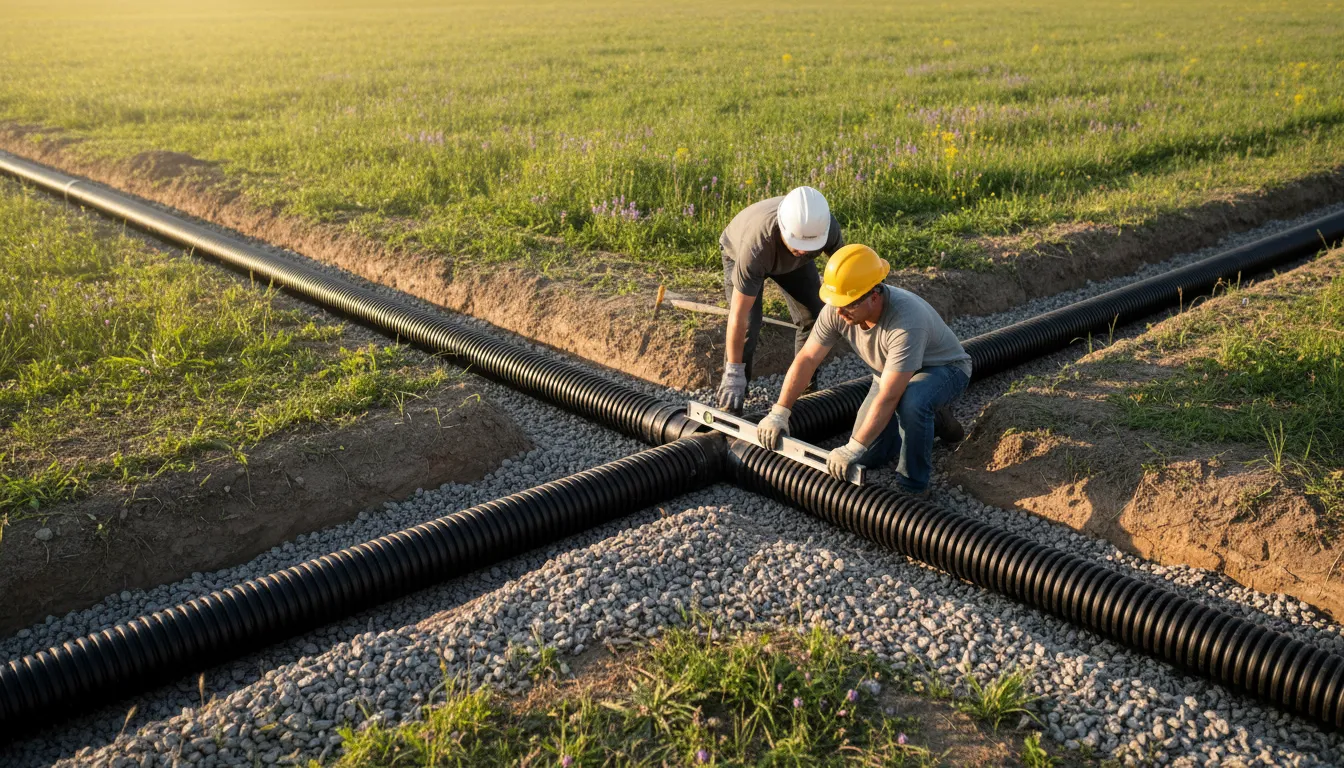
The drain field is the final stage of your onsite wastewater treatment system. After solids settle in the septic tank, the liquid effluent flows into a network of perforated pipes buried in trenches filled with gravel. This effluent slowly seeps into the soil, where natural processes provide final treatment. In Arkansas, the performance of your drain field is heavily dependent on local soil conditions, which can vary greatly from the rocky Ozarks to the Delta's clay-heavy soils.
Common signs of drain field failure include:
- Persistently soggy or spongy ground over the field area, even in dry weather.
- Sewage odors near the tank or drain field.
- Slow-draining toilets and fixtures throughout the home.
- Unusually lush, green grass growing over the field.
- Sewage backing up into household drains.
If you notice any of these signs, it's crucial to act promptly. Ignoring a failing drain field will not solve the problem and can lead to environmental contamination, health hazards, and more expensive repairs down the line.
Arkansas Regulations and Permit Requirements
All work on septic systems in Arkansas is regulated by the Arkansas Department of Health (ADH). State law is clear: a permit is mandatory for any construction, alteration, or repair of a septic system installed after July 1, 1977 1. This absolutely includes drain field repair or replacement.
Key Regulatory Points:
- Permit is Mandatory: You cannot legally begin any drain field work without first obtaining the proper permit from your local ADH Environmental Specialist.
- Emergency Repairs: If a situation constitutes a genuine emergency (like a complete system backup), repairs can be initiated to abate the immediate hazard. However, you must apply for and secure the permit within 10 working days of starting the emergency work.
- Licensed Professionals Only: Arkansas law requires that the actual repair or installation work be performed by an Arkansas Licensed Septic System Installer 2. Hiring an unlicensed individual can result in improper work, voided permits, and potential legal liability.
- Permit Fee: The ADH charges a $30 fee for reviewing a permit application for the alteration, repair, or extension of an individual sewage disposal system.
The Step-by-Step Process for Repair or Replacement
Navigating a drain field project involves several key steps. Following this process ensures compliance and a successful outcome.
- Problem Identification & Assessment: The first step is to have a licensed professional diagnose the issue. This often involves a septic tank inspection and a probe of the drain field area to determine if the problem is a clog, compaction, soil saturation, or a more fundamental design failure.
- Consult Local ADH & Hire a Licensed Installer: Contact your local ADH health unit to understand local requirements and begin the permit process. Simultaneously, you should solicit quotes and hire a licensed septic system installer. They will be familiar with the permit application and can often handle much of the paperwork.
- Submit Permit Application: Your installer will typically prepare the system design or repair plan required for the permit application, which is submitted to the local ADH office along with the $30 fee.
- Approval & Scheduling: Once the ADH approves the permit, your installer can schedule the work. The ADH or its authorized agent has the right to inspect the installation at any stage of construction.
- Notification for Inspection: It is the duty of the installer or permit holder to notify the ADH authorized agent when the system is ready for final inspection. Do not backfill trenches or consider the job complete until after this inspection has been passed.
- Final Inspection & System Start-Up: An ADH representative or a designated professional (like a licensed engineer) will conduct the final inspection 3. Upon approval, the system can be put into service.
Find the perfect drain field repair companies for your needs
Get personalized recommendations and expert advice
Cost Considerations for Drain Field Work in Arkansas
The cost to repair or replace a drain field in Arkansas is highly variable. It depends on the extent of the damage, soil conditions, the size of the system needed for your household, local labor rates, and whether a simple repair or a full replacement is required.
Based on available data for system work in the region:
- Basic septic system installations (which include the drain field) for a single-tank system can range from approximately $2,000 to $3,500.
- Larger or more complex two-tank systems may range from $3,000 to $5,000 or more.
- Remember to factor in the $30 permit fee for repairs/alterations 4 5.
- Licensed professionals also pay fees for their certification, which is part of doing business ($100 for licensing/certification) 6.
These are estimates. A full drain field replacement is often at the higher end of these ranges or can exceed them, especially if soil conditions require advanced treatment systems or significant site work. The only way to get an accurate cost is to obtain detailed quotes from multiple licensed installers for your specific situation.
Maintaining Your System and Preventing Future Failure
Proper maintenance is the best way to avoid the high cost and hassle of drain field failure.
- Know Your System's Location: Homeowners must know the location of their septic tank and drain field to avoid damaging it with vehicles, construction, or deep-rooted landscaping.
- Practice Water Conservation: Overloading the system with too much water is a leading cause of failure. Spread out laundry loads, fix leaky fixtures, and consider water-efficient appliances.
- Mind What You Flush: Only human waste and toilet paper should go down the drain. Avoid chemicals, grease, diapers, wipes (even "flushable" ones), and medications.
- Pump the Tank Regularly: Regular septic tank pumping (typically every 3-5 years) prevents solids from escaping into and clogging the drain field.
- Keep Records: Maintain records of inspections, pumping, repairs, and your system's as-built design diagram.
Any significant changes to your household water usage or the system itself may require a review of your system's design and potentially a new maintenance contract 7 8. Always hire licensed technicians for any service to ensure it's done correctly and doesn't void any existing agreements or warranties 7 9.
Frequently asked questions
Sources
Footnotes
-
ACT 402 of 1977 - Arkansas Department of Health - https://healthy.arkansas.gov/wp-content/uploads/ACT_402_Language_Update_20140603.pdf ↩
-
Onsite Wastewater FAQs - Arkansas Department of Health - https://healthy.arkansas.gov/programs-services/public-health-safety/onsite-wastewater/onsite-wastewater-faqs/ ↩
-
Arkansas Administrative Code, Division 04, Rule 007.04.22-003 - https://regulations.justia.com/states/arkansas/agency-007/division-04/rule-007-04-22-003/ ↩
-
Rules and Regulations - Arkansas Secretary of State - https://www.sos.arkansas.gov/uploads/rulesRegs/Arkansas%20Register/2008/dec_2008/007.04.08--001.pdf ↩
-
How Much Does a Septic System & Septic Tank Cost - NexGen Septics - https://www.nexgenseptics.com/septic-system-cost/ ↩
-
Arkansas Septic License & Certification | 2024 Contractor Guide - https://www.servicetitan.com/licensing/septic/arkansas ↩
-
Onsite Wastewater Treatment System Ordinance Frequently Asked ... - http://bentoncountyar.gov/Media/Publication/Committees/Meeting/Meeting_20151109_0600%20PM_Legislative_6_Misc.pdf ↩ ↩2
-
Property Owner Septic System Permit Information Sheet - https://www.adeq.state.ar.us/downloads/webdatabases/permitsonline/npdes/permitinformation/arg550320c_health%20department%20documents_20091202.pdf ↩
-
Septic Systems - https://www.bellavistaar.gov/septic_systems/index.php ↩