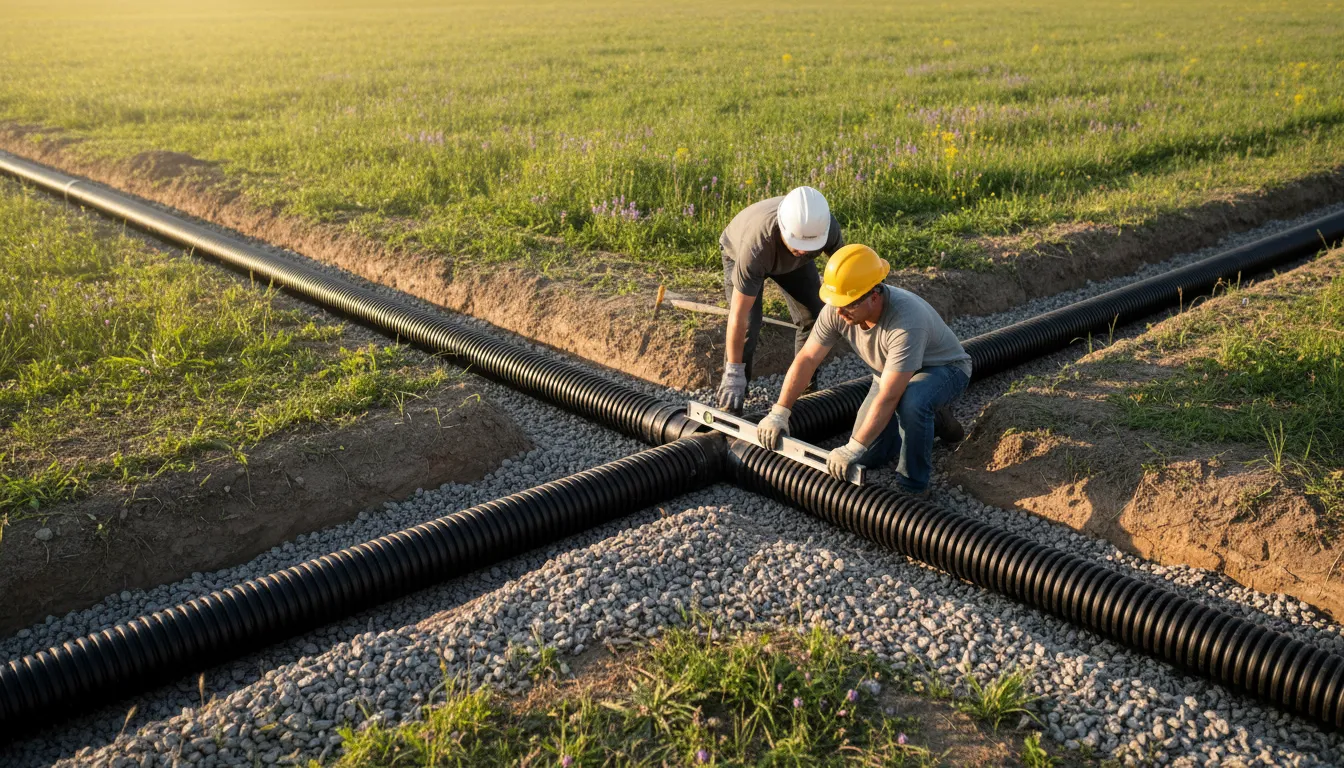
Find the Best Drain Field Repair Companies for Your Business
No obligation • Fast responses • Nationwide coverage

Why you can trust Septic Spot
Septic Spot is a leading United States resource for understanding and comparing septic services. Our editors review providers using consistent criteria and verify key business details. Listings and scores are independent, and companies cannot pay to influence our content.
Search providers near you
Top Drain Field Repair Companies in East Hartford, Connecticut Ranked
A failing drain field is a serious issue for any home with a septic system, leading to soggy yards, foul odors, and potential environmental contamination. Drain field repair and replacement involves diagnosing and fixing the underground network of pipes and soil that treats and disperses wastewater from your home. This guide explains the critical process, local regulations, and costs specific to East Hartford, helping you understand your options and connect with qualified local professionals for assessment and service.
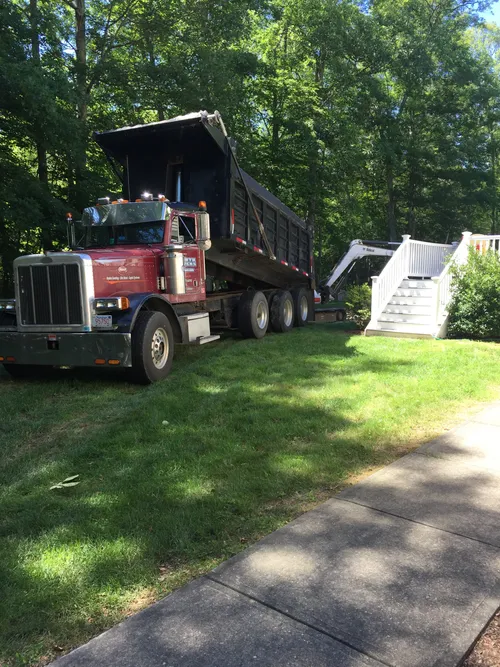
Earth Movers Excavation, Inc.
Springfield, MA
Earth Movers Excavation, Inc. is a family-owned business based in Springfield, MA, serving residential and small commercial clients. Since 2005, they have specialized in septic services including pumping, inspections, installations, and drain field repairs. Their expertise also extends to excavation, grading, retaining walls, and hydroseeding to support site restoration and erosion control. Earth Movers serves several nearby communities including Wilbraham, Hampden, and Ludlow, providing comprehensive septic system solutions and related site work.
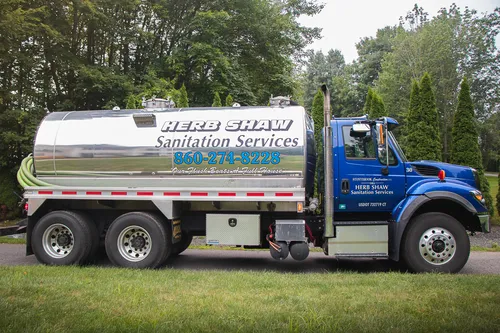
Herb Shaw Sanitation Services
1500 Echo Lake Rd, Watertown, CT 06795
Herb Shaw Sanitation Services is a septic system company based in Waterbury, CT, serving Southern Litchfield County and Northern New Haven County. With over 55 years of experience, they offer septic tank cleaning, repair, installation, pump repair, riser installation, and wastewater system services. Their team is knowledgeable and compliant with state and local waste and health codes. They provide emergency services available any day or time to address unexpected septic system failures.
Understanding Your Drain Field and Leach Field
Your septic system's drain field, also known as a leach field or absorption field, is its most critical and expensive component. While the septic tank separates solids, the drain field is responsible for the final treatment and dispersal of liquid effluent into the soil. In East Hartford, soil conditions and high groundwater can challenge these systems over time. When a drain field fails, it's not just an inconvenience-it's a public health concern that requires immediate and regulated attention.
Common Signs of Drain Field Failure
How do you know if you need leach field repair? Look for these warning signs:
- Soggy Ground or Surfacing Effluent: Puddles or persistently wet, spongy soil over the drain field area, especially when it hasn't rained.
- Sewage Odors: Unpleasant smells emanating from your yard or even inside your home.
- Slow Drains and Backups: Gurgling pipes, slow-draining sinks and toilets, or sewage backups.
- Unusually Green Grass: Patches of grass over the drain field that are much lusher and greener than the rest of the lawn.
- Failed Dye Test or Inspection: A professional inspection confirms the system is not properly treating or dispersing wastewater.
East Hartford's Regulatory Landscape
All septic system work in East Hartford falls under the jurisdiction of the North Central District Health Department (NCDHD). You cannot begin any repair or replacement without the proper permits and adherence to state code.
Key Regulations and Permits
The governing regulation is the Connecticut Public Health Code 19-13-B103, which outlines strict standards for subsurface sewage disposal. The state is planning updates to this code, with changes now delayed until July 1, 2026 1. For now, all work must comply with the current code and the 2024 Technical Standards. The permitting process through NCDHD is mandatory and ensures the work protects groundwater and public health.
The Role of Professional Engineering
For most drain field replacements and significant repairs, a licensed Professional Engineer (PE) is required. The engineer conducts the necessary site evaluations and creates the system design plans that must be submitted for permit approval. This is not a DIY project; the complexity of local soil and water table conditions demands professional expertise 2.
The Step-by-Step Process for Repair or Replacement
Addressing a failed leaching system is a multi-stage process involving assessment, design, permitting, and construction.
1. Site Evaluation and Soil Testing
This is the foundational step. A backhoe is used to excavate deep test pits (typically to 10 feet) so the engineer and health department official can evaluate soil layers, texture, and structure. A percolation (perc) test measures the soil's ability to absorb water. Crucially, they must verify at least 18 inches of unsaturated soil between the proposed system bottom and the seasonal high groundwater table. Poor soil percolation or a high water table may necessitate advanced, more expensive solutions 3.
2. System Design and Planning
Based on the site evaluation, the engineer designs a system that meets your home's needs and complies with all regulations. The design must account for:
- Setbacks: Required distances from wells, property lines, buildings, and water bodies.
- Soil Hydraulic Capacity: Designing a system size that matches the soil's ability to treat effluent.
- Alternative Technologies: If a conventional trench system isn't feasible, the design may include mound systems, sand filters, or other advanced treatment components.
3. Securing Permits and Approvals
Your engineer or septic contractor will submit the design plans, application, and fees to the NCDHD for review and permit issuance. The health district will also schedule to witness the soil testing. Never proceed with excavation before the permit is in hand 4.
4. Installation, Inspection, and Final Approval
Once permitted, licensed excavators and septic installers perform the work. A critical step is the final inspection by the NCDHD. They must inspect all components-tanks, pipes, distribution boxes, and the drain field bed-before they are covered with soil. Passing this inspection is required for final approval of the work.
Find the perfect drain field repair companies for your needs
Get personalized recommendations and expert advice
Cost Factors for Drain Field Work in East Hartford
Drain field repair or replacement is a significant investment. Costs are highly variable and depend on your specific site conditions and the chosen system type.
What Influences the Price?
- System Size and Complexity: Larger homes require larger drain fields. Complex sites needing engineered solutions (like mound systems or pumps) cost more.
- Soil Conditions: Poor soil (high clay, slow perc) or a high water table dramatically increases costs due to the need for more extensive systems or imported sand.
- Engineering and Design Fees: Professional engineering services typically range from $500 to $3,000+ and are a necessary part of the process 5 6.
- Permit Fees: Fees paid to the NCDHD vary based on the project scope.
- Excavation and Materials: Costs for heavy equipment, labor, gravel, sand, piping, and other materials.
Estimated Cost Ranges
While every project is unique, homeowners in the region should be prepared for the following ranges:
- Drain Field Replacement: A full leach field replacement in Connecticut typically costs between $10,000 and $25,000 or more 7 8.
- Partial Repairs: Less extensive repairs (like replacing a clogged section of pipe) may cost less, but often a partial failure indicates broader issues.
- Advanced Systems: For challenging sites requiring mound systems or other alternative technologies, costs can easily exceed $25,000 9.
Maintaining Your New or Repaired System
Protecting your investment is crucial. Proper maintenance can extend the life of your drain field for decades.
- Pump Regularly: Have your septic tank pumped every 3-5 years to prevent solids from washing out into the drain field.
- Conserve Water: Spread out laundry loads and fix leaks to avoid hydraulically overloading the system.
- Mind What You Flush: Only human waste and toilet paper. Never flush chemicals, grease, wipes, or feminine hygiene products.
- Protect the Area: Never drive or park heavy vehicles over the drain field, and avoid planting trees with deep roots nearby.
Frequently asked questions
Sources
Footnotes
-
Environmental Engineering - Subsurface Sewage - CT.gov - https://portal.ct.gov/dph/environmental-health/environmental-engineering/environmental-engineering----subsurface-sewage ↩
-
Septic System Design: What CT Homeowners Need to Know - https://andersonseptic.com/septic-system-design-guide/ ↩
-
Operation and Maintenance - CT.gov - https://portal.ct.gov/dph/environmental-health/environmental-engineering/operation-and-maintenance ↩
-
Septic Systems Reports, Regulations, Guidance, and Manuals - https://www.epa.gov/septic/septic-systems-reports-regulations-guidance-and-manuals ↩
-
Septic Developers - North Central Distict Health Department - https://www.ncdhd.org/septic-developers ↩
-
Connecticut Septic Tank Requirements - https://www.ntotank.com/blog/connecticut-septic-tank-requirements ↩
-
Septic System Replacement New Milford CT | Signs, Costs & Solutions - https://newmilfordseptic.com/when-is-it-time-to-replace-your-septic-system-in-new-milford-ct/ ↩
-
How Much Does A Septic System Cost? - https://uniquedrainseptic.com/blogs/resources/how-much-does-a-septic-system-cost ↩
-
Septic Drain Field Replacement Cost - https://dillonseptic.com/septic-drain-field-replacement-cost/ ↩