Find the Best Drain Field Repair Companies for Your Business
No obligation • Fast responses • Nationwide coverage

Why you can trust Septic Spot
Septic Spot is a leading United States resource for understanding and comparing septic services. Our editors review providers using consistent criteria and verify key business details. Listings and scores are independent, and companies cannot pay to influence our content.
Search providers near you
Top Drain Field Repair Companies in Greenwich, Connecticut Ranked
A failing drain field, also known as a leach field or absorption area, is a serious issue for any Greenwich homeowner with a septic system. This critical component is responsible for safely filtering and dispersing treated wastewater into the soil. When it malfunctions, it can lead to sewage backups, environmental hazards, and significant property damage. Navigating the repair or replacement process involves strict local health codes, professional engineering, and careful planning. This guide will help you understand the signs of failure, the regulatory steps required in Greenwich, and how to connect with qualified local professionals to restore your system's function.

Understanding Your Drain Field's Role
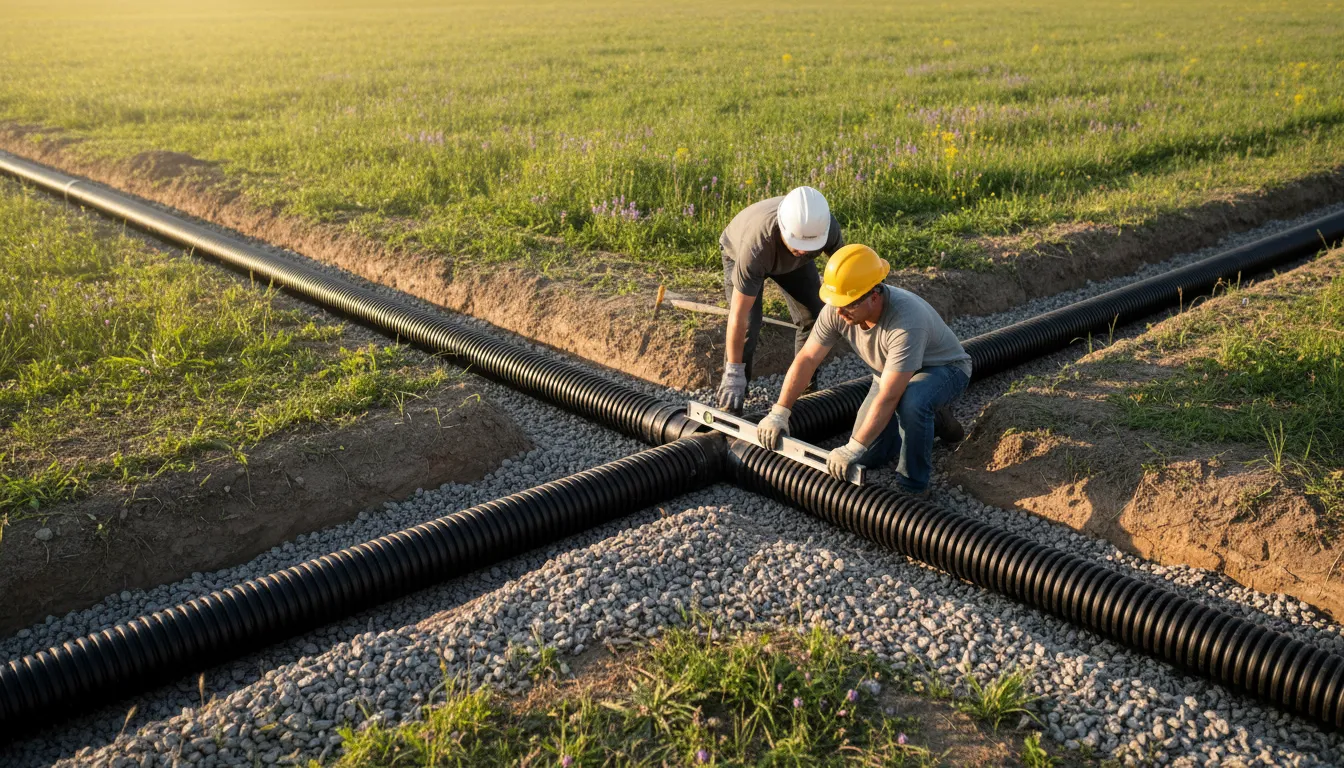
The drain field is the final stage of your onsite wastewater treatment system. After solids settle in the septic tank, the liquid effluent flows into a network of perforated pipes buried in trenches filled with gravel. This effluent slowly percolates into the soil, where natural processes provide final treatment by removing harmful bacteria, viruses, and nutrients. A properly functioning drain field is essential for protecting both your home's plumbing and Greenwich's groundwater quality.
Signs You Need Drain Field Repair or Replacement
Recognizing early warning signs can prevent a complete system failure and more costly repairs. If you notice any of the following, it's time to investigate your leach field 1:
- Sewage Backups: The most alarming sign, often starting with slow drains and gurgling toilets before progressing to backups in household drains.
- Soggy Lawn or Surfacing Effluent: Wet, mushy, or unusually green patches over the drain field area, especially when it hasn't rained. In severe cases, untreated sewage may pool on the surface.
- Foul Odors: Persistent sewage smells near the drain field or septic tank area, which may indicate the soil is saturated and cannot absorb more effluent.
- Slow Drains: Consistently slow-draining sinks, showers, and tubs that aren't resolved by plunging.
The Greenwich Regulatory Process: Permits and Planning
Greenwich, like all of Connecticut, enforces strict regulations under the Connecticut Public Health Code §19-13-B103 to protect public health and the environment. Any significant repair or full replacement of a septic system's absorption area requires formal approval from the Greenwich Health Department.
The "Permit to Construct"
You cannot begin any excavation or installation work without first obtaining a "Permit to Construct" from the local health department 2. This permit is only issued after a comprehensive site and system plan is submitted and approved.
The Critical "100% Replacement Area" Requirement
A key regulation in Greenwich is the mandate for a designated 100% replacement area. This means that when you apply for a repair or replacement, you must also identify and reserve a separate, suitable area on your property for a future entire system. This ensures that if the newly installed drain field fails, there is a pre-approved location for another system without needing to purchase additional land. This requirement is also triggered when adding one or more bedrooms to a home or installing a pool, as these increase the system's design flow 3.
The Step-by-Step Process for Leach Field Work
Replacing or repairing a septic absorption area is a multi-stage project that involves several professionals.
1. Site Investigation and Soil Testing
This is the foundational step. A licensed soil scientist or professional engineer must conduct a thorough site evaluation. This includes:
- Deep Test Holes: Excavating holes to a minimum depth of seven feet to examine soil layers, texture, and structure, and to determine the seasonal high-water table.
- Percolation Tests: Measuring the rate at which water drains through the soil in the proposed area. This "perc rate" is crucial for sizing the drain field correctly 4.
2. System Design and Engineering Plans
Using the soil data, an engineer designs a new system that complies with all state and local codes. The design must account for:
- System Sizing: In Connecticut, design flow is based on the number of bedrooms in a home, not bathrooms. Each bedroom is assumed to contribute a specific daily flow of wastewater.
- Setback Requirements: The new drain field must maintain legal separation distances from wells, property lines, wetlands, streams, and building foundations.
The completed engineered plan details the layout, dimensions, and specifications for the new leach field.
3. Permit Application and Approval
The engineered plan, along with the 100% replacement area application and other required forms, is submitted to the Greenwich Health Department for review 5 6. Officials will ensure the design meets all health code requirements before issuing the "Permit to Construct."
4. Professional Installation and Inspection
Once permitted, a licensed septic installer can begin construction. The installation must follow the approved plan exactly. Before the trenches are backfilled, a health department inspector must visit the site to approve the workmanship and ensure it matches the permitted design 7 8. This final inspection is mandatory for the system to be legally operational.
Find the perfect drain field repair companies for your needs
Get personalized recommendations and expert advice
Cost Considerations for Drain Field Projects
The cost for a new leach field in Greenwich can vary widely based on your property's specific conditions. On average, homeowners can expect costs to range from $2,000 to over $10,000 for the drain field portion alone 9 10. Several factors influence the final price:
- System Size and Complexity: A larger home with more bedrooms requires a larger absorption area, increasing material and labor costs.
- Soil and Site Conditions: Difficult sites with poor drainage, high bedrock, or a high water table may require advanced (and more expensive) system designs like raised beds or sand filters.
- Engineering and Permitting: Fees for soil testing, engineered design plans, and town permit applications are additional required costs.
- Access and Landscaping: Easy equipment access can reduce costs, while difficult access or the need to remove trees, decks, or other structures will add to the project total.
Maintaining Your New Drain Field
Protecting your investment is crucial. Proper maintenance extends the life of your new leach field significantly.
- Practice Water Conservation: Spread out laundry loads, fix leaky fixtures, and install water-efficient appliances to avoid hydraulically overloading the system.
- Mind What You Flush: Only human waste and toilet paper should go down the drains. Avoid chemicals, grease, wipes, and feminine hygiene products.
- Protect the Area: Never drive or park vehicles over the drain field, and avoid planting trees or shrubs with deep roots nearby.
- Pump the Tank Regularly: Have your septic tank pumped every 3-5 years by a licensed professional to prevent solids from escaping into and clogging the new drain field.
Frequently asked questions
Sources
Footnotes
-
The Ultimate Guide to Replacing a Septic Drain Field - https://www.rciseptic.com/the-ultimate-guide-to-replacing-a-septic-drain-field ↩
-
CONNECTICUT PUBLIC HEALTH CODE On-site Sewage Disposal ... - https://portal.ct.gov/-/media/Departments-and-Agencies/DPH/dph/environmental_health/environmental_engineering/2023-uploads/TS-Master-2023-1242023A.pdf ↩
-
Additions When Property is on Septic | Greenwich, CT - https://www.greenwichct.gov/584/Additions-When-Property-is-on-Septic ↩
-
FAQ - https://www.albertfrick.com/frequently-asked-questions ↩
-
100% Septic System Replacement Area Application - Greenwich, CT - https://www.greenwichct.gov/DocumentCenter/View/3132/100-percent-Septic-System-Replacement-Area-Application-PDF ↩
-
Environmental Online Access | Greenwich, CT - https://www.greenwichct.gov/1810/Environmental-Online-Access ↩
-
Septic Developers - North Central Distict Health Department - https://www.ncdhd.org/septic-developers ↩
-
Building & Construction - Northeast District Department of Health - https://nddh.org/services/environment-building/building-construction/ ↩
-
Septic System Design: What CT Homeowners Need to Know - https://andersonseptic.com/septic-system-design-guide/ ↩
-
How Much Does A Septic System Cost? - https://uniquedrainseptic.com/blogs/resources/how-much-does-a-septic-system-cost ↩