Find the Best Drain Field Repair Companies for Your Business
No obligation • Fast responses • Nationwide coverage

Why you can trust Septic Spot
Septic Spot is a leading United States resource for understanding and comparing septic services. Our editors review providers using consistent criteria and verify key business details. Listings and scores are independent, and companies cannot pay to influence our content.
Search providers near you
Top Drain Field Repair Companies in Hartford, Connecticut Ranked
A failing drain field, also known as a leach field or absorption area, is a serious issue for any Hartford homeowner with a septic system. This critical component is responsible for safely dispersing treated wastewater into the soil, and when it malfunctions, it can lead to soggy yards, foul odors, and significant environmental health risks. Navigating the repair or replacement of a septic drain field involves strict state and local regulations, specialized site assessments, and significant investment. This guide explains the process, costs, and local requirements to help you understand your options and connect with qualified professionals in the Hartford area.
Earth Movers Excavation, Inc.
Springfield, MA
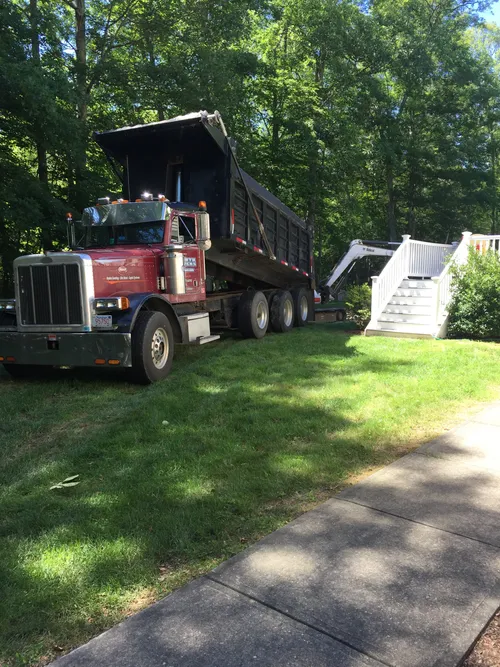
Earth Movers Excavation, Inc. is a family-owned business based in Springfield, MA, serving residential and small commercial clients. Since 2005, they have specialized in septic services including pumping, inspections, installations, and drain field repairs. Their expertise also extends to excavation, grading, retaining walls, and hydroseeding to support site restoration and erosion control. Earth Movers serves several nearby communities including Wilbraham, Hampden, and Ludlow, providing comprehensive septic system solutions and related site work.
Herb Shaw Sanitation Services
1500 Echo Lake Rd, Watertown, CT 06795
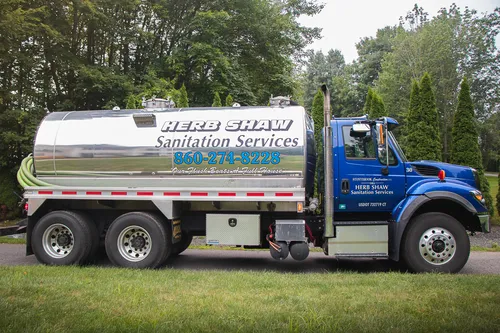
Herb Shaw Sanitation Services is a septic system company based in Waterbury, CT, serving Southern Litchfield County and Northern New Haven County. With over 55 years of experience, they offer septic tank cleaning, repair, installation, pump repair, riser installation, and wastewater system services. Their team is knowledgeable and compliant with state and local waste and health codes. They provide emergency services available any day or time to address unexpected septic system failures.
Understanding Drain Field Failure
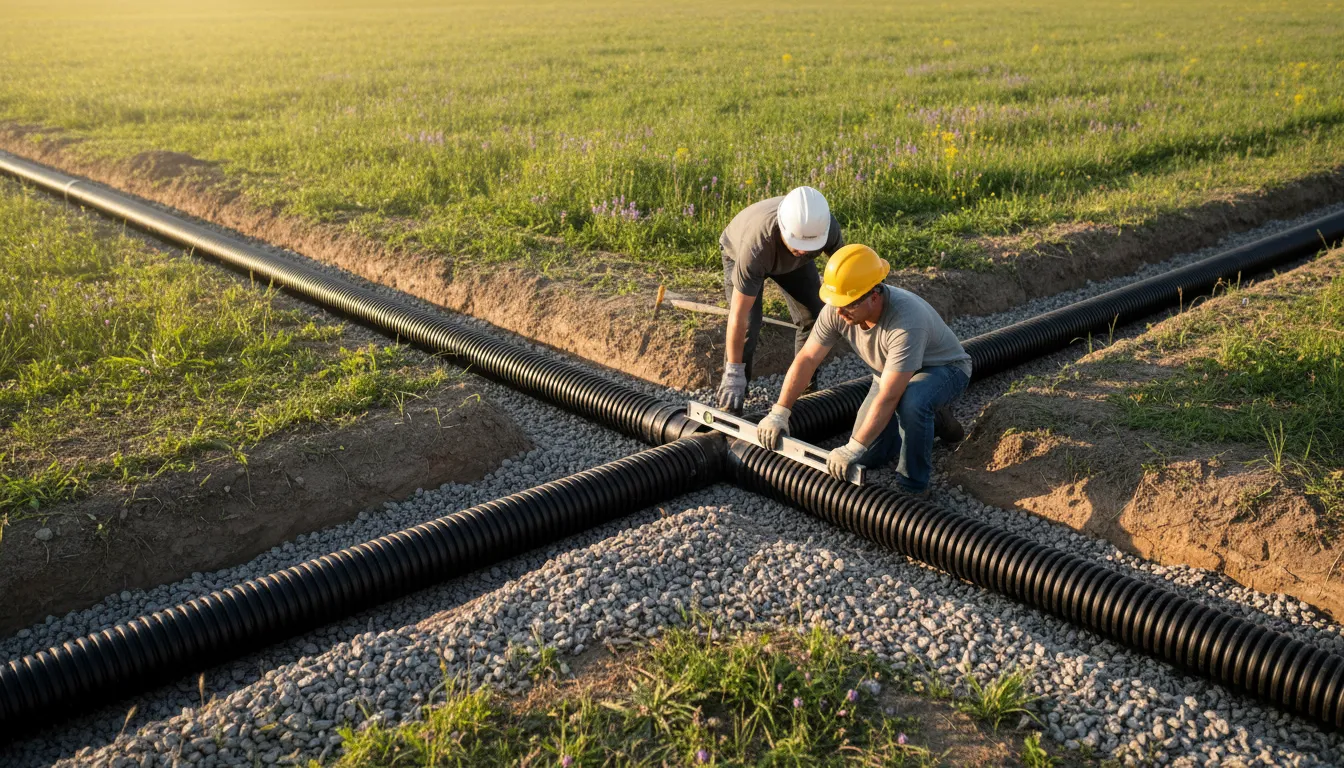
Your septic system's drain field is a network of perforated pipes buried in trenches filled with gravel. After solids settle in the septic tank, the liquid effluent flows into this field, where it percolates through the soil for final treatment. Failure occurs when the soil can no longer absorb the liquid. Common signs in Hartford include:
- Soggy Ground or Surfacing Sewage: Persistent wet, spongy areas or standing effluent over the drain field, especially after rain.
- Slow Drains & Backups: Gurgling plumbing fixtures, slow-draining sinks and toilets, or sewage backups in the home.
- Unpleasant Odors: Foul smells emanating from the yard near the drain field or tank area.
- Unusually Green Grass: Lush, fast-growing grass over the drain field while the rest of the lawn is dry.
When these signs appear, immediate action is required to prevent a public health nuisance and potential regulatory action.
Hartford's Regulatory Landscape: Permits and Approvals
All septic system work in Connecticut, including drain field repairs, is governed by the Connecticut Public Health Code (19-13-B103) and the 2024 Technical Standards. For Hartford residents, the North Central District Health Department (NCDHD) is the local authority that oversees, inspects, and authorizes all septic work.
A permit is mandatory before any repair or replacement work can begin. This is not a simple formality; the permit process ensures the new system is designed to protect public health and the environment. Key steps include:
- Initial Assessment & Plan Submission: A licensed septic system designer or installer must assess the failure and submit engineered plans for the proposed repair or new system to the NCDHD.
- Soil & Site Evaluation: A percolation test (to measure soil drainage rate) and deep observation hole test (to determine seasonal high groundwater depth) are required to prove the site has suitable soil conditions.
- Final Inspection: Once installation is complete, the health district must perform a final inspection before the system can be covered and put into use 1.
Failure to obtain proper permits can result in fines and an order to cease work. Furthermore, if a property change (like a home addition) causes a greater than 50% increase in the system's design flow, a completely new, compliant system may be required instead of a simple repair 2 3.
The Repair or Replacement Process
Addressing a failed absorption area is a multi-step process that requires professional expertise from start to finish.
1. Professional Diagnosis The first step is hiring a licensed septic professional to confirm the drain field is the source of the problem. They will inspect the septic tank, check for clogged inlet/outlet baffles, and verify that tank pumping isn't a temporary solution. A true drain field failure requires a more extensive fix.
2. Site Assessment and Design If the drain field has failed, a detailed site assessment is next. This involves the mandatory soil testing mentioned above. Factors like high groundwater tables, shallow bedrock, or limited suitable space on your Hartford property will directly influence the repair strategy and cost. Sites with poor conditions often require more complex, engineered alternative systems, such as sand filters or aerobic treatment units (ATUs) 4 5.
3. Exploring Repair vs. Replacement
- Limited Repair: In some cases, if the failure is localized, a technique called a "drain field expansion" might be possible. This involves adding new trenches to the existing field. However, this still requires a full permit and site evaluation to ensure the new area is suitable 6.
- Complete Replacement: More often, a full leach field replacement is necessary. This means abandoning the old, failed trenches (often by filling them with gravel) and constructing a entirely new absorption area in a virgin, code-complying location on your property 7.
Find the perfect drain field repair companies for your needs
Get personalized recommendations and expert advice
Cost Factors for Drain Field Work in Hartford
The cost for drain field repair or replacement in Hartford is highly variable, but homeowners should generally expect a range from $5,000 to over $20,000 8 9. Several key factors drive this cost:
- System Size & Complexity: A standard gravity-fed system for a typical home is on the lower end. Larger homes or those requiring pressurized dosing systems or advanced treatment units will see higher costs.
- Site Conditions: This is often the biggest cost variable. Properties with high water tables, poor percolation rates, or rocky soil require extensive engineering and specialized system components, which can significantly increase the price.
- Permitting & Design Fees: Fees for soil testing, permit applications, and professional design work are separate from installation costs.
- Excavation & Labor: The cost of heavy equipment operation and labor for digging new trenches and disposing of old material.
- System Type: A conventional stone-and-pipe trench system is generally less expensive than an engineered alternative system, which may include sand, plastic chambers, or other proprietary technologies.
Financial Assistance Options
Recognizing the high cost, the State of Connecticut offers potential financial assistance for repairing or replacing failing septic systems for eligible homeowners. These programs may provide low-interest loans or deferred loans. It's advisable to check with the Connecticut Department of Public Health or local health district for the most current program availability and eligibility requirements 10.
Choosing a Professional in Hartford
Given the technical and regulatory complexity, selecting the right contractor is critical. Look for a licensed septic system installer with extensive experience in the Hartford area and a proven track record of working successfully with the North Central District Health Department. They should be fully insured, provide detailed written estimates, and be willing to guide you through the entire permit process. A reputable professional will always insist on pulling the proper permits before starting work.
Maintaining Your New Drain Field
Once your new or repaired leach field is installed, proper maintenance is key to ensuring its longevity. This includes regular septic tank pumping (typically every 2-5 years), conserving water to avoid overloading the system, and avoiding planting trees near the field or driving/parking heavy vehicles over it. Protecting your investment starts with responsible daily use.
Frequently asked questions
Sources
Footnotes
-
Septic Developers - North Central Distict Health Department - https://www.ncdhd.org/septic-developers ↩
-
CONNECTICUT PUBLIC HEALTH CODE - CT.gov - https://portal.ct.gov/dph/-/media/departments-and-agencies/dph/dph/environmental_health/environmental_engineering/ts_historic/technical-standards-2009.pdf?rev=45f2e169305a43e4aca6b0c5fd6045d5&hash=606C34B41D3DD5B134AAC8FEC07FE856 ↩
-
Connecticut Public Health Code On-site Sewage Disposal ... - https://portal.ct.gov/-/media/Departments-and-Agencies/DPH/dph/environmental_health/environmental_engineering/TS-2024-Documents/2024-Technical-Standards-Final-01012024.pdf ↩
-
Septic System Design: What CT Homeowners Need to Know - https://andersonseptic.com/septic-system-design-guide/ ↩
-
Environmental Engineering - Subsurface Sewage - CT.gov - https://portal.ct.gov/dph/environmental-health/environmental-engineering/environmental-engineering----subsurface-sewage ↩
-
Septic System Repair - Connecticut eRegulations System - https://eregulations.ct.gov/eRegsPortal/Browse/RCSA/Title_8Subtitle_8-416_HTML/ ↩
-
The Ultimate Guide to Replacing a Septic Drain Field - https://www.rciseptic.com/the-ultimate-guide-to-replacing-a-septic-drain-field ↩
-
Septic Drain Field Replacement Cost - https://dillonseptic.com/septic-drain-field-replacement-cost/ ↩
-
Cost to Replace Septic Tank and Drain Field [2026 Data] | Angi - https://www.angi.com/articles/how-much-new-drain-fields-foot.htm ↩
-
Septic Systems Reports, Regulations, Guidance, and Manuals - https://www.epa.gov/septic/septic-systems-reports-regulations-guidance-and-manuals ↩