Find the Best Drain Field Repair Companies for Your Business
No obligation • Fast responses • Nationwide coverage

Why you can trust Septic Spot
Septic Spot is a leading United States resource for understanding and comparing septic services. Our editors review providers using consistent criteria and verify key business details. Listings and scores are independent, and companies cannot pay to influence our content.
Search providers near you
Top Drain Field Repair Companies in Meriden, Connecticut Ranked
A failing septic system drain field can lead to soggy yards, unpleasant odors, and serious environmental health concerns. Drain field repair and replacement is a critical service that restores your property's wastewater treatment system, protecting your home's value and your family's health. This guide explains the process, local regulations, and costs for homeowners in Meriden, Connecticut, helping you understand what to expect and how to connect with qualified local professionals for your leach field project.
Understanding Your Septic System's Drain Field
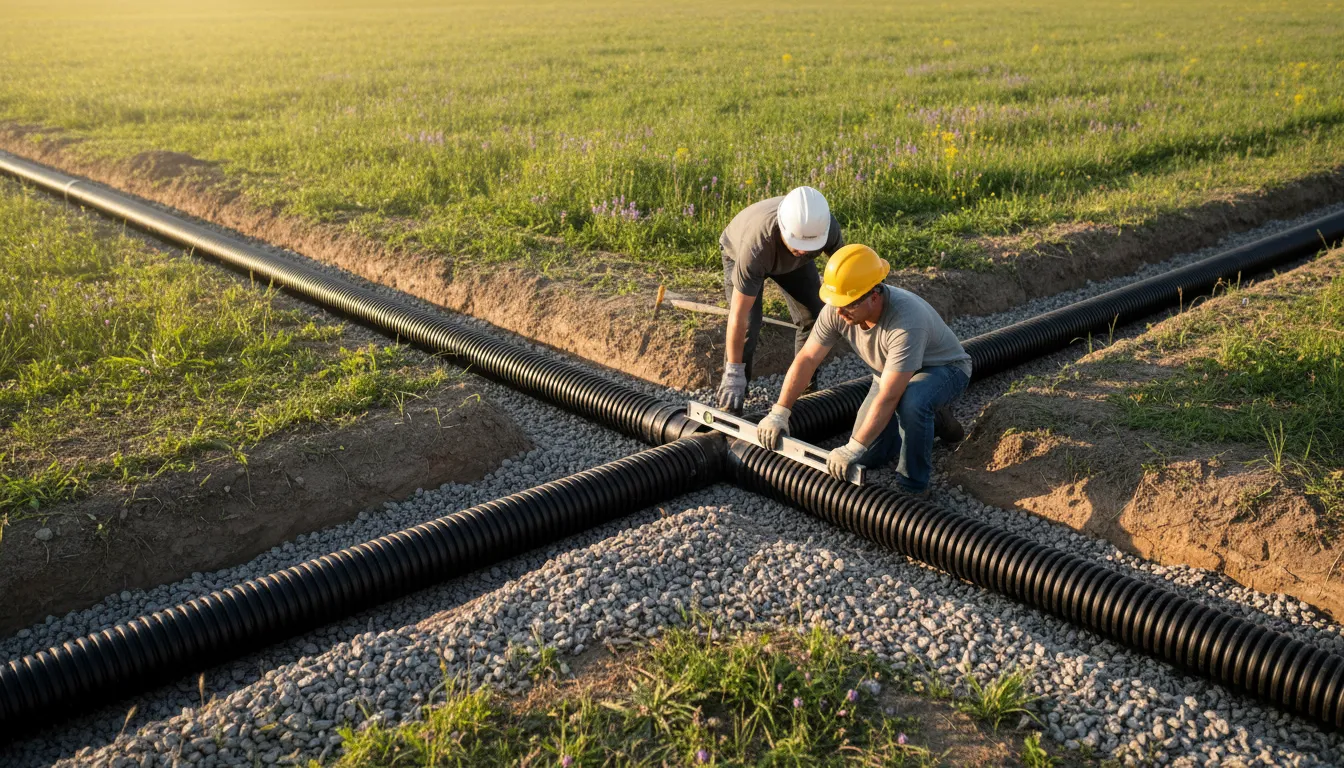
Often called a leach field or absorption field, the drain field is the final, crucial stage of your onsite wastewater treatment system. After solids settle in the septic tank, the liquid effluent flows into a network of perforated pipes buried in trenches filled with gravel. This effluent slowly percolates down through the soil, where natural processes filter out harmful bacteria, viruses, and nutrients before the water rejoins the groundwater. When this area fails, it can no longer absorb and treat the wastewater, leading to system backups and surface pooling.
Signs You May Need Drain Field Repair or Replacement
Recognizing early warning signs can prevent a complete system failure and more extensive property damage. If you notice any of the following in Meriden, it's time to consult a professional:
- Soggy Ground or Surfacing Effluent: Persistent wet, spongy areas or standing water over the drain field, especially after recent dry weather, is a primary indicator.
- Sewage Odors: Unpleasant smells emanating from your yard, particularly near the septic tank or leach field area.
- Unusually Lush Vegetation: Patches of grass that are greener and grow faster than the rest of your lawn can signal a nutrient-rich sewage leak.
- Slow Drains and Backups: Gurgling pipes, slow-draining sinks and toilets, or sewage backups in the home can point to a saturated drain field that is not accepting water.
- Failed Dye Test or Inspection: A professional septic inspection, which often includes checking sludge/scum levels and a dye test, can conclusively diagnose drain field failure 1 2.
The Regulatory Landscape in Meriden, Connecticut
Any work on a septic system in Meriden is strictly governed by state and local codes. The Connecticut Public Health Code (19-13-B103) and the 2024 Technical Standards set the enforceable rules for design, permitting, and installation. The City of Meriden's Division of Health enforces these regulations locally, with additional provisions in the city's code.
A key concept in Connecticut is the "code-complying area." If a repair to the existing leaching system is not feasible, you must identify a new area on your property that meets all current setback and soil requirements for a full replacement system. This area must be legally designated on your property records 3 4.
Required Professionals and Permits
You cannot tackle this project alone. State law requires the involvement of licensed professionals:
- Licensed Installer: Only a Connecticut-licensed septic installer can perform the excavation and installation work.
- Professional Engineer (P.E.): A licensed engineer is typically required to design the system, especially for engineered alternatives or difficult sites.
- Local Health Department: The Meriden Division of Health must review and approve all plans and issue the construction permit before any work begins.
The permitting process involves fees for soil testing, plan review, and the permit itself. For example, local health district fee schedules list charges for site testing and plan reviews, which can start around several hundred dollars.
The Step-by-Step Process for Leach Field Work
1. Comprehensive Site Evaluation and Testing
Before any design can be created, a detailed site evaluation is mandatory. A licensed professional will conduct:
- Deep Test Pits: At least two pits are excavated down to approximately 10 feet to examine soil types, structure, and the depth to seasonal high groundwater or bedrock.
- Percolation Test: This measures how quickly water drains through the soil, determining the size and type of drain field needed 5. These tests determine the soil's suitability and identify challenges like high water tables or shallow rock, which may require a more complex, engineered system.
2. System Design and Permitting
Using the soil data, a design is created that complies with all setbacks from wells, property lines, buildings, and water bodies. The design plans are submitted to the Meriden Health Department for review. Once approved and the permit is issued, work can be scheduled 6 7.
3. Excavation and Installation
The old, failed drain field is properly abandoned. The new leaching area is excavated according to the engineered plan. This involves laying a gravel bed, perforated distribution pipes, and covering them with more gravel and soil. A new distribution box may also be installed to evenly split effluent flow to all trenches.
4. Final Inspection and Approval
After installation, the licensed installer and a health department inspector will conduct a final review to ensure the work matches the permitted plans. Once approved, the area can be landscaped (with only grass recommended) and the system can be put into use.
Find the perfect drain field repair companies for your needs
Get personalized recommendations and expert advice
Cost Considerations for Drain Field Projects in Meriden
The cost for leach field repair or replacement is significant and varies widely based on several key factors specific to your property:
- System Size and Type: A standard gravity-fed trench system for a 3-4 bedroom home will cost less than a large system or one requiring advanced technology like a mound or drip irrigation system.
- Soil and Site Conditions: Difficult sites with poor drainage, high groundwater, or rocky soil require more complex engineering and materials, increasing costs.
- Extent of Work: Simple repairs to a clogged line are less expensive than a full replacement, which may also involve upgrading the septic tank or distribution box.
- Permitting and Design Fees: Budget for soil testing fees (e.g., around $275 for site testing), plan review fees, and permit costs 8 9.
- Labor and Materials: Local excavation and material costs directly impact the final price.
While specific Meriden averages are not published, national data suggests full drain field replacement often ranges from several thousand to tens of thousands of dollars 10. The most accurate way to understand cost is to obtain detailed estimates from licensed local installers based on your site-specific evaluation.
Potential Financial Assistance
If a failing septic system is classified as a public health nuisance, Connecticut homeowners may qualify for low-interest loan programs to help finance necessary repairs or replacement. It's worth inquiring with your installer or the local health department about any available state funding assistance 11.
Maintaining Your New Leach Field
Protect your investment with proper care:
- Divert Water: Ensure roof drains, sump pumps, and surface runoff are directed away from the drain field.
- Mind the Location: Never drive or park vehicles, build structures, or plant trees and shrubs over the leaching area.
- Practice Water Conservation: Spread out laundry loads and fix leaky fixtures to avoid hydraulically overloading the system.
- Pump Regularly: Have your septic tank pumped every 3-5 years by a professional to prevent solids from washing out and clogging the new drain field 12 13.
Frequently asked questions
Sources
Footnotes
-
Septic Homeowners - North Central Distict Health Department - https://www.ncdhd.org/septic-homeowners ↩
-
Septic Inspections in Meriden, CT - https://paragoninspectionsct.com/septic-inspections/ ↩
-
Connecticut Public Health Code On-site Sewage Disposal ... - https://portal.ct.gov/-/media/Departments-and-Agencies/DPH/dph/environmental_health/environmental_engineering/TS-2024-Documents/2024-Technical-Standards-Final-01012024.pdf ↩
-
Article VIII: Supplementary Regulations - City of Meriden, CT - https://ecode360.com/13398113 ↩
-
Septic Developers - North Central Distict Health Department - https://www.ncdhd.org/septic-developers ↩
-
Septic System Design: What CT Homeowners Need to Know - https://andersonseptic.com/septic-system-design-guide/ ↩
-
Article IV: Subsurface Sewage Disposal Systems (Septic ... - https://ecode360.com/13490462 ↩
-
HVHD Fee Schedule 2024 - 2025 - https://hvhdct.gov/wp-content/uploads/2025/04/OPS_FY24_25-UpdatedFeeSchedule.pdf ↩
-
How Much Does a Leach or Drain Field Replacement Cost? (2026) - https://homeguide.com/costs/drain-leach-field-replacement-cost ↩
-
How Much Does It Cost to Replace a Septic Tank and Drain Field? - https://www.bobvila.com/articles/cost-to-replace-septic-tank-and-drainfield/ ↩
-
Septic System Repair - Connecticut eRegulations System - https://eregulations.ct.gov/eRegsPortal/Browse/RCSA/Title_8Subtitle_8-416_HTML/ ↩
-
Operation and Maintenance - CT.gov - https://portal.ct.gov/dph/environmental-health/environmental-engineering/operation-and-maintenance ↩
-
Frequent Questions on Septic Systems | US EPA - https://www.epa.gov/septic/frequent-questions-septic-systems ↩