
Find the Best Drain Field Repair Companies for Your Business
No obligation • Fast responses • Nationwide coverage

Why you can trust Septic Spot
Septic Spot is a leading United States resource for understanding and comparing septic services. Our editors review providers using consistent criteria and verify key business details. Listings and scores are independent, and companies cannot pay to influence our content.
Search providers near you
Top Drain Field Repair Companies in Milford, Connecticut Ranked
A failing drain field, also known as a leach field or absorption system, is a serious issue for any Milford homeowner. This critical component of your septic system is responsible for safely dispersing and filtering treated wastewater into the soil. When it malfunctions, it can lead to sewage backups, environmental contamination, and significant property value loss. Navigating the repair or replacement of a leaching area involves strict local health codes, professional engineering, and specific permitting. This guide explains the process, regulations, and key considerations for addressing drain field problems in Milford, helping you connect with qualified, licensed professionals for your project.
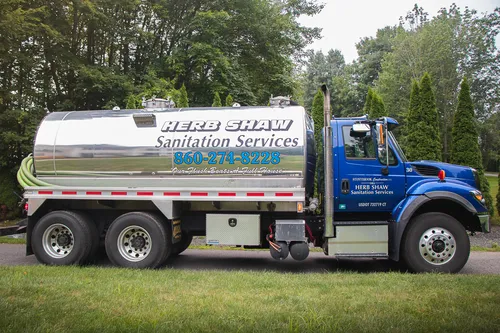
Understanding Your Drain Field's Role
The drain field is the final stage of your onsite wastewater treatment system. After solids settle in the septic tank, the liquid effluent flows into a network of perforated pipes buried in trenches filled with gravel. This effluent slowly percolates into the surrounding soil, where natural microbial action provides further treatment. The system's success hinges entirely on the soil's hydraulic capacity-its ability to absorb and disperse liquid without becoming saturated. When the soil becomes clogged or the system is overloaded, it can no longer accept effluent, leading to a failure.
Milford's Regulatory Landscape: Permits Are Mandatory
In Milford, all work on septic systems, including any repair or replacement of a leaching area, is governed by the Connecticut Public Health Code and overseen by the Milford Health Department (MHD) for systems with a daily design flow under 7,500 gallons 1. A core rule is that no component may be replaced, repaired, or extended without first obtaining an Approval to Construct from the local health director 2. After installation but before use, a Permit to Discharge must also be issued 2. Homeowners are expressly prohibited from installing their own systems; all construction must be performed by a state-licensed installer 3.
The Critical "Code-Complying Area"
If you are altering your property or your system has failed, you must demonstrate that a "code-complying area" exists on your lot for a potential replacement system 4 5. This is a section of land that meets all current setback and soil requirements. Without this available space, conventional repair or replacement may not be possible, necessitating alternative technologies.
Required Setbacks and Separations
Your leaching system must maintain strict minimum distances from other features:
- At least 10 feet from building foundations 6.
- Typically 75 feet from private drinking water wells 7.
- Specific distances from property lines, watercourses, and other structures as defined by code.
Diagnosing a Failing Leach Field
Before any repair can be planned, a proper diagnosis is essential. Licensed professionals often use a combination of methods during an inspection 8:
- Visual Assessment: Looking for "red flags" like unusually bright green or soggy patches of lawn over the field, persistent sewage odors, or standing water or surfacing sewage 9.
- Tank Measurements: Checking sludge and scum levels; if sludge fills more than one-third of the tank depth, it may be flowing into and clogging the drain field 10.
- Flow/Push Test: Introducing a large volume of water into the system to simulate peak usage and observing if the leaching area rejects the flow or surfaces effluent 11.
- Dye Testing: Using non-staining dye to confirm suspected leaks or if sewage is bypassing the treatment system and entering storm drains 12.
The Path to Replacement: Soil Testing and Design
Replacing a leaching system begins with a thorough evaluation of your property's soil. The MHD requires a formal Application for Soil Testing for septic replacement, which carries a fee. The testing itself is rigorous:
- Deep Test Pits: At least two pits, typically dug to a depth of 10 feet, are required to examine the soil profile, texture, and color, which indicate permeability and seasonal groundwater levels.
- Percolation Test: This measures the soil's absorption rate (how quickly water drains) at the proposed depth of the leaching system.
The results determine if your soil is suitable and dictate the size and type of system needed. Key site conditions include:
- Groundwater: The bottom of the leaching system must be at least 18 inches above the maximum seasonal groundwater level13.
- Ledge Rock: Bedrock must be at least 4 feet below the bottom of the leaching trenches14 15.
- Drainage: The site must have positive slope to move sewage away from the leaching area, and all surface water runoff (from roofs, sump pumps, etc.) must be diverted away to prevent hydraulic overloading 16 17.
Find the perfect drain field repair companies for your needs
Get personalized recommendations and expert advice
The Repair and Replacement Process
Once testing is complete and a code-complying area is confirmed, a licensed professional or professional engineer will design the new system according to Technical Standards 18. The design is submitted with the permit application to the MHD. After receiving the Approval to Construct, installation can begin. Inspections are required during construction and upon completion before the system is covered and put into use19.
Understanding Costs
While exact quotes are property-specific, general cost ranges in Connecticut provide a framework:
- Soil Testing Application (Milford): $50.00 fee 20.
- Routine Pumping & Inspection: Typically $300 to $600, depending on tank size 21 22.
- Full System Replacement: This is a major excavation and construction project. Costs are significant and an unusable system can greatly lower property values 23 24. It's important to note that eligible homeowners may qualify for state financial assistance in the form of loans or deferred loans for the repair or replacement of systems deemed a public health nuisance 25.
Maintaining Your New Leach Field
Protecting your investment is crucial. Proper operation and maintenance include:
- Conserving water to avoid hydraulically overloading the system.
- Never parking or driving heavy equipment over the drain field.
- Keeping trees and deep-rooted shrubs away from the leaching area.
- Avoiding the disposal of chemicals, grease, or non-biodegradable materials down the drains.
- Scheduling regular septic tank pumping (every 3-5 years) to prevent solids from escaping into the field.
Frequently asked questions
Sources
Footnotes
-
Environmental Engineering - Subsurface Sewage - CT.gov - https://portal.ct.gov/dph/environmental-health/environmental-engineering/environmental-engineering----subsurface-sewage ↩
-
Connecticut Septic Tank Requirements - https://www.ntotank.com/blog/connecticut-septic-tank-requirements?srsltid=AfmBOor-B0mgHNuC84phN8Tb3Ehwq5E46rdAnEPmbVmOo9z5ytiaWeuD ↩ ↩2
-
Septic Homeowners - North Central Distict Health Department - https://www.ncdhd.org/septic-homeowners ↩
-
State of Connecticut Regulation of Department of Public Health ... - https://eregulations.ct.gov/eRegsPortal/Search/getDocument?guid=%7B70603D95-0000-C454-B302-90D8CF431A50%7D ↩
-
Milford, CT - https://www.milfordct.us/DocumentCenter/View/820 ↩
-
Septic System Design: What CT Homeowners Need to Know - https://andersonseptic.com/septic-system-design-guide/ ↩
-
SUPPLEMENT EXISTING SEPTIC SYSTEM INSPECTION REPORT - https://portal.ct.gov/dph/-/media/departments-and-agencies/dph/dph/environmental_health/environmental_engineering/pdf/supplementpdf.pdf?rev=de19ca52ec45499aa7352711c1e504bf&hash=0E519F09C29CDB915E825AA57D2F9833 ↩
-
DIVISION 1: Generally - Town of New Milford, CT - eCode360 - https://ecode360.com/13598983 ↩
-
CONNECTICUT RECOMMENDED MINIMUM EXISTING ... - https://portal.ct.gov/-/media/Departments-and-Agencies/DPH/dph/environmental_health/environmental_engineering/pdf/formpdf.pdf?la=en/1000 ↩
-
New Milford Septic Services - https://newmilfordseptic.com/wp-content/uploads/2022/06/Septic-Inspection-Information-NMSEPTIC.pdf ↩
-
Septic system inspection before home sale New Milford, CT - https://westctplumbing.com/service/septic/septic-system-inspection-before-home-sale/new-milford/connecticut ↩
-
Septic Systems: Identifying Signs of Problems - CT.gov - https://portal.ct.gov/-/media/departments-and-agencies/dph/dph/drinking_water/pdf/2025-wsit-subsurface-presentation.pdf ↩
-
Operation and Maintenance - CT.gov - https://portal.ct.gov/dph/environmental-health/environmental-engineering/operation-and-maintenance ↩
-
ARTICLE I: Sanitary Code - Town of New Milford, CT - eCode360 - https://ecode360.com/13598912 ↩
-
CONNECTICUT PUBLIC HEALTH CODE On-site Sewage Disposal ... - https://portal.ct.gov/dph/-/media/departments-and-agencies/dph/dph/environmental_health/environmental_engineering/2023-uploads/ts-master-2023-1242023a.pdf?rev=ff2a02fba994441d8db4a5690867a002&hash=153A7DFFC69CCAAE2595B4A254D97960 ↩
-
Operation and Maintenance - CT.gov - https://portal.ct.gov/dph/environmental-health/environmental-engineering/operation-and-maintenance ↩
-
Septic Developers - North Central Distict Health Department - https://www.ncdhd.org/septic-developers ↩
-
CONNECTICUT PUBLIC HEALTH CODE On-site Sewage ... - https://portal.ct.gov/-/media/Departments-and-Agencies/DPH/dph/environmental_health/environmental_engineering/2023-uploads/TS-Master-2023-1242023A.pdf ↩
-
19-13-B104c. General provisions - Connecticut eRegulations System - https://eregulations.ct.gov/eRegsPortal/Browse/RCSA/Title_19Subtitle_19-13Section_19-13-b104c/ ↩
-
Application for Soil Testing Septic Replacement ... - Milford, CT - https://www.milfordct.us/DocumentCenter/View/817 ↩
-
Department of Housing Septic System Repair §§ 8-416-1- ... - https://eregulations.ct.gov/eRegsPortal/Browse/getDocument?guid=%7B7082E756-0100-CD34-9423-D481ECFC2063%7D ↩
-
Well and Septic Systems - Schaefer Inspection Service - https://mhschaefer.com/wells-septic/ ↩
-
Septic Homeowners - North Central Distict Health Department - https://www.ncdhd.org/septic-homeowners ↩
-
Septic System Replacement New Milford CT | Signs, Costs & Solutions - https://newmilfordseptic.com/when-is-it-time-to-replace-your-septic-system-in-new-milford-ct/ ↩
-
Septic System Repair - Connecticut eRegulations System - https://eregulations.ct.gov/eRegsPortal/Browse/RCSA/Title_8Subtitle_8-416_HTML/ ↩