Find the Best Drain Field Repair Companies for Your Business
No obligation • Fast responses • Nationwide coverage

Why you can trust Septic Spot
Septic Spot is a leading United States resource for understanding and comparing septic services. Our editors review providers using consistent criteria and verify key business details. Listings and scores are independent, and companies cannot pay to influence our content.
Search providers near you
Top Drain Field Repair Companies in Southington, Connecticut Ranked
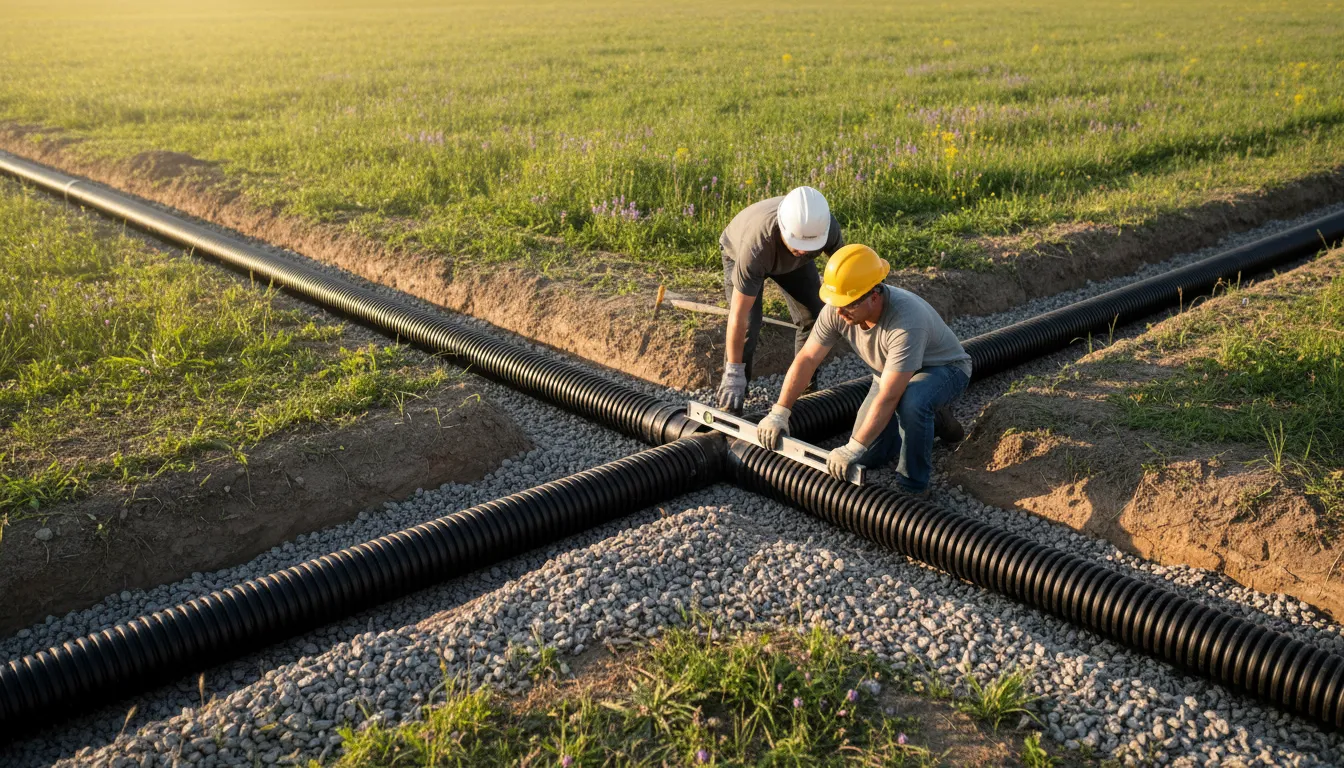
A properly functioning drain field, also known as a leaching system, is the heart of your home's septic system, responsible for safely filtering and dispersing treated wastewater into the soil. When this critical component fails, it can lead to sewage backups, environmental contamination, and significant property damage. In Southington, all septic system work is strictly regulated by state and local health codes, requiring professional expertise. This guide will help you understand the local requirements, processes, and considerations for addressing drain field issues, empowering you to make informed decisions when seeking qualified local service providers.
Understanding Your Leaching System and Local Regulations
In Southington, residential septic systems are governed by the Connecticut Public Health Code (PHC) Section 19-13-B103 and the associated Technical Standards for Subsurface Sewage Disposal Systems. The local enforcement and permitting authority is the Southington Health Department. A core tenet of these regulations is that any repair, replacement, or alteration to a septic system, including the leaching area, must be performed by a state-licensed installer 1. Homeowners are explicitly prohibited from installing or repairing their own systems.
The proper function of a disposal field hinges on the site's ability to disperse liquid volume without becoming saturated. This is why local codes mandate specific site conditions:
- Groundwater Separation: The bottom of the leaching system must be at least 18 inches above the seasonal high groundwater table.
- Soil Type: Loamy soils are ideal as they balance drainage and retention for treatment. Sandy soils may drain too quickly, while dense clay soils risk saturation and failure 2.
- Separation Distances: Systems must typically be located at least 75 feet from private wells, 50 feet from open water sources, and septic tanks must be at least 10 feet from building foundations 3.
- Protected Area: The drain field must remain free of encroachments like decks, pools, sheds, and vehicular traffic, which can crush pipes or compact the soil, leading to failure.
When is Drain Field Repair or Replacement Necessary?
A "failed system" is legally defined as one where effluent breaks out on the ground surface or backs up into the house, creating a public health nuisance that must be repaired. Beyond these obvious signs, other indicators of a failing leaching system include:
- Persistently soggy ground or standing water over the drain field area.
- Unusually lush, green grass growing over the field, especially during dry weather.
- Foul odors emanating from the yard.
- Slow-draining household fixtures, even after the septic tank has been pumped.
It's important to note that Connecticut law ties system functionality to property development. No building addition is permitted unless the local health director determines that a code-complying area exists on the lot for a potential replacement system 4. This makes understanding your system's condition crucial for any future home improvements.
The Southington Permit and Inspection Process
Before any work begins on your septic system in Southington, a written permit from the Director of Health is mandatory 5. The process for repairs and replacements generally follows these key stages:
- Initial Site Evaluation: A licensed professional or health department agent conducts thorough site testing. This includes soil analysis, percolation (perc) tests to measure absorption rates, and deep hole testing to determine groundwater levels 6. This evaluation determines if a repair is feasible or if a full replacement is required.
- System Design and Plan Submission: For replacements or major alterations, a professional engineer must typically draft plans that comply with all state and local technical standards. These plans are submitted to the Southington Health Department for permit approval 7.
- Construction Inspection: The health department must inspect the system during installation to ensure it matches the approved design and meets all code requirements 8.
- Final Approval and Record Drawing: Before the system is approved for use, the installer must provide an "as-built" or record drawing that shows the exact location of all system components. This document is vital for future maintenance and property transactions 9.
Find the perfect drain field repair companies for your needs
Get personalized recommendations and expert advice
Options for Addressing a Failing Leaching System
The solution for your property depends on the cause and extent of the failure, as determined by the site evaluation.
- Minor Repairs: Sometimes, issues are isolated, such as a crushed distribution pipe or a clogged section. A licensed contractor can excavate and repair just the affected area, which is often the most cost-effective solution.
- Drain Field Expansion or Addition: If the existing leaching area is undersized or partially failed, it may be possible to add a new expansion field in a suitable area of your yard, creating a larger, compliant system.
- Complete System Replacement: In cases of severe failure, high groundwater, or unsuitable soil, a full system replacement may be the only option. This involves designing a new system, which may include advanced treatment technologies if the site is challenging.
- System Alterations for Additions: If you're planning a home addition, you may need to alter or upgrade your system to handle the increased wastewater flow, even if the current system is functioning.
Understanding Costs and Financial Assistance
Costs for leaching system work vary widely based on system size, soil conditions, and the extent of the repair. Typical cost categories include:
- Permit Fees: Paid to the Town of Southington for the repair/replacement application.
- Engineering & Design: Fees for a professional engineer to draft and submit compliant plans, especially for complex sites.
- Labor & Materials: Costs for excavation, new septic tank (minimum 1,000 gallons for a 1-3 bedroom home), distribution boxes, and leaching structures like chambers or stone-and-pipe beds.
Financial assistance may be available. Connecticut offers financial assistance programs, such as loans or deferred loans, to eligible homeowners for repairing or replacing failed septic systems that have been declared a public health nuisance 10. Eligible costs can include inspection fees, labor, and materials, though landscaping is typically excluded.
Maintaining Your New or Repaired System
Protecting your investment is key. The primary ongoing maintenance is regular septic tank pumping-typically every 3-5 years-to prevent solids from washing out and clogging the new drain field 11. Additionally, always keep the area over your leaching system clear. Never drive or park on it, and avoid planting trees or deep-rooted shrubs nearby. Conserve water and avoid pouring grease, chemicals, or non-biodegradable items down the drain to keep your entire system healthy for years to come.
Frequently asked questions
Sources
Footnotes
-
Private Sewage Disposal and Water Supply Wells - eCode360 - https://ecode360.com/27537843 ↩
-
Operation and Maintenance - CT.gov - https://portal.ct.gov/dph/environmental-health/environmental-engineering/operation-and-maintenance ↩
-
SEPTIC SYSTEMS - CT.gov - https://portal.ct.gov/-/media/Departments-and-Agencies/DPH/dph/environmental_health/environmental_engineering/pdf/SepticSystems101pdf.pdf ↩
-
Connecticut Septic Tank Requirements - https://www.ntotank.com/blog/connecticut-septic-tank-requirements ↩
-
Connecticut Septic Tank Requirements - https://www.ntotank.com/blog/connecticut-septic-tank-requirements ↩
-
Septic System Design: What CT Homeowners Need to Know - https://andersonseptic.com/septic-system-design-guide/ ↩
-
CONNECTICUT PUBLIC HEALTH CODE On-site Sewage Disposal ... - https://portal.ct.gov/dph/-/media/departments-and-agencies/dph/dph/environmental_health/environmental_engineering/2023-uploads/ts-master-2023-1242023a.pdf?rev=ff2a02fba994441d8db4a5690867a002&hash=153A7DFFC69CCAAE2595B4A254D97960 ↩
-
19-13-B104c. General provisions - Connecticut eRegulations System - https://eregulations.ct.gov/eRegsPortal/Browse/RCSA/Title_19Subtitle_19-13Section_19-13-b104c/ ↩
-
SUPPLEMENT EXISTING SEPTIC SYSTEM INSPECTION REPORT - https://portal.ct.gov/dph/-/media/departments-and-agencies/dph/dph/environmental_health/environmental_engineering/pdf/supplementpdf.pdf?rev=de19ca52ec45499aa7352711c1e504bf&hash=0E519F09C29CDB915E825AA57D2F9833 ↩
-
Septic System Repair - Connecticut eRegulations System - https://eregulations.ct.gov/eRegsPortal/Browse/RCSA/Title_8Subtitle_8-416_HTML/ ↩
-
Operation and Maintenance - CT.gov - https://portal.ct.gov/dph/environmental-health/environmental-engineering/operation-and-maintenance ↩