
Find the Best Drain Field Repair Companies for Your Business
No obligation • Fast responses • Nationwide coverage

Why you can trust Septic Spot
Septic Spot is a leading United States resource for understanding and comparing septic services. Our editors review providers using consistent criteria and verify key business details. Listings and scores are independent, and companies cannot pay to influence our content.
Search providers near you
Top Drain Field Repair Companies in Stratford, Connecticut Ranked
A failing drain field, also known as a leach field or absorption system, is a serious issue for any Stratford homeowner with a septic system. When this critical component stops properly dispersing treated wastewater into the soil, it can lead to sewage backups, soggy yards, and environmental contamination. Understanding the local regulations, the repair process, and how to find qualified professionals is essential for protecting your property, your health, and your investment. This guide provides the information you need to navigate the complex process of septic system repair and replacement in Stratford, Connecticut.
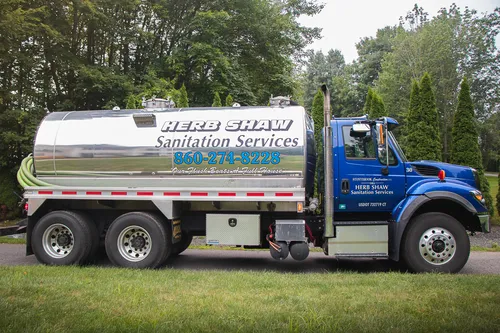
Understanding Your Stratford Septic System
A septic system is an on-site wastewater treatment system, typically consisting of a septic tank and a drain field. The tank holds solid waste, allowing it to decompose, while the liquid effluent flows out into a network of perforated pipes buried in trenches filled with gravel-the drain field. Here, the effluent is filtered and treated by the surrounding soil before rejoining the groundwater.
In Stratford, all residential septic system installations, repairs, and replacements are governed by the Town of Stratford Health Department (SHD) in accordance with the Connecticut Public Health Code (PHC) Section 19-13-B103 and its associated Technical Standards 1. A permit from the SHD is mandatory before any construction, repair, or replacement work can begin on a subsurface sewage disposal system.
Signs You May Need Drain Field Repairs
Recognizing early warning signs can save you from more extensive and costly damage. Be alert for these common indicators of a failing leaching system:
- Sewage Odors or Wet, Soggy Spots: The most direct sign is the smell of sewage or persistently wet, mushy areas in your yard, especially over the drain field area.
- Slow Drains and Backups: Gurgling pipes, slow-draining sinks and toilets, or sewage backing up into your home.
- Unusually Green Grass: Patches of grass over the drain field that are much lusher and greener than the rest of the lawn, indicating a nutrient-rich effluent surfacing.
- Standing Water: Puddles of greywater forming on the ground surface when no rain has occurred.
If you notice any of these signs, it's crucial to contact a licensed professional immediately for an inspection to prevent further system failure and potential health hazards.
The Stratford Permit and Regulatory Process
Navigating local regulations is the first critical step. The SHD oversees a strict process to ensure all systems are safe and compliant.
1. Permit Requirement: All installations, repairs, and replacements require a permit from the Stratford Health Department 2. Only persons licensed by the Commissioner of Public Health are permitted to construct or repair these systems.
2. Soil Testing and Evaluation: Before any design can be created, a professional must conduct a site evaluation. This involves digging "deep test holes" (typically 7-10 feet deep) to examine the soil profile and conducting "percolation tests" to measure how fast water drains through the soil 3. This data determines the site's suitability and the required size of the new leaching system 4.
3. System Design and Sizing: A professional engineer or licensed designer uses the soil data to draft a plan. Key sizing rules in Stratford include:
- Residential septic tanks must be at least 1,000 gallons for homes with 1-3 bedrooms, with an additional 125 gallons required for each bedroom beyond three 5 6.
- For properties developed before current code amendments, adding bedrooms is generally prohibited unless the Stratford Director of Health determines the property can support the expansion 7.
4. Critical Separation Distances: The design must ensure the system maintains minimum distances from structures and water sources, including 8 9 10:
- Septic tank to building foundation: 10 feet.
- Leaching system to a private well: 75 feet.
- Leaching system to an in-ground pool: 25 feet.
- The bottom of the leaching system must be at least 18 inches above the maximum seasonal high groundwater table.
5. Construction Inspections and Final Approval: The local health department must inspect the system during construction. After completion, the installer provides an "as-built" drawing, and the health department issues a final Permit to Discharge, authorizing the system's use 11 12 13.
Find the perfect drain field repair companies for your needs
Get personalized recommendations and expert advice
Repair vs. Complete Replacement
Not all drain field issues require a full replacement. A licensed professional can diagnose the problem.
- Repairs: Sometimes, issues are isolated, such as a crushed pipe, clogged distribution box, or a small section of saturated soil. These can often be repaired without redoing the entire field.
- Replacement: A full drain field replacement is necessary when the soil is permanently clogged (a condition called "biomat" failure), the entire field is saturated, or the system is undersized for the home's current use. Replacement involves excavating a new leaching area in a compliant location on your property.
Costs and Financial Considerations
The cost for septic drain field and tank replacement in Stratford varies significantly based on site complexity, soil conditions, system size, and type.
- Replacement Range: Typical costs for a complete septic tank and drain field replacement range from $5,000 to $12,000 or more 14 15.
- Additional Expenses: Homeowners must also budget for engineering design fees, soil percolation tests, Stratford Health Department permit fees, and inspection fees. These can add several thousand dollars to the total project cost.
- Financial Assistance: The state of Connecticut may offer financial assistance in the form of loans or deferred loans to eligible homeowners for repairing or replacing systems that have been declared a public health nuisance. Eligible costs can include appraisals, inspection fees, labor, and materials, though landscaping is typically not covered.
Choosing a Licensed Professional in Stratford
Given the complexity of regulations and the importance of proper installation, selecting the right contractor is paramount.
- Verify Licenses: Always confirm that any professional you hire is currently licensed by the Connecticut Commissioner of Public Health to construct or repair subsurface sewage disposal systems 16.
- Check References and Reviews: Ask for local references from past clients in Stratford and check online reviews.
- Get Multiple Quotes: Obtain detailed written estimates from at least three licensed contractors. Ensure the quotes itemize costs for design, permits, excavation, materials, and restoration.
- Ask About the Process: A reputable contractor will be familiar with the Stratford Health Department's requirements and should be able to clearly explain the entire process, from soil testing to final inspection.
Maintaining Your New or Repaired System
Protect your investment with proper care. Have your septic tank pumped regularly (typically every 3-5 years), conserve water to avoid overloading the system, and never flush harmful chemicals or non-biodegradable items. Avoid planting trees near the drain field and never drive or park heavy vehicles over it 17.
Frequently asked questions
Sources
Footnotes
-
Environmental Engineering - Subsurface Sewage - CT.gov - https://portal.ct.gov/dph/environmental-health/environmental-engineering/environmental-engineering----subsurface-sewage ↩
-
Septic | Town of Stratford - https://www.stratfordct.gov/page/septic ↩
-
Septic Developers - North Central Distict Health Department - https://www.ncdhd.org/septic-developers ↩
-
CONNECTICUT PUBLIC HEALTH CODE On-site Sewage Disposal ... - https://portal.ct.gov/dph/-/media/departments-and-agencies/dph/dph/environmental_health/environmental_engineering/2023-uploads/ts-master-2023-1242023a.pdf?rev=ff2a02fba994441d8db4a5690867a002&hash=153A7DFFC69CCAAE2595B4A254D97960 ↩
-
Connecticut Septic Tank Requirements - https://www.ntotank.com/blog/connecticut-septic-tank-requirements?srsltid=AfmBOorRezROn0cjAMJm-Uc2PzkRLJ0J8qnHUc-fDic4RXmcMYzLLF8g ↩
-
CONNECTICUT PUBLIC HEALTH CODE On-site Sewage Disposal ... - https://portal.ct.gov/-/media/Departments-and-Agencies/DPH/dph/environmental_health/environmental_engineering/2023-uploads/TS-Master-2023-1242023A.pdf ↩
-
Systems) of Title 7 of the General Statutes of the State of ... - https://ecode360.com/ST1064/laws/LF2330595.pdf ↩
-
Septic Systems: Identifying Signs of Problems - CT.gov - https://portal.ct.gov/-/media/departments-and-agencies/dph/dph/drinking_water/pdf/2025-wsit-subsurface-presentation.pdf ↩
-
Septic Systems - East Shore District Health Department - https://www.esdhd.org/septic-systems/ ↩
-
SEPTIC SYSTEMS - CT.gov - https://portal.ct.gov/-/media/Departments-and-Agencies/DPH/dph/environmental_health/environmental_engineering/pdf/SepticSystems101pdf.pdf ↩
-
CONNECTICUT PUBLIC HEALTH CODE On-site Sewage Disposal ... - https://portal.ct.gov/-/media/Departments-and-Agencies/DPH/dph/environmental_health/environmental_engineering/Tech-Standards-2023/TS-Master-2023-12292022.pdf ↩
-
19-13-B104c. General provisions - Connecticut eRegulations System - https://eregulations.ct.gov/eRegsPortal/Browse/RCSA/Title_19Subtitle_19-13Section_19-13-b104c/ ↩
-
SUPPLEMENT EXISTING SEPTIC SYSTEM INSPECTION REPORT - https://portal.ct.gov/dph/-/media/departments-and-agencies/dph/dph/environmental_health/environmental_engineering/pdf/supplementpdf.pdf?rev=de19ca52ec45499aa7352711c1e504bf&hash=0E519F09C29CDB915E825AA57D2F9833 ↩
-
Septic System Repair - Connecticut eRegulations System - https://eregulations.ct.gov/eRegsPortal/Browse/RCSA/Title_8Subtitle_8-416_HTML/ ↩
-
Cost to Replace Septic Tank and Drain Field [2026 Data] | Angi - https://www.angi.com/articles/how-much-new-drain-fields-foot.htm ↩
-
Connecticut Septic Tank Requirements - https://www.ntotank.com/blog/connecticut-septic-tank-requirements?srsltid=AfmBOorhkNtbYVlZm0QqaZAyLWDOXnLbjJsp0lLoTHAE8_rF4KkCmJFC ↩
-
Operation and Maintenance - CT.gov - https://portal.ct.gov/dph/environmental-health/environmental-engineering/operation-and-maintenance ↩